The Islamic Republic of Iran as a strategic actor is undergoing a profound transformation.
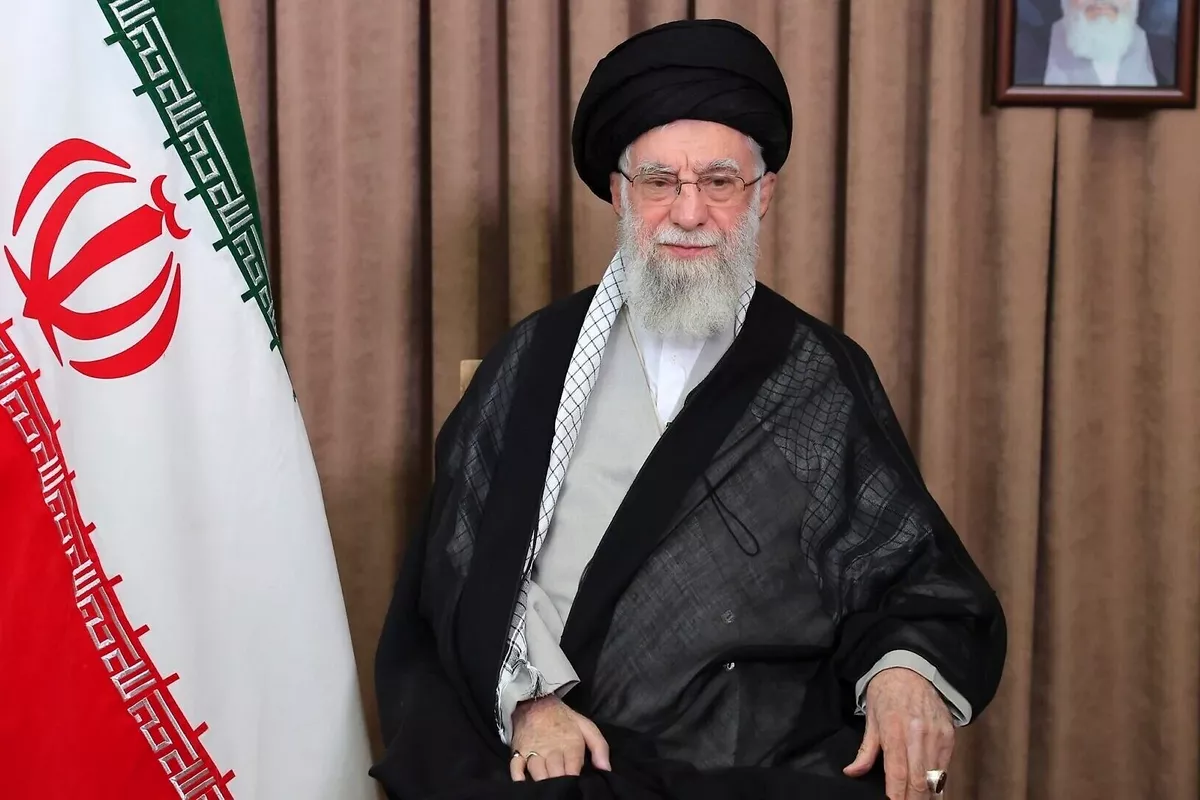
The joint US-Israeli strike which killed Iran’s Supreme Leader Ayatollah Ali Khamenei did not end the state’s political structure, but it marked a pivotal moment in the ongoing escalation.
Recent events have highlighted serious vulnerabilities within Iran’s security architecture. Tehran was unable to prevent targeted strikes against senior figures, including Ismail Haniyeh in 2024, as well as high-ranking military and IRGC officials during the 12-day conflict in 2025.
With a temporary leadership council working to ensure continuity, Iran has launched missile and drone strikes targeting sites in Dubai, Bahrain, and Saudi Arabia. These actions reflect an attempt to respond to mounting external pressure amid rapidly changing regional dynamics.
A look at the military balance underscores the asymmetry of the confrontation.
Iran has killed three US servicemen and approximately 10 Israeli civilians. In turn, the United States and Israel have carried out extensive strikes targeting senior leadership, judicial institutions, military headquarters, and elements of Iran’s command-and-control infrastructure. Israel’s Air Force has reportedly established aerial superiority over Tehran.
The conflict illustrates the imbalance between a global superpower and a technologically advanced regional military on one side, and a state whose conventional capabilities have struggled under sustained pressure on the other.
Iran’s regional partners - long viewed as a source of strategic depth - are themselves facing significant constraints. Hezbollah has come under intense pressure in Lebanon; Hamas has suffered major setbacks in Gaza; the Assad government in Syria has fallen; and the Houthis have not yet intervened directly in support of Tehran.
The broader network often referred to as the “Axis of Resistance” has thus far been unable to alter the trajectory of the current escalation.
One of Tehran’s most consequential decisions has been to expand strikes beyond Israel. Hundreds of missiles and drones have reportedly targeted the UAE, Bahrain, Qatar, Kuwait, Saudi Arabia, Jordan, and Oman - including countries that had previously maintained diplomatic or mediating roles.
Incidents have been reported at Dubai’s airport, near the Burj Al Arab, at Jebel Ali port, in residential areas in Manama, and at airports in Abu Dhabi and Kuwait. Saudi infrastructure has also been affected.
Supporters of Tehran describe these actions as a demonstration of resolve following the killing of Khamenei. Critics argue that they risk broadening the conflict and complicating regional diplomacy.
The strikes on Gulf states have raised questions about strategic intent, particularly as several of these countries were not directly involved in the initial US-Israeli operation and had limited their engagement.
In response, the UAE has closed its embassy in Tehran and withdrawn its diplomatic mission. Saudi Arabia has summoned Iran’s ambassador. Qatar, Bahrain, and Kuwait have condemned what they described as violations of territorial sovereignty. Airspace across parts of the Gulf has been temporarily closed, and global markets have reacted with volatility.
As a result, relations between Iran and several Gulf states have deteriorated sharply, including with countries that had recently pursued rapprochement.
The precision of strikes targeting Khamenei and other senior command nodes suggests a significant level of intelligence penetration. Israel has previously demonstrated the capability to carry out high-profile targeted operations against nuclear scientists and senior officials.
Some analysts attribute these developments to sophisticated intelligence operations; others point to internal political and institutional strains that may have weakened cohesion within parts of the Iranian system.
Domestically, Iran has faced significant internal unrest over the past year. January protests resulted in thousands of casualties, further intensifying debates about governance, legitimacy, and the country’s future direction.
The ripple effects of the crisis are being felt beyond the immediate theatre.
In Pakistan, at least 22 people were killed during protests outside US diplomatic facilities. Demonstrations escalated in some areas, including reported attacks on international offices.
While many Pakistanis expressed solidarity following Khamenei’s death, analysts have raised concerns about sectarian tensions and the risk of regional actors influencing domestic dynamics in a nuclear-armed state already facing security challenges.
Pakistan, managing tensions along the Afghan border and internal security concerns, faces additional pressure amid regional escalation.
At present, Iran confronts a complex strategic environment. Its regional partnerships are under strain, its leadership structure has been disrupted, and its relations with Gulf states have deteriorated.
The crisis risks expanding further if diplomatic channels are not restored.
The current trajectory suggests a volatile and unpredictable phase in Middle Eastern geopolitics - one driven not only by military calculations but also by political recalibrations within and beyond Iran.