As the European Union (EU) continues to struggle to properly recognise Türkiye's importance for the European security architecture, Ankara’s relations with individual member states are simultaneously gaining notable momentum. Türkiye’s significance for the European continent is both substantial and self-evident.
Türkiye’s economy is deeply integrated into European supply chains, and it is one of the EU’s major trading partners. It is also a formidable actor in the defence and security sphere, with the Turkish military widely recognised as one of the most capable in Europe. In addition, the country serves as a regional transit hub not only in terms of migration, but also for broader interregional connectivity.
These two realities continue to exist in parallel. As in other strategically important cases, there is little cohesion among the various actors under the broad ‘EU umbrella’ when it comes to approaching Türkiye. On the one hand, there is a degree of public recognition of the country’s strategic significance and vast potential. On the other hand, there is a lack of concrete steps to deepen integration with Ankara and move beyond already established and arguably outdated frameworks of cooperation.
Moreover, contradictory statements portraying Türkiye as a negative influence and a source of instability in international relations do not accurately reflect the country’s actual relevance to the European continent. In this light, it is essential for the EU’s political leadership to acknowledge Türkiye’s importance through more than rhetoric and to take clear steps to bridge the gap between policy and statements.
Italy’s Rational and Decisive Stance
Source: latitudeworld
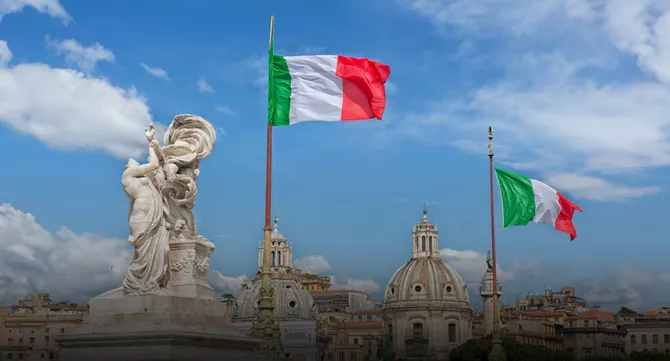
Nevertheless, while the EU grapples with the incoherence of its approach towards Türkiye, some influential member states are pursuing a decisive deepening of relations with Ankara. Italy stands out as one of the leading examples. The relationship between the two countries is comprehensive and, most importantly, continues to move steadily upward. This is reflected in trade figures, with total trade volume exceeding 32 billion euros, Italy ranking among Türkiye’s top five export destinations, and Turkish exports to Italy reaching a record $12.4 billion in 2025.
Italy now ranks behind only Germany, the United States and the United Kingdom among Türkiye’s leading export destinations. The automotive, chemical, steel, textile and raw materials sectors are among the key areas in what is a long list of fields where the two economies intersect. Moreover, the countries have been working to strengthen cooperation in the military and defence industries.
The acquisition of Piaggio Aerospace, an Italian manufacturing company, by Baykar, a world-leading Turkish firm specialising in the production of unmanned vehicles, in July 2025 confirmed this trend. In addition, close cooperation between Baykar and Leonardo, an Italian aerospace and defence company, promises to further expand the scope of bilateral cooperation. Cooperation between the two companies has already produced tangible results, with the establishment of LBA Systems, a “joint industrial structure”, in June 2025.
With Türkiye widely considered a leader in applying technological innovation to military capability, the Italian-Turkish tandem could lead to a long-term and resilient framework for cooperation in the defence industry. Most importantly, both countries are active NATO members and contributors to the alliance.
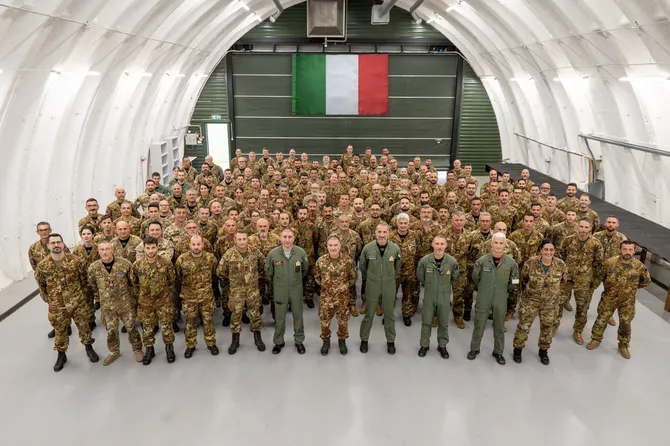
The Turkish army ranks as the second largest within the organisation, while Italy stands out for its consistent and growing troop contributions to NATO operations over the years. In Italy’s case, the war in Ukraine appears to have prompted a more active posture. For example, Italy is currently leading ‘allied multinational battlegroups’ in Bulgaria, with between 1,000 and 1,300 Italian military personnel deployed, while also participating in various air policing missions in neighbouring regions. This underlines the military and technological capabilities of both countries.
Political alignment
Source: decode39
Bilateral cooperation in the military sphere further elevates the geopolitical significance of the broader relationship. Both countries are fundamental to the security of the Mediterranean, making this a permanent area of mutual interest. To date, the two sides have combined their expertise through cooperation under both the NATO framework and bilateral mechanisms.
On matters of shared interest, such as relations with Libya, the sides have prioritised diplomacy and political coordination, emphasising the importance of mutually agreed outcomes. On other pressing issues, such as the war in Ukraine, the two countries have also demonstrated mutual support, with Italy backing Türkiye’s diplomatic efforts, including the Black Sea Grain Initiative in 2022, which enabled the safe transport of grain from Ukrainian ports despite major military escalation.
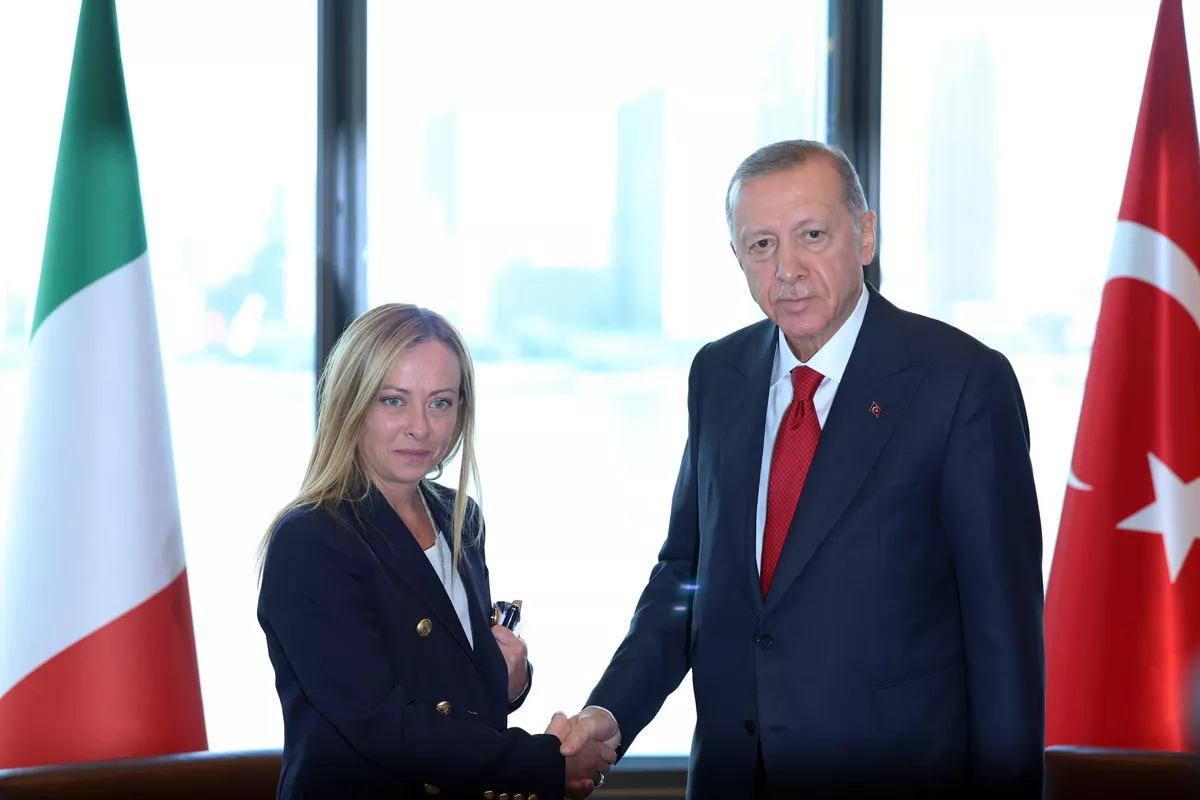
Diplomatic coordination is therefore another important pillar of the relationship, with contacts between Turkish President Erdoğan and Italian Prime Minister Meloni often described as positive, pragmatic and based on mutual understanding. Both leaders have played significant roles in conflict diplomacy, with Meloni’s support for Ukraine evident in her frequent meetings with President Volodymyr Zelenskyy.
President Erdoğan, for his part, continues to demonstrate Türkiye’s readiness to act as a mediator not only in the war in Ukraine, but also in other complex regional scenarios.
Therefore, in addition to driving progress in specific sectors and contributing to regional stability, this relationship can continue to serve as an important diplomatic source of influence based on the diplomatic track records of both states. With the situation in the Middle East becoming increasingly unpredictable, this may be more relevant than ever. In recent years, the two sides have shown a preference for diplomacy over confrontation even during periods of strategic divergence, which is inevitable for countries located in such geopolitically complex regions.
Under the current circumstances, this is an essential asset that gives the relationship even greater strategic weight.
Türkiye-Italy relations also hold particular significance from the perspective of the EU and Türkiye’s potential accession. Rome has consistently, including under Giorgia Meloni, advocated closer integration between Ankara and EU structures. This is particularly important given the unfriendly and at times openly anti-Turkish positions adopted by other member states on the issue.
Compared with France, for example, Italy has adopted a far more pragmatic and constructive tone towards Ankara. On several occasions, France has demonstrated practical resistance to both Turkish membership and closer Turkish integration within the EU framework.
This includes the defence sector, where Turkish interest in the SAMP/T air defence system, a Franco-Italian joint project, became impractical due to French objections. Turkish interest is likely to continue, especially following Türkiye’s recent decision to acquire Eurofighter Typhoon jets, which are considered integral to NATO and European air defence. Elsewhere, the recently announced decision by the Italian navy to purchase Bayraktar TB3 drones for its aircraft carrier Cavour demonstrates the mutual nature of the need for closer cooperation.
This growing convergence of interests, with Türkiye seeking to strengthen its air defence arsenal and Italy aiming to develop its UAV (Unmanned Aerial Vehicle) capabilities, highlights the compatibility of the interests of both sides.
These dynamics demonstrate that Italy, unlike some other key member states, has adopted a more pragmatic, rational and realistic approach towards Türkiye. Italy openly and consistently recognises not only Ankara’s technological proficiency in the military sphere but also its broader significance for a European Union that is increasingly seeking to develop genuine strategic autonomy. This is particularly relevant in the defence sphere, which has long remained a weakness in terms of the EU’s broader actorness.
This approach differentiates Rome from other core member states, creating an indispensable gateway through which Türkiye’s strategic advantages may contribute to European security. Italy’s political willingness to engage with Türkiye rather than minimise its role within the European security architecture should serve as an example to other European states that, for various reasons, continue to treat Ankara on a purely transactional rather than partnership-driven basis.
Wider Implications - the South Caucasus
Source: boell
The deepening partnership between Türkiye and Italy is significant beyond the EU and Mediterranean contexts. Both countries also share strategic interests in neighbouring regions, including the South Caucasus, which is currently undergoing a transformation from conflict towards stability and cooperation.
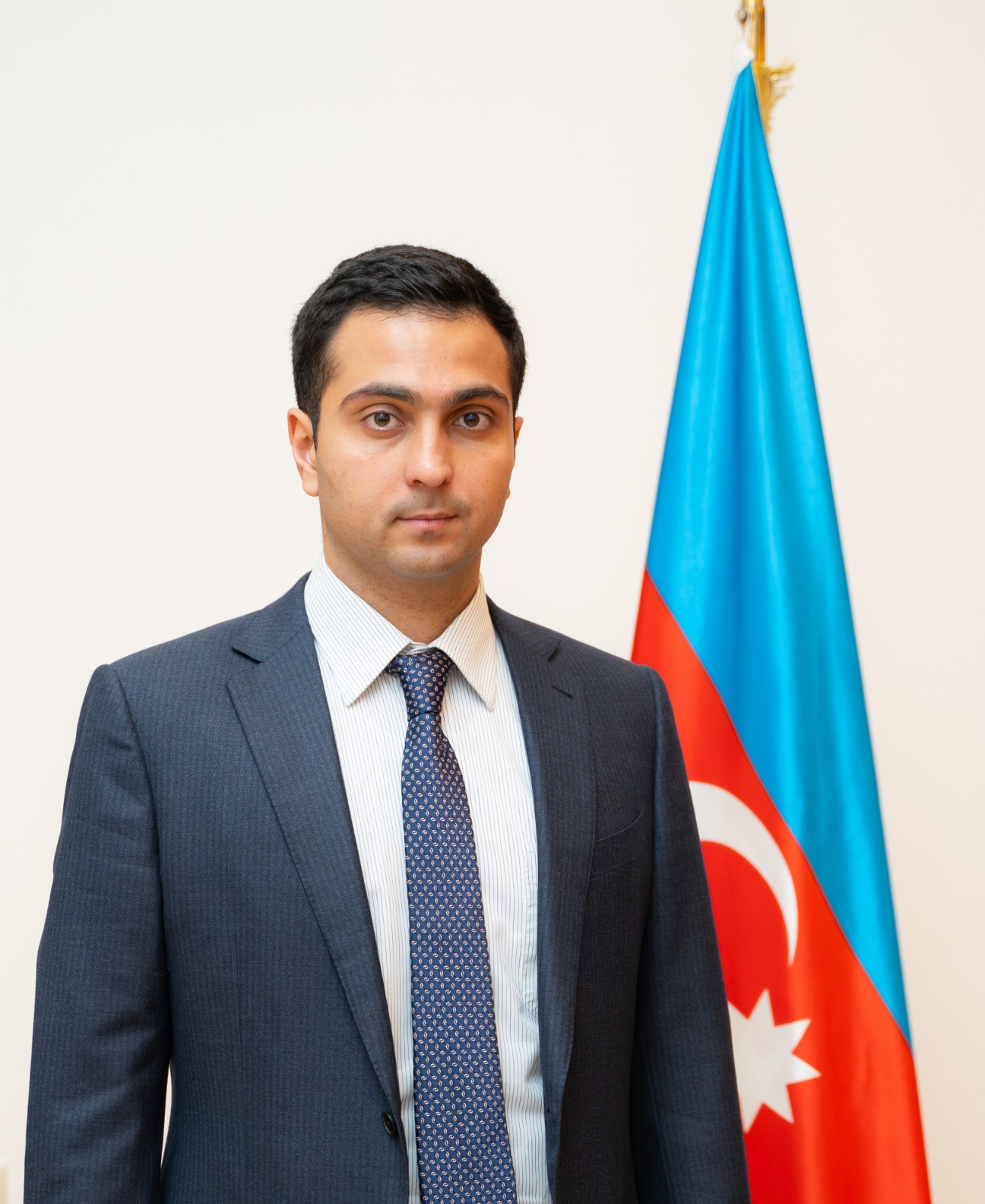
In this regional context, Azerbaijan continues to act as a leading player, with rapidly expanding diplomatic influence and growing international recognition of its strategic position. Türkiye and Italy both maintain substantial ties with the country - the unique and multidimensional allied relationship between Türkiye and Azerbaijan, together with the increasingly comprehensive partnership between Türkiye and Italy, provides a unique platform for potential trilateral cooperation.
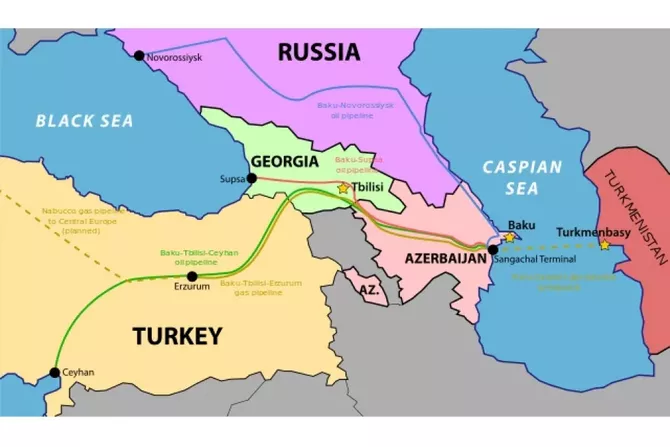
This potential trilateral format already rests on a strong foundation, with the Southern Gas Corridor transporting Azerbaijani gas to Europe, particularly Italy, through Türkiye. Italian Prime Minister Giorgia Meloni’s recent visit to Azerbaijan and the subsequent announcement by both leaders of steps to deepen bilateral cooperation are precisely the kind of developments needed in this direction.
In addition to an already extensive energy partnership, with Azerbaijan consistently supplying Italy with gas and Italian companies actively operating in the country, the leaders also expressed interest in pursuing military-industrial and defence cooperation.
It is becoming increasingly clear and publicly acknowledged that the sides have much to offer one another in this sphere. Combined with Türkiye’s world-leading military capabilities, this could develop into an important source of both regional and global influence. However, cooperation within this trilateral framework should not necessarily focus predominantly on military matters. All three actors possess extensive resources, expertise and experience across various areas of international affairs. This includes regional diplomacy, economic cooperation, humanitarian initiatives and even education, where Italy and Azerbaijan have recently strengthened ties through the opening of the Italy-Azerbaijan University in Baku.
Furthermore, the Azerbaijan-Türkiye-Italy partnership can be viewed through the lens of the constantly evolving and expanding ‘middle power class’ in international relations. Although the three countries differ significantly in terms of size and geography, they are increasingly united by overlapping interests and their growing role in shaping regional and global affairs. Azerbaijan’s hosting of major UN conferences such as COP29 and WUF13 is one example of its emergence as a middle power.
As the international system continues to transition towards a new world order, where strength and regional ownership are becoming increasingly decisive factors, such ‘minilateral’ frameworks have the potential to become a preferred form of cooperation.
Bilateral ties, as demonstrated by Türkiye-Italy relations, will remain vital. However, as the category of ‘middle powers’ continues to expand, important opportunities are emerging for different partners within this group to join forces and cooperate more closely.
In Italy’s case, its vision for Europe, based on the pursuit of strategic autonomy without overriding the national interests of member states, could greatly benefit from looking beyond traditional frameworks and expanding cooperation with leading actors in neighbouring regions. Whether bilaterally or through minilateral frameworks, Türkiye and Azerbaijan appear to be the most natural partners in this direction.