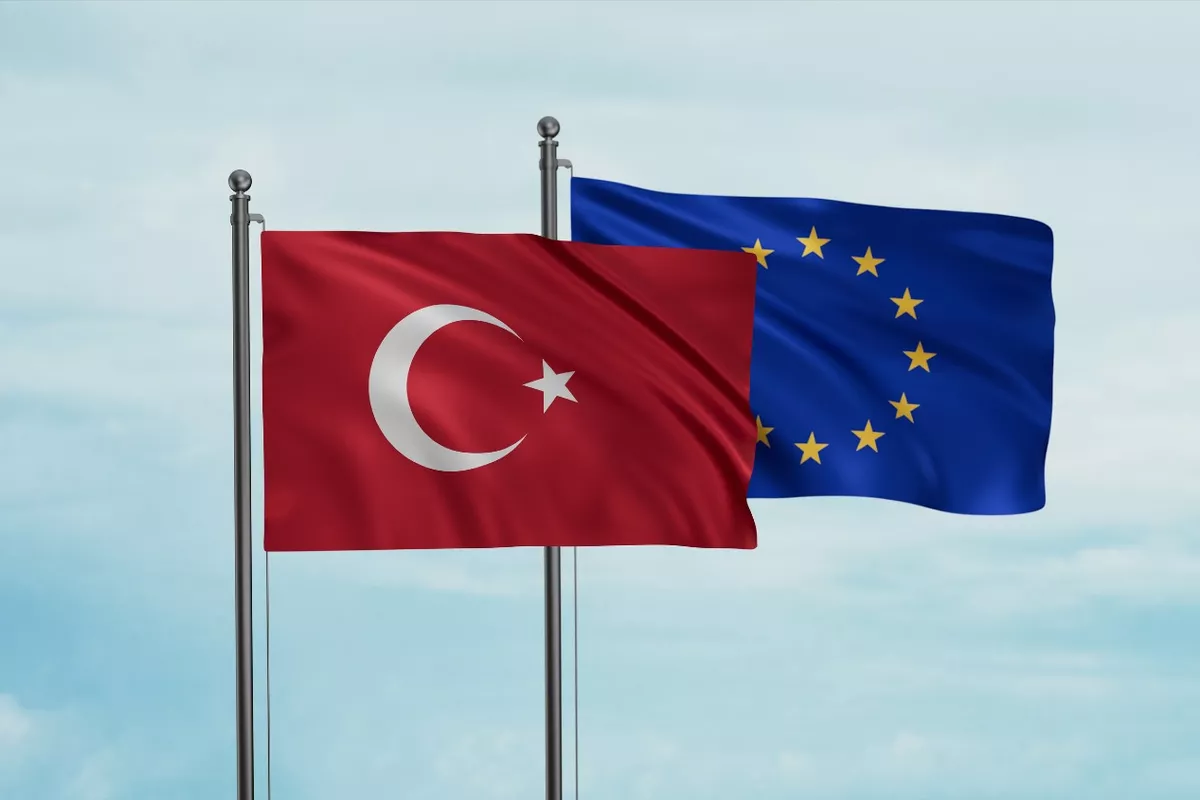
New Türkiye Meets a Fragmented Europe
Türkiye will host a historic NATO summit in Ankara on July 6-7. Yet despite the magnitude of this moment, there remains a narrow-minded tendency in parts of Europe to analyze Türkiye-West relations through outdated frameworks inherited from the Cold War and early post-Cold War years. That intellectual laziness increasingly prevents European policymakers and observers from understanding the strategic transformation taking place before their eyes.
Türkiye-Europe relations have changed so profoundly that they can no longer be interpreted through the old hierarchical lens in which one side “gives” and the other side “receives.” The relationship today is no longer paternalistic, normative or one-directional. It is increasingly transactional, strategic and shaped by hard geopolitical realities.
The upcoming NATO summit in Ankara itself symbolizes this transformation.
Türkiye’s growing defense partnerships with several European countries, its expanding geopolitical engagement in Africa and the Middle East and its increasing strategic autonomy all point to a new reality: Ankara is no longer merely reacting to the international system. It is actively shaping it.
At the same time, Europe itself has transformed. The continent is more fragmented, more insecure and strategically less coherent than before. If one fails to understand this European transformation, it becomes impossible to contextualize the true implications of a NATO summit hosted by Türkiye.
4 Faces of Europe
There is no longer a single Europe when it comes to Ankara. Instead, there are at least four distinct Europes, each with its own instincts, priorities and limitations.
The first Europe consists of the U.K., Belgium and the Netherlands. These countries increasingly approach Türkiye through strategic pragmatism. They recognize Ankara’s military capabilities, diplomatic reach, industrial potential and geopolitical relevance. Their engagement is not driven primarily by ideological reflexes but by geopolitical calculation. They are asking a practical question: How can Europe cooperate with a rising Türkiye in an increasingly unstable international order?
The second Europe includes Spain and Italy. Their discourse toward Türkiye is generally positive, but their policies often remain inconsistent. They speak the language of strategic partnership, yet frequently fall short when difficult political choices are required. Their approach remains suspended between rhetorical support and limited practical engagement.
The third Europe remains centered around Germany and France, still the dominant axis within the European Union. Paris and Berlin fully understand Türkiye’s strategic importance in defense, migration, energy, regional security and Eurasian geopolitics. Yet both continue to struggle with accepting the emergence of the new Türkiye, which is more autonomous, more assertive and less dependent on traditional Western tutelage. They are slowly adapting to this reality, but reluctantly. This unresolved tension continues to define one of the core fault lines in Türkiye-Europe relations.
The fourth Europe lies in the East: Hungary, Poland and Romania. For years, Türkiye’s Eastern European engagement was disproportionately shaped through Viktor Orban’s personal relationship with Ankara. However, the strategic map of Europe is changing rapidly. For Türkiye, the time has come to broaden and reconstruct this Eastern European dimension, particularly through deeper engagement with Romania and Poland, whose geopolitical importance has significantly increased after the war in Ukraine. These countries historically aligned themselves with the broader Germany-France axis, but shifting security dynamics are now opening new strategic possibilities.
This is precisely why romanticism has disappeared from Türkiye-Europe relations. There is no single Europe. No unified strategic mentality. No grand civilizational narrative holds the relationship together.
Every European country now approaches Türkiye according to its own interests, fears, domestic politics and geopolitical calculations.
Türkiye's Approach to Each
President Recep Tayyip Erdoğan understood this transformation earlier than many in Europe did. Ankara gradually abandoned the old totalizing approach toward Europe and replaced it with a flexible, country-by-country strategy. Türkiye today engages European capitals individually, issue by issue, sector by sector. Transactional where necessary, strategic, where possible, and confrontational when unavoidable. In a nutshell, relations are not emotional, not ideological, but grounded in geopolitical realism.
A recent Europe Day reception in Istanbul offered a symbolic reflection of this broader transformation. What immediately stood out was the demographic profile of the attendees: The overwhelming majority appeared to be above the age of 55. Among the journalists present, there was quiet joking that perhaps the event resembled a gathering representing a declining geopolitical era rather than a rising political future.
More striking, however, was the limited interest shown by Turkish government circles. That absence itself carried political meaning.
In redefining Türkiye-Europe relations, Ankara has already transformed its approach, style and strategic understanding. The real question now is whether Europe can do the same.
Can a divided Europe generate the imagination, flexibility and strategic courage required for a new relationship with Türkiye? That remains to be seen.
Find the original article here