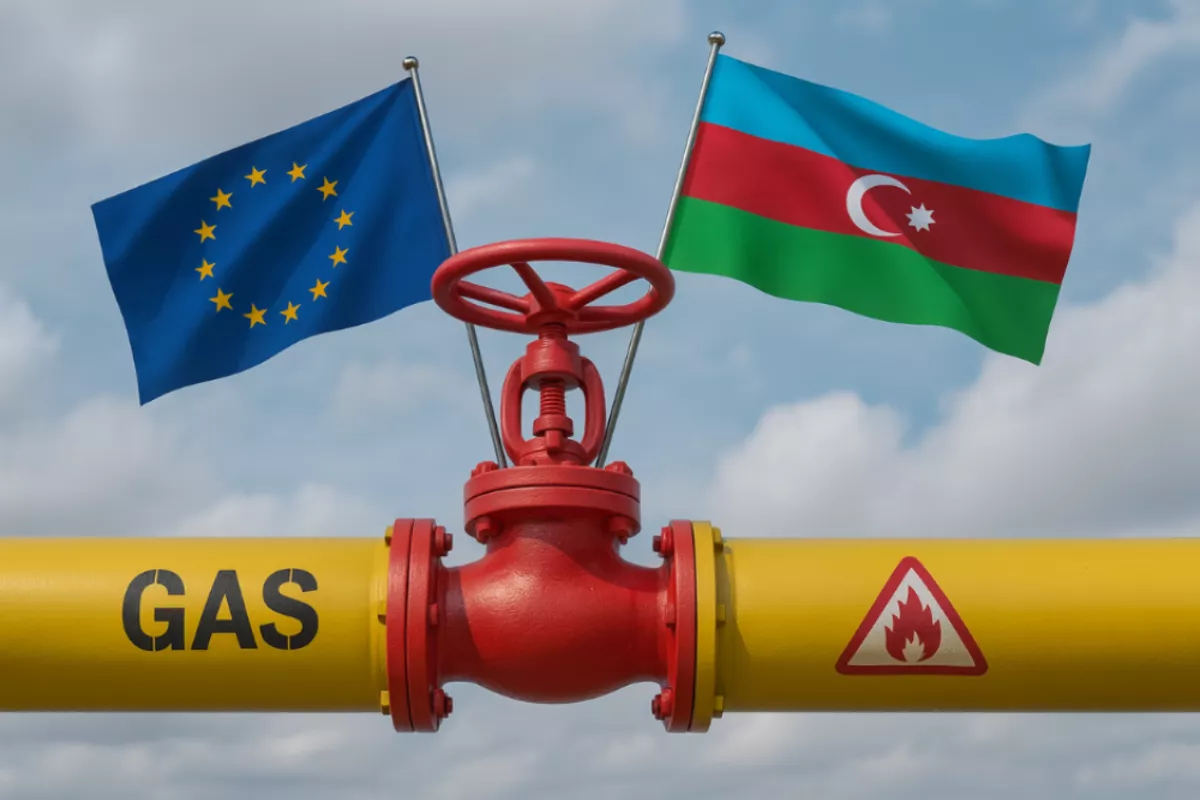
In January, SOCAR Marked A Quiet But Significant Milestone As Azerbaijani Gas Began Reaching Germany And Austria, Bringing The Total Number Of Countries Importing Gas From Azerbaijan To 16.
While on the surface this appears to be a routine expansion of export markets, the move carries far deeper implications, signaling Azerbaijan’s growing role as a strategic cornerstone in Europe’s evolving energy and geopolitical landscape.
The wider context is clear. Russia’s war against Ukraine upended Europe’s long-held energy assumptions and exposed the risks of relying too heavily on a single supplier. As Brussels scrambled for alternatives, Azerbaijan shifted from a supplementary source to a strategic one. The Southern Gas Corridor, anchored by the Trans Adriatic Pipeline (TAP) and the Trans Anatolian Natural Gas Pipeline (TANAP), enables Baku to deliver gas directly to European markets while bypassing both Russia and Iran. Few energy routes today offer such a combination of commercial sense and geopolitical significance.
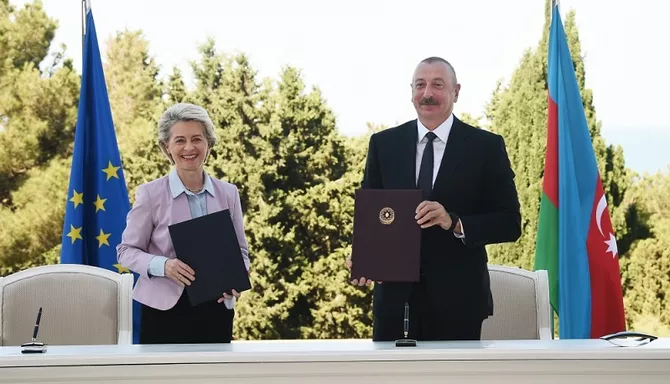
Photo: AZERTAC This shift was soon formalized politically. In 2022, Azerbaijan and the European Union signed a strategic partnership memorandum committing to double Azerbaijani gas exports to Europe to 20 billion cubic meters by 2027. Since then, supply volumes have continued to grow. In 2025, Azerbaijan produced 51.5 bcm of gas, a 2.4 percent increase compared to the previous year. Total exports reached 25.2 bcm, with Europe accounting for roughly half - 12.8 bcm. Italy, Greece, Bulgaria, Romania, Hungary, Serbia, Slovenia, Croatia, Slovakia, and North Macedonia form the core group of buyers, now joined by Austria and Germany through TAP.
Infrastructure remains the decisive variable in this equation. TAP currently carries up to 10 bcm annually, with phased expansion planned from 2026 onward. TANAP ensures stable transit through Türkiye, reinforcing the corridor’s reliability. In 2025 alone, exports to Türkiye amounted to 9.6 bcm, while Georgia received 2.3 bcm. New commercial agreements, such as the two-year supply contract with Hungary’s MVM Group starting in 2026, underscore that demand for Azerbaijani gas is not merely political, but firmly market-driven.
For Europe, the implications are immediate and tangible. In 2025, the EU lost approximately 15 bcm of Russian gas following the expiration of the Ukraine transit agreement. Azerbaijani supplies do not replace Russian volumes in full, but they meaningfully mitigate the shortfall. More importantly, they come from a supplier that has demonstrated reliability under pressure. That 10 of the 16 importers of Azerbaijani gas are EU member states speaks quietly but clearly about trust.
Photo: Azernews For Azerbaijan, the benefits extend well beyond export revenues. Gas has become a multiplier of political influence across Southern and Central Europe. Energy partnerships with Hungary, Slovakia, and Austria reinforce broader diplomatic ties, while cooperation with Türkiye through TANAP strengthens the Ankara-Baku axis as a stabilizing force in Eurasian energy transit. Ukraine, too, stands to gain: Azerbaijani gas routed via Bulgaria and Romania could offer Kyiv partial relief from the loss of Russian transit, preserving its relevance in Europe’s energy architecture.
Looking ahead, most projections point upward. Exports to Europe could rise to 13-14 bcm as early as 2026, driven by TAP expansion and new supply contracts. The 20 bcm target for 2027 remains achievable, but not automatic. It will require substantial upstream and infrastructure investment, estimated at $41 billion, across fields such as Absheron, Umid, and Shah Deniz. This is not merely a technical challenge; it is a strategic test of whether Europe is prepared to treat Azerbaijan as a long-term partner rather than a temporary solution.
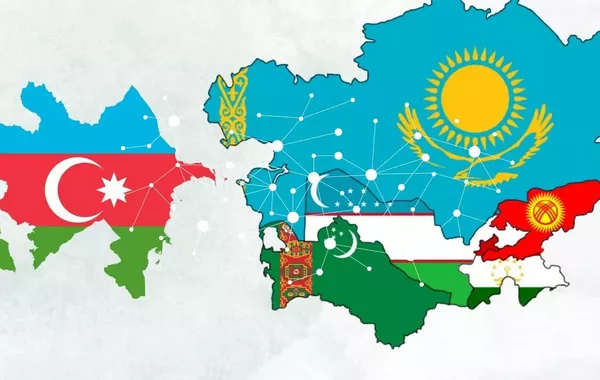
Yet energy is only part of the picture. In recent years, Brussels has demonstrated growing interest in Central Asia’s resources and connectivity potential. Access to that space inevitably runs through Azerbaijan, which functions as a geographic and political bridge between Europe and Central Asia. Normalizing and deepening relations with Baku is therefore not optional - it is structural.
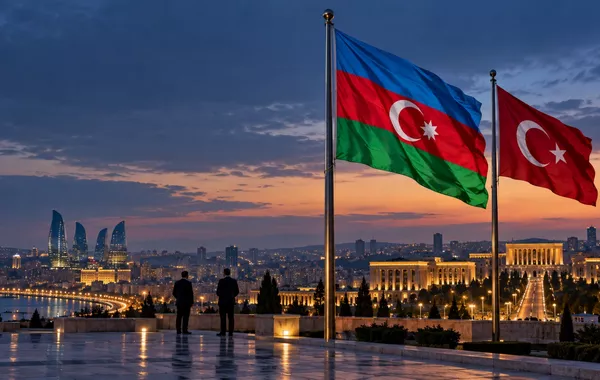
From this perspective, President Ilham Aliyev's participation in the 6th European Political Community summit in Tirana was more than diplomatic protocol. With leaders from 44 European countries in attendance, Azerbaijan’s presence symbolized its integration into Europe’s evolving geopolitical architecture. The decision to host the European Political Community summit in Azerbaijan in 2028 further confirms this shift. Trust, after all, is rarely expressed more clearly than through hosting rights.
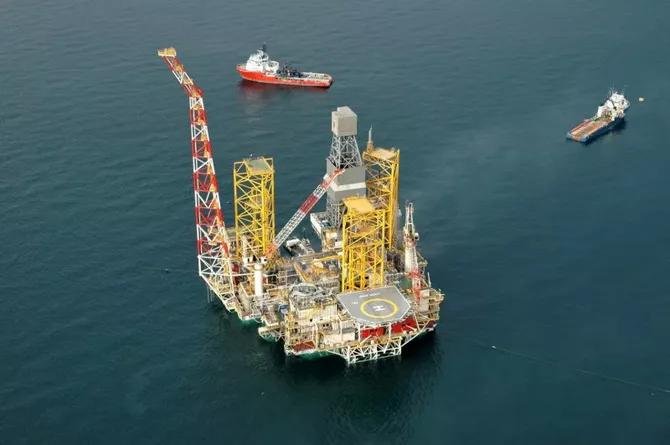
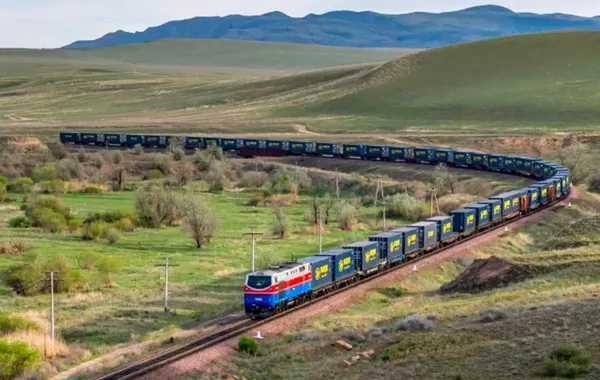
Photo: bp-Azerbaijan Beyond energy, the EU increasingly views Azerbaijan as a linchpin of the Middle Corridor connecting China and Europe. Baku’s transport infrastructure, combined with its ability to pursue a balanced, multi-vector foreign policy, makes it indispensable to Europe’s broader strategic calculus. In an era of intensifying competition with Russia and China, Azerbaijan’s strategic autonomy has become an asset rather than a liability.
The Southern Gas Corridor, once framed largely as a commercial infrastructure project, has thus evolved into a strategic artery of Europe’s energy and geopolitical resilience. Its importance lies not only in volumes delivered, but in the logic it embodies: diversification without dependence, connectivity without coercion, and partnership without political conditionality. At a time when energy has become a weapon and supply chains a vulnerability, the Southern Gas Corridor represents a rare example of predictability in an increasingly volatile environment.
As Europe recalibrates its long-term energy and foreign policy priorities, Azerbaijan’s role is no longer peripheral or transactional - it is systemic. Baku provides not just gas, but strategic optionality: an alternative route, an alternative partner, and an alternative model of engagement in a region where choices are narrowing. Europe’s evolving geopolitical architecture cannot function effectively without Azerbaijan as one of its load-bearing pillars. From energy security to transcontinental connectivity, from Central Asian outreach to strategic autonomy vis-à-vis Russia and China, Azerbaijan is no longer reacting to European priorities - it is helping shape them.