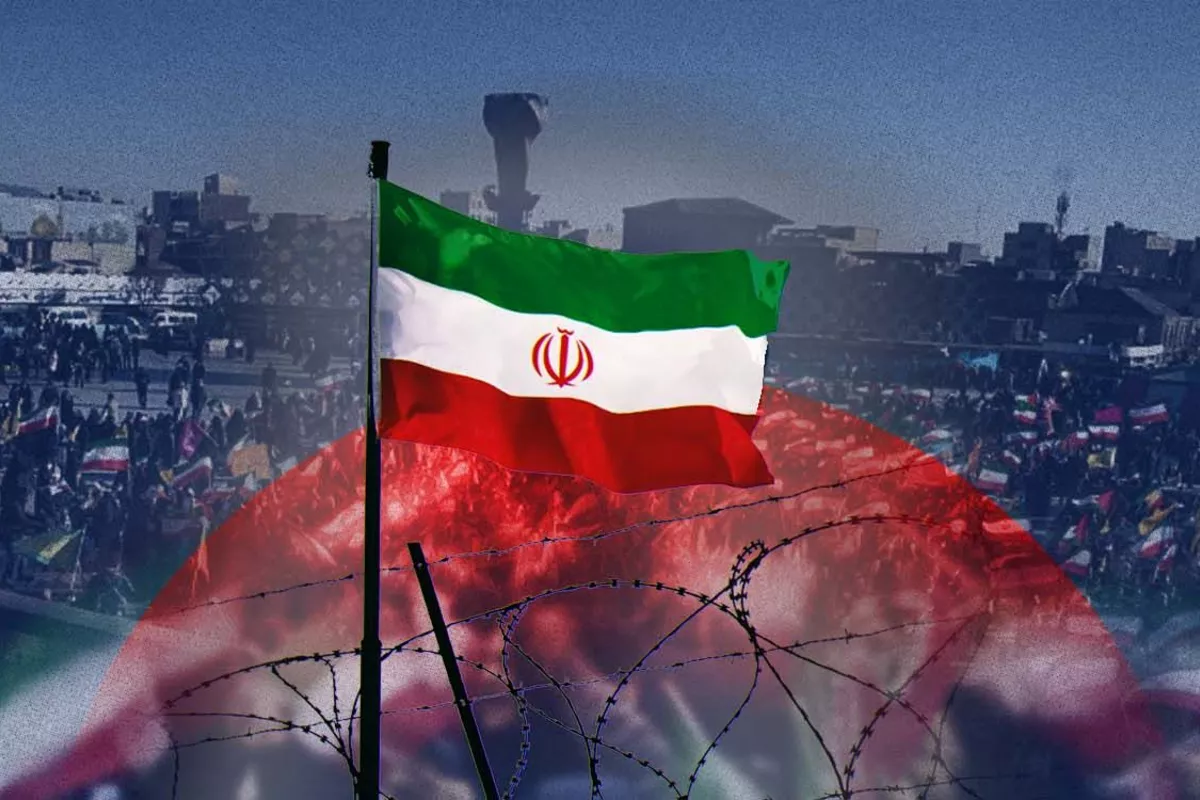
For decades, Iran has portrayed itself as a defender of the Islamic world. Iranian leaders have repeatedly claimed that Tehran stands at the forefront of protecting Muslim nations from external pressure and defending the interests of Muslims globally. This narrative has been central to the ideological messaging of the Islamic Republic since the 1979 revolution.
However, the geopolitical reality in the Middle East tells a far more complex story. Iran’s policies over the past four decades suggest that the country’s strategic ambitions have been driven less by a desire to defend the Muslim world and more by a goal of expanding political influence and shaping the regional balance of power.
Understanding this distinction is essential for analyzing Iran’s actions across the Middle East and the broader Islamic world.
Iran has never truly sought to defend the Islamic world. Its strategic objective since the 1979 Islamic Revolution has been far more ambitious, and far more political. The goal was not protection but dominance.
In Azerbaijan, this reality has long been understood. Iran’s position during the Armenian-Azerbaijani conflict over Karabakh clearly demonstrated that Tehran’s actions did not always align with the image of a country acting in defense of Muslim solidarity.
Since the Islamic Revolution, Iran’s leadership has pursued a broader geopolitical vision: building a system of ideological and political influence that would allow Tehran to position itself as a central power within the Islamic world.
At the core of this strategy is the idea of consolidating Shiite communities across the region under Iran’s influence. Supreme Leader Ali Khamenei and the ideologues of the Islamic Republic view Shiite populations across the Middle East as a potential geopolitical network through which Iran can expand its strategic reach.
To a certain extent, this strategy has produced results. Iran has established significant influence in several parts of the Middle East through allied movements and proxy structures.
Yet one major Shiite country has remained outside Tehran’s sphere of control - Azerbaijan. Despite religious similarities with Iran’s Shiite majority, Azerbaijan has consistently pursued an independent political course and has never subordinated its policies to Tehran’s ideological agenda.
Iran has also attempted to influence Shiite communities in other countries. In the eastern provinces of Saudi Arabia, for example, where there is a significant Shiite population, Tehran has historically sought to support opposition or anti-government movements to expand its geopolitical leverage.
This reveals the real logic of Iran’s strategy:
First, consolidate influence over Shiite populations across the region.
Second, transform that influence into political dominance across the broader Islamic world and impose Tehran’s political will.
Arab states understand this dynamic well. For many of them, Iran’s claims about defending the Islamic world have long been viewed with skepticism.
In fact, one of the key motivations behind the emergence of the Abraham Accords was the growing fear of Iran among Arab governments. These agreements opened the door to normalization between Israel and several Arab states and created a new framework for regional security cooperation.
Israel signed official agreements with the United Arab Emirates and Bahrain. Even with Saudi Arabia, despite the absence of a formal treaty, there is significant interaction and security coordination.
Israeli technologies have been integrated into certain defense systems, intelligence cooperation has expanded, and economic contacts have grown steadily.
During conversations with Israeli business leaders operating in the Gulf, particularly in the UAE, an interesting strategic logic often emerges in discussions with local officials.
They openly acknowledge that the presence of Israeli business and technology is also seen as an additional security factor. If Israel has substantial economic and technological interests in the region, it is more likely to defend those interests in the event of Iranian aggression.
For this reason, many Arab states view Iran not as a defender of the Islamic world but as a source of regional instability.
Azerbaijan is also well aware of this reality. Relations between Baku and Tehran have long been complicated and, at times, tense. Iranian military exercises near Azerbaijan’s borders and periodic political pressure from Tehran have reinforced these concerns.
When analyzing Iran’s actions, it is therefore necessary to view them through the prism of the ideological doctrine formed after the Islamic Revolution-a doctrine that envisions Iran as the central power in the Islamic world.
At the same time, the internal situation within Iran itself remains fragile.
Reliable sociological data from Iran is difficult to obtain, but many analysts estimate that only about 10-15 percent of the population actively supports the Islamic system and is willing to defend it.
Meanwhile, roughly 70-75 percent of Iranians oppose the current political system and would prefer significant political change.
This means the regime largely maintains its authority through coercion. The world has repeatedly witnessed severe repression directed against protest movements inside the country.
In addition, a large Iranian diaspora abroad overwhelmingly opposes the Islamic Republic.
Taken together, these factors indicate that there is considerable internal potential for political transformation within Iran.