Usually, totalitarian regimes rely on ideology in addition to repression and material benefits for their supporters. In Iran’s case, this ideology is religion, with political power sanctified by the highest spiritual authority.
Alongside the Shiite branch of Islam, other religious communities are also present in the country. Moreover, the factor of ethnic identity is becoming increasingly significant. It is precisely this factor that the United States may try to use to achieve its objectives.
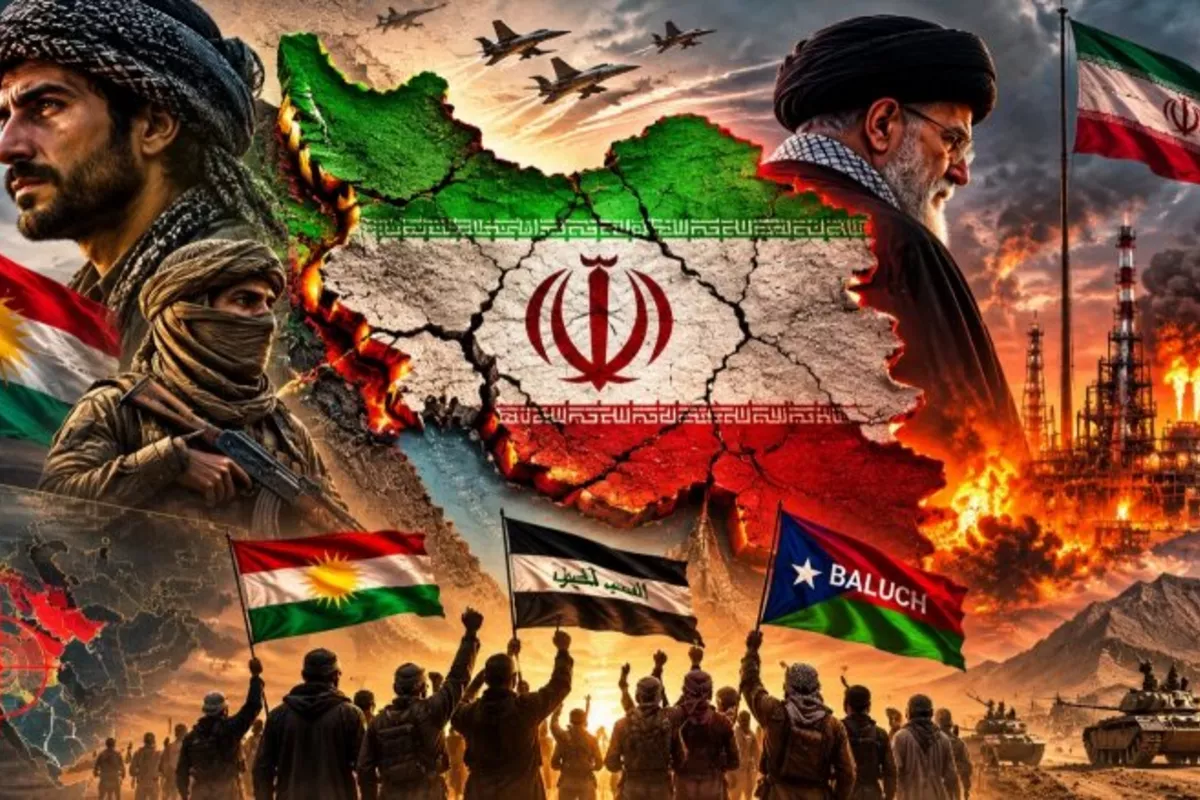
Particular attention in this context is being paid to separatist movements among Kurds, Baloch, Arabs, and other groups. National and religious minorities have for decades complained of systematic discrimination by the authorities. As Javid Rehman, the UN Special Rapporteur on the situation of human rights in Iran, has stated, many of them are unable to find work, eat properly, or receive adequate medical care.
According to the expert, the most vulnerable segments of the population are in the worst situation.
“Members of minorities, including Christian converts, Arabs, and Sunni Muslims, face discrimination, especially in employment and education,” he said.
At the same time, their suffering is not limited to economic deprivation. They are subjected to political pressure, repression, and serious human rights violations. According to the special rapporteur, representatives of ethnic and religious minorities are disproportionately represented among those sentenced to death on charges brought by the security services, as well as among political prisoners.
According to Abdullah Mohtadi, leader of the Komala Party of Iranian Kurdistan, “These are the executioners of the Iranian people, criminals, an entire gang of criminals.” He noted that his party supports “a democratic and secular system” that respects the rights of Kurds and other national minorities.
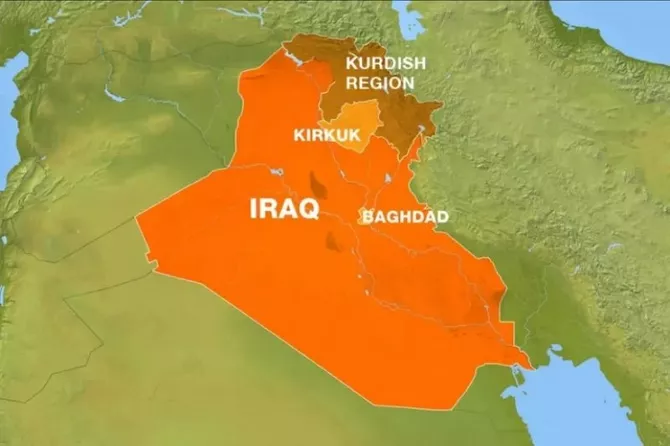
Kurds make up around 10 percent of Iran's population and have harboured serious grievances against the Islamic Republic for decades. At one point, Ayatollah Khomeini declared a “holy war” against Kurdish organisations, calling them “infidels” and “enemies of the state.” A significant part of Iran’s Kurdish population lives in the west and northwest of the country, while thousands of exiles have settled in the autonomous Kurdistan Region in northern Iraq.
Credit: Al Jazeera
Commenting on the joint US-Israeli military campaign against Tehran launched on 28 February, Mohtadi said he supported efforts to weaken the Iranian regime, but warned that “regime change is a matter for the Iranian people themselves.”
“If the American administration weakens the regime sufficiently, if it defeats its security structures and its military-industrial base, but not civilian infrastructure, then perhaps this will help the Iranian people rise up at some point,” he said.
In late February 2026, reports emerged that the CIA was arming and training Iranian Kurdish units in Iraq. In early March, US President Donald Trump, judging by his statements, appeared to support the idea of a ground offensive by Iranian Kurds. However, just a few days later, he told journalists: “I don’t want the Kurds entering Iran… This war is already complicated enough.”
In contrast to this statement, Reuters reported that the United States was holding talks with Kurdish field commanders in the Middle East, including Syrian Kurds, in an effort to encourage them toward a ground operation against Iran. The issue concerns the formation of strike groups that could use military equipment from US bases in Iraqi Kurdistan, as well as from military bases abandoned by the Americans in neighbouring Syria.
At present, around 12 million Kurds live in Iran, whose total population is approximately 83 million. The largest number of ethnic Kurds in Iran reside in the northwestern provinces, including Kurdistan, Kermanshah, West Azerbaijan, and Lorestan.
If the Americans and their Israeli allies manage to reach an agreement with Kurdish field commanders, it is quite obvious that any external incursion would target precisely those Iranian provinces where ethnic Kurds form the majority. Accordingly, such an operation would likely be launched from Iraqi territory, and it would cost the Americans little to declare that they do not consider these provinces to be part of Iran.
If their plan involving Kurdish armed groups, which would most likely operate alongside American private military contractors and so-called “volunteers”, is implemented, modern Iran could lose around 18 percent of its territory in the northwest and west.
The Iranian army and the Islamic Revolutionary Guard Corps would obviously resist any ground invasion. At present, the estimated size of the IRGC is around 180,000-200,000 personnel. The official size of the Iranian army is 625,000 personnel. Together, this represents a very significant force, but, as previous events have shown, it is effectively deprived of aviation capabilities, which complicates the fight against guerrilla groups.
This raises a perfectly reasonable question: how successfully can the IRGC and the Iranian army resist small, mobile armed groups that Tehran’s opponents seek to use against the Islamic Republic?
Moreover, given the tactics usually employed by the United States, Iran could be attacked not only from the directions discussed above, but also, for example, from the sea - through an amphibious landing in one of the country’s most unstable provinces, Sistan and Baluchestan, where separatist sentiments have been cultivated for decades.
Therefore, it is quite obvious that a ground operation by Iran’s opponents would become a full-scale challenge to Iranian statehood, even if it were carried out by limited forces. It should also be noted that ethnic minorities, taken together, constitute a majority. True, not all of them seek to break up Iran. Most simply oppose the current authorities.
According to Israeli expert Professor Mordechai Kedar, “It is necessary simply to unite three ethnic groups - the Baloch in the south, the Kurds in the northwest, and the Arabs between them - against the regime, which would deprive it of the sources of oil and gas located in the Arab and Kurdish regions. In this way, the authorities would be deprived of the sources of financing needed to restore all their ambitious projects aimed at regional domination.”
“At the same time, the Baloch, who are connected with their brothers in Pakistan and Afghanistan, would be able to secure a special status for themselves. Incidentally, both the Baloch and the Kurds are Sunnis. Yes, the armed formations of these minorities do not hold military parades every day, but they rely on a population that is tired of the current authorities,” he said.
The expert added that, with air support from Israel and the United States, they would be able to fight successfully against the IRGC regime in the north and south.
“And there is one more important point. Between the Kurds and the Baloch lies the area inhabited by the Arab population. This area is Iran’s storehouse of gas and oil. These resources also extend northward toward the Kurdish ‘sector.’ Thus, all sources of financing for the regime would fall within the zone of rebel activity, and even if the rule of the ayatollahs survives, without income from hydrocarbon sales it would no longer pose any threat to its neighbours,” he noted.
“Of course, a united Iran would be better both for its peoples and for neighbouring countries, but for that to happen, this state must abandon expansion and move toward peace, democracy, and good-neighbourly relations,” he added.