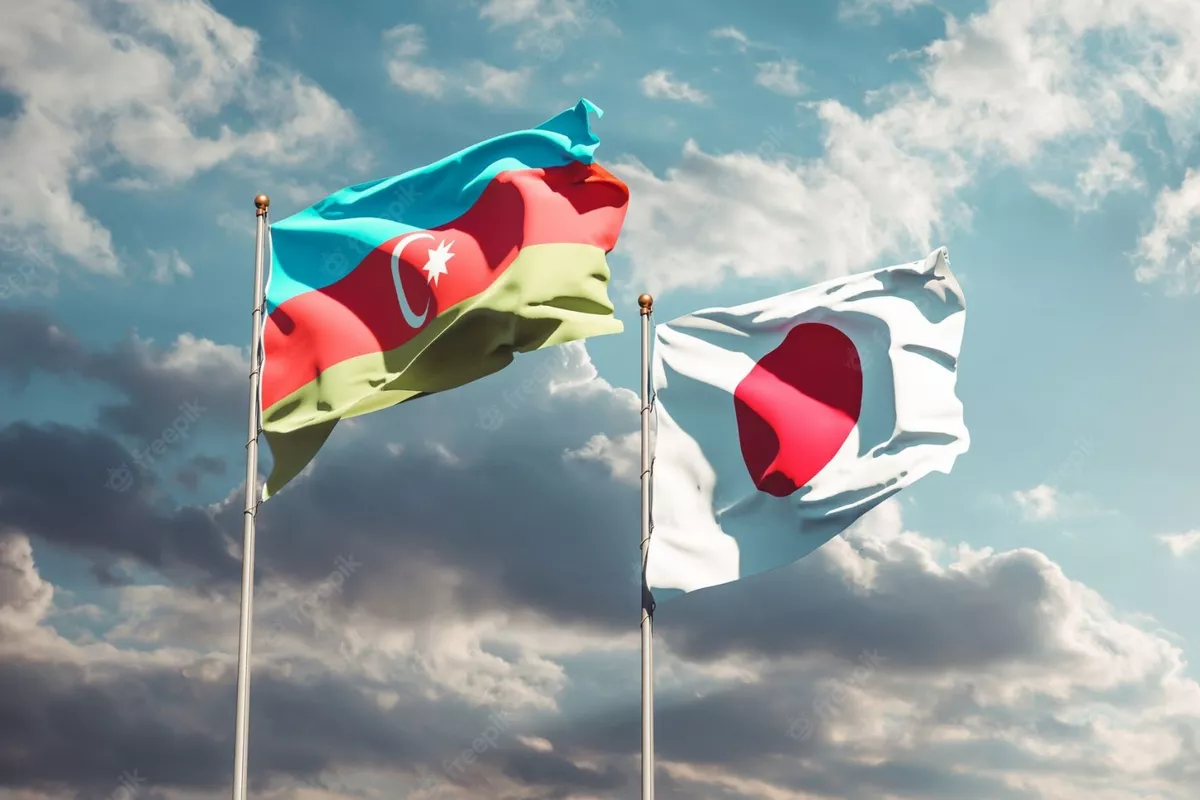
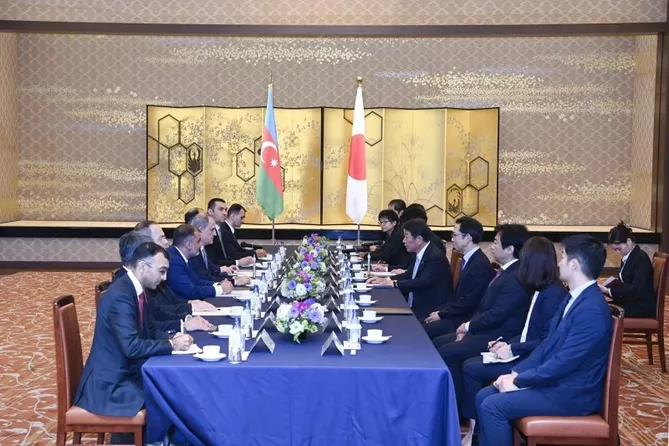
The recent talks between Azerbaijani Foreign Minister Jeyhun Bayramov and Japanese Foreign Minister Toshimitsu Motegi in Tokyo have highlighted an important shift in Azerbaijan’s international energy profile. For many years, Baku was viewed mainly through the prism of European energy security, especially after the launch of the Southern Gas Corridor and the growing demand in Europe for non-Russian gas supplies. But Japan’s renewed interest in energy cooperation with Azerbaijan shows that Baku’s role is no longer limited to Europe. Azerbaijan is increasingly being seen as a reliable energy partner for major Asian economies as well.
This is not a symbolic development. It reflects a broader transformation in global energy politics. Japan is one of the world’s largest energy importers and remains highly sensitive to disruptions in the Middle East, maritime routes and global oil and gas markets. The fact that Tokyo is paying closer attention to Azerbaijan is therefore significant. It means that Baku is being evaluated not only as a regional producer or a European supplier, but as part of a wider network of reliable energy and connectivity partners.
During the talks in Tokyo, the Japanese side stressed its interest in further strengthening cooperation with Azerbaijan, noting that Japanese companies had purchased Azerbaijani crude oil in response to tensions in the Middle East. This detail is important. It shows that Azerbaijan is not only a long-term infrastructure partner, but also a flexible supplier at moments of geopolitical uncertainty. For a country like Japan, which imports most of its energy resources, reliability and diversification are not abstract concepts. They are matters of national security.
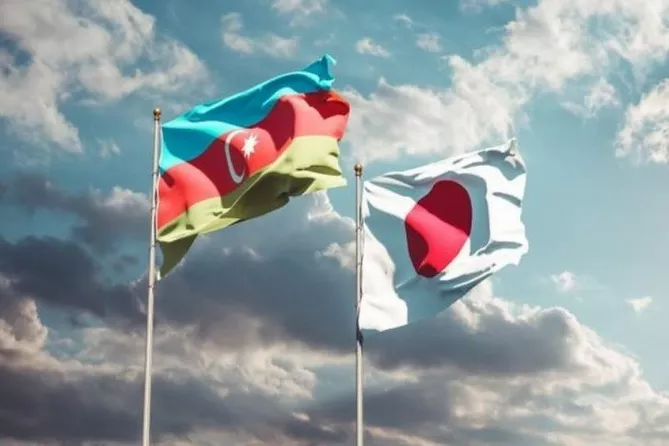
Source: Azerbaijan's Foreign Ministry The economic figures also show that the Azerbaijan-Japan relationship is becoming more practical. In 2024, bilateral trade turnover reached $428 million, while in the first four months of 2025 it stood at $131 million. In the first quarter of 2025 alone, trade between the two countries amounted to $87.9 million, marking a 42% increase compared with the same period of the previous year. This is still not a massive figure compared with Azerbaijan’s trade with Türkiye, Italy, Russia or China, but the growth trend is important. It shows that economic ties with Japan are not limited to diplomatic declarations.
The structure of trade also tells an important story. In the first quarter of 2025, Azerbaijan’s exports to Japan reached $3.1 million, while imports from Japan stood at $84.8 million. This imbalance reflects the current nature of bilateral trade: Japan mainly exports industrial goods, vehicles, machinery, equipment and high-value technological products, while Azerbaijan’s exports remain narrower. But this also means there is significant room for expansion, especially if energy, green technologies, petrochemicals, transport infrastructure and industrial cooperation become deeper parts of the relationship.
According to Japanese data, in 2025 Japan’s exports to Azerbaijan included iron and steel products, motor vehicles, machinery, rubber tires and pumps, while imports from Azerbaijan included aluminum and aluminum alloys, crude materials such as natural graphite and kaolin, re-imported goods and wine. This shows that the economic relationship already goes beyond oil and gas, even though energy remains its strategic foundation. The challenge now is to transform this trade from a narrow exchange of goods into a broader partnership involving investment, technology and long-term industrial cooperation.
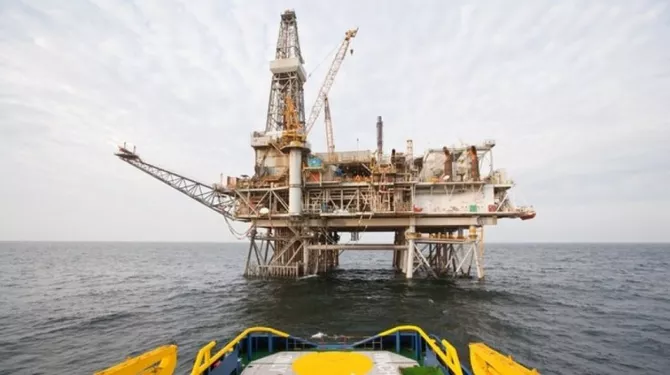
Japanese involvement in Azerbaijan’s economy is not new. It began in the 1990s, when Japan became one of the first major Asian economies to support Azerbaijan’s energy strategy. Japanese companies took part in the development of the country’s flagship oil and transport projects, including the Azeri-Chirag-Gunashli oil field and the Baku-Tbilisi-Ceyhan pipeline.
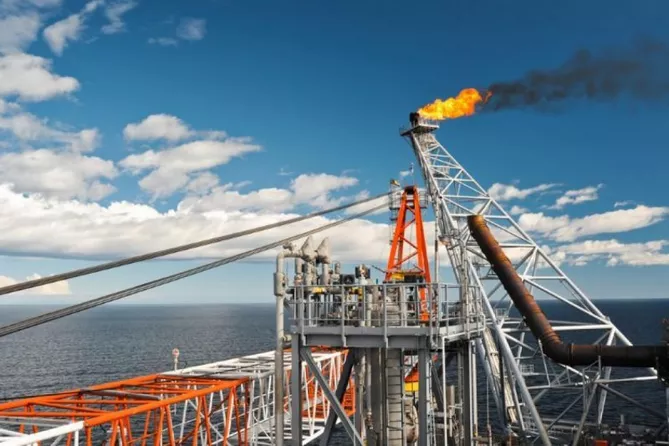
Today, Japan’s presence in Azerbaijan is most visible in the energy sector. INPEX, Japan’s largest exploration and production company, participates in the ACG oil fields through INPEX Southwest Caspian Sea Ltd., holding a 9.31% stake. Itochu also remains part of the ACG project with a 3.65% share. In the Baku-Tbilisi-Ceyhan pipeline, which carries Caspian crude to the Mediterranean port of Ceyhan, Itochu holds 3.4%, while INPEX BTC Pipeline Ltd. holds 2.5%. These are not symbolic stakes. They place Japanese companies inside the core infrastructure that connects Azerbaijani oil with global markets.
Source: SOCAR Other Japanese trading and industrial groups have also been involved in Azerbaijan over the years. Mitsubishi, Mitsui, Marubeni and Sojitz have been linked to energy, infrastructure and industrial cooperation projects in the country. This shows that Japan’s role in Azerbaijan is broader than crude oil purchases alone. It includes technology, engineering, infrastructure, equipment supplies and project financing.
Japan’s financial contribution has also been substantial. According to Japan’s Ministry of Foreign Affairs, Tokyo’s official development assistance to Azerbaijan up to fiscal year 2023 included 101.162 billion yen in loans, 10.693 billion yen in grants and 3.814 billion yen in technical cooperation. These funds supported areas such as power generation, water supply, sanitation, healthcare, agriculture and human resource development. In dollar terms, earlier Azerbaijani investment-promotion materials described JICA-financed loan projects in Azerbaijan as amounting to nearly $1 billion.
This background is important because it shows that Azerbaijan-Japan energy cooperation is not starting from zero. Japanese capital, technology and corporate expertise have already been present in Azerbaijan’s strategic sectors for decades. The current dialogue in Tokyo is therefore not a one-time diplomatic gesture, but the continuation of a long-term partnership that can now expand into green energy, hydrogen technologies, energy efficiency, infrastructure modernization and industrial cooperation.
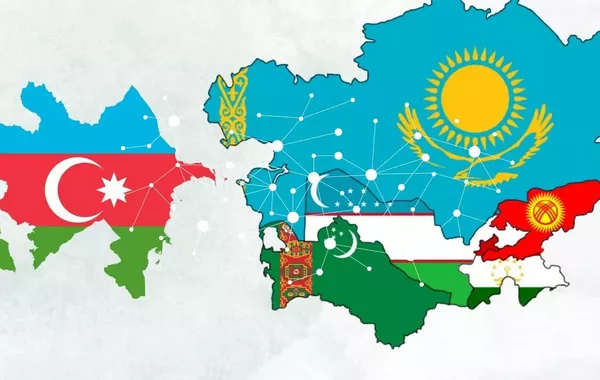
Azerbaijan’s advantage lies precisely in this combination: resources, geography, infrastructure and political reliability. The country is located at the crossroads of the Caspian region, the South Caucasus, Türkiye, Central Asia and Europe. It has access to significant oil and gas reserves, established export infrastructure and a record of implementing large-scale international energy projects with Western and regional partners. This makes Azerbaijan attractive not only for Europe, but also for countries in Asia that are looking for stable and politically predictable energy links.
For Europe, Azerbaijan’s importance became especially clear after Russia’s invasion of Ukraine and the subsequent energy crisis. The Southern Gas Corridor, which connects the Caspian region with European markets through Türkiye, became one of the key routes for diversifying gas supplies. Azerbaijani gas is already reaching a growing number of European countries, and SOCAR has expanded its presence into Central Europe, including Germany and Austria. This confirms that Baku can play a practical role in reducing excessive dependence on a single supplier.
Source: SOCAR But the Japan dimension adds a new layer to this story. While Europe looks at Azerbaijan mainly through the lens of gas diversification, Japan’s interest is more connected to oil, supply stability, investment, technology and broader economic security. Tokyo has long experience in working with Azerbaijan’s energy sector. Major Japanese companies, including Itochu and Inpex, have been involved in oil and gas projects in the country. This history gives the current dialogue a practical foundation rather than making it a sudden diplomatic gesture.
The timing is also important. The Middle East remains one of the most vulnerable regions for global energy flows. Any escalation there can affect oil prices, shipping routes, insurance costs and long-term supply calculations. For Japan, which depends heavily on imported energy, diversifying sources is not optional. Azerbaijan cannot replace the Middle East in Japan’s energy structure, but it can serve as an additional, reliable and politically stable source in a more uncertain global environment.
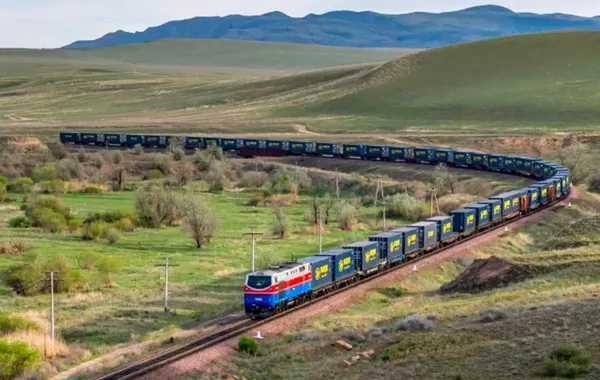
This is why Baku’s energy role is expanding from a regional function into a wider strategic function. Azerbaijan is no longer just a producer exporting hydrocarbons. It is becoming an energy connector. Through pipelines, ports, the Caspian Sea, the Middle Corridor and partnerships with Türkiye and Georgia, Azerbaijan is linking different parts of Eurasia. Energy, transport and logistics are increasingly becoming parts of the same geopolitical equation.
This broader connectivity is especially relevant for Asian economies. Japan, South Korea, China and other major Asian players are all watching the transformation of Eurasian transport and energy routes. The disruption of traditional supply chains, tensions in the Middle East, sanctions against Russia and growing competition over critical infrastructure have made alternative routes more important. Azerbaijan’s position along the Middle Corridor gives it additional strategic value beyond oil and gas.
Another important factor is the green energy agenda. Azerbaijan is actively developing renewable energy projects and positioning itself as a future exporter of green electricity. The Caspian-Black Sea-Europe Green Energy Corridor, as well as plans for new electricity links involving Azerbaijan, Georgia, Türkiye and European partners, show that Baku wants to remain relevant not only in the hydrocarbon era, but also in the low-carbon transition. For Japan, a country deeply interested in energy technology, decarbonization and stable supply chains, this opens another field for cooperation.
Japanese companies can bring technology, investment, engineering expertise and experience in energy efficiency. Azerbaijan, for its part, can offer resources, location, infrastructure and access to regional platforms. The combination could be useful not only in traditional oil and gas, but also in petrochemicals, renewable energy, hydrogen-related technologies, power infrastructure and digital connectivity. This is why the Azerbaijan-Japan energy dialogue should not be viewed narrowly. It has the potential to grow into a broader strategic economic partnership.
There is also a diplomatic dimension. Azerbaijan has built a reputation as a country able to maintain balanced relations with different power centers. It works with Europe, Türkiye, Central Asia, the Gulf states, China and now increasingly with East Asian partners. For Japan, which seeks reliable partners in a fragmented international environment, Azerbaijan offers a stable and pragmatic platform in a strategically important region.
Source: Flickr At the same time, Baku benefits from diversifying its own partnerships. Europe will remain a key destination for Azerbaijani energy exports, but relying only on one direction would limit Azerbaijan’s strategic flexibility. Stronger ties with Japan allow Baku to expand its global profile, attract investment and deepen cooperation with one of the world’s leading technological economies. This is especially important as Azerbaijan seeks to move from being mainly an energy exporter to becoming a broader logistics, industrial and green energy hub.
The numbers remain modest when compared with Azerbaijan’s trade with its largest partners, but the direction is politically important. Japan is not simply buying goods from Azerbaijan; it is looking at the country as a stable partner in a volatile energy environment. For Baku, this opens the door to a more diversified foreign economic strategy. Azerbaijan’s energy diplomacy is no longer only about sending gas to Europe. It is also about attracting Asian technology, investment and long-term political interest.
The Tokyo talks therefore should be seen as part of a larger trend. Azerbaijan’s energy importance is no longer defined only by how much gas it can send to Europe. It is increasingly defined by its ability to offer reliability, connectivity and strategic balance in a world where energy security is becoming more complex. From the Southern Gas Corridor to the Middle Corridor, from crude oil exports to green electricity projects, Azerbaijan is building a multidimensional energy role.
For Japan, cooperation with Azerbaijan is about diversification and resilience. For Azerbaijan, it is about expanding its relevance from Europe to Asia. And for the wider Eurasian region, it is another sign that Baku is becoming one of the key energy and connectivity nodes between East and West.
In a global environment marked by wars, sanctions, supply disruptions and energy transition, reliable partners matter more than ever. Azerbaijan has already proven its importance for Europe. Now Japan’s growing interest shows that Baku’s energy role is entering a wider geography. The message is clear: Azerbaijan is no longer just a Caspian energy producer. It is becoming a strategic energy bridge between Europe and Asia.