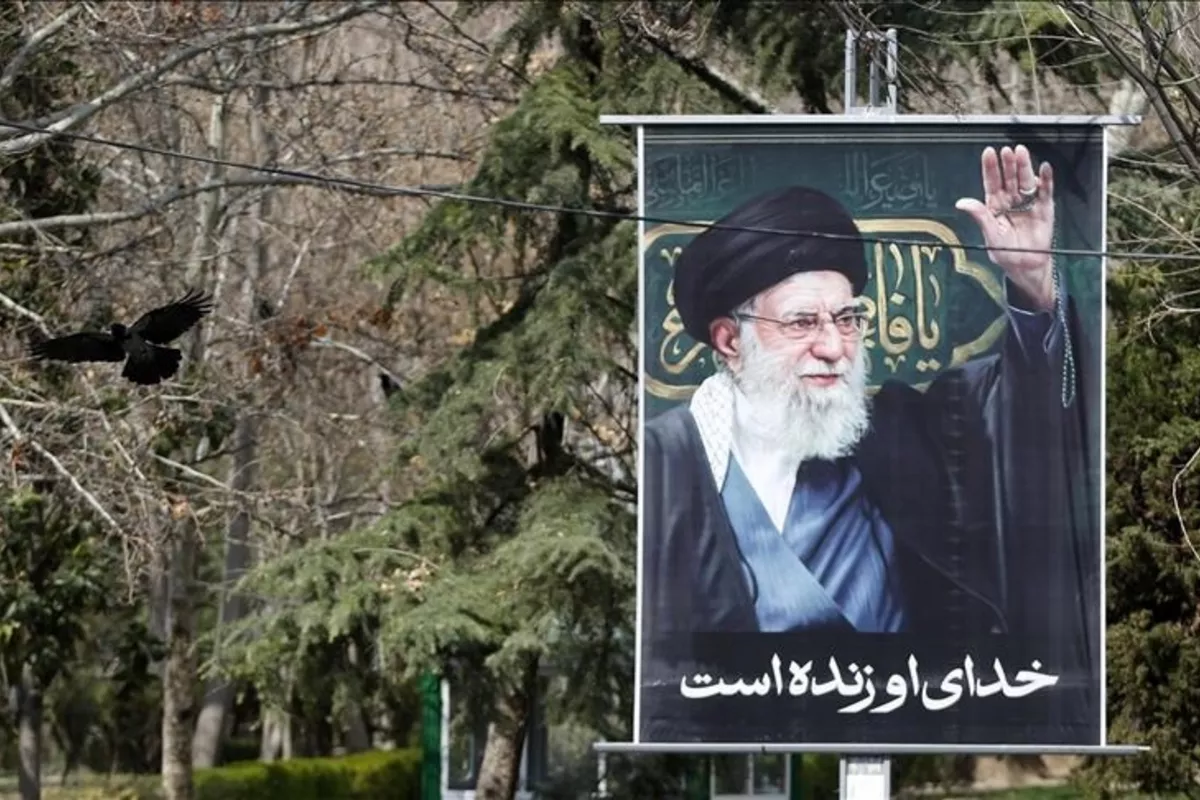
Anadolu Agency has published an analysis examining how the death of Ali Khamenei could reshape Iran’s internal power dynamics.
The Caspian Post republishes the article.
The passing of Iran's Supreme Leader, Ayatollah Ali Khamenei -- the most influential figure remaining from the Islamic Republic's founding generation -- undoubtedly marks a historic turning point for the regime. For nearly 37 years, Khamenei functioned as the ultimate arbiter within the Iranian political system. His critical role in the state's operation stemmed not only from his vast constitutional authority but also from his ability to balance the competing power dynamics between various institutional and political factions. As a result, his death initially fueled perceptions that Iran had entered a leadership vacuum, bringing with it the imminent risk of systemic collapse.
How Will the Post-Khamenei System Function?
Initial developments on the ground suggest that, rather than the sudden systemic collapse many expected, a pre-designed transition mechanism was rapidly activated. In accordance with Article 111 of the Iranian Constitution, the swift formation of a tripartite Provisional Leadership Council -- composed of President Masoud Pezeshkian, Chief Justice Gholam-Hossein Mohseni-Ejei, and Assembly of Experts member Ayatollah Alireza Arafi -- demonstrates that the state was institutionally prepared for such a crisis.
This reality highlights a common misconception regarding the Iranian political system. Contrary to frequent assumptions, the Islamic Republic is not a personalized regime dependent solely on the will of a single leader. Instead, the system is built upon a multi-layered power architecture distributed among the clerical establishment, the security bureaucracy, the Islamic Revolutionary Guard Corps (IRGC), various constitutional bodies, and expansive networks of economic foundations. The institutional apparatus surrounding the Office of the Supreme Leader, which expanded under Khamenei to include thousands of personnel and affiliated economic and ideological networks, is specifically structured to ensure this very institutional continuity.
Crises Iran has faced in recent years have served as a practical test of the system's institutional resilience. During the 12-day Iran-Israel conflict in June 2025 -- despite the targeting of critical figures within the military command structure -- Iran's ability to sustain its operations proved that its decision-making processes do not rely on a single actor. Similarly, the current loss of leadership has not produced the strategic fallout many anticipated. In this context, rather than a regime collapse, Khamenei's death has triggered elite consolidation and a shift toward security-centric decision-making.
External military pressure often forces internal regime rivalries to the background, as visible divisions among the elite create vulnerabilities that could both invite foreign intervention and trigger domestic instability. Therefore, the current alignment among the elite should be viewed less as a structural consensus and more as a cautious pursuit of equilibrium imposed by crisis conditions. It is a historically documented phenomenon that revolutionary regimes tend toward centralization rather than fragmentation when under external military duress. In the Iranian case, the fact that this transition is occurring under wartime conditions has suppressed the likelihood of sudden political transformation, instead bringing the system’s survival instincts to the fore.
The true uncertainty, however, lies not in the immediate aftermath but in the medium to long term. Khamenei functioned as a central authority, arbitrating between competing ideological and institutional power centers to maintain a strategic equilibrium. With this stabilizing force gone, the selection of a new Supreme Leader transcends mere constitutional procedure; it has evolved into a complex process of elite consensus-building conducted under the extreme pressures of wartime. Consequently, Iran is currently navigating a structural transformation -- a repositioning of its power centers -- rather than an immediate regime collapse.
However, the institutional resilience and elite alignment observed in the short term do not guarantee the regime's long-term stability. Once the transition is complete, latent rivalries over the governance model, economic direction, and foreign policy priorities are likely to resurface.
The Emerging Leadership Profile
The most critical question for the post-Khamenei era is the leadership model the Islamic Republic will ultimately adopt. Current indicators suggest that the system's overriding priority is regime continuity rather than ideological reform. Therefore, the decisive factor in selecting the next Supreme Leader is expected to be a consensus on a candidate who is compatible with existing power dynamics, rather than a search for a figure with independent or overwhelming personal authority.
Ayatollah Alireza Arafi, a member of the Provisional Leadership Council, is a particularly noteworthy figure in this regard. As the head of Iran's clerical educational institutions, Arafi has remained largely detached from overt factional politics, offering a candidate profile that is palatable to both hardline conservatives and more pragmatic actors. Paradoxically, his lack of an independent political base is an asset; the current power centers likely prefer a Supreme Leader who is compatible with the existing system rather than one with a strong, independent mandate.
Similarly, Chief Justice Mohseni-Ejei is frequently cited as a potential successor. His deep-rooted ties to the security apparatus and his history of hardline enforcement make him a compelling choice for the security elite, especially under the exigencies of war. However, such a profile may have a limited capacity to generate broader social legitimacy.
The name of Khamenei's son, Mojtaba Khamenei, also surfaces frequently in potential transition scenarios. Given the influence he has cultivated within the Office of the Supreme Leader and various security circles, he clearly wields significant systemic power. Nevertheless, the Islamic Republic’s framework of institutional legitimacy-coupled with the religious nature of the Office-makes the prospect of hereditary succession a politically sensitive issue. Consequently, regardless of whether Mojtaba Khamenei formally seeks the position, he will remain a pivotal power broker in shaping the post-transition equilibrium.
The deliberations regarding the succession are not confined solely to the clergy. Seasoned political figures such as Ali Larijani, or pragmatic actors like Hassan Rouhani -- who has recently seen a resurgence in visibility -- are emerging as key players. While they may not be direct contenders for the Supreme Leadership, they will be instrumental in shaping the power dynamics of the transition. This indicates that the ultimate decision will not be made within the Assembly of Experts alone; rather, it will be forged through a consensus among the security apparatus, the clerical elite, and influential political networks.
The current environment differs significantly from the post-Khomeini transition of 1989. While the clerical establishment held the decisive hand then, today the security and military institutions -- most notably the IRGC -- wield far greater institutional weight within the political system. Consequently, the personal authority of the next Supreme Leader is unlikely to reach the heights seen under Khamenei.
The current landscape suggests that the transition in Iran will involve much more than a mere change of personnel. In the post-Khamenei era, political authority is likely to become less concentrated in a single individual and more collectively distributed among security institutions and entrenched power networks. While this may result in a relative decline in the Supreme Leader's direct, hands-on role in steering the state, it will likely lead to a broader distribution of decision-making across institutional actors. Therefore, the post-Khamenei period should be viewed not as a rupture for the regime, but as a phase in which the Islamic Republic adapts to crisis conditions by redefining its leadership architecture.