The Caspian Sea region - encompassing Azerbaijan, Kazakhstan, Turkmenistan, Iran, and Russia - has for decades been a central node in global energy geopolitics. Its hydrocarbon endowments - some of the world’s largest oil and gas reserves - have funded national budgets, shaped regional alliances, and underpinned global energy security strategies. Today, even as the world transitions energy systems toward lower carbon futures, the Caspian remains critical: not only as a supplier of oil and gas but also as a testing ground for diversifying export routes and emerging green-energy cooperation.
What complicates this picture is the region’s geopolitical complexity - territorial disputes, great-power competition, and the enduring tug-of-war between diversification and dependency on external markets. These factors intersect in the infrastructure that physically connects Caspian resources to global consumers. Understanding the latest projects and strategic shifts is essential to grasping how the Caspian Sea continues to influence global energy security in 2025-2026.
Fossil Fuels Still First Among Equals
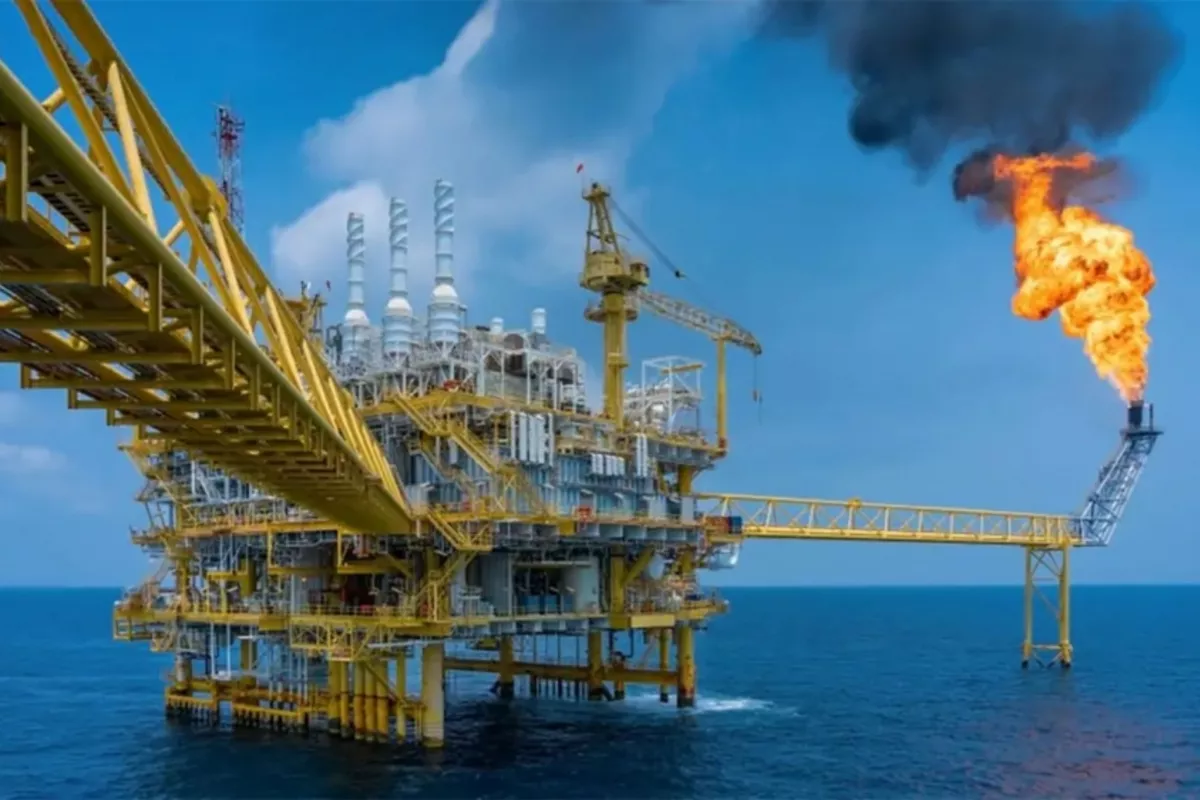
Despite strong global rhetoric on decarbonization, oil and natural gas remain central to the Caspian’s export strategy.
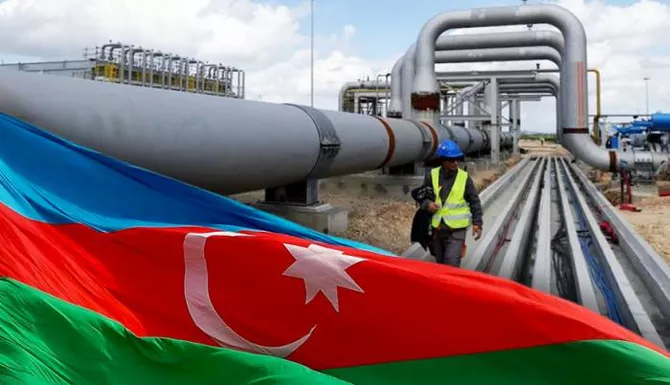
Photo: Shutterstock
Azerbaijan: A Growing Gas Exporter
Azerbaijan has actively expanded its oil and gas sectors and export networks:
Shah Deniz Gas Field: One of the region’s largest gas fields continues to drive exports via the Southern Gas Corridor - which includes the Trans-Anatolian Pipeline (TANAP) and Trans-Adriatic Pipeline (TAP) delivering gas to Türkiye and Europe. In 2025, Azerbaijan’s natural gas exports exceeded 25 billion cubic meters, and the ongoing Shah Deniz Compression Project (final investment decision in June 2025) is expected to add about 50 billion cubic meters of production capacity.
New Gas Fields: The Absheron field, with potential exceeding 300 billion m³ of gas, began production - marking an innovative step with the first remotely operated platform in the Caspian. Strategic inroads include foreign investment, such as the UAE’s ADNOC taking a stake, signifying international confidence.
Diversifying Supply: The completion of the İğdır-Nakhchivan Gas Pipeline in late 2024 connects Azerbaijan’s exclave to Turkish supplies, reducing reliance on Russian gas for the region.
Analysis: Azerbaijan’s gas strategy reflects a pivot to Europe and the wider Eastern Mediterranean, strengthening energy security by offering alternatives to Russian supplies - especially after disruptions in Russian exports tested European infrastructure resilience. With additional gas capacity being unlocked and extended export networks, Baku is positioning itself as a reliable corridor for energy diversification.
Kazakhstan: Struggling with Transportation, Seeking Alternatives
Kazakhstan is a heavyweight in Caspian energy, yet its export routes suffer from structural bottlenecks and geopolitical constraints.
Export Routes under Strain: The Caspian Pipeline Consortium (CPC) handles about 80 % of Kazakhstan’s oil exports, but recent infrastructure damage at the Black Sea terminal reduced shipments, prompting diversion to internal markets and alternative routes (including deliveries to China via the Atasu-Alashankou pipeline).
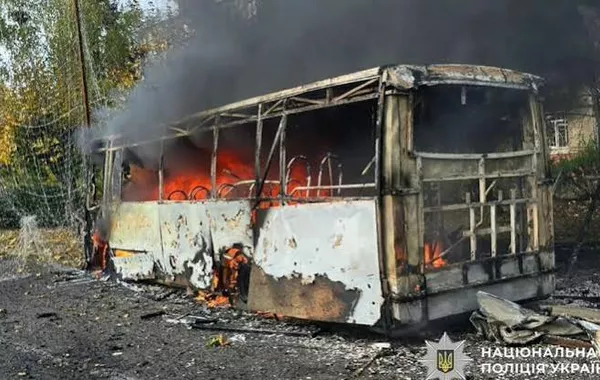
Production Disruptions: Oil production at Tengiz, one of the world’s largest fields, was halted due to an incident at a power station, cancelling significant export cargoes - demonstrating how infrastructure vulnerabilities can have immediate global market implications.
Route Diversification: Kazakh energy planners are pushing to expand exports through Azerbaijan via the Baku-Tbilisi-Ceyhan (BTC) pipeline and Caspian shipping from Aktau; this allows bypassing Russian routes to reach global markets.
Analysis: Kazakhstan’s predicament illustrates the geopolitical risk of over-reliance on a single export corridor (CPC) and why diversification - through Caspian-to-Europe routes - is both an economic necessity and a geopolitical maneuver to reduce dependence on Moscow. For Europe, alternative Kazakh supplies could marginally ease tight markets, particularly if integrated via Azerbaijan’s infrastructure.
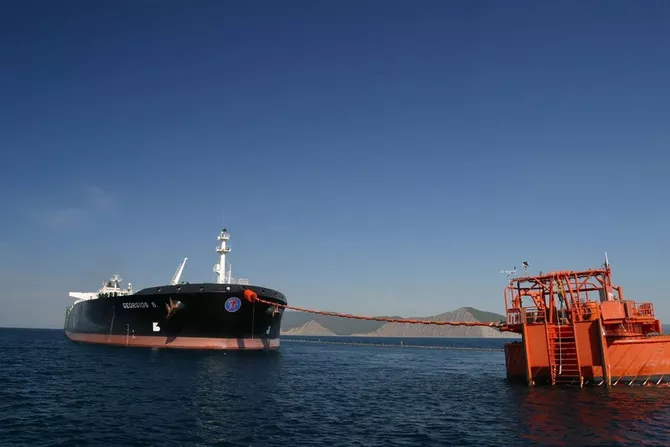
Photo: Caspian Pipeline Consortium
Turkmenistan: Gas Potential Straining Against Geopolitics
Turkmenistan holds massive gas reserves, but political and legal disputes over Caspian ownership and pipeline agreements have limited its access to lucrative Western markets.
Trans-Caspian Gas Pipeline (TCGP): A long-discussed subsea pipeline from Turkmenistan to Azerbaijan could supply Turkmen gas to the Southern Gas Corridor and Europe - however, the project remains stalled due to legal, environmental, and geopolitical hurdles. The region’s unclear maritime delimitation complicates pipelines under the Caspian.
Diversification via China: Turkmen gas currently flows mainly to China via the Central Asia-China pipeline network; this market lacks the pricing flexibility that Europe desires.
Domestic Power Projects: Turkmenistan has also launched a 1.6 GW combined-cycle power plant on the Caspian coast, a first step in linking energy production to regional electricity export potential.
Analysis: Turkmenistan’s potential as a major supplier to the West remains unrealized. While China remains a reliable buyer, the lack of export options reduces Turkmen leverage and limits Europe’s access to new, secure gas sources outside Russia. The Trans-Caspian pipeline - if ever built - would be a geopolitical game-changer.
Export Routes: The Lifelines of Caspian Energy
Energy export infrastructure from the Caspian to global markets is where geopolitics becomes tangible. The physical routes carry not just hydrocarbons, but strategic influence and alliances.
The Southern Gas Corridor (SGC)
The Southern Gas Corridor - consisting of the South Caucasus Pipeline, TANAP, and TAP - is a cornerstone of Caspian energy’s contribution to European energy security. It physically links Shah Deniz gas to Southern Europe and beyond. Following its expansion via compression projects, its throughput capacity will become even more significant.
Strategic Implication: The SGC reduces European exposure to single-source dependency and reinforces the EU’s energy diversification strategy.
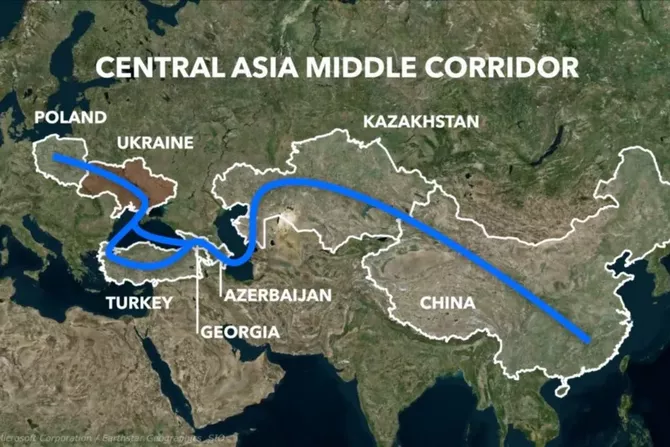
Photo: middlecorridor.com
Trans-Caspian and Middle Corridor Ambitions
Türkiye and Azerbaijan have renewed calls to build the Trans-Caspian Gas Pipeline - a subsea link from Turkmenistan to Baku that could supply Central Asian gas to Europe. Turkish leadership has labeled it “strategically essential” for broader regional energy security.
Beyond gas, the Middle Corridor (Trans-Caspian International Transport Route) is emerging as a multimodal trade and energy link from China through Central Asia and the Caucasus into Europe - bypassing Russia and deepening economic integration across Eurasia.
Strategic Implication: These corridors could pivot Eurasian energy geopolitics by creating alternative westward routes that sidestep both Russian and Iranian chokepoints, but they face significant environmental, legal, and financing challenges.
Oil Routes and the CPC/BTC Dynamics
The Baku-Tbilisi-Ceyhan (BTC) pipeline remains a vital outlet for Azerbaijani and Kazakh oil. Kazakhstan’s plans to increase shipments via BTC underscore the region’s efforts to diminish dependence on Russian outlets and capture European markets directly.
In contrast, the CPC remains crucial for Kazakhstan’s bulk exports, even as damage and supply interruptions reveal the vulnerability of relying on Russia-controlled infrastructure.
Strategic Implication: Oil export diversification reduces political leverage from dominant transit powers and integrates Caspian producers more directly with global markets.
The Emerging Green Energy Dimension
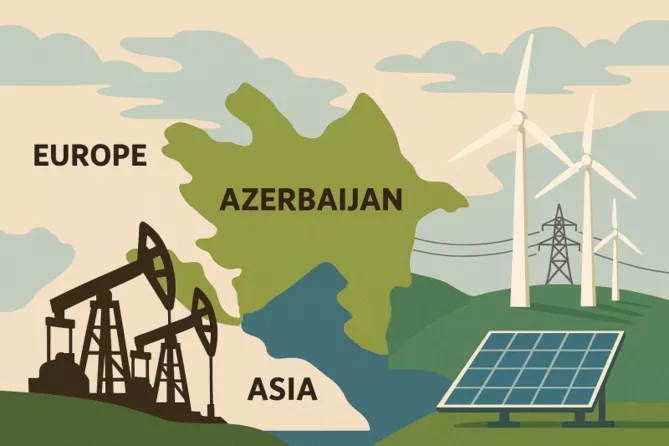
While hydrocarbons dominate today’s geopolitics, green energy is increasingly part of Caspian strategies - albeit in early stages.
AI-generated image
Azerbaijan’s Green Push
Azerbaijan is advancing renewable power development and exploring integration into broader regional grids:
It is legislating favorable conditions for renewables and has partnered with developers like Masdar and ACWA Power on wind and solar projects.
A visionary Caspian-Black Sea Green Energy Corridor has been proposed, which would lay deep-sea transmission cables to supply renewable electricity from the Caucasus and potentially Central Asia into Europe.
Strategic Implication: If realized, this corridor could transform the Caspian from a fossil-fuel hub to an electricity exporter, enhancing energy security and climate goals for partner countries.
Geopolitical Ramifications: Balancing Powers in the Caspian
Caspian energy policy does not unfold in a vacuum. Its geopolitics is shaped by great powers - Russia, China, the EU and the U.S. - and by regional alliances.
Russia’s waning monopoly: Russia has historically been the main transit route for Kazakh and Turkmen energy. Diversification into Caspian and Southern corridors challenges Moscow’s leverage and aligns with Western interests in reducing Europe’s dependency on Russia.
China’s foothold: China remains a dominant buyer of Turkmen gas and an important market for Kazakh crude, maintaining energy ties that bypass Western infrastructure priorities.
Western alignment: The EU and U.S. have supported Caspian export expansion and political stability, including recent agreements to integrate Armenian and Azerbaijani energy systems, a move tied to broader peace and transit initiatives.
Strategic Implication: Energy routes are also political routes. Expanding Caspian export networks strengthens ties with Europe and Türkiye but also draws the region into broader geopolitical rivalries, where energy supply security and political alignment are inseparable.
Conclusion: An Energy Chessboard of High Stakes
In 2026, the Caspian region remains a crucible of global energy security. While hydrocarbons sustain its geopolitical weight, the region stands at an inflection point:
Diversification of routes and markets - from Southern and Middle Corridors to new interconnections - is reshaping regional power balances.
Infrastructure vulnerabilities, such as disruption at CPC terminals and pipeline outages, highlight how physical chokepoints can have outsized geopolitical impacts.
The green energy transition, while nascent, offers a roadmap for future relevance beyond fossil fuels and aligns with European decarbonization goals.
The Caspian’s future is not predetermined. Its trajectory will depend on how swiftly it can resolve legal, political, and technical challenges around new export routes, negotiate energy cooperation across rival states, and harness both hydrocarbons and renewables to serve evolving global energy needs.
In the end, the Caspian Sea’s strategic importance may lie not just in what it produces today, but in how it adapts to the energy realities of tomorrow - a test of regional diplomacy, infrastructure innovation, and geopolitical foresight.