Speculation About An Alleged Military Coup In China Has Flooded Social Media Across Parts Of East Asia, Sparked Dramatic Headlines, And Fueled Alarmist Narratives.
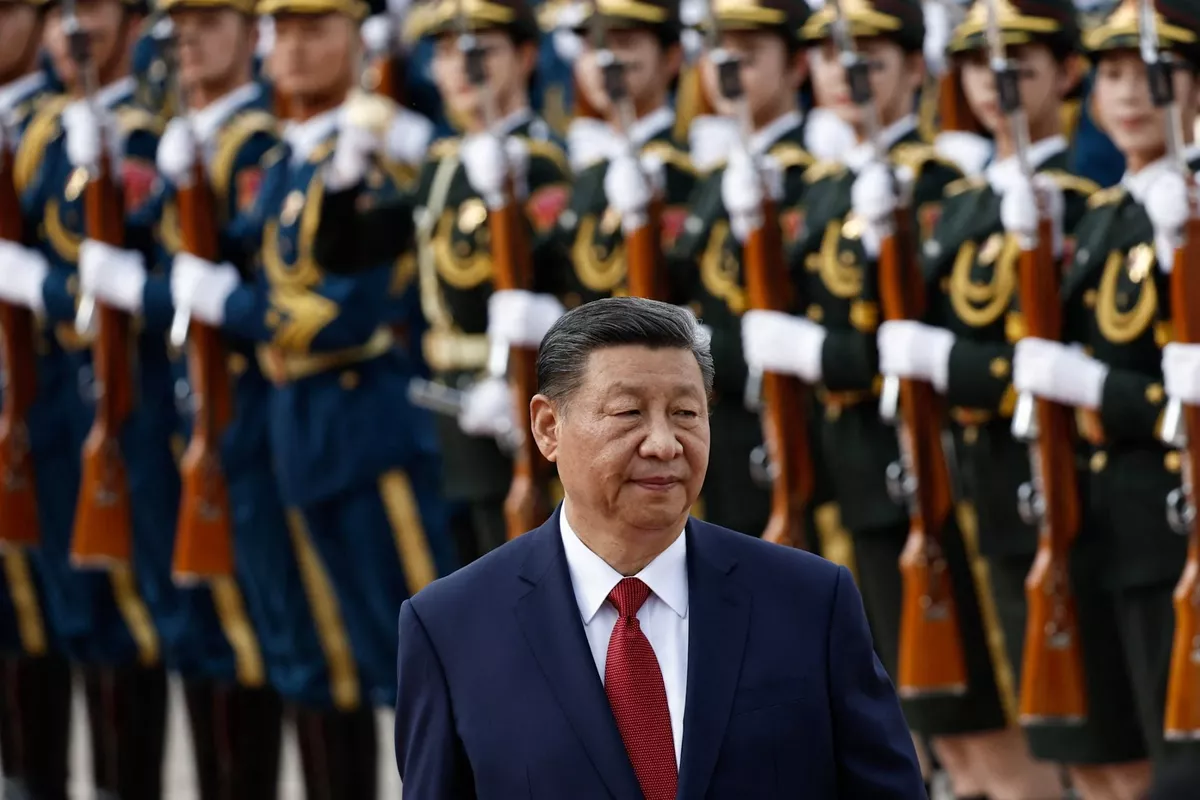
Yet the picture emerging from more credible sources points to a different - and in many ways more consequential - development: an intensifying internal purge within the People’s Liberation Army (PLA) under the direct supervision of President Xi Jinping, aimed at removing any remaining pockets of autonomous influence inside China’s military establishment.
Beijing has formally announced investigations into two of the country’s most senior uniformed officers, General Zhang Youxia and General Liu Zhenli, accusing them of “serious violations of discipline and law.” In the political vocabulary of the Chinese Communist Party, such wording rarely signals an ordinary legal inquiry. Instead, it is widely understood as a prelude to political sidelining, loss of power, and, in some cases, complete erasure from the elite landscape.
Until recently, Zhang Youxia was vice-chairman of the Central Military Commission (CMC) - the body that exercises ultimate command over the PLA - and was widely regarded as one of the most influential figures in China’s security hierarchy. He also had long-standing personal ties to Xi Jinping, making his sudden fall particularly striking. Liu Zhenli, another top commander, has likewise vanished from public view, reinforcing perceptions that a far-reaching reshuffle is underway.
Western media outlets, including Reuters, have described recent developments as “abnormal” shifts within China’s military leadership, while officials and analysts in Taiwan have acknowledged that they are closely tracking signs of turbulence inside the PLA. Taken together, these signals suggest not an imminent coup, but a deepening struggle within the upper echelons of China’s power system.
Rather than reacting to an active rebellion, Xi appears to be acting preemptively - tightening control before alternative centers of influence can consolidate. This pattern is consistent with earlier waves of anti-corruption campaigns that, while framed as efforts to clean up the system, also served to neutralize political rivals and reinforce personal authority.
Adding to the atmosphere of uncertainty is the growing circulation of slogans such as “Save the Party” and “Save the Nation” among segments of the overseas Chinese diaspora, particularly in Southeast Asia. On opposition-oriented platforms, commentators increasingly portray the Chinese leadership as facing an internal crossroads. While such rhetoric should be treated with caution, it reflects a perception that elite cohesion in Beijing is under strain.
Crucially, there is no verified evidence that Zhang Youxia, Liu Zhenli, or any other senior officers attempted to mobilize troops against Xi Jinping. What is clear, however, is that their removal coincides with an unprecedented thinning of the Central Military Commission’s visible leadership. With Xi Jinping himself and the long-time anti-corruption chief Zhang Shengmin now dominating the CMC, China’s top military command appears more centralized - and more personalized - than at any point in recent decades.
The broader implication is sobering. China’s political system is entering a phase in which stability is increasingly dependent on the authority of a single individual rather than on institutional balance. While this may enhance short-term control, it also heightens long-term risks: reduced internal debate, fewer corrective mechanisms, and a greater possibility of strategic miscalculation. In this sense, the real story is not a coup in Beijing, but the steady consolidation of power - and the uncertainties that inevitably accompany it.
Speculation about an attempted military coup in China has flooded social media across parts of East Asia, generating dramatic headlines and alarmist narratives. Yet the picture emerging from more credible sources points to a different - and in many ways more consequential - development: an intensifying internal purge within the People’s Liberation Army (PLA) under the direct supervision of President Xi Jinping, aimed at removing any remaining pockets of autonomous influence inside China’s military establishment.
Beijing has formally announced investigations into two of the country’s most senior uniformed officers, General Zhang Youxia and General Liu Zhenli, accusing them of “serious violations of discipline and law.” In the political vocabulary of the Chinese Communist Party, such wording rarely signals an ordinary legal inquiry. Instead, it is widely understood as a prelude to political sidelining, loss of power, and, in some cases, complete erasure from the elite landscape.
Until recently, Zhang Youxia was vice-chairman of the Central Military Commission (CMC) - the body that exercises ultimate command over the PLA - and was widely regarded as one of the most influential figures in China’s security hierarchy. He also had long-standing personal ties to Xi Jinping, making his sudden fall particularly striking. Liu Zhenli, another top commander, has likewise vanished from public view, reinforcing perceptions that a far-reaching reshuffle is underway.
Western media outlets, including Reuters, have described recent developments as “abnormal” shifts within China’s military leadership, while officials and analysts in Taiwan have acknowledged that they are closely tracking signs of turbulence inside the PLA. Taken together, these signals suggest not an imminent coup, but a deepening struggle within the upper echelons of China’s power system.
Rather than reacting to an active rebellion, Xi appears to be acting preemptively - tightening control before alternative centers of influence can consolidate. This pattern is consistent with earlier waves of anti-corruption campaigns that, while framed as efforts to clean up the system, also served to neutralize political rivals and reinforce personal authority.
Adding to the atmosphere of uncertainty is the growing circulation of slogans such as “Save the Party” and “Save the Nation” among segments of the overseas Chinese diaspora, particularly in Southeast Asia. On opposition-oriented platforms, commentators increasingly portray the Chinese leadership as facing an internal crossroads. While such rhetoric should be treated with caution, it reflects a perception that elite cohesion in Beijing is under strain.
Crucially, there is no verified evidence that Zhang Youxia, Liu Zhenli, or any other senior officers attempted to mobilize troops against Xi Jinping. What is clear, however, is that their removal coincides with an unprecedented thinning of the Central Military Commission’s visible leadership. With Xi Jinping himself and the long-time anti-corruption chief Zhang Shengmin now dominating the CMC, China’s top military command appears more centralized - and more personalized - than at any point in recent decades.
The broader implication is sobering. China’s political system is entering a phase in which stability is increasingly dependent on the authority of a single individual rather than on institutional balance. While this may enhance short-term control, it also heightens long-term risks: reduced internal debate, fewer corrective mechanisms, and a greater possibility of strategic miscalculation. In this sense, the real story is not a coup in Beijing, but the steady consolidation of power - and the uncertainties that inevitably accompany it.