Is the EU Using Armenia to Reopen Karabakh Issue?
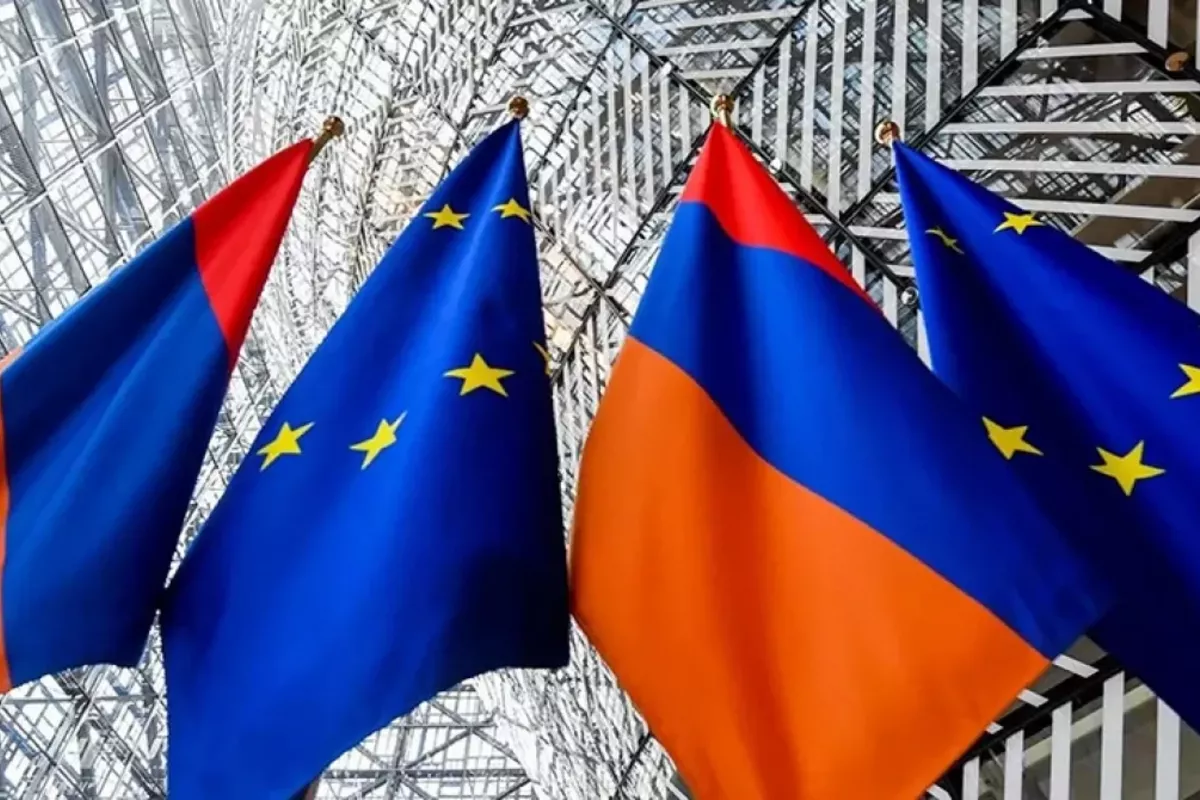
The European Union’s decision to deploy a Hybrid Rapid Response Team to Armenia ahead of the June 2026 parliamentary elections is being framed in Brussels as a technical step to protect democratic processes. Officially, the mission is intended to help Armenian institutions counter disinformation, cyber risks and foreign interference. It was requested by Yerevan and is expected to work closely with key state bodies, including the government, security structures and electoral authorities.
At first glance, this appears to be a routine element of European support for democratic resilience. However, a closer look raises a more complex question: is the EU simply helping Armenia safeguard its elections, or is it gradually building a broader mechanism of political influence in the country - one that could reshape the regional balance?
The issue lies in how “hybrid threats” are defined and applied. Armenian officials tend to frame such threats narrowly, focusing on alleged external interference in domestic political processes. This narrative is politically convenient, particularly in a pre-election environment marked by internal polarisation. However, the EU’s own definition of hybrid threats is much broader, encompassing coordinated information campaigns, political pressure, economic leverage and strategic influence operations.
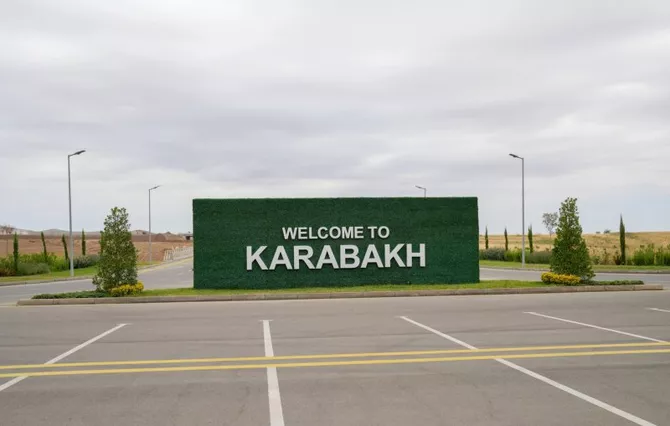
Viewed through this wider lens, one of the most visible “hybrid dynamics” in the region today is not interference in Armenian elections, but the sustained effort to reintroduce the Karabakh issue into international discourse - despite the fact that, from Azerbaijan’s perspective, the conflict has been resolved both militarily and politically.
This effort is not spontaneous. It is driven by a network of political actors and lobbying structures across Europe. Armenian diaspora organisations, sympathetic lawmakers in countries such as Belgium and the Netherlands, and repeated initiatives within the European Parliament have collectively shaped a narrative that keeps the issue alive. At the centre of this political momentum is France, which has emerged as Armenia’s most active advocate within Europe.
Source: Reuters
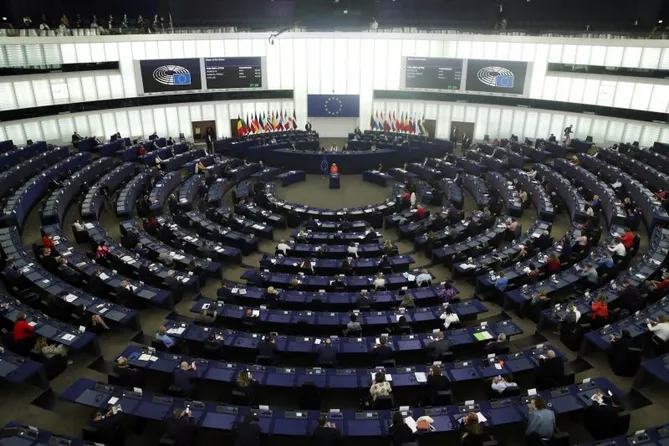
The scale of this political alignment is reflected in voting patterns. In March 2024, the European Parliament adopted a resolution on EU-Armenia relations with overwhelming support - more than 500 votes in favour and only a handful against. Such figures do not merely indicate consensus; they highlight how deeply entrenched a one-sided perception of the South Caucasus has become within parts of the European political system.
Beyond rhetoric, this approach is increasingly backed by concrete actions. France, for instance, has moved from political support to military cooperation, signing agreements to supply Armenia with CAESAR self-propelled howitzers. These steps were taken at a time when Baku and Yerevan were making cautious progress towards normalisation, including border delimitation efforts. Unsurprisingly, such moves have been perceived in Azerbaijan not as neutral support, but as a factor that risks encouraging a harder Armenian negotiating stance.
Source: Anadolu Agency
At the same time, the EU’s institutional footprint in Armenia continues to expand. What began in 2022 as a small monitoring presence along the Armenian side of the undelimited border with Azerbaijan has evolved into a full-fledged civilian mission. The EU Mission in Armenia (EUMA) now includes more than 200 personnel and has had its mandate extended until at least 2027. Representatives from more than two dozen European countries are involved in its operations, making it one of the most visible examples of EU engagement in the region.
Against this backdrop, the deployment of an additional “rapid response” team is not an isolated measure. It is part of a broader, long-term strategy of embedding European structures within Armenia’s political and security architecture. The question, therefore, is no longer whether the EU is present in Armenia, but how that presence is being used.
From Baku’s perspective, the concern is not engagement per se, but its direction. If the goal is genuine stabilisation, then priority should be given to supporting a sustainable peace agreement based on mutual recognition of sovereignty and territorial integrity. However, repeated attempts to politicise the Karabakh issue, along with continued external signalling that Armenia may still have leverage through international platforms, risk undermining that process.
This is where the concept of “hybrid threats” takes on a different meaning. Hybrid influence is not limited to cyberattacks or election interference; it also includes the systematic shaping of political narratives that affect state-level decision-making. When external actors - whether through parliamentary resolutions, media framing or diplomatic pressure - encourage the persistence of unresolved claims, they become part of the very dynamic they claim to counter.
In practical terms, this creates a contradiction. On the one hand, the EU positions itself as a stabilising force. On the other, elements within its political system contribute to prolonging tensions by keeping contested issues in circulation. This duality is increasingly difficult to reconcile.
For Azerbaijan, the core principle remains clear: the post-conflict reality must be accepted as the foundation for long-term peace. Any attempt to revisit or reinterpret that reality through external pressure is seen not as mediation, but as interference. Such interference, regardless of how it is labelled, carries the risk of destabilising an already fragile regional equilibrium.
Ultimately, if the EU seeks to play a constructive role in the South Caucasus, it will need to move beyond politically selective engagement. Supporting peace requires consistency - both in rhetoric and in action. Otherwise, initiatives launched under the banner of “countering hybrid threats” risk becoming instruments of strategic imbalance.
By Samir Muradov