In late January 2026, Kazakhstan took over the rotating chairmanship of the Central Asian Nuclear-Weapon-Free Zone (CANWFZ) at the annual consultative meeting of the Treaty’s states parties. On the surface, the transition looked routine: chairs rotate, statements are issued, and communiqués are adopted. Yet the timing gives the role far more weight. Global nuclear risk is rising again, traditional arms-control guardrails are weakening, and regional security is increasingly shaped by “near-nuclear” dynamics-threshold capabilities, missile proliferation, radiological threats, and the vulnerability of critical infrastructure-rather than by classical Cold War deterrence alone.
CANWFZ is often cited as a niche success in the nonproliferation landscape. A more accurate reading is that it functions as a regional security institution grounded in legally binding restraint. It seeks to turn Central Asia’s nuclear trauma and uranium legacy into enforceable rules, verification practices, and external guarantees. Kazakhstan’s chairmanship matters because the country’s own experience-from closing the Semipalatinsk test site to giving up inherited Soviet nuclear weapons-gives Astana rare credibility. That credibility can be used to convene partners, reinforce compliance norms, and press nuclear-weapon states to treat negative security assurances as ongoing commitments rather than symbolic signatures.
What follows examines what the Semipalatinsk Treaty is and prohibits, what CANWFZ is designed to achieve, why its distinctive features have strategic-not merely symbolic-value, and what Kazakhstan can realistically pursue during its 2026 chairmanship.
The Semipalatinsk Treaty: scope, prohibitions, and regional logic
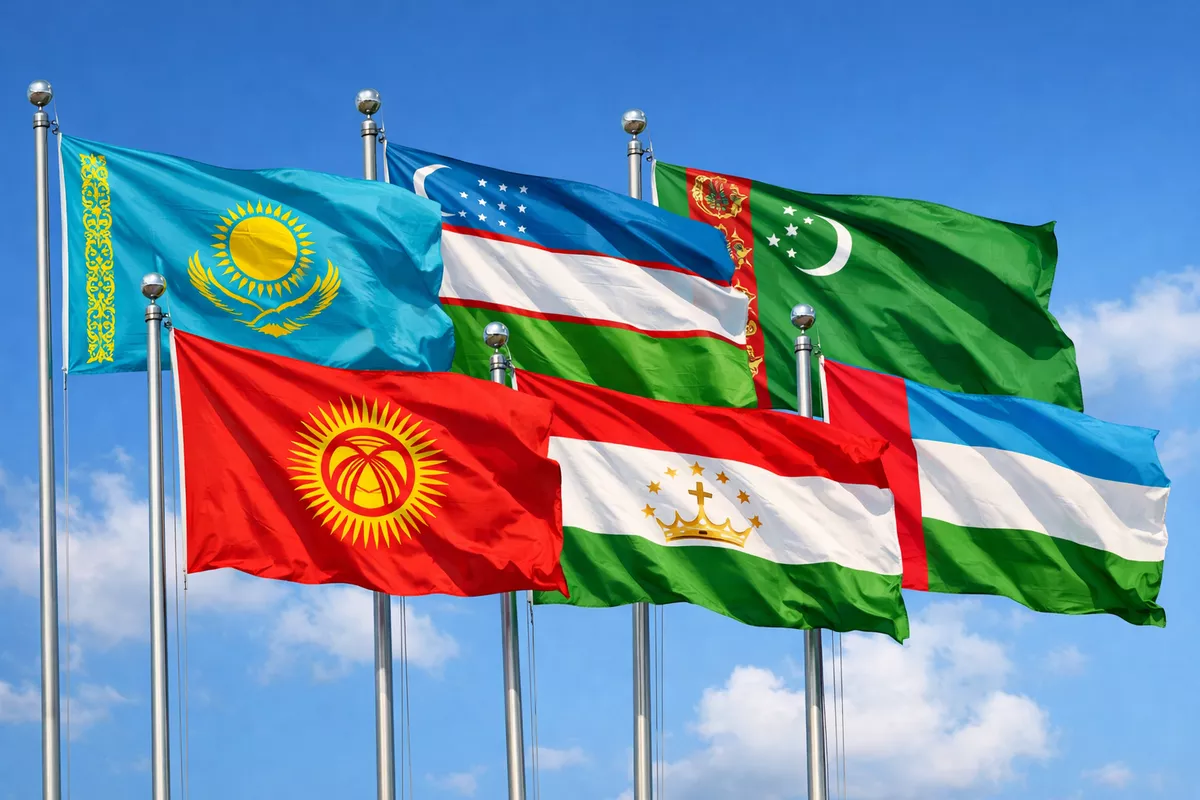
Formally titled the Treaty on a Nuclear-Weapon-Free Zone in Central Asia, the agreement is widely known as the Semipalatinsk Treaty because it was signed on 8 September 2006 at the former Semipalatinsk Test Site-one of the Cold War’s most notorious nuclear proving grounds. The Treaty entered into force on 21 March 2009 after ratification by all five Central Asian states: Kazakhstan, Kyrgyzstan, Tajikistan, Turkmenistan, and Uzbekistan.
At its core, the Treaty commits the parties not to manufacture, acquire, possess, or control nuclear weapons; not to conduct nuclear explosive tests; and not to allow the stationing of nuclear weapons on their territories or provide related assistance. These provisions resemble those found in other nuclear-weapon-free zone (NWFZ) treaties, but CANWFZ incorporates region-specific layers that reflect Central Asia’s particular risk profile.
First, the Treaty places strong emphasis on verification and safeguards, tying its credibility to robust cooperation with the International Atomic Energy Agency and reaffirming that nuclear material and facilities must be used exclusively for peaceful purposes. Second, environmental and legacy concerns are unusually central. The agreement is inseparable from the realities of test-site contamination, uranium mining, and radioactive tailings-long-term hazards that pose security and public-health risks even in the absence of any weapons program. Third, CANWFZ treats the “zone” not as a one-time pledge but as a living institution, sustained through consultative meetings and ongoing coordination among states parties.
Analytically, the Treaty is less about disarmament-none of the five states possess nuclear arsenals-and more about preventing a future return of nuclear weapons to Central Asia through coercion, hedging, accident, or great-power deployment patterns.
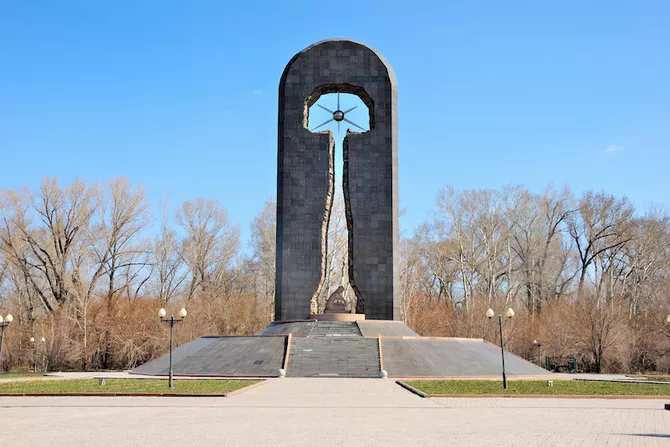
Monument “Stronger than Death” is a memorial to the victims of nuclear tests in Semei, Kazakhstan (Phot: Astana Times)
CANWFZ’s strategic purpose: a regional firewall against nuclear risk
While the Treaty aligns with the broader objectives of the global nonproliferation regime and the Nuclear Non-Proliferation Treaty, its main purpose becomes clearer when translated into strategic terms.
One core function is to lock in the post-Soviet nuclear settlement. Central Asia inherited elements of Soviet nuclear infrastructure, scientific expertise, and, in Kazakhstan’s case, direct exposure to nuclear testing and deployments. CANWFZ formalizes the region’s decision that independence would not be accompanied by nuclear hedging.
A second function is to close off pathways for nuclear re-entry. The Treaty is designed to block domestic breakout, external basing or transfer by nuclear-armed powers, and the diversion of radiological materials to non-state actors. In this sense, it addresses not only state-level proliferation but also the risks of illicit trafficking and radiological terrorism.
A third function is to generate leverage for negative security assurances. Nuclear-weapon-free zones are most credible when nuclear-armed states pledge not to use or threaten nuclear weapons against zone members. CANWFZ’s Protocol provides the framework for those assurances, embedding the zone within a wider security bargain.
Taken together, these elements make CANWFZ a governance mechanism rather than a symbolic declaration. Its effectiveness depends on national implementation, peer consultation, and the willingness of external powers to honor their commitments.
What makes CANWFZ distinctive among nuclear-weapon-free zones
Several features set CANWFZ apart from other NWFZs, and each has strategic significance.
The zone is often described as the first NWFZ located entirely in the Northern Hemisphere. This matters because the Northern Hemisphere contains most nuclear-armed states, major military alliances, and delivery systems. A zone in this environment is not peripheral; it represents legally binding restraint in a densely militarized strategic space.
Equally important is the zone’s grounding in a region shaped by nuclear testing and uranium production. Signing the Treaty at Semipalatinsk linked legal commitments to lived experience. Beyond symbolism, the legacy of testing and mining creates enduring demands for environmental remediation, material protection, and oversight-areas where security and public safety intersect. As a result, CANWFZ is as much about nuclear security governance as it is about arms control.
Geography further amplifies the zone’s importance. Central Asia shares extensive land borders with Russia and China, both recognized nuclear-weapon states. This proximity influenced the Treaty’s negotiation and underlines its value today. In crises involving major powers, neighboring regions can become logistics corridors or signaling terrain. By pre-committing to non-stationing and restraint, CANWFZ raises the political and legal costs of gray-zone nuclear behavior and reassures regional states that they will not be drawn into nuclear confrontation dynamics beyond their control.
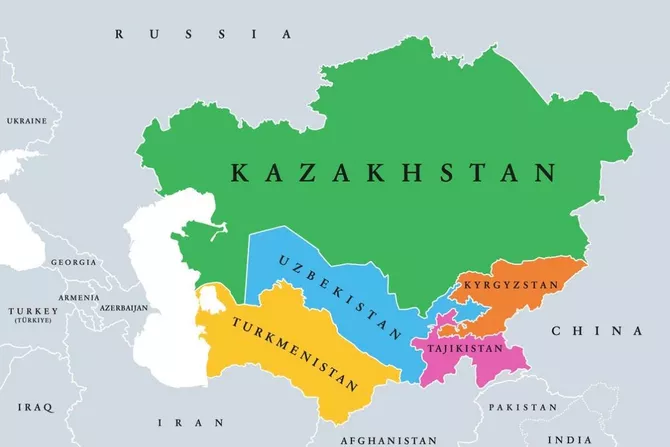
Photo: Wikimedia Commons
Kazakhstan’s 2026 chairmanship: practical priorities and wider significance
The CANWFZ Protocol, signed in 2014 by all five NPT-recognized nuclear-weapon states, is intended to provide legally binding negative security assurances. Yet signature alone is not the same as ratification and operationalization. Delays-most notably on the U.S. side-underscore why chairmanship leadership still matters. For non-nuclear states in a contested region, such assurances are part of what makes permanent non-nuclear status politically sustainable.
Kazakhstan’s chairmanship does not grant enforcement powers, but it does offer agenda-setting authority. The year 2026 also marks two decades since the Treaty’s signing, creating an opportunity to use anniversary diplomacy to extract tangible commitments rather than ceremonial praise. Astana can refocus discussions on practical risk governance: strengthening controls against illicit radiological trafficking, harmonizing standards for the physical protection of radioactive sources, and improving regional emergency-response coordination. These measures deliver security and public-safety benefits even when broader geopolitics are strained.
The chairmanship also offers a platform to align peaceful nuclear cooperation with safeguards credibility. As Central Asia’s energy and industrial needs evolve, interest in nuclear technology may grow. CANWFZ can serve as an enabler of such cooperation precisely because it insists on transparency and robust safeguards, reducing the risk that peaceful programs are misinterpreted as latent weapons hedges.
Finally, Kazakhstan can use the chair to preserve unity among the five states despite external pressures. CANWFZ’s strength lies in collective discipline; its reassurance value erodes if the zone is perceived as aligned with any geopolitical bloc. Consensus-building and institutional continuity are therefore strategic assets in their own right.
In a broader sense, CANWFZ functions as a middle-power stabilizer. It does not eliminate nuclear weapons globally, but it narrows nuclear options in a sensitive region, reinforces the norm that post-Soviet security does not require nuclear arms, and provides a platform for external assurances and internal coordination. At a time when nuclear rhetoric is again normalized and arms control is under strain, such regional restraint regimes become more, not less, relevant. How Chinese EVs Came to Dominate Central AsiaCANWFZ-from a landmark of historical denuclearization into an active instrument of contemporary nuclear risk management.