Introduction
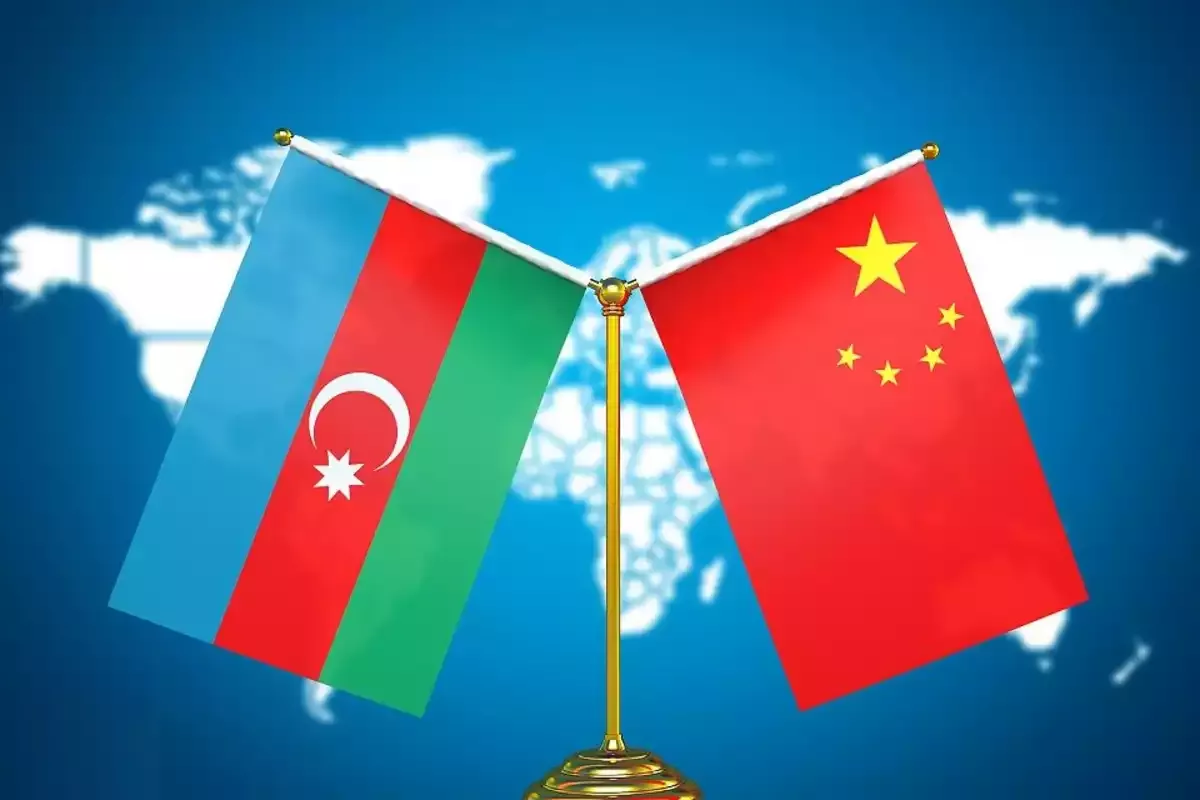
In an era marked by accelerating multipolarity, intensifying competition over connectivity, and the global energy transition, Azerbaijan-China relations have acquired growing strategic significance. Situated at the crossroads of Eurasian transport corridors and embedded within shifting regional architectures, Azerbaijan has pursued a calibrated foreign policy that combines multilateral engagement with bilateral pragmatism. Within this framework, cooperation with China has evolved beyond traditional diplomatic exchanges into a multidimensional partnership shaped by institutional alignment, infrastructure connectivity, digital transformation, and renewable energy collaboration.
This evolution has primarily advanced through two interrelated frameworks, namely the Shanghai Cooperation Organization (SCO) and the Belt and Road Initiative (BRI). Azerbaijan’s gradual integration into the SCO-from Dialogue Partner status to its formal pursuit of Observer standing-has provided a structured multilateral setting in which political dialogue, security coordination, and economic engagement with China and other Eurasian actors have intensified. Parallel to this institutional trajectory, the BRI has served as a practical vehicle for translating strategic alignment into concrete projects in transport, logistics, digital infrastructure, and energy modernization.
The interaction between these multilateral frameworks and bilateral dynamics reveals a deliberate progression. Azerbaijan has leveraged the SCO to expand its diplomatic visibility and institutional access, while simultaneously deepening bilateral ties with China under the broader BRI umbrella. Over time, this dual-track approach has generated tangible sectoral outcomes, particularly in digital infrastructure development and renewable energy cooperation. What began as an engagement centered on transit and logistics has matured into a comprehensive partnership encompassing smart technologies, industrial modernization, green energy deployment, and long-term technological collaboration.
Ultimately, these developments illustrate how Azerbaijan has positioned itself as an increasingly proactive actor within Eurasia’s evolving political and economic order. By integrating multilateral participation with targeted bilateral partnerships, Baku has sought to enhance strategic autonomy, diversify external relationships, and translate connectivity into long-term development gains. The Azerbaijan-China case thus offers insight into how medium-sized states navigate great-power initiatives while aligning external cooperation with domestic modernization objectives in a transforming global landscape.
Abstract
This study examines the multilateral dimensions of Azerbaijan-China strategic engagement, tracing its evolution from institutional dialogue to structurally embedded cooperation across political, economic, digital, and energy domains. Situated at the crossroads of Eurasian connectivity corridors, Azerbaijan has pursued a calibrated foreign policy that integrates multilateral participation with targeted bilateral implementation. Within this framework, engagement through the Shanghai Cooperation Organization (SCO) and cooperation under the Belt and Road Initiative (BRI) have emerged as complementary pillars of a progressively deepening partnership with China.
The study adopts a chronological and sectoral approach. First, it analyzes Azerbaijan’s gradual institutional integration into the SCO-from Dialogue Partner status to its formal pursuit of Observer standing-highlighting how multilateral diplomacy has enhanced Baku’s strategic visibility and diversified its external partnerships. Second, it explores the operationalization of Azerbaijan-China cooperation within the BRI framework, particularly in transport modernization, digital infrastructure, and the Digital Silk Road, demonstrating Azerbaijan’s transition from a transit corridor to an emerging regional data and innovation hub. Third, it evaluates the rapid expansion of renewable energy collaboration, where incremental technical engagement has evolved into a comprehensive strategic partnership encompassing large-scale solar and wind projects, energy storage, technology transfer, and industrial localization.
By integrating multilateral diplomacy with infrastructure-led development and green transition strategies, Azerbaijan has strengthened its strategic autonomy while aligning domestic modernization objectives with Eurasia’s evolving economic architecture. The Azerbaijan-China case illustrates how a medium-sized state can leverage great-power initiatives to advance connectivity, sustainability, and geopolitical positioning in a transforming multipolar order.
The Strategic Evolution of Azerbaijan-China Cooperation under the Shanghai Cooperation Organization
Azerbaijan’s engagement with the Shanghai Cooperation Organization (SCO) has unfolded gradually and strategically, reflecting a carefully calibrated foreign policy trajectory rather than an isolated diplomatic initiative. This engagement reveals a consistent progression from formal institutional participation toward deeper strategic alignment, framed within Azerbaijan’s broader national development agenda and evolving geopolitical environment.
Baku’s formal relationship with the SCO began in July 2015, when it was granted Dialogue Partner status, followed by the signing of a memorandum of understanding in March 2016. Under this framework, Azerbaijan gained access to the organization’s multifaceted activities, including participation in ministerial meetings, working groups, expert forums, conferences, workshops, and election observation missions. The agreed areas of cooperation encompassed strengthening regional security and stability, combating terrorism, extremism, and separatism, and expanding economic and transport collaboration. Although Dialogue Partner status imposes institutional limitations, it provided Azerbaijan with an initial platform for structured interaction with the SCO and its member states.
During the early years of engagement, Azerbaijan utilized these mechanisms to build visibility and practical experience within the organization. Delegations participated in the 2021 SCO Economic Forum in Dushanbe and the 2022 SCO Economic Forum and Industrial Innovations Exhibition in Tashkent. Azerbaijan also consistently contributed to the organization’s political processes by participating in SCO election observation missions, having done so 4 times as of September 2024. These forms of engagement, while procedural, signaled Azerbaijan’s sustained interest in institutional integration and demonstrated its willingness to operate within the SCO framework.
High-level political engagement further accelerated this trajectory. President Ilham Aliyev’s participation as an honorary guest in the “SCO Plus” summits in Samarkand (2022), Astana (2024), and Tianjin (2025) marked significant milestones in Azerbaijan’s expanding visibility and deepening engagement within the organization. In his addresses, President Aliyev emphasized Azerbaijan’s investments in the East-West and North-South transport corridors and highlighted the country’s role as a reliable transit and logistics hub in Eurasia. He also underscored Azerbaijan’s commitment to multilateralism, referencing its chairmanship of the Non-Aligned Movement and its hosting of COP29, to which SCO leaders were personally invited. Notably, President Aliyev used the SCO platform to inform member states of Azerbaijan’s restoration of sovereignty over its internationally recognized territories, linking this development to principles of territorial integrity and international law.
Parallel to this growing political engagement, Azerbaijan expanded bilateral cooperation with SCO member states under the organization's broader umbrella. The Joint Declaration on Strategic Partnership between Azerbaijan and China, adopted during the 2024 Astana SCO Summit, represented a landmark in political and economic relations, covering cooperation in political dialogue, energy, connectivity, technology, and trade. Similar bilateral discussions and agreements with Russia, Uzbekistan, Kazakhstan, Tajikistan, and Kyrgyzstan underscored the centrality of bilateral tracks within Azerbaijan’s SCO strategy. In mid-2024, the Memorandum of Understanding between the Government of the Republic of Azerbaijan and the Government of the People’s Republic of China on the Development of Trans-Caspian International Transport Routes for the China-Europe Railway Express further strengthened practical connectivity cooperation aligned with the SCO’s broader agenda.
Institutional ambitions also became more explicit during this period. Although Dialogue Partner status provided a foundation, Azerbaijani officials consistently indicated aspirations for enhanced standing within the organization. In February 2022, President Aliyev publicly noted that Azerbaijan had previously applied for Observer status and had received indications from key member states that there were no significant obstacles. This long-standing objective culminated in the formal submission of an application for Observer status in July 2024. The rationale behind this move was clear: Observer status would allow Azerbaijan to attend open SCO meetings more systematically, participate in discussions without voting rights, and access a wider range of documents and decisions. Such a status would enhance Azerbaijan’s capacity to articulate its interests and influence deliberations across areas such as trade, connectivity, security, and investment.
Moreover, in September 2025, Azerbaijani President Ilham Aliyev addressed the “Shanghai Cooperation Organization Plus” (SCO+) meeting in Tianjin, China, underscoring Azerbaijan’s growing engagement with the SCO framework and its broader Eurasian vision. In his remarks, President Aliyev highlighted Azerbaijan’s strategic location at the crossroads of the East-West and North-South transport corridors, presenting the country as a reliable bridge linking Asia and Europe. He emphasized modernizing national transport infrastructure, expanding multimodal logistics networks, and Azerbaijan’s commitment to facilitating seamless trade flows along the Middle Corridor.
The President also reiterated Azerbaijan’s support for deeper economic cooperation among SCO member and partner states, particularly in the fields of energy security, renewable energy development, digital transformation, and industrial innovation. He stressed the importance of diversifying beyond hydrocarbons and promoting sustainable growth models aligned with global climate and development agendas, noting that expanded multilateral collaboration could enhance investment flows, technological exchange, and regional value chain integration.
Furthermore, President Aliyev underscored Azerbaijan’s role as a proponent of regional stability and constructive dialogue, advocating enhanced multilateral coordination within the SCO+ format. By situating Azerbaijan’s modernization trajectory within the broader context of Eurasian connectivity and cooperative governance, his speech reinforced the country’s aspiration to serve as both a strategic transit hub and a proactive stakeholder in shaping the evolving architecture of regional economic and political cooperation.
Support for Azerbaijan’s enhanced status has been notable. China has explicitly endorsed strengthening Azerbaijan’s legal standing within the SCO, signaling that the issue would receive attention during its chairmanship. Russia has also expressed support, viewing Azerbaijan’s deeper involvement as beneficial within the SCO framework. Central Asian states, including Kazakhstan and Uzbekistan, have reportedly welcomed Azerbaijan’s aspirations. Nonetheless, the requirement of consensus among all member states means that accession to Observer status remains subject to the organization’s internal dynamics and its traditionally cautious approach to expansion.
Economically, Azerbaijan’s engagement with the SCO bloc has grown in parallel with its institutional ambitions. Trade turnover with SCO member states reportedly increased by 45.8 percent between 2022 and 2023, surpassing 9 billion dollars and accounting for 17 percent of Azerbaijan’s total trade. SCO countries have invested over 12 billion dollars in Azerbaijan’s economy, while Azerbaijani investments in SCO states reached 3.2 billion dollars. China has emerged as Azerbaijan’s fourth-largest trading partner and its largest import source. Bilateral trade between Azerbaijan and China reached $1.02 billion in the first quarter of 2025, a 37% increase from the same period in 2024. These figures underscore the substantive economic dimension underpinning Azerbaijan’s SCO engagement.
Throughout this chronological progression, Azerbaijan has maintained a multi-vector foreign policy, balancing cooperation with SCO member states alongside relations with Western partners and Türkiye. Within a shifting multipolar global order, deeper integration with Eurasian multilateral structures is viewed in Baku as a means of strengthening strategic autonomy, diversifying partnerships, and enhancing diplomatic leverage. Achieving Observer status would solidify Azerbaijan’s position within a major non-Western regional bloc while reinforcing its development and connectivity objectives.
In sum, Azerbaijan’s expanding role within the SCO has developed through a gradual yet deliberate sequence: initial Dialogue Partner engagement beginning in 2015; sustained participation in institutional mechanisms; articulation of development priorities under “Azerbaijan 2030” in 2021; enhanced high-level political visibility at SCO summits in 2022 and 2024; formal application for Observer status in July 2024; and expanding economic and bilateral cooperation across the SCO bloc. This structured evolution reflects a strategic approach that combines multilateral engagement with bilateral pragmatism, positioning Azerbaijan as an increasingly influential actor within the broader Eurasian framework.
Strengthening Azerbaijan-China Relations Within the Broader Framework of the Belt and Road Initiative
Within the framework of the Belt and Road Initiative (BRI), Azerbaijan has progressively expanded its cooperation with China in digital infrastructure and advanced technologies, extending bilateral engagement beyond traditional pillars of transport, logistics, and energy into the rapidly evolving digital economy. This shift has become increasingly evident since the late 2010s, as digital connectivity has been recognized by both sides as a critical component of contemporary infrastructure development and a long-term driver of economic growth. High-level political dialogue-reinforced through presidential meetings, intergovernmental commissions, and memoranda concluded during bilateral visits and multilateral forums-has provided the institutional foundation for broadening Azerbaijan-China cooperation into digital domains.
This evolution closely corresponds with the growing prominence of the Digital Silk Road (DSR) within the broader BRI framework. Initially articulated in China’s Vision and Actions on Jointly Building the Silk Road Economic Belt and the 21st-Century Maritime Silk Road and subsequently reinforced through sector-specific policy documents, the DSR emphasizes cooperation in telecommunications, digital trade, smart cities, and innovation ecosystems. Azerbaijan’s engagement with this agenda reflects a convergence of strategic interests: for China, Azerbaijan represents a stable partner situated along a key Eurasian land bridge; for Azerbaijan, cooperation with China offers access to advanced technologies, financing instruments, and implementation experience in large-scale digital infrastructure projects.
These interactions have translated into concrete areas of cooperation, including broadband expansion, fifth-generation (5G) telecommunications, satellite and space-based technologies, and broader digital-economy development. Since the late 2010s and early 2020s, Chinese technology firms and vendors such as Huawei and ZTE have emerged as important partners in supporting Azerbaijan’s efforts to modernize its digital backbone, enhance nationwide connectivity, and prepare for next-generation communication networks. Such cooperation has featured prominently in meetings of the Azerbaijan-China Intergovernmental Commission on Trade and Economic Cooperation, as well as in Belt and Road Initiative-related forums and technology exhibitions.
In this regard, in 2019, Azerbaijan’s State Customs Committee reached an agreement with China’s telecommunications conglomerate, Huawei, to establish long-term collaboration to modernize and automate the country’s customs system using cutting-edge technologies. This partnership led to the implementation of an integrated customs management system for international trade and transport operations, incorporating Single Window systems that enhance connectivity and digitization across border crossings and customs ecosystems. By leveraging automation, Azerbaijan has significantly improved the efficiency, accuracy, and transparency of its customs operations, reducing processing times and minimizing the risk of errors or fraudulent activities in trade transactions.
Similarly, the most recent intergovernmental deals, reached in 2024 between Azerbaijan and China, provide a further illustration of this deepening partnership. In particular, the Memorandum of Understanding between the Government of the Republic of Azerbaijan and the Government of the People’s Republic of China on the development of the Trans-Caspian International Transport Routes for the China-Europe Railway Express, together with the Memorandum of Understanding between the Ministry of Economy of the Republic of Azerbaijan and the National Development and Reform Commission of the People’s Republic of China on jointly accelerating the preparation of a cooperation plan for the Belt and Road Initiative, signals the opening of a new phase of bilateral cooperation. These agreements reflect a shared commitment to advancing transport and logistics through coordinated interstate modernization projects.
Collectively, these bilateral partnerships support Azerbaijan’s strategic ambition to position itself as a regional digital hub facilitating east-west data flows across Eurasia. By strengthening domestic digital infrastructure and aligning it with transregional transport and logistics corridors, Azerbaijan seeks to move beyond a purely transit-based model and to host value-added digital activities, including cloud services, fintech platforms, e-commerce logistics, and data-driven transport management systems. International organizations increasingly emphasize the importance of integrating digital layers into physical connectivity corridors, particularly along Eurasian routes linking China with Europe.
Chinese expertise and investment are also viewed as important enablers of Azerbaijan’s smart infrastructure agenda, especially in the context of post-conflict reconstruction in liberated territories. These areas have been designated as pilot zones for smart cities and smart villages, where digital governance systems, intelligent transport solutions, renewable-energy integration, and high-speed connectivity are incorporated from the outset. Cooperation with Chinese partners in smart urban technologies and digital public services has been framed as a means of accelerating reconstruction while introducing advanced technological standards.
By embedding digital technologies into urban planning and public-service delivery, Azerbaijan seeks to demonstrate how digitalization can support inclusive growth, efficient resource management, and improved quality of life. This approach aligns with the broader recalibration of the BRI in the early 2020s toward “high-quality development,” innovation, and sustainability, with greater emphasis on technology-intensive, digitally enabled projects.
In this context, the Digital Silk Way serves as a regional digital extension of the BRI, leveraging China’s technological capabilities and Azerbaijan’s geographic position along key Eurasian corridors. By linking Chinese digital infrastructure initiatives with the Trans-Caspian route and Azerbaijan’s domestic digital transformation agenda, this concept reinforces Azerbaijan’s role as a bridge between Asian and European digital ecosystems. Investments in fiber-optic connectivity, data-transmission infrastructure, and regional digital hubs illustrate how physical and digital corridors are increasingly developed in tandem.
Crucially, Azerbaijan has sought to embed BRI-related digital cooperation with China within a broader multi-vector connectivity strategy. Rather than treating the BRI as an exclusive framework, Baku aligns engagement with China alongside parallel initiatives under the Middle Corridor, cooperation within the Organization of Turkic States, and interaction with European digital markets. This approach allows Azerbaijan to benefit from Chinese technological innovation and financing while preserving strategic flexibility and regulatory compatibility with multiple partners.
Ultimately, Azerbaijan’s participation in the digital dimension of the BRI underscores its ambition to evolve from a transit country into an active stakeholder shaping Eurasia’s emerging digital economy. By embedding digital infrastructure, smart technologies, and data connectivity into BRI cooperation with China, Azerbaijan advances its broader strategy of leveraging digital connectivity to drive economic diversification, geopolitical relevance, and sustainable development across the Eurasian space. While the BRI provides key technological and financial inputs for Azerbaijan’s digital backbone, the country’s parallel engagement with the SCO embeds these capabilities within the wider security and confidence-building architectures of the Asian continent.
Emerging Azerbaijan-China Renewable Energy Cooperation for Regional Prosperity
As the global energy transition accelerates, Azerbaijan-China cooperation in renewable energy has progressively evolved from discrete, project-based technical engagement into a strategically consequential partnership encompassing economic, technological, industrial, and geopolitical dimensions. What initially began as the incorporation of Chinese equipment and engineering services into individual solar and wind projects has, over a relatively short period, matured into a multidimensional framework of collaboration embedded within national development strategies and broader Eurasian connectivity initiatives. The partnership now reflects not only complementary economic interests but also converging strategic visions regarding sustainable infrastructure, industrial modernization, and regional energy diversification.
Viewed chronologically, this evolution reveals a deliberate and structured progression. Early phases were characterized primarily by Chinese firms supplying photovoltaic modules, wind turbines, monitoring systems, and EPC services for projects led by Azerbaijani and third-country developers. These engagements provided technical proof-of-concept, demonstrating cost-efficiency, reliability, and the capacity to integrate renewable generation into Azerbaijan’s grid. Over time, however, cooperation expanded beyond transactional supply arrangements toward coordinated planning, competitive procurement processes, and long-term capacity development initiatives.
Crucially, this shift has been anchored in multilateral mechanisms and sustained high-level political commitments. Frameworks such as the Belt and Road Initiative (BRI), COP29 agreements, and engagement within the Shanghai Cooperation Organization (SCO) have provided diplomatic legitimacy and institutional depth, transforming isolated projects into components of a broader strategic alignment. Ministerial dialogues, memoranda of understanding, renewable energy auctions, and the eventual elevation of bilateral relations to a comprehensive strategic partnership have collectively institutionalized cooperation across generation, storage, digitalization, and research and development.
This strategic transformation acquired structural depth in mid-2023, when Azerbaijan signed a memorandum of understanding with China Gezhouba Group to develop up to 2,000 MW of renewable energy capacity nationwide, including solar and wind farms, energy storage systems, and potential green hydrogen production. By aligning closely with Azerbaijan’s broader objective of installing 7 GW of new renewable capacity by 2030, the agreement not only expanded the quantitative scope of cooperation but also marked the formal integration of a major Chinese engineering conglomerate into Azerbaijan’s long-term energy planning architecture. In this sense, the MoU represented a transition from project-based engagement to coordinated strategic alignment.
While this policy-level framework was consolidating, Chinese technology was simultaneously becoming embedded in Azerbaijan’s flagship renewable projects at the operational level. The 230 MW Garadagh Solar Park, inaugurated in 2023 and developed by Masdar of the United Arab Emirates, relied on Dongfang Electric’s advanced monitoring systems and LONGi Solar’s high-performance photovoltaic panels, making it the largest solar plant in the CIS region and a notable example of trilateral cooperation. Similarly, the 240 MW Khizi Absheron Wind Farm, developed by ACWA Power under a 2020 intergovernmental agreement and financed by the EBRD and the OPEC Fund through a 300 million dollar syndicated loan, incorporates Chinese-manufactured turbines. Generating approximately 1 billion kWh annually, supplying electricity to around 300,000 homes, and reducing carbon emissions by roughly 400,000 tons per year, the wind farm demonstrated the operational reliability and cost-competitiveness of Chinese hardware, EPC expertise, and grid-management technologies. Collectively, these early projects established the practical credibility and technical confidence that later facilitated broader institutional commitments.
Building upon this growing technical integration, institutional consolidation accelerated throughout 2024. Azerbaijan’s first renewable energy auction, launched with technical assistance from the European Bank for Reconstruction and Development (EBRD), was awarded to China’s Universal International Limited for the design, construction, and operation of the 100 MW Gobustan Solar Plant, scheduled for commissioning in 2027. Once operational, the facility is expected to generate approximately 260 million kWh annually, save 57 million cubic meters of natural gas, and reduce emissions by 124,000 tons per year. This competitive procurement process not only demonstrated the financial viability of Chinese participation but also reflected Azerbaijan’s commitment to transparent, market-based renewable deployment. In late 2024, cooperation expanded further when Azerbaijan’s Ministry of Energy, SOCAR Green LLC, and China Energy Overseas Investment Co. agreed to construct a 160 MW solar plant in the Fuzuli district, integrating renewable energy into post-conflict reconstruction efforts in the Karabakh region. These developments signaled a qualitative shift from technology provision to structured investment and strategic regional revitalization.
Parallel to these project-level advancements, high-level diplomacy played a decisive role in deepening and formalizing the partnership. At the 3rd Belt and Road Ministerial Conference in China in October 2024, Azerbaijan’s Energy Minister Parviz Shahbazov met with leading Chinese vendors to discuss offshore wind development in the Caspian Sea, the localization of clean-energy equipment production, and the expansion of solar and wind investments. By advancing the concept of Caspian “green energy corridors” for exporting renewable electricity to Europe, Azerbaijan signaled its ambition to extend bilateral cooperation beyond domestic generation to transnational energy connectivity.
This diplomatic momentum intensified during COP29 in Baku in November 2024, where prior strategic discussions were translated into comprehensive agreements. Leading Chinese high-tech manufacturers specializing in power transmission, renewable energy, and advanced materials-PowerChina Resources and TBEA-signed memoranda of understanding with Azerbaijan’s Ministry of Energy encompassing cooperation in solar and wind power development, pumped hydro storage, battery energy systems, smart grid technologies, green hydrogen, as well as training initiatives and technology transfer. TBEA pledged support for the local production of high-tech energy network equipment and participation in green interconnection initiatives, while China Datang Co. Ltd. agreed to collaborate on feasibility studies and on the prospective establishment of a renewable energy R&D center. These agreements institutionalized cooperation across generation, storage, digitalization, and capacity-building, embedding renewable collaboration within a broader framework of technological and industrial exchange.
The elevation of Azerbaijan-China relations to a comprehensive strategic partnership in April 2025 consolidated this trajectory at the highest political level, explicitly prioritizing renewable energy, energy storage, digitalization, and regional connectivity. President Ilham Aliyev’s state visit to China that same month marked a decisive transition from strategic frameworks to large-scale implementation. Agreements concluded during the visit included the construction of a 100 MW solar power plant in Gobustan, targeted for completion in 2026; a 2 GW offshore wind project in the Caspian Sea to be developed jointly with PowerChina and China Datang; a 100 MW floating solar plant on Lake Boyukshor paired with a 30 MW battery energy storage system to enhance grid stability and intermittency management; a 160 MW ground-mounted solar plant; and a 100 MW pilot solar project led by Huantai Energy, the winner of Azerbaijan’s first renewables auction. Collectively, these initiatives significantly expanded both the scale and strategic ambition of bilateral renewable cooperation, embedding long-term infrastructure commitments within the upgraded political relationship.
The diplomatic sequence continued in late summer 2025, further reinforcing the institutional architecture of cooperation. During President Aliyev’s participation in the SCO summit in Beijing from August 31 to September 1, 2025, Azerbaijan leveraged its dialogue-partner status to deepen energy engagement within the SCO framework. On September 2, 2025, in Tianjin, President Aliyev met Xi Yinfen, Executive Vice President of PowerChina Group. Discussions focused on expanding solar and wind projects, integrating smart energy systems, advancing green hydrogen and water treatment initiatives, and strengthening training programmes, reflecting a discernible shift toward systemic innovation, knowledge transfer, and long-term capacity development.
This consolidation of strategic and corporate engagement was reaffirmed on September 26, 2025, when Azerbaijan’s Minister of Economy, Mikayil Jabbarov, met Zhong Haixiang, Chairman of PowerChina Resources Ltd. The meeting addressed diversification of joint activities, renewable energy investment opportunities, export enhancement, and water resource management projects implemented through public-private partnerships. PowerChina’s extensive global experience in renewable generation, hydropower development, and infrastructure construction, along with its cooperation with SOCAR Green, was emphasized as contributing to regional energy stability, technological diffusion, and sustainable development.
Throughout this progression, cooperation steadily expanded beyond the provision of hardware to institutionalized technology transfer and industrial localization. Chinese firms demonstrated advanced EPC capabilities, facilitating grid integration and managing intermittency as Azerbaijan scaled up wind and solar deployment. According to Azerbaijan’s ambassador to China, Bunyad Huseynov, Chinese renewable technologies are already widely deployed domestically, reflecting high standards of technical competence and professional project execution. Discussions with China Energy Engineering Group regarding the establishment of a renewable energy R&D center further underscore a shared commitment to long-term innovation and the institutionalization of knowledge. Localization initiatives, including the potential production of turbine components, solar modules, and battery systems, support Azerbaijan’s ambition to develop domestic supply chains and reduce structural reliance on hydrocarbons. In the hydropower sector, Chinese expertise offers tangible opportunities to modernize legacy infrastructure and develop pumped-storage solutions to stabilize variable renewable energy output.
Taken together, these projects and diplomatic milestones are reshaping Azerbaijan’s energy architecture in measurable terms. The Gobustan and Khizi-Absheron projects alone will save an estimated 277 million cubic meters of natural gas annually, while offshore wind potential-estimated at up to 7 GW by 2040-positions Azerbaijan as a prospective renewable exporter via Caspian-Black Sea-Europe interconnectors, aligning with Europe’s broader diversification objectives. The evolution of Azerbaijan-China renewable energy cooperation demonstrates how incremental technical engagement can mature into a structured, strategically embedded partnership. What began with the integration of Chinese equipment and EPC services into individual projects has, through successive memoranda, competitive procurement processes, high-level ministerial engagement, COP29 agreements, and the 2025 comprehensive strategic partnership, developed into an institutionalized framework. This framework now links industrial policy, infrastructure development, and geopolitical positioning.
For Azerbaijan, this partnership advances multiple national objectives simultaneously: accelerating decarbonization, strengthening energy security, freeing natural gas for export, fostering domestic industrial capacity, and positioning the country as a prospective renewable energy exporter along Caspian-Black Sea-Europe corridors. The measurable impact of flagship projects-particularly in solar and wind-demonstrates that cooperation is not declaratory but materially transformative, reshaping the structure of the national energy system. For China, Azerbaijan represents a strategically located node within a greener iteration of the Belt and Road Initiative, enabling the deployment of advanced renewable technologies, expansion of corporate footprints, and demonstration of sustainable infrastructure capabilities in Eurasia. Through technology transfer, localization initiatives, and potential R&D collaboration, Beijing’s engagement extends beyond hardware exports toward long-term institutional influence. More broadly, the Azerbaijan-China case illustrates how renewable energy cooperation can serve as both a climate instrument and a geopolitical stabilizer. By embedding green infrastructure within multilateral platforms and diversified partnerships, the relationship mitigates dependence risks while reinforcing regional energy resilience. If implementation continues to prioritize transparency, competitive procurement, and balanced external engagement, Azerbaijan is well-positioned to consolidate its emergence as a renewable energy hub in the South Caucasus, while contributing to Europe’s diversification strategy and the wider global energy transition.
Conclusion
The multilateral dimensions of Azerbaijan-China strategic engagement reveal a partnership that has evolved methodically from institutional participation to structurally embedded cooperation across critical sectors. What began with Azerbaijan’s Dialogue Partner status within the Shanghai Cooperation Organization has progressively matured into a broader alignment encompassing political dialogue, connectivity initiatives, digital transformation, and renewable energy development. This trajectory underscores that Azerbaijan’s engagement with China is neither episodic nor narrowly transactional; rather, it reflects a carefully sequenced strategy integrating multilateral diplomacy with targeted bilateral implementation.
Within the SCO framework, Azerbaijan has leveraged incremental institutional access to enhance diplomatic visibility, articulate its development priorities, and consolidate strategic partnerships. Its pursuit of Observer status reflects not only a desire for greater participation but also a recognition that Eurasian multilateral platforms are increasingly central to shaping regional economic and security architectures. At the same time, the Belt and Road Initiative has functioned as the operational engine translating political alignment into concrete infrastructure, transport, and digital connectivity projects. Together, the SCO and BRI have provided complementary channels-one institutional and political, the other infrastructural and economic-through which Azerbaijan-China cooperation has deepened.
The expansion of digital collaboration illustrates Azerbaijan’s transition from a transit corridor to an emerging data and innovation hub linking Asian and European markets. By embedding digital infrastructure into transport routes and post-conflict reconstruction initiatives, Azerbaijan has sought to capture higher-value-added activities and strengthen its long-term economic resilience. Simultaneously, renewable energy cooperation has become the most strategically transformative dimension of the partnership. Through large-scale solar and wind projects, technology transfer, localization initiatives, and joint research ambitions, Azerbaijan and China have constructed a framework that aligns decarbonization, industrial modernization, and geopolitical positioning. The scale and institutionalization of this cooperation demonstrate that it is reshaping Azerbaijan’s energy architecture while contributing to broader regional diversification efforts.
The Azerbaijan-China case thus offers a broader insight into how medium-sized states navigate a transforming global order. By aligning domestic modernization priorities with major multilateral initiatives such as the SCO and BRI, Azerbaijan has demonstrated how strategic agency can be exercised within the framework of great powers. The partnership’s evolution-from procedural participation to institutional consolidation and sectoral transformation-illustrates the growing interconnection between multilateral diplomacy, infrastructure development, digital integration, and green transition strategies.
Find the original article here