At a time when the global economy and international trade routes are being reshaped and geopolitical competition is intensifying, strategic partnerships between states are becoming increasingly important. In particular, growing demand for alternative trade and logistics corridors linking Europe and Asia has made transport, energy and investment cooperation central issues on the international agenda.
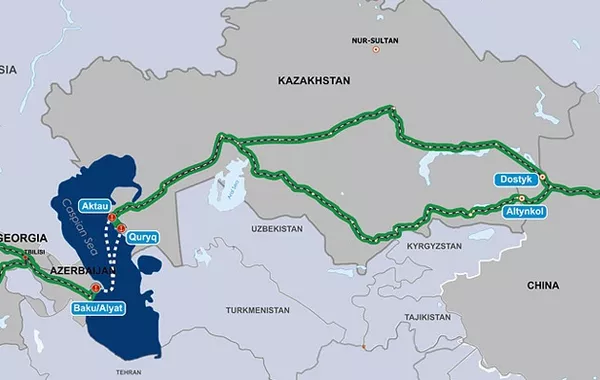
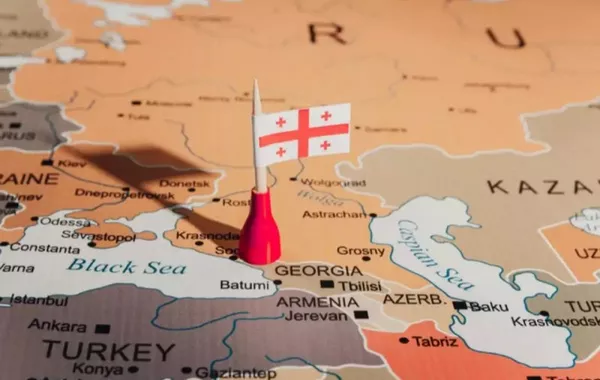
Against the backdrop of the Russia-Ukraine war, the US-Iran confrontation and ongoing shifts in global supply chains, the Middle Corridor has emerged as one of Eurasia's most promising transport routes. Connecting China with Europe via Central Asia, the Caspian Sea, Azerbaijan, Georgia and Türkiye, the corridor has gained strategic importance as governments and businesses seek to diversify away from traditional northern and southern routes. According to the World Bank, freight volumes along the Trans-Caspian International Transport Route (TITR), widely known as the Middle Corridor, could triple by 2030 if participating countries continue investing in infrastructure, logistics and regulatory reforms.
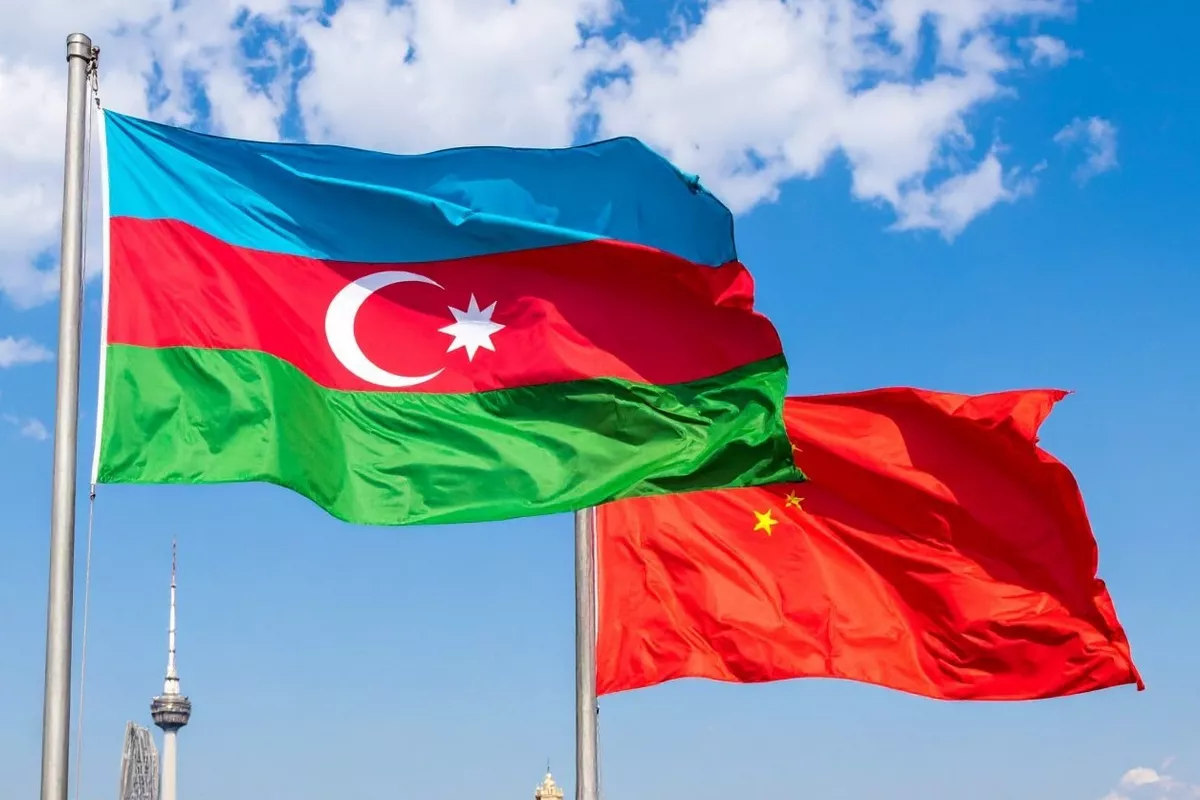
Against these geopolitical and economic realities, Azerbaijan-China relations have entered a qualitatively new stage of development. President Ilham Aliyev's state visit to the People's Republic of China in 2025 and the signing of the Joint Statement on the Establishment of a Comprehensive Strategic Partnership elevated bilateral cooperation to a new level. Over the past year, significant progress has been made across nearly all areas of cooperation, ranging from political dialogue and the economy to transport, green energy, industrial cooperation and defence.
Although relations between Azerbaijan and China have developed steadily in recent years, the Joint Statement on the Comprehensive Strategic Partnership has given bilateral cooperation fresh momentum. As a result, collaboration has expanded rapidly not only in political dialogue but also in the fields of the economy, logistics, energy, industry, high technology and investment. At the same time, growing cargo flows from China to Europe and the increasing international importance of the Middle Corridor are further strengthening Azerbaijan's position as a regional logistics and transit hub.
Economic relations have also continued to deepen. According to Azerbaijan's State Customs Committee, bilateral trade exceeded $3.7 billion in 2025, making China Azerbaijan's fourth-largest trading partner and its largest source of imports. Machinery, electrical equipment, industrial products and vehicles account for much of China's exports to Azerbaijan, while Baku is seeking to expand exports of petrochemical products, agricultural goods and other non-oil products to the Chinese market.
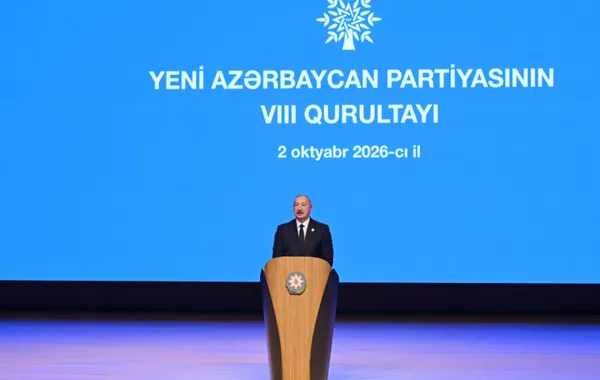
While answering questions from participants during the opening ceremony of the 4th Shusha Global Media Forum, titled The Role of Media in Promoting Peace: Restoring Truth and Building Trust, on 13 July, Azerbaijani President Ilham Aliyev said the Comprehensive Strategic Partnership with China had already produced tangible results, leading to a significant expansion of cooperation across multiple sectors.

Source: AzerTag
"Following my state visit to the People's Republic of China last year and the signing of the Joint Statement on the Establishment of a Comprehensive Strategic Partnership, we have witnessed a significant intensification of cooperation across all areas - political, economic, transport and others. We are very pleased with this and attach great importance to it," President Aliyev said.
This approach demonstrates that Baku views its relations with Beijing as a long-term strategic partnership and that China is becoming one of Azerbaijan's key partners in its foreign economic policy.
In recent years, the presence of Chinese companies in Azerbaijan has expanded significantly. They are participating in transport, energy, manufacturing and infrastructure projects while also increasing their direct investment. Today, more than 300 companies with Chinese capital are registered in Azerbaijan, with dozens actively operating in construction, logistics, renewable energy, telecommunications, manufacturing and trade. Cooperation has increasingly shifted from traditional contracting towards long-term investment projects, industrial localisation and technology partnerships.
According to President Aliyev: "Today, there are more Chinese companies operating in Azerbaijan. Some of them are already making substantial investments, while others are participating in various infrastructure projects."
The head of state also emphasised that meetings with executives of China's leading companies during his visit have already produced tangible results: "During my state visit, I met with the leadership of many of China's leading companies, and I am pleased that their activities in Azerbaijan are already producing results. They are working very efficiently, rapidly and to a very high standard."
This trend demonstrates not only that Azerbaijan's investment environment is attractive to Chinese businesses but also that the country's role as a regional manufacturing and logistics hub continues to strengthen.
Source: canalsolar.com
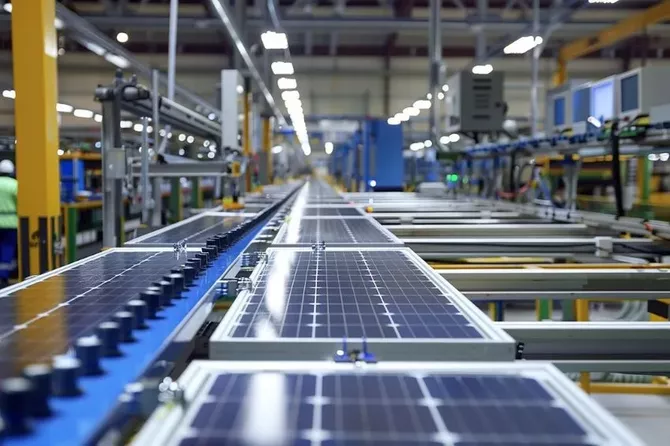
Azerbaijan's green energy strategy has also created new opportunities for Chinese companies. Most of the equipment used in the country's solar energy projects is manufactured in China, and this cooperation is gradually moving towards technology transfer. Azerbaijan aims to increase the share of renewable energy in its installed electricity generation capacity to around 30 per cent by 2030, while China currently accounts for more than 80 per cent of global solar panel manufacturing capacity, making it the world's leading producer of photovoltaic technologies.
President Ilham Aliyev stated: "Although Chinese companies have only recently begun investing in this sector, all the solar panels installed in Azerbaijan under contracts with companies from outside China are of Chinese origin. This means that, regardless of the investor, every solar panel you see in Azerbaijan is manufactured in China."
He added: "A major investment project is currently underway to build a solar panel manufacturing plant in Azerbaijan by a Chinese company. The plant will supply the domestic market and export its products."
This project is particularly significant as it could transform Azerbaijan not only into a consumer of renewable energy but also into a regional producer of renewable energy equipment, supporting technology transfer, industrial diversification and new export opportunities.
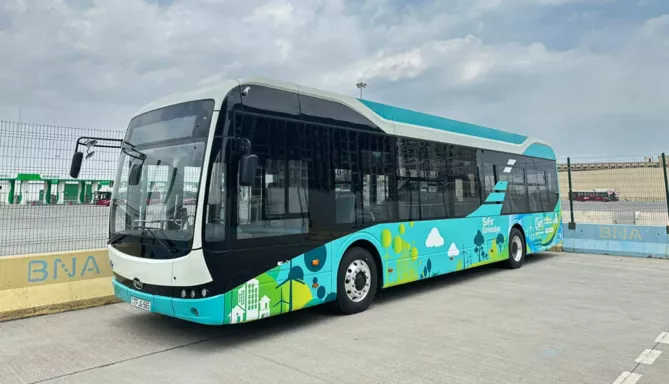
One of the most notable projects within Azerbaijan-China cooperation is the joint production of BYD electric buses. Besides contributing to the environmental transformation of public transport, the project also promotes industrial cooperation. BYD is one of the world's largest manufacturers of electric vehicles and electric buses, operating in more than 100 countries, while Azerbaijan has been steadily modernising its public transport fleet as part of its broader decarbonisation strategy.
President Ilham Aliyev noted: "One of the latest important developments in our bilateral cooperation is the joint production of BYD electric buses, which we now see operating throughout the city. We have two colours of buses: green for electric buses and red for conventional ones. The more green buses we have, the better."
Source: sustainable-bus.com
In the future, this project could serve as the foundation for developing a broader electric vehicle and electric transport manufacturing industry.
The Russia-Ukraine war has significantly disrupted the traditional northern transport routes connecting Europe and Asia. At the same time, the US-Iran confrontation and growing security risks in the Middle East have raised concerns about the reliability of southern transport corridors. Under these circumstances, the Middle Corridor has emerged as one of Eurasia's safest and most sustainable alternative routes. Depending on the origin and destination, container shipments between East Asia and Europe can be completed in approximately 10-18 days via the Middle Corridor, compared with roughly 30-45 days via traditional maritime routes.
Located at the heart of this corridor, Azerbaijan serves both as a transit country and a major logistics hub. The expansion of the Port of Baku, the Baku-Tbilisi-Kars railway, new highways and digital customs systems has substantially increased the country's transit capacity. The Port of Baku currently has an annual cargo-handling capacity of 15 million tonnes, including 100,000 TEU, while the ongoing expansion aims to increase overall capacity to 25 million tonnes and 500,000 TEU annually.
Meanwhile, the upgraded Baku-Tbilisi-Kars railway is capable of transporting up to 5 million tonnes of freight a year.
President Ilham Aliyev stated: "As for the Middle Corridor, the volume of cargo transported from China through Azerbaijan and to Azerbaijan is increasing."
He also explained that the expansion of port infrastructure is being carried out with this in mind: "As I have already mentioned, we are almost doubling the capacity of our commercial seaport, relying primarily on the expected increase in cargo flows from China, as well as from the countries of Central Asia."
This approach demonstrates that Azerbaijan is proactively expanding its infrastructure in anticipation of future cargo flows along the Middle Corridor while implementing a long-term transit strategy.
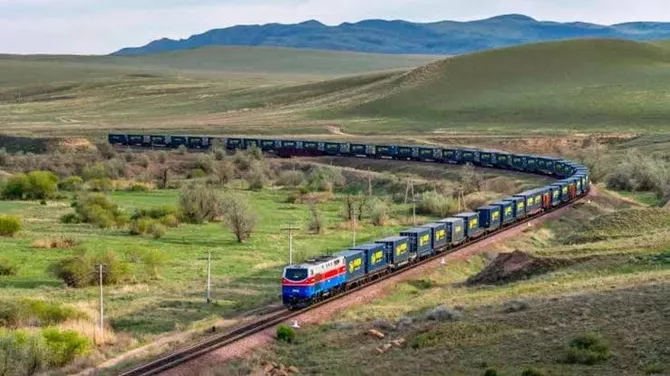
Source: Reuters
One of the newest and most significant areas of Azerbaijan-China cooperation is military-technical collaboration. This demonstrates that bilateral relations are evolving not only economically but also in the field of security. China has become one of the world's largest defence manufacturers, producing advanced unmanned aerial systems, air defence equipment, armoured vehicles and precision-guided weapons, while Azerbaijan continues to diversify its defence partnerships as part of its military modernisation strategy.
According to President Aliyev: "We have also opened a new chapter in our cooperation - defence cooperation. Azerbaijan has already acquired certain military products, some of which were displayed during the parade marking the fifth anniversary of our Victory, while others are still on their way and some remain under discussion. Therefore, we are very interested in developing cooperation in the field of military-technical support."
This development reflects the increasingly strategic nature of bilateral relations and the willingness of both sides to expand cooperation within a broader security framework.
Azerbaijan-China relations have evolved beyond traditional trade ties into a comprehensive strategic partnership. Projects in investment, industrial production, green energy, logistics and defence clearly demonstrate the tangible results of this cooperation.
At the same time, the growing importance of the Middle Corridor amid global geopolitical uncertainty is further strengthening Azerbaijan's role within the Eurasian transport system. As the world's second-largest economy and largest trading nation, China has a strong interest in reliable Eurasian connectivity, while Azerbaijan's continued expansion of its ports, railway network and transit infrastructure forms part of a long-term strategy to establish the country as one of the principal logistics and trade hubs linking East and West. In this context, the deepening strategic partnership with China can be regarded as one of the key factors strengthening Azerbaijan's economic and geopolitical position while contributing to broader regional connectivity across Eurasia.