Turkmenistan’s long-standing foreign-policy doctrine of “positive neutrality” is often treated as a diplomatic branding exercise-an abstract positioning meant to keep Ashgabat outside formal alliances and geopolitical blocs. In the energy sector, however, neutrality is not rhetorical. It operates as a practical system for survival in a structurally constrained export environment. The logic is simple but unforgiving: keep gas revenues flowing, avoid binding political commitments to any single power, and preserve autonomy in pricing, financing, and diplomacy-even when geography sharply limits available choices.
For much of the past two decades, this approach delivered acceptable results. Turkmenistan could plausibly point to several export directions: northward to Russia, southward to Iran, westward-at least in theory-across the Caspian toward Europe, and eastward to China as a fast-growing new market. That multi-vector reality gave Ashgabat room to maneuver. Today, the landscape is narrower. Eurasia’s energy map is shifting again, and the margin for maneuver is shrinking.
Russia’s pivot toward Asian markets is accelerating, China’s leverage as a buyer is steadily increasing, sanctions and regional conflicts complicate swap-based trade, and Europe’s appetite for long-term gas imports is structurally lower than it was in the 2010s. Against this backdrop, Turkmenistan’s energy diplomacy in 2026 is best understood not as neutrality in the abstract, but as a strategy of selective optionality. Ashgabat is not choosing sides. It is attempting to avoid being fully priced, financed, and constrained by a single customer-while working within the hard limits imposed by pipelines, capital, and regional politics.
The Material Reality Behind “Energy Neutrality”
Energy neutrality does not mean disengagement. For a major gas exporter, it means preserving policy autonomy while remaining commercially indispensable. The challenge for Turkmenistan is that autonomy in gas markets is shaped less by diplomatic language than by physical infrastructure. Pipelines define leverage. Whoever sits at the end of the pipe holds significant influence over volumes, pricing formulas, payment terms, and investment decisions.
This reality explains why Turkmenistan’s energy diplomacy consistently emphasizes three themes at once. First is reliability: Turkmenistan presents itself as a supplier that delivers contracted volumes without political conditionality. Second is non-politicization: Ashgabat insists that energy cooperation should remain insulated from broader geopolitical disputes. Third is diversification: the stated aim to avoid excessive dependence on any single buyer or transit route.
The tension is obvious. Diversification requires either the construction of new pipelines-projects that demand billions of dollars, long lead times, and substantial political risk-sharing-or the use of swap arrangements through neighboring countries. Swaps are cheaper and faster but introduce their own vulnerabilities, including sanctions exposure, payment complications, and reliance on regional stability. In practice, Turkmenistan is pursuing both paths simultaneously, but with a clear bias toward near-term, lower-risk options.
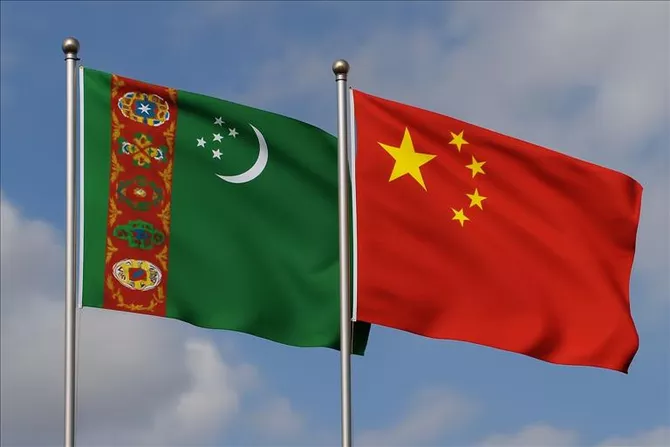
Photo: Shutterstock
China as the Structural Core of Turkmen Gas Exports
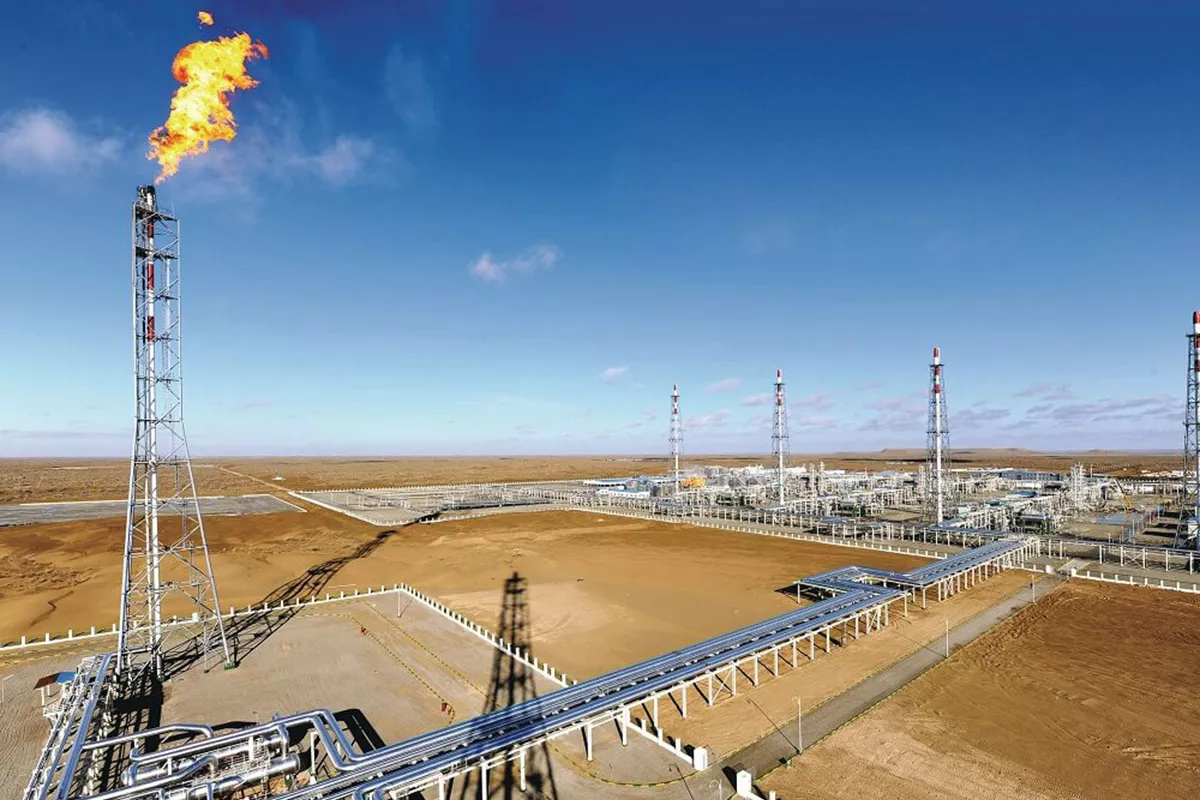
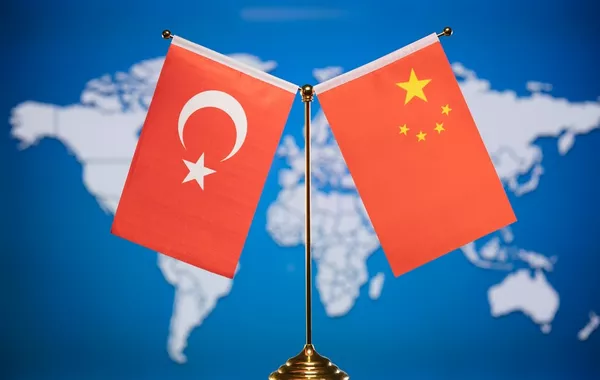
The gravitational center of Turkmenistan’s gas exports remains China. Chinese customs data for 2025 show imports of Turkmen natural gas valued at approximately $8.41 billion, with annual volumes commonly cited at around 40 billion cubic meters delivered through Lines A, B, and C of the Central Asia-China pipeline system. Even allowing for fluctuations in pricing and seasonal demand, the strategic picture is unambiguous: China is Turkmenistan’s anchor market.
This dependence shapes nearly every aspect of Turkmen energy policy. Pipeline gas is not easily rerouted, and the absence of alternative large-scale outlets means that Turkmenistan’s negotiating position is structurally constrained. Two factors deepen this dynamic. The first is concentration risk: reliance on a single dominant buyer increases exposure to demand shocks and strengthens that buyer’s pricing power. The second is the depth of Chinese involvement upstream.
China’s role extends well beyond purchasing gas. Chinese firms are deeply embedded in Turkmenistan’s production ecosystem, particularly around the supergiant Galkynysh gas field. They provide technical expertise, service capacity, and-historically-financing tied to future deliveries. This integration has underpinned export stability, but it has also entrenched dependence.
A key development heading into 2026 underscores how Ashgabat is trying to recalibrate this relationship without destabilizing it. China’s CNPC is set to implement Phase Four of the Galkynysh field, a stage that could add roughly 30 bcm per year in production capacity. Notably, Turkmenistan has signaled that this phase will be financed entirely from its own funds, even as CNPC executes the project.
This structure is revealing. Turkmenistan is not reducing Chinese operational involvement; it is reducing financial dependence. The message is subtle but important: more China in execution, less China in sovereign debt exposure. It is a recalibration rather than a rupture.
When Dependence Grows Even Without Volume Growth
Paradoxically, Turkmenistan’s vulnerability to China can increase even if export volumes remain stable. The reason lies in China’s expanding optionality. In 2025, Russia delivered roughly 38.8 bcm of gas to China via the Power of Siberia pipeline, exceeding contracted targets. This development has turned pipeline competition in China from a theoretical risk into a concrete reality.
China is also expanding LNG imports, developing additional pipeline options, and accelerating domestic clean-energy deployment. Together, these trends do not eliminate gas demand, but they do enhance Beijing’s leverage at the margin. For Turkmenistan, the strategic risk is not that China will walk away. It is that China will be able to negotiate more aggressively on price and terms because alternative supplies are increasingly credible.
The only meaningful counterweight is diversification that buyers believe is real. Even small alternative outlets can change negotiating dynamics if they are credible, repeatable, and scalable over time.
Photo: Shutterstock
Swaps as the First Line of Diversification
Turkmenistan’s diversification toolkit increasingly resembles a barbell strategy. On one end are pragmatic, lower-capital swap arrangements that can be implemented relatively quickly. On the other are large-scale megaprojects with transformational potential but high uncertainty. In 2026, the balance is clearly tilted toward swaps.
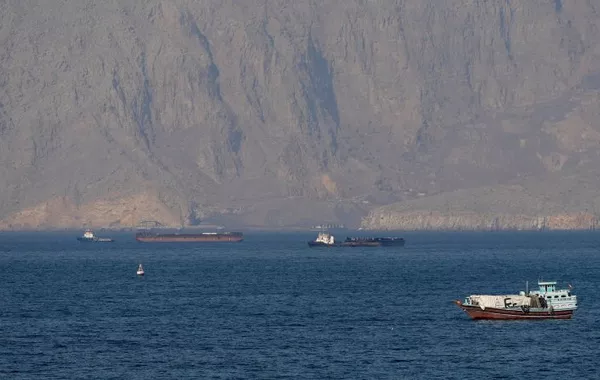
The most concrete westward opening has been the gas swap arrangement involving Turkmenistan, Iran, and Türkiye. Under the deal reported in early 2025, Turkmen gas is delivered to northern Iran, freeing up equivalent volumes of Iranian gas for export to Türkiye. Initial volumes were modest-around 1.3 bcm expected in 2025, with a technical ceiling of roughly 2 bcm per year.
From a revenue perspective, these volumes do not materially alter Turkmenistan’s export profile. Strategically, however, the deal carries disproportionate weight. It establishes a tangible non-China export route, tests payment and logistics mechanisms under sanction-sensitive conditions, and embeds Turkmen gas-however symbolically-into Türkiye’s ambition to position itself as a regional gas hub.
Importantly, reporting in early 2026 suggests that Türkiye intends to continue or resume Turkmen imports under similar arrangements. This signals that swaps are becoming a recurring feature rather than a one-off experiment. While they will not replace China, they do reduce the psychological and commercial sense of monopsony.
Ambitious Western Concepts and Their Structural Limits
Beyond Türkiye, more ambitious westward ideas continue to circulate. One frequently discussed concept involves supplying gas to Iraq through Iran’s network, with volumes sometimes cited at up to 10 bcm per year. On paper, this would represent a meaningful diversification step. In practice, the obstacles are formidable.
Payment mechanisms remain complicated by sanctions. Iran’s domestic gas shortages and infrastructure constraints add uncertainty. Political risk along the route further undermines bankability. This is a case where Turkmenistan’s desire to remain neutral and commercially relevant collides with the hard realities of the sanctions era.
These challenges illustrate a broader pattern: many diversification ideas are technically feasible but financially and politically fragile. As a result, they function more as strategic options than as near-term solutions.
TAPI: Enduring Logic, Elusive Execution
The Turkmenistan-Afghanistan-Pakistan-India pipeline remains the most ambitious diversification project on the table. Its strategic logic is unchanged: large capacity, access to new markets, and geopolitical significance that would reduce overreliance on any single buyer. Turkmenistan continues to emphasize that its section of the pipeline is complete and ready.
Yet progress beyond Turkmen borders remains slow. By late 2025, reports suggested that only a limited stretch of pipeline-roughly 14 to 15 kilometers-had been laid in Afghanistan. Security risks, financing challenges, and uncertainty around downstream commitments continue to weigh heavily on the project.
TAPI’s core problem is not engineering. It is risk pricing. Without credible security guarantees, top-tier financing, and firm long-term offtake commitments, the project remains difficult to bank. In the current Eurasian environment, TAPI serves more as strategic leverage than as an imminent alternative to China.
The Trans-Caspian Question and Europe’s Changing Role
Periodically, attention returns to the idea of a Trans-Caspian pipeline linking Turkmen gas to Azerbaijan and onward through the Southern Gas Corridor to European markets. On the surface, the logic is appealing: Europe values diversification, and infrastructure on the western side already exists.
Yet the barriers are persistent. Legal and environmental issues in the Caspian have eased in principle but remain sensitive in practice. Commercial questions-contract duration, pricing formulas, and demand guarantees-remain unresolved. Financing is perhaps the largest hurdle: someone must underwrite the political and commercial risk of an undersea link in a market where Europe’s long-term gas demand outlook is uncertain.
Recent analytical work suggests that swap-based alternatives could theoretically move larger volumes westward using existing networks. In reality, utilization remains limited. In today’s European gas market, the critical question is no longer whether Europe wants Turkmen gas, but who is willing to pay for and guarantee the route. Until that question is answered, Trans-Caspian remains more political concept than bankable project.
Russia as a Competitive, Not Contractual, Constraint
Turkmenistan’s direct gas relationship with Russia has been episodic, with flows starting and stopping over the years. In 2026, Russia’s relevance is less about being a customer and more about being a competitor. As Russian volumes to China increase and new Asian routes are pursued, Turkmenistan faces a more crowded primary market.
This dynamic reinforces the importance of diversification not as an alternative to China, but as a means of protecting pricing power within the Chinese market itself.
Methane, Climate Conditionality, and Market Access
An increasingly important constraint on gas diplomacy is emissions performance, particularly methane. Turkmenistan has faced repeated scrutiny over methane leaks and “super-emitter” events. What was once a reputational issue is becoming a commercial one. Buyers and financiers are increasingly linking gas imports to emissions monitoring and mitigation.
In response, Turkmen authorities and their partners have begun emphasizing measurement, mitigation, and cooperation on methane reduction. This shift is not purely environmental. It reflects a recognition that future diversification-especially westward-will require improved emissions performance to remain financeable and competitive.
What “Neutral but Relevant” Means in Practice
Taken together, Turkmenistan’s energy diplomacy in early 2026 is evolutionary rather than revolutionary. It combines continuity with cautious adjustment. Production capacity is being expanded to secure revenue continuity. Swap-based exports are being normalized to demonstrate non-China optionality. Megaprojects are kept alive rhetorically to preserve leverage, even as progress remains slow. Governance and emissions optics are receiving more attention as prerequisites for future market access.
A Realistic Outlook for Diversification
Three paths appear plausible. The most likely is incremental diversification through expanded swaps, providing modest but real non-China revenue streams. A second is deeper upstream cooperation with China, paired with tighter control over financing terms. The least likely in the near term is a breakthrough on a megaproject like TAPI or Trans-Caspian driven by a major political underwriting event.
The strategic conclusion is clear. Turkmenistan does not need to replace China to improve its position. It needs enough credible alternatives-however small-to shift bargaining dynamics. That is the practical meaning of being neutral but relevant in an energy system where pipelines, prices, and power remain tightly intertwined.