No Rush for Peace: Why a Broad Peace in Ukraine Remains Elusive
Recent trips to Moscow and Kyiv by US envoys Steve Witkoff and Jared Kushner, preceded by a visit by CIA Director John Ratcliffe, marked a new attempt by Washington to jumpstart negotiations on ending the Russia-Ukraine war. However, the intensity of diplomatic contacts currently far outweighs their tangible results. The reason lies not so much in the lack of an acceptable peace formula as in the fundamentally different expectations the parties hold concerning the war's continuation: Ukraine seeks ways to stop the destruction, while Russia hopes that, in the coming months, Kyiv will no longer be able to keep resisting.
This divergence can’t be explained by shifts on the battlefield map alone, as there have been almost none. Russian pressure at the front has not secured the kind of victory that would allow Moscow to dictate terms. At the same time, Ukraine lacks the advantage needed to rapidly liberate occupied territories. To call this balance a stalemate would be to underestimate how the nature of the war itself is evolving. What matters most is the ability to destroy the opposing side's economic foundation.
Targeting the economy
Ukrainian strikes on the Russian oil industry are a good example. They are intended to raise the cost of the war to the point where Moscow sees a practical benefit in mutually limiting attacks. Kyiv is open to a wide range of agreements, from protecting Black Sea shipping and grain infrastructure to halting strikes on energy facilities or even a complete mutual cessation of long-range strikes, as this would allow for de-escalation without waiting for the resolution of all political disputes.
The problem is that Moscow has so far been unwilling to discuss such arrangements; instead, it links any meaningful move toward a truce to Ukraine’s prior withdrawal from the remaining parts of Donbas under its control. By insisting on the withdrawal of Ukrainian troops from the rest of Donbas, which Kyiv believes it will be able to defend at least for a few years, the Kremlin is demanding what Kyiv considers impossible.
Russia’s reluctance to agree to limits on strikes stems from the conviction that time is on Moscow’s side. In private discussions with American counterparts, the Russian side points to Ukraine’s budgetary difficulties and the uncertainty surrounding future European funding. Upcoming elections in Europe are also presented as an additional sign of weakened support for Ukraine in the future. The Kremlin operates on the assumption that while losses in its own oil sector are manageable, the combination of winter-induced destruction and financial constraints will ultimately force Kyiv to give up.
Ukraine is bracing for attacks not only on its power grid but also on its gas infrastructure, preparing for a massive humanitarian crisis. Under these circumstances, the supply of air defense systems and reliable funding not only help Kyiv defend itself but also undermine Moscow’s confidence that Ukrainian resistance will eventually collapse.
Stalled negotiations
Meanwhile, visits by American negotiators have not brought a breakthrough, and Moscow has linked its willingness to take further steps in the talks to the conclusion of the September parliamentary elections. Both Kyiv and Washington understand that the Russians will likely find new grounds for delay thereafter, allowing them to continue the military campaign into the spring.
The American attempts to offer economic incentives in exchange for de-escalation have not yet resolved the fundamental contradiction. Moscow may well be interested in economic benefits without losing its desire to continue the war.
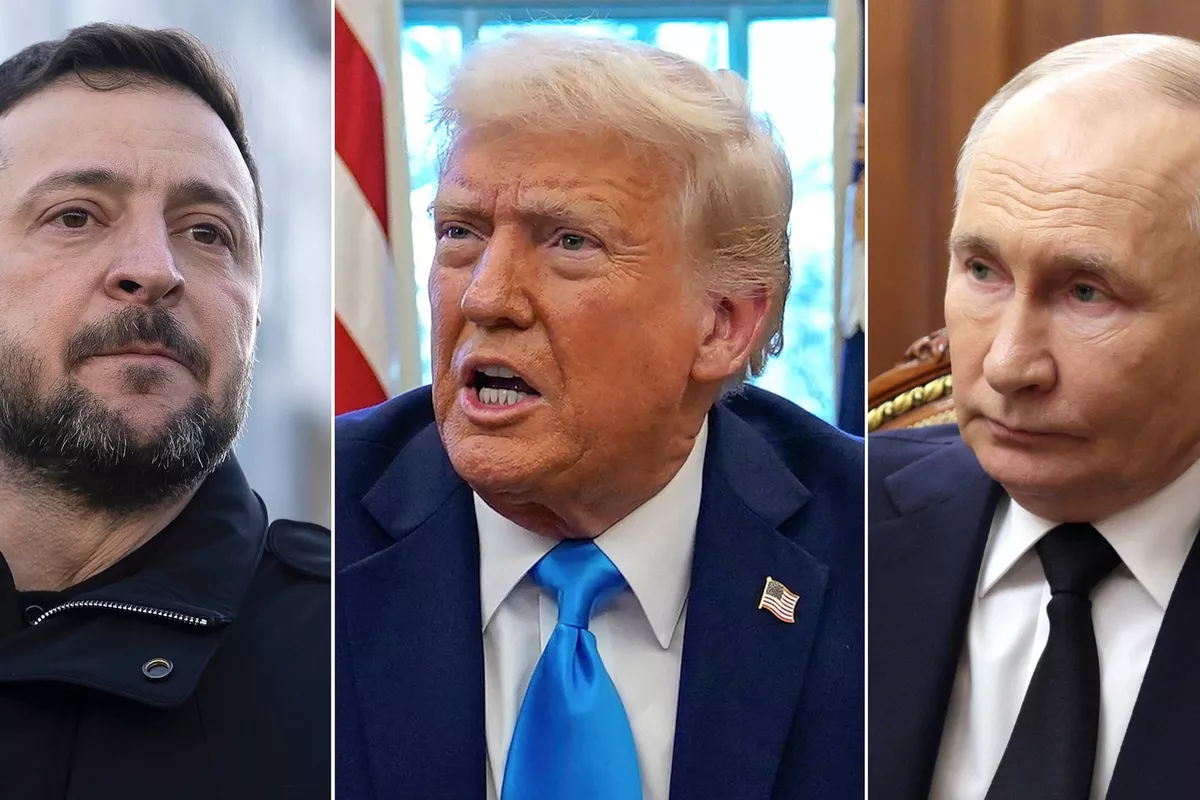
In the absence of conditions for a broad agreement, the upcoming meeting between Ukrainian President Volodymyr Zelenskyy and his US counterpart Donald Trump during the UN General Assembly could offer the next opportunity to test the prospects for a limited truce. Draft resolutions calling for an end to strikes on grain infrastructure in the Black Sea are already circulating at the UN. Such an agreement would have significance far beyond Ukraine, mitigating risks to the global food supply and allowing the UN to demonstrate its practical utility after years of criticism regarding its ineffectiveness.
For Trump, a Black Sea truce could also serve as a diplomatic achievement ahead of the midterm congressional elections, particularly as the protracted war with Iran continues to consume American resources. For these reasons, he might be interested in spearheading this process and leveraging American influence to ensure the agreement is upheld. Skepticism over UN mechanisms further reinforces Ukraine’s desire for Washington to assume direct political responsibility for the truce's observance. Ukraine’s readiness for a mutual truce leaves sufficient room for an agreement. To capitalize on this, Washington and Europe must use sanctions, incentives, or both to convince the Kremlin that another winter will not deliver the victory it has so far been unable to achieve on the battlefield.
Find the original article here