In an in-depth analysis for The Nation, former ambassador and a distinguished visiting fellow at the National Defence University and analyst Tariq Osman Hyder examines how the emerging Pakistan-Uzbekistan strategic partnership is increasingly shaped by two interconnected priorities: regional connectivity and the stabilization of Afghanistan. The article argues that transport corridors, trade routes, and security cooperation are not only central to bilateral ties but also key to unlocking broader economic integration and long-term stability across Central and South Asia.
The eve of Uzbek President Shavkat Mirziyoyev’s visit to Pakistan early next month offers a vantage point for examining the declared objective of both countries to implement a strategic partnership. What is it based on? Where are we now? What are the objectives, and do they go far enough? Both countries share deep historical, cultural, political, and civilisational links. The colonial period in the eighteenth and nineteenth centuries disrupted this relationship due to Russian expansion into Central Asia and British colonial rule in South Asia. Yet there remained in Pakistan a deep sense of longing to reconnect and to know more about Central Asia, particularly Uzbekistan, from where, through the Mughals, so much of our history, governance, culture, religious traditions, and architecture came, The Caspian Post reports via The Nation.
In 1991, Pakistan sent a special delegation led by Minister Sardar Aseff Ali, including diplomats, officials, and leading businessmen, on a dedicated plane to tour the Central Asian states. During this exercise, the USSR was dissolved and the Central Asian Republics regained their rightful independence. Pakistan was thus well-positioned and became the second country after Turkey to recognise the independence of all of them.
Embassies were opened in their capitals, zero-interest ten-million-dollar loans were extended for the purchase of Pakistani medicines, and PIA began flights to Tashkent, Almaty, Ashgabat, and Baku, with chartered flights operating to Pakistan from there. Two-way suitcase tourism gave commerce a boost. Some Pakistani business groups established themselves in Uzbekistan. The pioneer, Yaqub Tabani, set up two factories in Tashkent, and the Arifin Group established the first mobile cellular system in Uzbekistan. Within two years, Turkmenistan, Pakistan, and Afghanistan agreed on a project to transport natural gas and oil from Turkmenistan through Afghanistan to Pakistan. Uzbekistan agreed to add Uzbek gas to the Centgas pipeline project. Assistance was offered to Uzbekistan to further explore its natural uranium resources.
It was a promising start, and in the post-independence phase of the Central Asian Republics there was a certain sense of euphoria in Pakistan. However, these early expectations were not lived up to. The continuing turmoil in Afghanistan was, of course, a major factor. No one was able to persuade either the Afghan factions that they had more to gain from peace than conflict, or the Americans that investment in connectivity projects would stabilise Afghanistan, bring development to its long-suffering people, and knit the whole region together towards a more prosperous future.
We lack institutional memory. Unless we read the past, we cannot move forward. What is different now, considering that Uzbekistan and Pakistan have a post-1991 history of high-level interactions? There are, of course, objective reasons, though these are not new. They include complementary geo-economic aspirations, regional connectivity imperatives, the need to expand bilateral trade and other ties, and a shared interest in stability in Afghanistan.
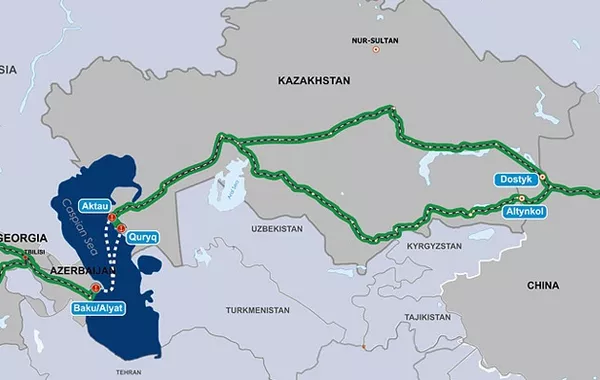
Connectivity is central to Pakistan-Uzbekistan cooperation. For landlocked Uzbekistan, Pakistan offers the shortest, most efficient, and economically viable access to global markets through its seaports and to CPEC. For Pakistan, enhanced connectivity with Uzbekistan, and also Turkmenistan, opens pathways to Central Asia and beyond, reinforcing our role as a natural bridge between South Asia, Central Asia, and the Middle East. The Uzbekistan-Afghanistan-Pakistan (UAP) Railway Project epitomises this shared connectivity vision. However, until the realisation of this project, existing truck-based logistics routes need augmentation.
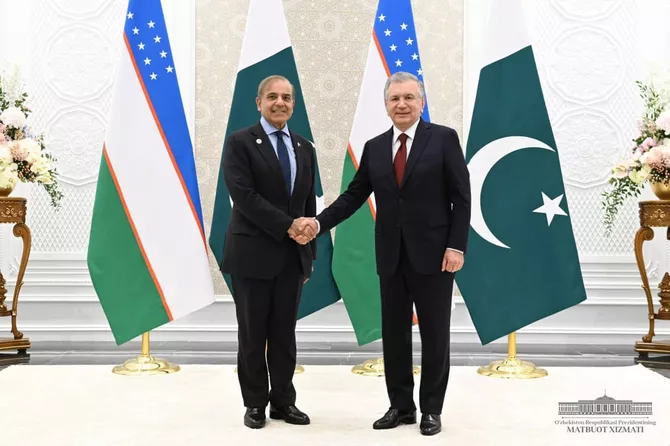
photo: Kun.uz
Past leaders and governments deserve credit for recognising the need for a strategic partnership. This led to the Joint Declaration on the Establishment of a Strategic Partnership between Uzbekistan and Pakistan on 16 July 2021, and the Joint Declaration on Further Steps to Develop the Strategic Partnership on 4 March 2022. The current leadership in both countries is driving this process. President Mirziyoyev’s reforms have opened Uzbekistan regionally. Prime Minister Shehbaz Sharif has focused on furthering bilateral relationships through two-way visits, especially with the Central Asian states. These interactions have led to regular high-level exchanges and sustained institutional engagement. Trade with this most populous Central Asian country has already risen to $450 million.
Key milestones have been:
The Pakistani Prime Minister’s visit to Uzbekistan in February 2025, during which it was agreed to set up a High-Level Strategic Cooperation Council; Progress augmented by a number of institutional mechanisms, including bilateral political consultations; an intergovernmental commission on trade, economic and scientific cooperation; a joint security commission, including a working group on counter-terrorism; working groups on subjects such as agriculture, minerals, tourism, and transport; and a joint business council. Participation by both countries in a series of meetings of Afghanistan’s neighbours aimed at stabilising the country and discouraging cross-border terrorism.
Connectivity depends on a supportive relationship with Afghanistan. Uzbekistan, for its part, has long provided electricity to the border region around Mazar-e-Sharif and is now building a large transmission line from Termez to Kabul. Pakistan needs to restore its relationship with Afghanistan while constraining cross-border terrorism. The Taliban say, “Control your side of the border.” The USSR established double fences along the long borders of the Central Asian Republics with Iran and Afghanistan. India has a sophisticated fence along our border. Our fence along the Afghan border defines territory but does not curtail forcible access. We need to rethink, reinvest in relevant infrastructure, including a double fence and technology, and consider reverting to our earlier proposal to mine the border.
Uzbekistan-Pakistan relations are progressing towards a new strategic quality; however, both countries need to be more ambitious. Uzbekistan is a major global uranium producer and exporter, with an output of roughly 3,500 tonnes annually and an objective to double production to 7,100 tonnes by 2030. Pakistan, with its expertise, can offer to assist in both uranium mining and refining. Uzbekistan would add far more value to its uranium resources if, instead of exporting raw material for enrichment abroad, its uranium were enriched and then exported. Under IAEA safeguards, Pakistan could work out and offer a joint enrichment modality.
At a time when major hydrocarbon producers such as the UAE and Saudi Arabia have either set up nuclear power plants or are planning to do so, Azim Akhmedkhadjaev, head of Uzbekistan’s Atomic Energy Agency, has emphasised the importance of nuclear energy in reducing Uzbekistan’s dependence on imported fossil fuels. This comes in the context of an agreement with Russia to set up a six-unit small modular nuclear power plant in Jizzakh province. These RITM-200N reactors are derived from Russia’s naval reactor technology and utilise 20 per cent enriched fuel. For the future development of Uzbekistan’s own civil nuclear power programme, Pakistan, with its complete nuclear fuel cycle capability, should offer to build an IAEA-safeguarded nuclear research reactor utilising Uzbekistan’s own natural uranium. Pakistan should also offer to train Uzbek students and scientists in its nuclear sciences, regulatory, and safety training institutions.
Connectivity and the stabilisation of Afghanistan represent the current main objectives of this strategic partnership. Going forward, IAEA-safeguarded bilateral civil nuclear energy cooperation would add further depth to it.
Ambassador Tariq Osman Hyder was Pakistan’s first Ambassador to Turkmenistan from 1993 to 1998.