Armenian Prime Minister Nikol Pashinyan has proposed that Baku close the issue of Western Azerbaijan and the return of Karabakh Armenians.
On Thursday, he said he intends to make an open, public proposal to Azerbaijan to remove these topics from the agendas of both countries, arguing that doing so would help prevent potential conflict.
“I want to make an open, public proposal to Azerbaijan, because just as they have concerns regarding these topics, we have concerns as well. I propose adopting a joint ‘road map’ to close these two issues. I have also told our compatriots from Karabakh that their return is unrealistic. Continuing the agenda of return would mean restarting the Karabakh movement, which I have said should not continue. The Karabakh movement is over, and attempts to revive it are futile,” Pashinyan said.
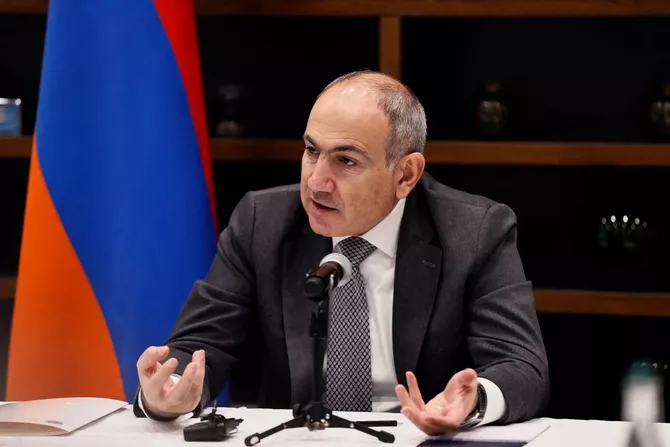
Photo credit: oc-media.org
He also noted that Azerbaijan continues to raise the issue of Western Azerbaijan. “Therefore, it is necessary to sit down, discuss the matter, and remove it from the long-term strategic perspective,” Pashinyan added.
This concern in Armenia arose after the 3rd International Conference of the Western Azerbaijan Community was held in Baku on December 5, under the title “Cultural Heritage and the Right of Return: Restoring the Cultural Heritage of Azerbaijanis Expelled from Armenia as a Path to Justice, Reconciliation, and Peace,” which coincided with the Day of Remembrance of the Deportation of Western Azerbaijanis. President Ilham Aliyev addressed the conference participants with a message.
Ilham Aliyev highlighted the importance of intensifying efforts to ensure the return of Azerbaijanis forcibly expelled from Armenia, in line with the right of return enshrined in the Universal Declaration of Human Rights, the International Covenant on Civil and Political Rights, the Convention Relating to the Status of Refugees, and other key international instruments. According to the president, the right of return is a fundamental human right, encompassing not only physical return to one’s homeland but also the restoration of spiritual integrity, cultural heritage, and historical memory. He also stressed that restoring and protecting Azerbaijani cultural heritage in Armenia, a legitimate demand of the Azerbaijani people, is essential for respecting universal human values, closing the page of enmity, and achieving mutual understanding between peoples.
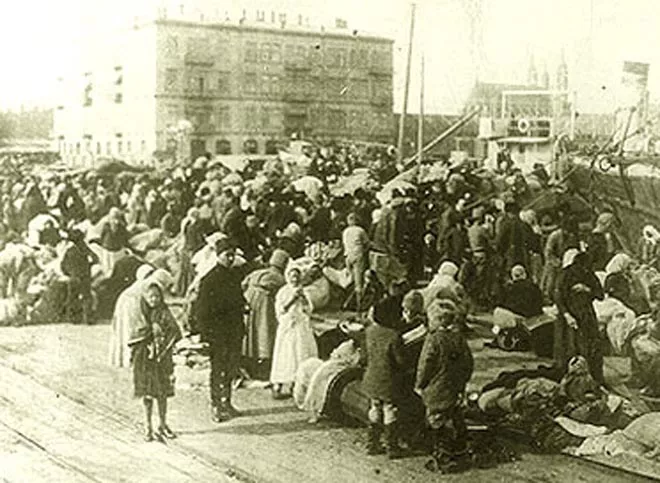
Photo credit: 1905.Az
Interestingly, Armenian officials remained silent at the time. There were no official comments, and only the revanchist opposition voiced outrage. Nevertheless, Aliyev’s message did not go unnoticed, as reflected in Pashinyan’s latest statements.
The Armenian prime minister spoke reasonably and logically, but there are important nuances.
Azerbaijanis have never threatened Armenia’s territorial integrity. They were peaceful, law-abiding citizens who never entertained thoughts of self-determination. Azerbaijan has never sought to reclaim territories unlawfully taken from it over the past century, such as Zangezur, where some Azerbaijani communities remained even after three deportations. Baku has consistently adhered to international law and approached realities pragmatically. Territories like Zangezur, transferred to Armenia during the Soviet period, remained within the internationally recognized borders of the neighbouring state after the USSR’s collapse. There was never Azerbaijani propaganda or separatist agitation in Armenia, and Azerbaijanis never posed a threat to the country.
In contrast, Armenians who settled in Karabakh from the beginning pursued the goal of separating the territory from Azerbaijan. The desire to seize other people’s land and expand Armenian-populated areas became a national doctrine and guided Armenians until their departure from Karabakh. This ideology poisoned the existence of the minority and prevented it from integrating as part of Azerbaijan’s multinational society. The Karabakh conflict ended with Armenia’s defeat, the collapse of the idea of “miatsum,” and the voluntary departure of Armenians who did not wish to live alongside Azerbaijanis.
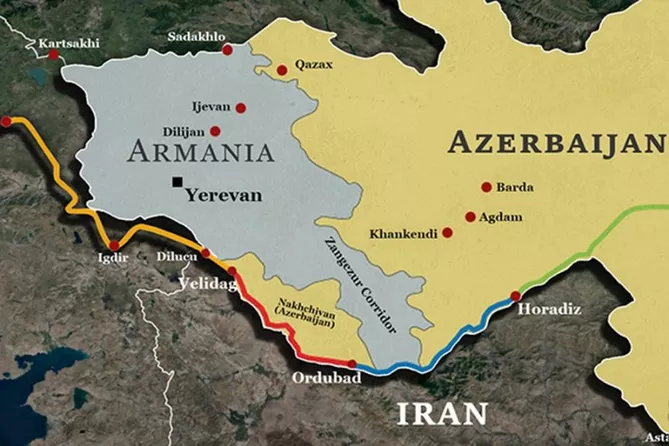
Photo credit: News.Az
Furthermore, Azerbaijanis endured brutal ethnic cleansing: they were deported, losing everything, including their health, while fleeing on foot through snowy mountain passes to Azerbaijan. Armenians, in contrast, left Karabakh voluntarily, using their own transport, taking their belongings, valuables, and documents, accompanied by police, peacekeepers, and journalists. They departed without violence, often receiving food and support.
These are two completely different situations. The return of Azerbaijanis poses no threat to Armenia, whereas the return of Armenians could destabilize Azerbaijan and risk a new regional conflict. The positions are inherently unequal.
Nevertheless, Pashinyan’s proposal is reasonable. Baku may be willing to consider it, but only in exchange for firm guarantees that the issue of Karabakh Armenians’ return will be closed permanently. But will it truly be closed forever?
Recently, searches were conducted at the offices of separatist representatives in Yerevan. Armenian media reported that certain documents were being sought. While these likely do not relate to the period of occupation, the fact that authorities are finally addressing separatists is a positive development.
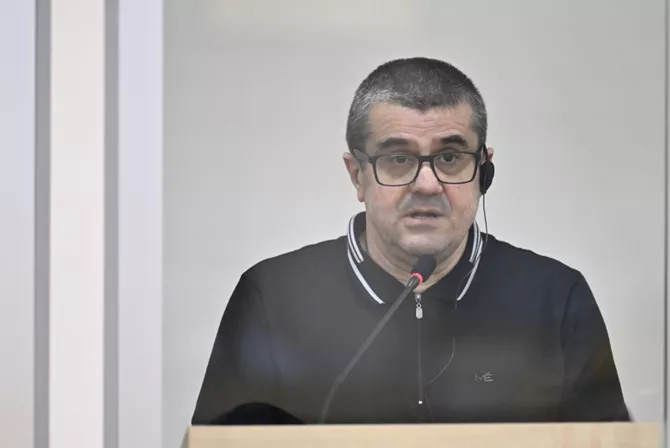
Photo credit: Azertac
However, this alone will not solve all problems. The separatist network continues to be leveraged by the revanchist opposition and is unlikely to accept state oversight or cease its activities. Separatists have served nationalist agendas both during the conflict and today. Although it is clear that Azerbaijan will not reopen pathways to Armenian separatism, the idea of a “just return” continues to be promoted. Pashinyan should have addressed the separatists two years ago, when they had just arrived in Armenia and were still recovering from the failure of their “century-old dream.” By delaying, he allowed them to regroup, find sponsors and allies, and now they actively undermine him through statements, actions, and external contacts.
Pashinyan appears out of touch with realities on the ground. What kind of “road map” is he proposing after the EU’s strategic priorities include a commitment to ensure Azerbaijan implements international court rulings on Armenia’s lawsuits? These cases concern Armenians who voluntarily left Karabakh at their leaders’ instruction and were left destitute despite promises. International courts have ruled in their favour, and the EU now pledges support in enforcing these rulings. Similarly, the EU promises assistance in securing the release of separatist leaders.
It is unclear whether Pashinyan approved these priorities out of euphoria over potential rapprochement with the EU or a genuine lack of understanding of their implications.
Following the Strategic Priorities announced on December 2, the structure of the peace process has shifted. In this context, Pashinyan’s proposal appears insincere and requires serious reconsideration.
In short, the topic of Western Azerbaijan will remain on the agenda until the Armenian government removes separatist activity from the political field. Only then will a “road map” become unnecessary.
By Tural Heybatov