A few days ago, media across the Caucasus reported that several Azerbaijan-bound freight trucks were held up at Georgian customs - an incident that sparked questions far beyond routine transit issues. What initially appeared to be a simple technical delay soon took on the shape of a political message.
Azerbaijani freight trucks carrying tobacco products to Europe were halted in early November at customs checkpoints in Batumi and Tbilisi, with no explanation provided to the drivers or the companies involved. The vehicles sat idle for nearly three weeks - an unusually long delay in international logistics, where even short holdups translate into financial losses.
The standoff ended only after the Embassy of Azerbaijan stepped in. Once diplomatic pressure was applied, the trucks were released within hours.
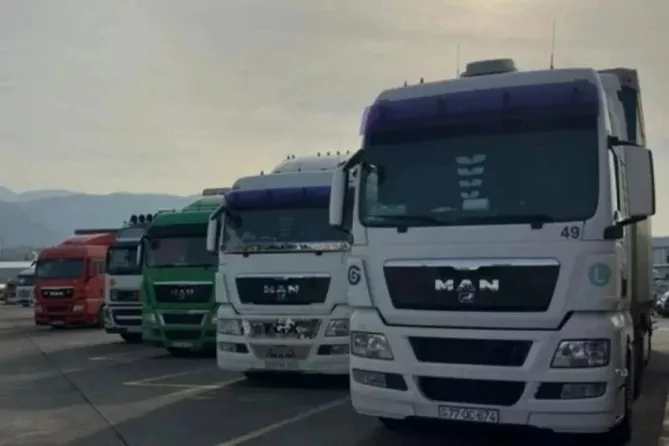
Photo credit: Report.az
Drivers stressed that all rules for transporting tobacco products through Georgia had been fully complied with. Duties were paid, documentation completed, and the cargo was legally declared and properly handled.
No Georgian official offered a clear explanation for the delay. According to the drivers, the most troubling issue was not the detention itself but the rude and dismissive conduct of customs officers - behavior at odds with long-standing Azerbaijani-Georgian relations. For three weeks, the drivers slept in their trucks, uncertain whether their cargo would be released or seized, and confused as to why they were suddenly treated as unwelcome.
Once the situation drew public attention, Azerbaijani journalists contacted Georgian authorities. The response was vague, claiming the detained trucks were “undergoing standard procedures.” Yet, when pressed, no official could clarify what kind of standard procedure would take nearly a month at the border. Notably, the delays ended only after diplomatic intervention from Baku. Coincidence? Perhaps, but the timing raises serious questions.
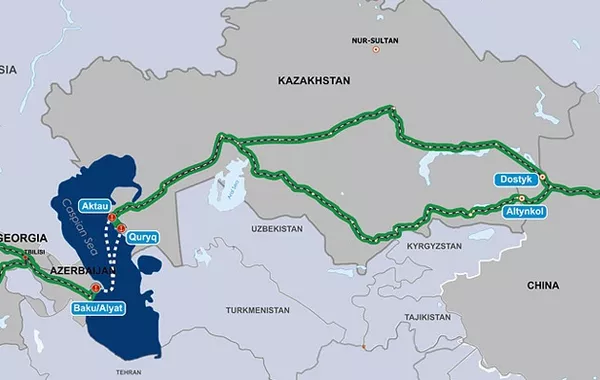
For decades, Georgian transit has been a stable, predictable, and trusted route - a backbone of regional supply chains along the Middle Corridor. What happened in November disrupted not only logistics but also confidence, raising doubts not about ordinary Georgian citizens but about whether decision-making in Tbilisi is increasingly shaped by short-term geopolitical anxieties rather than long-standing strategic interests.

Photo credit: forbes.ge
Azerbaijani drivers have occasionally raised concerns about inconsistent treatment at the Red Bridge border crossing. While these incidents were previously isolated and not systemic, recent developments suggest an emerging pattern, and patterns like these rarely appear by chance.
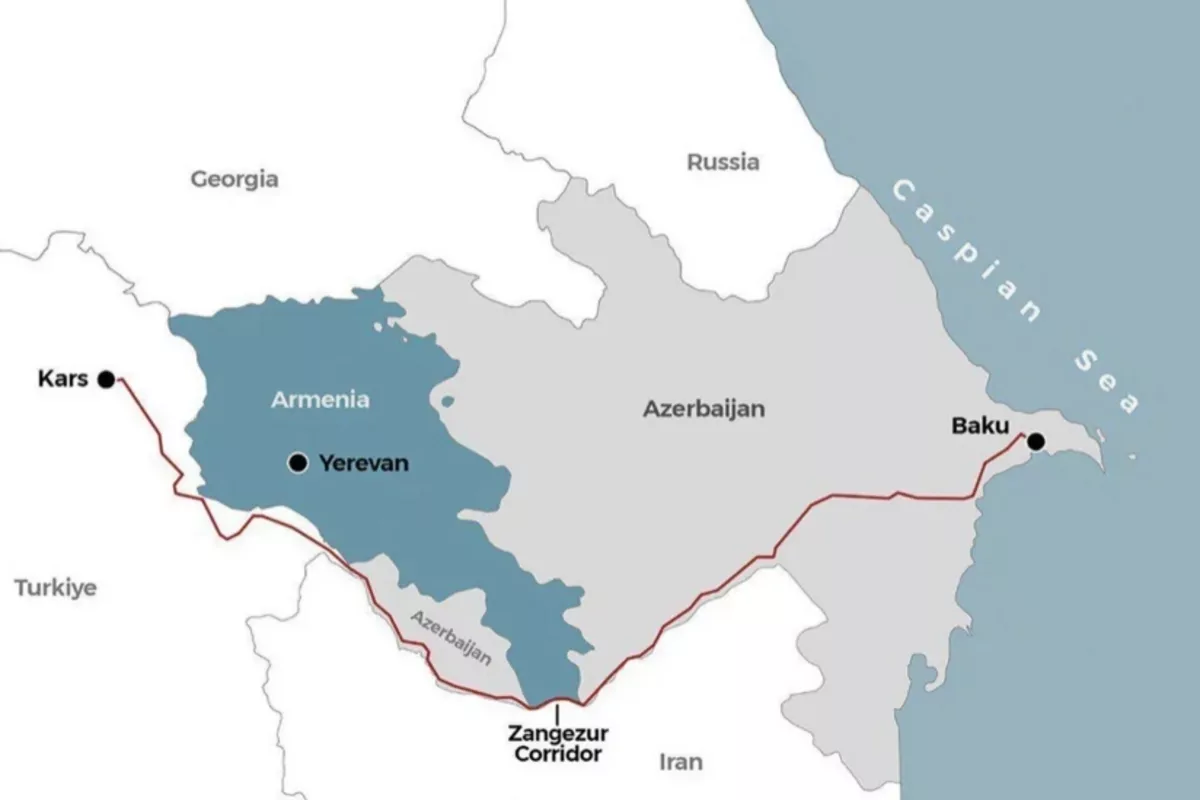
Some of the detained drivers said Georgian customs officers responded to their inquiries with the sarcastic remark, “Why don’t you go through Zangezur instead?”
Casual, emotional, and even mocking, the comment is revealing. Ordinary customs officers do not spontaneously adopt geopolitical language, nor do border staff suddenly become defenders of transit politics. The remark suggests that someone has influenced the institutional environment, making such language acceptable.
Some observers suggest that Georgia’s Armenian community, one of the country’s most organized and politically active minority groups, is promoting narratives framing the Zangezur Corridor as a threat to Georgia’s regional role. Others argue the shift may reflect pressure from external actors pursuing their own strategic agendas. Some attribute it to Russian influence, though this theory is considered weak given Moscow’s waning leverage in the South Caucasus.
The central argument circulating in media and on social networks is straightforward, and misleading:
“Once the Zangezur Corridor opens, Georgia will lose its transit monopoly, its strategic role, and the financial benefits tied to the Middle Corridor.”
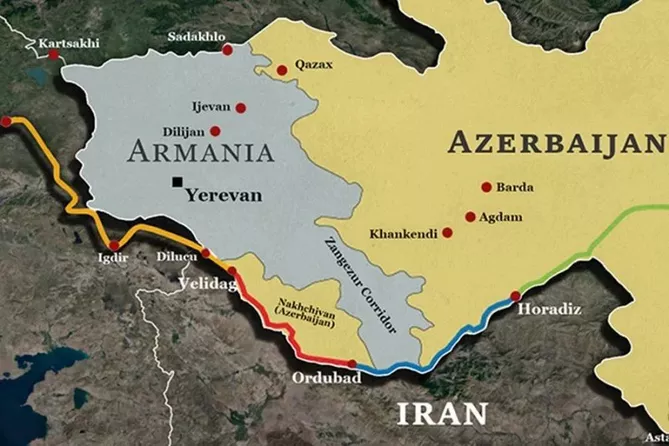
Photo credit: trendsresearch
These concerns appear repeatedly in Armenian, Georgian, and Russian media, often accompanied by sensational headlines predicting Georgia’s economic marginalization. When repeated frequently, such narratives can shape perceptions, particularly within bureaucratic structures sensitive to political pressures.
However, the fears are largely overstated.
Georgia has little to worry about from the Zangezur route. Azerbaijan has invested billions in modernizing Georgian infrastructure, including funding upgrades to Georgian railways and spearheading the Baku-Tbilisi-Kars line. These investments were never intended to be temporary; strategic infrastructure cannot function on seasonal interest.
Once operational, the Zangezur route will not replace the Georgian corridor - it will complement it. Logistics networks rely on redundancy, diversification, and parallel capacity. No serious transport corridor depends on a single route.
Yet this reality comes with a caveat: Georgia must keep pace.
For years, Georgia relied on its geography alone, assuming regional transit would inevitably pass through its territory. Geography, however, is only an advantage when backed by infrastructure, efficiency, and political predictability.
The Baku-Tbilisi-Kars railway remained underutilized for nearly a year due to issues specifically on the Georgian side. That delay cost millions, damaged reputations, and forced Azerbaijan to consider alternative routes. No country, even a friendly neighbor, can absorb such losses indefinitely.
Photo credit: gtreview.com
Azerbaijan will continue developing the Zangezur Corridor, as the project serves broader geopolitical and economic goals, including providing access to Türkiye and Europe without dependence on unpredictable actors. Armenia is expected to benefit as well, though the advantages will take time to materialize.
Construction is still in the early stages. Yerevan plans to begin infrastructure work in the second half of next year, focusing initially on power lines and pipelines under the TRIPP framework. The railway, the corridor’s central component, remains a distant prospect.
This gives Georgia time - not unlimited, but enough - to transform from a mere “territory of transit” into an indispensable partner. To maintain this role, the country must treat transit not as a privilege it grants others, but as a strategic asset and a competitive market.
Azerbaijan has repeatedly proven itself a reliable neighbor, often at critical moments. For Tbilisi, the wisest approach is not fear, but cooperation.
In global logistics - as in politics - one rule holds:
Routes are not enemies. Routes are options. And in a rapidly changing world, the value of having multiple options only grows.
By Tural Heybatov