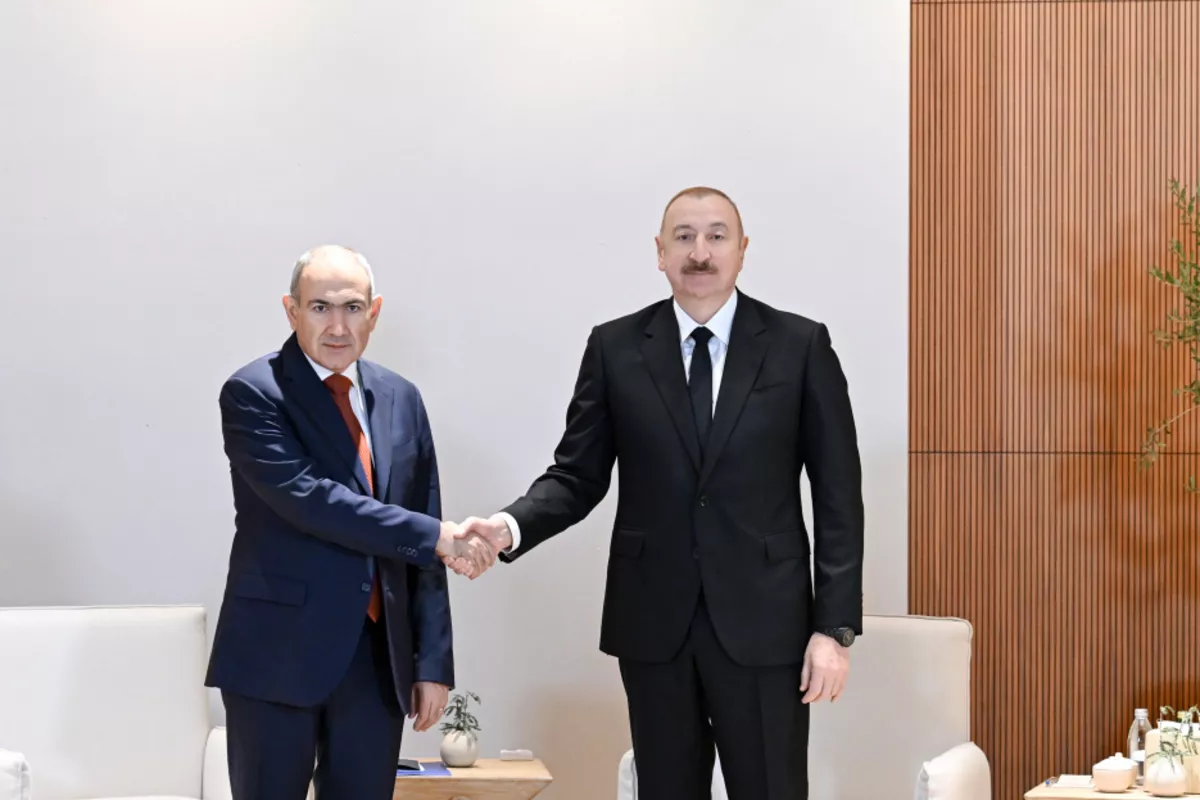
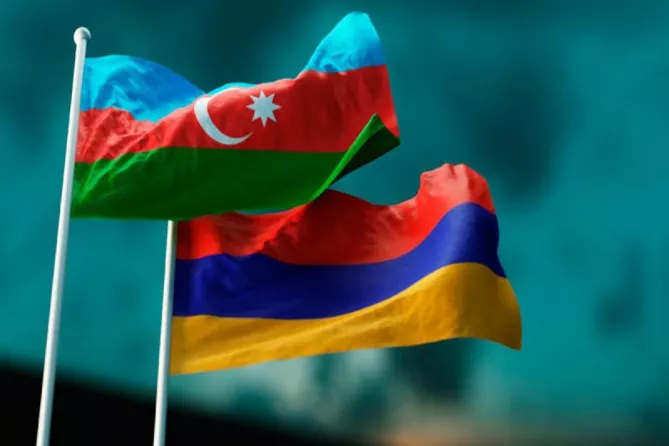
The meeting between Azerbaijani President Ilham Aliyev and Armenian Prime Minister Nikol Pashinyan in Abu Dhabi on February 4 may, at first glance, appear to be another routine diplomatic engagement. A closer examination, however, suggests that the talks reflect deeper shifts in the political architecture of the South Caucasus and in the underlying dynamics of Armenian-Azerbaijani relations.
What is gradually emerging is a shift from a conflict-centered paradigm toward a pragmatic, interest-based model of interaction. Normalization is no longer framed solely as a political aspiration or a distant diplomatic goal; it is increasingly taking shape through tangible processes - trade, transit, energy cooperation, infrastructure development, and people-to-people contacts. It is this evolution that transforms the meeting from a symbolic gesture into a potentially strategic milestone.
Economics as the anchor of peace
One of the most revealing aspects of the meeting was the acknowledgment that both societies are already experiencing tangible benefits from peace on the ground. The launch of bilateral trade, Azerbaijan’s exports of petroleum products to Armenia, and the transit of grain and other goods from third countries through Azerbaijani territory mark a fundamental break with decades of blockade-driven thinking.
In a region long defined by closed borders and zero-sum calculations, these developments point to a genuine paradigm shift.
Economic interdependence serves several strategic purposes. First, it creates constituencies - business communities, logistics operators, and investors - whose prosperity depends on stability. Second, it raises the cost of renewed escalation by embedding both countries in shared commercial networks. Third, it enables political leaders to demonstrate concrete dividends of peace to their domestic audiences, thereby strengthening internal support for normalization.
In this sense, Azerbaijan is consistently advancing a model in which peace is not imposed externally but emerges from rational self-interest. This approach aligns with Baku’s broader vision of transforming the South Caucasus into a zone of connectivity, energy flows, and transit corridors.
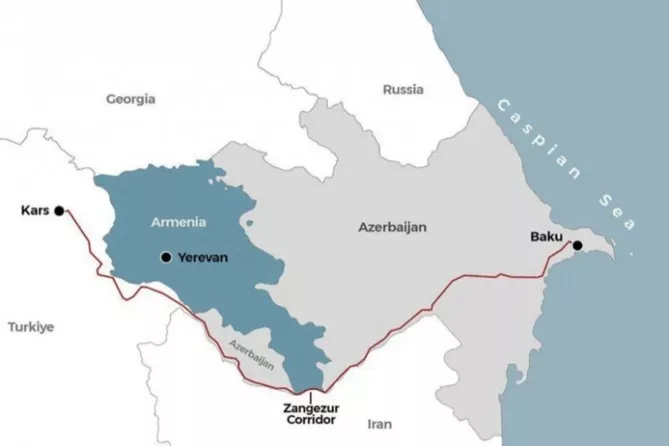
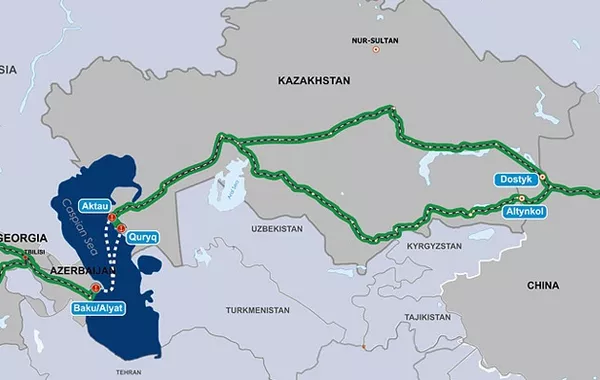
The discussion of the TRIPP project and other transport connectivity initiatives underscores how infrastructure has become a central instrument of regional transformation.
Today, transport corridors are no longer merely technical undertakings; they are tools of geopolitical reconfiguration. Their expansion is gradually repositioning the South Caucasus from a peripheral space into a critical bridge linking East and West, as well as North and South.
For Azerbaijan, this reinforces its ambition to consolidate its role as a key Eurasian transit hub. For Armenia, participation in these projects offers a pathway out of long-standing transport isolation. Crucially, these discussions are increasingly taking place within a bilateral framework, with reduced reliance on external mediators.
This shift reflects a maturing dialogue, in which Baku and Yerevan are beginning to view one another not only through the lens of historical antagonism, but also as practical partners in addressing shared economic and logistical challenges.
Washington’s role and a new mediation model
Both sides welcomed progress in implementing the outcomes of the Washington peace summit with the participation of U.S. President Donald Trump, underscoring the growing involvement of the United States as a facilitator in the normalization process.
At the same time, Washington’s role appears distinct from earlier mediation formats. Rather than substituting for direct bilateral engagement, it is reinforcing it. Responsibility for advancing the process remains primarily with Azerbaijan and Armenia themselves.
This distinction is critical. A durable peace cannot be sustained if it is perceived as externally imposed; it must be grounded in the political will and strategic calculations of the parties directly concerned.
Society as a pillar of sustainability
Another key takeaway from the meeting was the emphasis on reciprocal visits by civil society representatives and the need to broaden confidence-building measures.
Post-conflict reconciliation cannot be achieved through government agreements alone. Without gradual shifts in public perception, peace remains fragile. People-to-people contacts, academic exchanges, cultural initiatives, and humanitarian cooperation all play a subtle but decisive role in breaking down entrenched stereotypes.
This is a long and complex process, and rapid results should not be expected. Still, the recognition of society as an active stakeholder in peacebuilding reflects a more sophisticated and forward-looking approach.
Political will as the decisive resource
The regularity of high-level contacts between Aliyev and Pashinyan, including meetings in expanded formats, signals sustained political will on both sides.
For Pashinyan, normalization remains a deeply sensitive issue amid a polarized domestic environment. For Aliyev, it represents the institutionalization of the post-conflict reality and its transformation into a stable, rule-based order.
In both cases, commitment at the leadership level serves as the primary safeguard against potential derailment.
From managing conflict to managing peace
Taken together, the Abu Dhabi meeting illustrates a shift from “conflict management” to “peace management.” This is not merely semantic - preventing war and building peace are fundamentally different undertakings.
The emerging framework, grounded in economic ties, transport connectivity, humanitarian engagement, and direct political dialogue, aims to make renewed confrontation strategically irrational.
Setbacks remain possible. Spoilers may attempt to undermine progress, and trust deficits persist. Yet the foundations being laid today suggest that peace is gradually evolving from a temporary condition into a long-term project.
In this sense, the Aliyev-Pashinyan meeting in Abu Dhabi may eventually be remembered not as a routine diplomatic encounter, but as one of the moments when the contours of a new South Caucasus, defined more by cooperation than confrontation, began to take tangible shape.
By Tural Heybatov