Azerbaijan’s Corridor Strategy: Building a Network, Not a Single Route
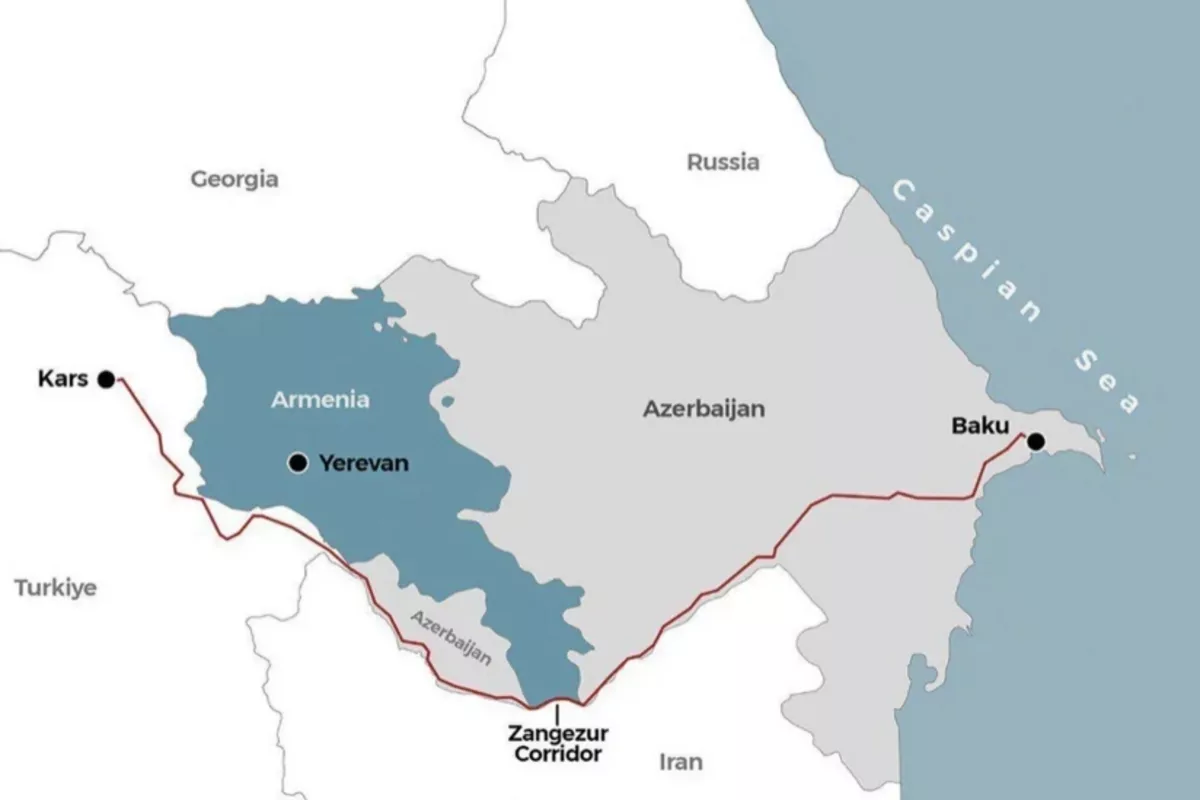
In the South Caucasus today, transport corridors are no longer merely lines on the map. They have become instruments of power, influence, and long-term geopolitical positioning. Whoever controls connectivity shapes trade flows, political alignments, and ultimately the region’s future. Against this backdrop, Azerbaijan’s simultaneous engagement with both the Baku-Tbilisi-Kars (BTK) railway and the Zangezur Corridor (TRIPP) reflects not hesitation or contradiction, but a deliberate strategic choice: building a dense network of routes rather than betting on a single corridor.
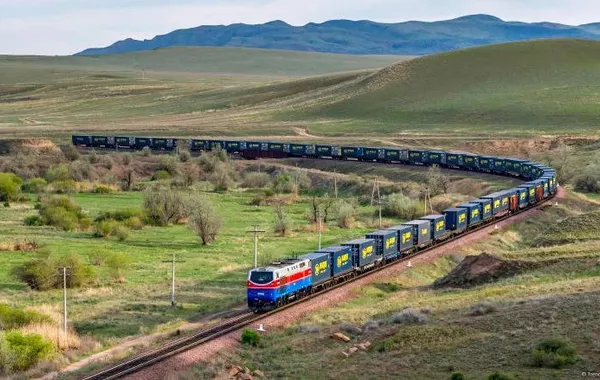
The agreements recently signed in Tbilisi between BTKI Railways and Georgian Railways illustrate this logic in practice. By regulating infrastructure use on the Marabda-Akhalkalaki section and terminal services at Akhalkalaki station, Baku and Tbilisi are reinforcing the operational backbone of the BTK line. These are not symbolic steps. They follow the completion of large-scale rehabilitation and modernization works on the 184-kilometer Georgian section of BTK, which have increased annual capacity from one million to five million tons. This upgrade alone signals a clear intention: BTK is being prepared for a new level of strategic relevance.
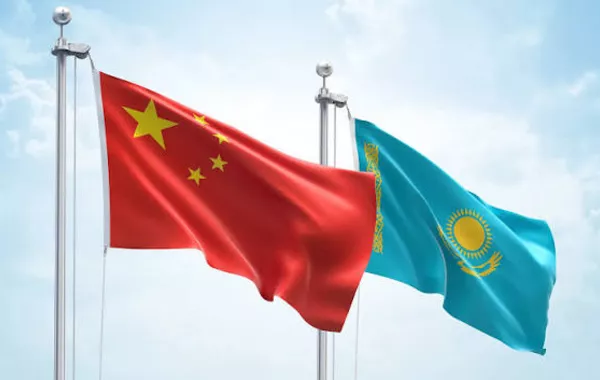
Why does this matter? Because the Middle Corridor is rapidly evolving from a conceptual alternative to traditional Eurasian routes into a real competitor. Trade between Georgia and China grew by 40 percent in the first 10 months of 2025, a figure that speaks for itself. Cargo flows between East Asia and Europe are increasing, and shippers are searching for diversified, politically stable, and time-efficient routes. BTK is designed to become one of the Middle Corridor’s core arteries, and Azerbaijan understands that maintaining its competitiveness requires constant investment and institutional coordination.
At the same time, Azerbaijan is actively promoting another transformative project: the Zangezur Corridor, also referred to as the Trump Route for International Peace and Prosperity (TRIPP). Some observers, particularly in Georgia and Armenia, interpret this as a sign that Baku is shifting priorities. This interpretation is misguided.
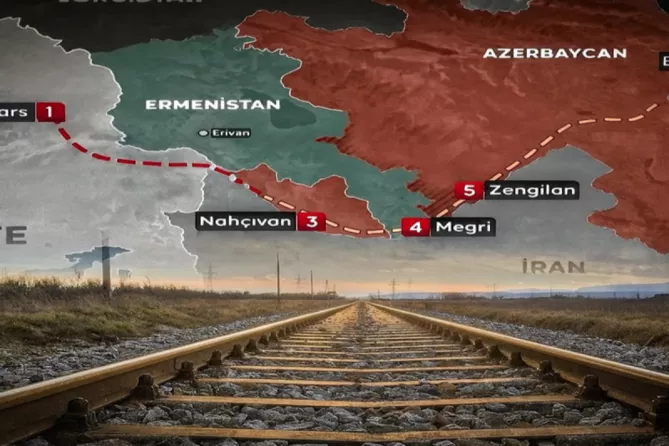
photo: The Caspian Post
Azerbaijan is not choosing between BTK and TRIPP. It is consciously developing both.
This dual-track approach is rooted in a simple but often overlooked principle: transit is not a zero-sum game. New routes do not automatically undermine existing ones. More often, they expand the overall volume of trade and create additional options for logistics chains. In a world marked by geopolitical fragmentation, sanctions regimes, and frequent disruptions, redundancy is not wasteful - it is strategic insurance.
Georgia’s leadership appears to understand this reality. Prime Minister Irakli Kobakhidze has publicly stated that alternative corridors will only complement Georgia’s transit function, not undermine it. Georgia is investing heavily in its transport infrastructure based on expectations of sustained transit growth. These expectations are rational. Georgia already possesses advantages that no new corridor can easily replicate: Black Sea ports with strong rail connectivity, an established logistics ecosystem, and long-standing experience as a transit hub between Europe and Asia.
The idea that Armenia could “replace” Georgia on the Middle Corridor after the completion of TRIPP is therefore unrealistic. At best, Armenia may attract a limited share of smaller-volume cargoes. Large-scale flows will continue to favor routes that offer deep-water ports, high-capacity railways, and proven operational reliability, all of which Georgia possesses.
For Azerbaijan, the logic extends even further. Baku is not merely focused on regional connectivity; it is actively working to anchor South Caucasus corridors within the broader European transport architecture. Discussions with the European Commission on the potential inclusion of the Zangezur Corridor in the Trans-European Transport Network (TEN-T) are a clear indication of this ambition. Integration into TEN-T would significantly raise the international profile of TRIPP and, by extension, strengthen the entire East-West connectivity axis running through Azerbaijan.
Türkiye plays a pivotal role in this strategy. The construction of the 224-kilometer electrified Kars-Iğdır-Nakhchivan railway, launched in August 2025, will physically link TRIPP to both BTK and Türkiye’s rapidly modernizing rail network. Parallel projects such as the Halkalı-Kapıkule high-speed line, connecting Istanbul with the Bulgarian border, are transforming Türkiye into a central bridge between Europe and Asia. By the end of this decade, continuous rail connectivity from Azerbaijan to the European Union will no longer be a political aspiration - it will be an operational reality.
From this perspective, Azerbaijan’s corridor diplomacy is not about competition between neighbors. It is about building a multilayered system in which each route reinforces the others.
Presidential Assistant Hikmet Hajiyev’s remarks in Brussels capture this philosophy clearly. He described the Zangezur Corridor as a project that will have a transformative impact on the Eurasian transport landscape and emphasized Azerbaijan’s desire to see the European Union become part of this new connectivity architecture, including through the Global Gateway initiative. This is not the language of exclusion. It is the language of integration.
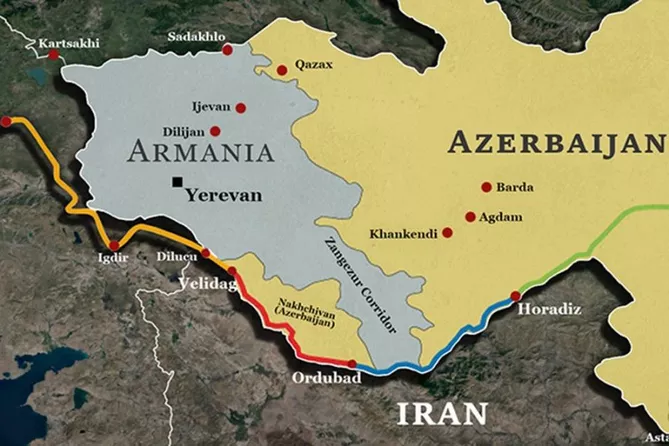
photo: News.Az
The broader geopolitical environment further strengthens Azerbaijan’s case. As global tensions intensify, traditional supply chains are becoming more fragile. Europe wants diversified access to Asian markets. China wants multiple pathways to Europe. Central Asian states want reliable outlets to global trade. In this environment, every functioning corridor through the South Caucasus becomes more valuable, not less.
The conclusion is straightforward. Azerbaijan is not undermining Georgia by supporting TRIPP, just as it is not sidelining TRIPP by investing in BTK. Baku is doing something far more sophisticated: constructing a networked corridor ecosystem in which multiple routes coexist, intersect, and reinforce one another.
In the coming years, this approach will likely define the South Caucasus’ role in Eurasian connectivity. Azerbaijan will remain the key orchestrator of this process. Georgia will remain an indispensable gateway to the Black Sea and Europe. Armenia, if it chooses to engage constructively, may gain a supplementary role. But no single route will monopolize the future.
Connectivity is not about choosing one road. It is about building many, and ensuring they all lead through stability, cooperation, and strategic foresight.