The South Caucasus is once again entering a phase of heightened geopolitical sensitivity, one in which even economic projects are perceived as signals of strategic realignment. Armenia’s cautious steps toward Israel, which outwardly appear to be pragmatic diversification, have provoked open concern in Iran.
What truly lies behind this tension: a temporary maneuver by Yerevan or the beginning of a deeper shift? Where is the line between rational strategy and siege mentality? The Caspian Post discusses these questions with Israeli political analyst Yuri Lagunin, who offers a sober and unconventional assessment of the emerging configuration of power in the South Caucasus.
- Yuri, the media coverage of a restart in Armenian-Israeli relations at first glance suggests that contacts between Armenia and Israel are purely economic: agriculture, water and tourism. Yet Iran’s reaction has been extremely nervous. Why does Tehran perceive these steps as a strategic threat rather than ordinary diversification of Yerevan’s foreign policy?

photo: Ynet
- Because in Tehran they stopped believing in “innocent economics” long ago. For Iran’s leadership, any Israeli connections in the immediate proximity of its northern borders are not trade or agrotechnology, but potential infrastructure for influence. Israel thinks in long cycles: today it is water and medicine, tomorrow standards, personnel, data and logistics.
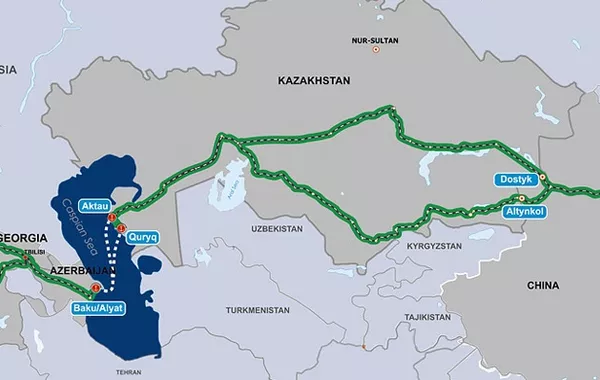
For Iran, Armenia is not an ordinary neighbor. It is an element of strategic depth, the last land gateway to Eurasia outside the Turkish-Azerbaijani framework. And when Yerevan begins carefully “opening windows” toward Israel, Tehran reads this as the beginning of the dismantling of the old dependency model. Hence the sharp reaction: Iran is defending not a particular route, but the very principle of the exclusivity of its influence.
- Ali Akbar Velayati, a senior adviser to Iran’s Supreme Leader, said that the so-called “Trump route” and the Zangezur corridor are essentially the same thing. To what extent does this statement reflect the real perception of the situation in Tehran?
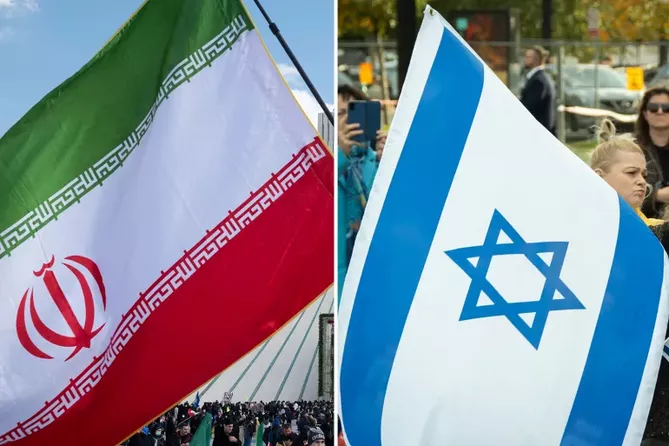
photo: Al Jazeera
- Let us put it this way: this is not diplomacy, but raw strategic logic. In Iran’s perception, there are no “technical differences” between routes if the result is the same, loss of control over geopolitical space.
Tehran thinks of corridors as categories of power. Any transport artery that is not under its direct or indirect influence automatically becomes a threat. Not because tanks will travel along it, but because rules will, foreign rules. When Velayati equates these projects, he is sending a signal not to Armenia, but to the region’s elites: Iran does not recognize alternative architectures if they are formed without its participation. This is the position of a defensive center of power that feels pressure from all sides.
- Iranian media affiliated with the IRGC openly speak of a “ring of pressure” and suspect Israel of using Armenia as part of a containment strategy. How rational are these concerns, and where does regime paranoia begin?
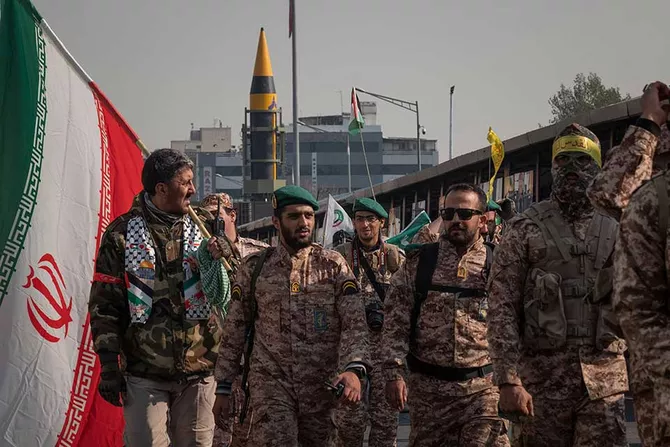
photo: brandeis
- The paradox is that rationality and paranoia do not contradict each other here. Israel really does operate through “soft power”, technology, humanitarian projects, expert networks and consultancy. But this is not a conspiracy or “secret bases”; it is the standard toolkit of 21st-century influence. In this sense, Israel’s presence is not an exception but part of normal global politics.
Iran’s problem lies elsewhere. The ayatollah regime does not think in terms of development, but in terms of survival. Any external contact between a neighbor and Israel is automatically read as a potential intelligence or military-technological threat. Hence the hyper-reaction. Not because Israeli bases will appear in Armenia tomorrow, but because Tehran fears losing its monopoly on fear. And the loss of fear among neighbors is the most dangerous scenario for any closed political system.
At the same time, it is essential to understand: Nikol Pashinyan is not an independent actor in this game. His steps are not the result of strategic insight or a “search for a new path”, but a reflection of decisions made in completely different offices. When we see the cautious “probing” of Armenian contacts with Israel, this is not Pashinyan’s personal initiative, but a forced line of behavior shaped by external centers of influence, including British ones. Armenia here is not a subject but an instrument.
Iran understands this perfectly. That is why, after Pashinyan came to power, there is no longer any trust toward Armenia. Tehran’s attitude today is that of someone watching a cart that was once pushed and now just keeps rolling by inertia. Iran is guided not by Armenia’s intentions, but by its lost sovereignty. Trust in such conditions is impossible by definition.
Against this backdrop, the behavior of Azerbaijan is particularly telling. Baku takes a calm and calculated position, without hysteria, without fuss, without dramatizing others’ maneuvers. For Azerbaijan, what is happening does not pose an existential threat or a strategic surprise. Neither cold nor hot, because Azerbaijan has long acted as a subject, not a cart.
And it is precisely this difference that defines the real balance of power in the region today, beyond emotions, fears and illusions.
- In the long term, can Armenia really leave the Moscow-Tehran orbit, or is its current maneuver just temporary tactics without strategic follow-through?
photo: Caspian Post
- Armenia today is balancing not between East and West, but between risk and survival. It has no firm security guarantees from the West, no full autonomy from Russia, and no resources for open confrontation with Iran. In this sense, its attempts to get closer to Israel cannot be seen as a strategic pivot or a conscious break with its previous anchors. It is more like probing, a cautious test of the limits of what is possible: how far it can go without provoking a backlash. And Tehran’s harsh reaction only underlines how narrow the space for maneuver remains.
On this background, the contrast with Azerbaijan is striking. Relations between Baku and Tel Aviv are not situational diplomacy or public show, but a deeply rooted partnership based on mutual benefit, trust and long-term interests. These ties cannot be “switched off” by external pressure or anyone’s expectations, neither from the West nor from regional players. Even Türkiye, with its own complex and often conflict-ridden relations with Israel, understands perfectly well that Azerbaijan will follow its own path. And this, perhaps, is the most accurate illustration of the real balance of power in the South Caucasus.
Unlike Azerbaijan, which has long gone beyond regional logic and acts as an independent geopolitical actor, mediator, economic hub, energy and transport center, Armenia remains an object of external calculations. Today the West sees it not as an equal partner, but as an instrument. An instrument of pressure, containment and attempts to adjust the position of Azerbaijan, which has become too strong, too independent and too inconvenient for old influence models.
In this sense, any sharp moves by Yerevan, toward Israel, Europe or anyone else, look not like sovereign decisions, but like a series of contradictory and risky impulses. In the current international context, Israel has in many ways become a toxic partner for Western capitals. And therefore the very question arises: why does Armenia now need to flirt with Israel, when it already has enough problems, with Türkiye, Iran, Russia, its own economy and security? The question is almost rhetorical.
History shows that when small states begin feverishly searching for new points of support, it means one thing, the old model no longer works. The process has already started. It cannot be completely stopped, only slowed. That is precisely what regional players, above all Iran, are trying to do now, clearly marking the limits of the permissible. Armenia, meanwhile, remains in its familiar state, between others’ interests, external fears and an internal lack of strategic resources. And that, perhaps, is its key characteristic at this stage.
- Yuri, recent months have also seen first practical steps toward economic contacts between Baku and Yerevan: discussions of trade, logistics and business channels. Armenia has even purchased fuel from Azerbaijan. Can the restart of Armenia-Israel relations be seen as part of a broader normalization linked to the Armenian-Azerbaijani track? Or are these parallel processes taking place without a direct connection?

photo: News.Az
- There is certainly a connection, but it is indirect, not linear, and that is crucial. The beginning of economic dialogue between Azerbaijan and Armenia is not a goodwill gesture, but a consequence of the new reality after 2020 and 2023. The real sources are quite transparent: government statements, the agenda of bilateral commissions, private business interests and most importantly, the position of international financial institutions and the EU, which directly link regional stability to economic interdependence.
The restart of Armenia’s contacts with Israel fits into the same logic, but is not a result of rapprochement with Baku. Rather the opposite: normalization with Azerbaijan reduces strategic toxicity for Armenia when building relations with third countries. While Yerevan was in a state of confrontation, any new partner was perceived by neighbors as a potential military or revanchist asset. After shifting to a pragmatic agenda, trade, transit and infrastructure, the window of opportunity expands.
It is important to stress that Israel has traditionally been a strategic partner of Baku, as confirmed by dozens of open sources, from energy cooperation to military-technical cooperation and agrotechnology. Therefore, Israel’s contacts with Armenia are only possible in a “de-ideologized” format, without anti-Israeli or anti-Azerbaijani rhetoric from Yerevan. This is an unwritten but strict limitation.
Thus, what we see is not an axis but a triangle of processes: Baku-Yerevan normalization as the basic stabilization of the region, Armenia’s cautious diversification in foreign policy and Israel maintaining a balance of interests with Azerbaijan as its priority.
Incidentally, this configuration also irritates Iran, because it reduces Armenia’s value as an exclusive outpost and turns it into an ordinary actor guided by the logic of economy, not blockade.