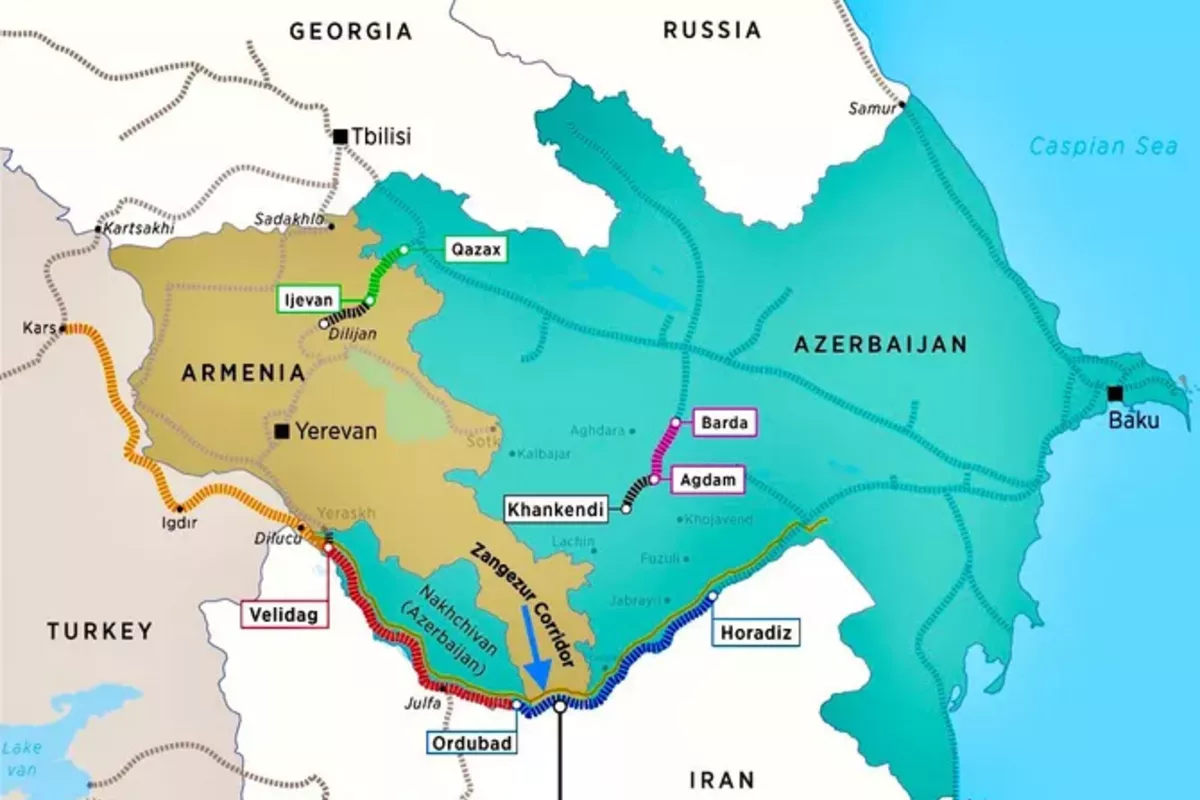
The Baku-Tbilisi-Kars railway project, regarded as one of the main pillars of strategic cooperation among Azerbaijan, Georgia, and Türkiye, has entered its final stage of completion. Reshaping the region’s transport map, the project not only expands the South Caucasus’ transit capacity but also strengthens the competitiveness of the Middle Corridor. At the same time, the transportation of grain and fuel to Armenia via Azerbaijan carries significant political implications for the restoration of economic ties in the region.

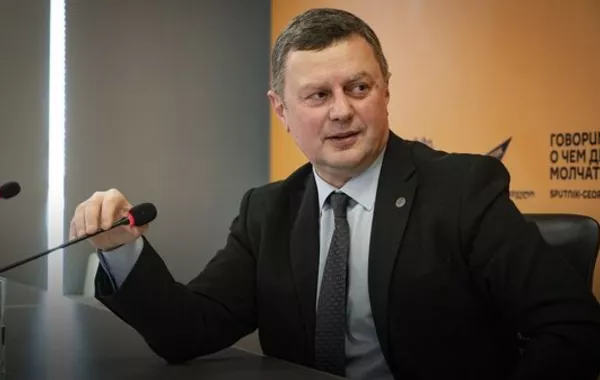
Photo: Gia Kuchava, Georgian political analyst
In an interview with The Caspian Post, Georgian political analyst Gia Kuchava discusses how these developments could affect Tbilisi’s interests, regional balances, and potential models of future cooperation.
- The Georgian authorities have stated that the Baku-Tbilisi-Kars railway project is nearly completed. How will this project affect the development of relations with Azerbaijan and Türkiye?
Source: APA
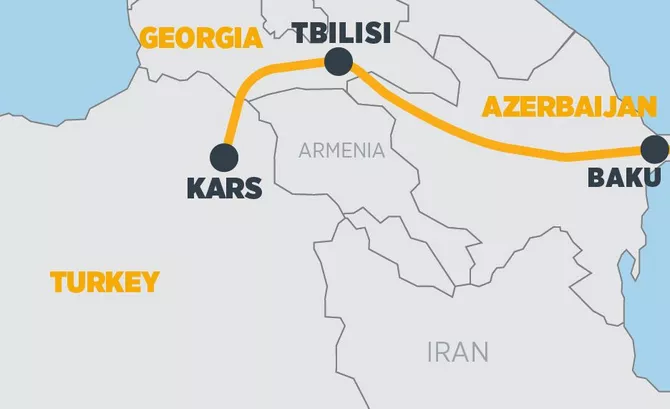
- Let me remind you that the Baku-Tbilisi-Kars railway was built on the basis of a trilateral interstate agreement between Azerbaijan, Georgia, and Türkiye in 2007, and it began operating in 2017.
The construction of this railway faced numerous obstacles. Throughout the entire construction period of Baku-Tbilisi-Kars, the attitude of EU countries and the United States was lukewarm, as Western countries opposed the weakening of Armenia’s position in Eurasian transport routes and the strengthening of Azerbaijan, Georgia, and Türkiye, which would increase our role and independence in international trade.
Azerbaijani President Ilham Aliyev stated: “We faced great resistance… The United States of America, in particular, opposed it. And the reason lay in their pro-Armenian policy, because it was believed that this project leaves Armenia on the sidelines. Therefore, the American government exerted very serious pressure on the Georgian leadership at that time so that it would not consent. For several years, we held negotiations with the Georgian side, and finally, we were able to reach an agreement.”
I must note the diplomatic tact of President Ilham Aliyev: President Aliyev did not mention the Russian side even once. Most likely, the Armenian lobby acted in close cooperation with the Russian side, and I do not exclude that at a certain stage it was financed by Russia, since the Baku-Tbilisi-Kars railway - like the entire Middle Corridor - competes with transport routes passing through the territory of Russia.
Back in the summer, Georgian Prime Minister Irakli Kobakhidze announced that the modernization of the Baku-Tbilisi-Kars railway corridor was almost fully completed. He stated: “We have achieved significant results in the railway sector. The railway modernization project is nearing completion, after which its throughput capacity will increase from 27 to 48 million tons.” A few days ago, Director General of Georgian Railways Lasha Abashidze stated that at this stage, “All the necessary documentation for the official commissioning of the project is being finalized. This project has been implemented through the joint efforts of Azerbaijan and Georgia, and Georgian Railways will become the exclusive operator.”
This project has strategic importance for Georgia, as it directly links the Georgian and Turkish railway networks. Whereas a railway link between Azerbaijan and Georgia has existed since the Russian Empire, this is the first railway line to directly connect Georgia and Türkiye. This, in turn, increases Georgia’s transport accessibility, thereby creating opportunities to attract additional freight flows.
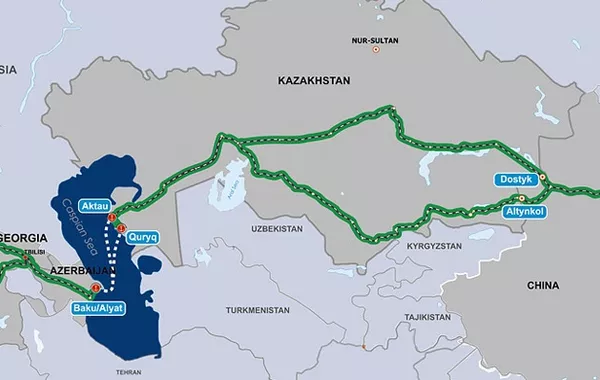
For example, this summer, Kazakhstan and Türkiye signed a cooperation agreement in the field of railway transport along the Middle Corridor.
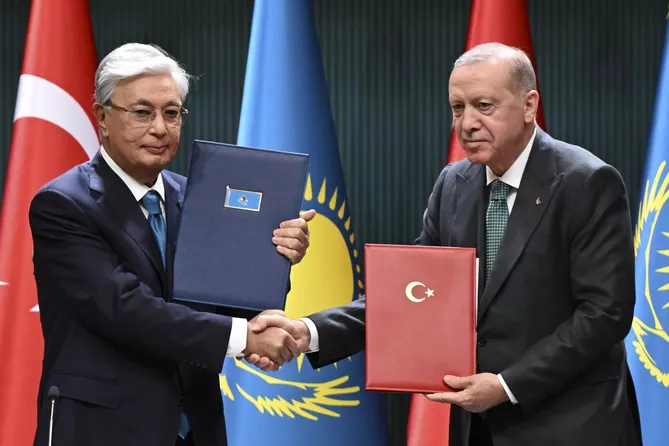
photo: Türkiye Today
It is important to emphasize that the war in Ukraine and the crisis in the Red Sea, where Houthi rebels supported by Iran are attacking commercial vessels, have forced shipping companies to reroute traffic around Africa. This lengthening of routes has led to increased logistics costs. The crisis directly affects EU countries and Türkiye. In this context, the interest in the Trans-Caspian International Transport Route, known as the “Middle Corridor,” of which the Baku-Tbilisi-Kars railway is a component, becomes clearer.
Several years ago, Russian and Armenian analysts wrote about the alleged inefficiency of the Baku-Tbilisi-Kars railway, claiming that in this project “politics prevails over economics.” However, all subsequent events have disproved these arguments.
In September 2025, Armenia and Türkiye reached an agreement to begin technical studies of the Gyumri-Kars railway branch. Russian and Armenian experts believe that once the Baku-Gyumri-Kars line is launched, the Georgian section of the Middle Corridor will be threatened with losing cargo flows. It is no coincidence that Russian and Armenian experts argue that to improve Georgia’s competitiveness, transit tariffs must be significantly reduced. At the same time, it should be noted that after being denied access to the so-called “Trump Route,” the Russian side managed to secure Armenia’s consent to open a consulate in the city of Gafan in Armenia’s Syunik region, although there is no Russian diaspora in this region. This should be a cause for concern not only for the Armenian side.
Recently, Poland closed the Russian consulate in Gdansk. Warsaw explained the move by citing the involvement of Russian special services in sabotage activities, including an act of sabotage on the Polish railway system.
On the Eurasian continent, there are many transport routes on which not only regional but also global trade directly or indirectly depends. The Trans-Caspian International Transport Corridor and its component - the Baku-Tbilisi-Kars railway line - can confidently be classified among them. It is no coincidence that in 2019 Russia attempted to join this project, but the Georgian authorities declared that the Baku-Tbilisi-Kars railway is a strategic project of Azerbaijan, Georgia and Türkiye, and that any other participant may join only with the consent of all three countries.
Today we can confidently state that the Baku-Tbilisi-Kars line has every opportunity to become the main artery of the Middle Corridor. Additional confirmation of this is that starting from 2026, the Baku-Tbilisi-Kars railway will undergo modernization in Georgia, and construction of a new terminal will begin in Akhalkalaki.
This railway will strengthen regional cooperation among Azerbaijan, Georgia, and Türkiye. Baku-Tbilisi-Kars is capable of shaping a new geopolitical reconfiguration in the world. Whereas the South Caucasus region was previously tied to Russia, the situation is now changing. The South Caucasus countries, the Caspian Sea, and Central Asia are increasingly being perceived as a single region in terms of communications, which raises their role and significance. The growing transit potential of our countries is attracting not only China, but also India and Pakistan.
- How do you assess the fact that first grain and now fuel are being delivered from Azerbaijan to Armenia through Georgia?
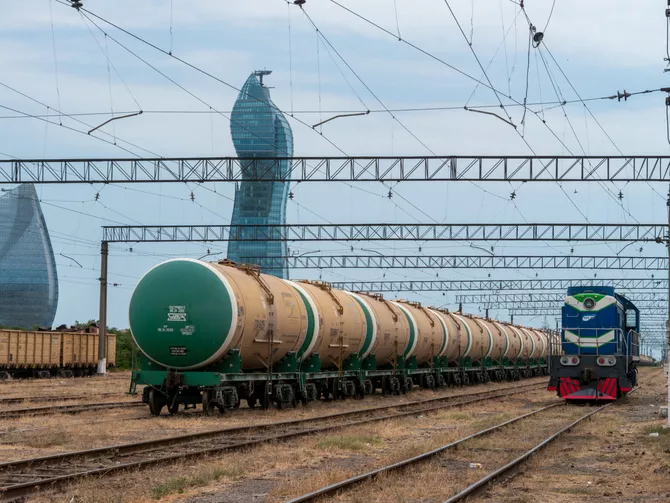
photo: Caspian-alpine
- Deliveries of grain and fuel from Azerbaijan to Armenia are carried out in accordance with an intergovernmental agreement signed between the two countries in November 2025. Since 1988, this is the first time that the Azerbaijani railway has been used to meet Armenia’s needs.
It is important to note that the first grain shipments included both Russian and Kazakh grain. It is especially worth mentioning that the new route makes Kazakh grain competitive. In Kazakhstan, the dispatch of the first railway shipment to Armenia was described as “an example of food diplomacy.”
The political significance of delivering grain from Azerbaijan to Armenia lies in the symbolic easing of tensions, the restoration of economic ties after almost 40 years of blockade, and the normalization of the situation in the South Caucasus region.
Against the background of renewed trade between Azerbaijan and Armenia, the issue of restoring direct rail service between Baku and Yerevan has arisen. In Soviet times, the railway line passed through Ijevan, but it was interrupted. In 2010, a landslide destroyed an important section between Yerevan and Ijevan, which to this day has not been restored.
At present, the Armenian railway is operated by a subsidiary of Russian Railways under a concession agreement valid until 2038. However, it should be noted that Armenian Prime Minister Nikol Pashinyan has suggested that his government is prepared to remove certain railway sections from Russian concession management and restore them using Armenia’s own resources.
- Recently, Armenian Minister of Economy Gevorg Papoyan stated in an interview with the Armenian Service of Radio Free Europe/Radio Liberty that the initial transit price for cargo from Azerbaijan to Armenia via Georgian railways is considered relatively high and non-competitive, although negotiations are still ongoing. Will the parties be able to reach a compromise on this issue?
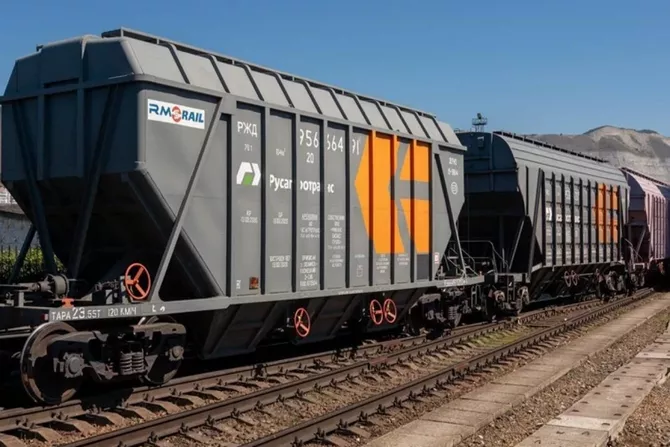
photo: APA
- On 18 December, Azerbaijan sent the first batch of fuel to Armenia. Against the backdrop of dissatisfaction over tariffs, the Georgian government decided to grant duty-free transit for the first train convoy.
Recently, Azerbaijan’s Foreign Minister Jeyhun Bayramov announced that the tariff issue regarding the transit of Azerbaijani petroleum products to Armenia has been resolved. According to the minister, “The Georgian leadership intervened, and the issue was resolved. An agreement was reached between the companies on a tariff fully corresponding to market conditions.”
Approximately a month ago, in an interview with your publication, I noted that Armenian and Russian experts claimed, and continue to claim, that after the opening of the Zangezur Corridor, Georgia will lose 15-20 percent of its export cargo flows, and that to remain competitive, it should reduce transit tariffs.
- In your view, how was the outgoing year 2025 for Georgia in terms of domestic political developments?
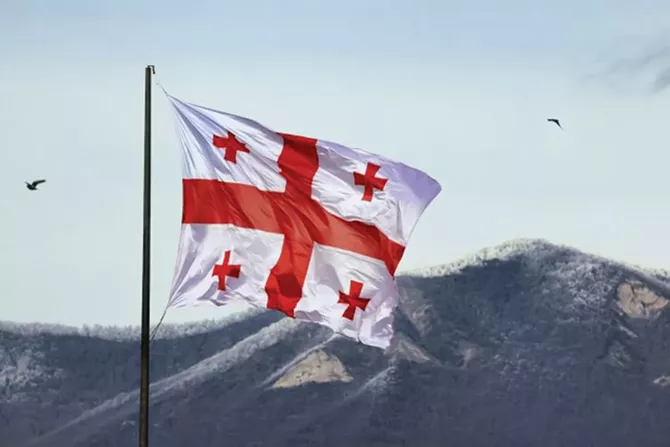
photo: The Caspian Post
- The outgoing year has been tense for Georgia. Since the parliamentary elections of October 2024, the results of which the radical opposition refuses to recognize, protests have not ceased, nor have they stopped following the municipal elections held this year.
The Georgian Dream government managed to reduce the protest temperature in society and stabilize the situation. The Georgian parliament introduced amendments to the Law on Political Parties.
The radical opposition is becoming increasingly marginalized, since apart from anti-Russian rhetoric, it offers nothing to Georgian society.
By Asif Aydinli