In the post-conflict period, Azerbaijan’s transport and logistics policy has entered a qualitatively new phase, marking a structural transformation of the country’s economic and geopolitical posture. A transport system that for decades evolved under regional constraints, unresolved conflicts, and elevated geopolitical risks has now shifted decisively toward reconstruction, reintegration, and outward expansion. The Zangezur corridor, the development of parallel connectivity routes to Nakhchivan, and the geo-economic axis known in international analytical discourse as the “Trump route” together form the backbone of Azerbaijan’s long-term strategy to reposition itself from a regional transit country into a pivotal Eurasian logistics hub.
Crucially, this transformation has moved beyond declarative diplomacy. It is now defined by physical infrastructure, measurable throughput capacity, capital investment volumes, and macroeconomic indicators. The post-conflict reality has enabled Azerbaijan to convert political outcomes into economic geography, reshaping regional connectivity patterns across the South Caucasus.
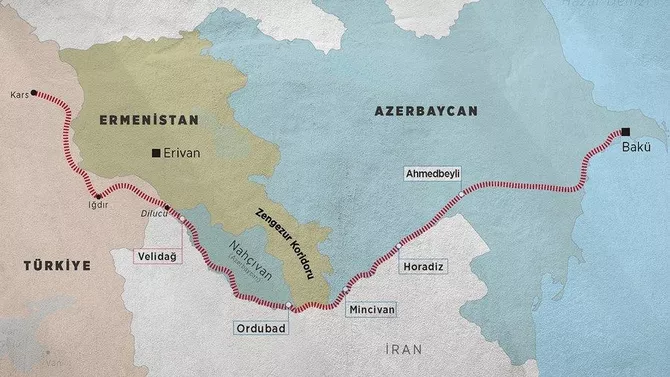
photo: Trend
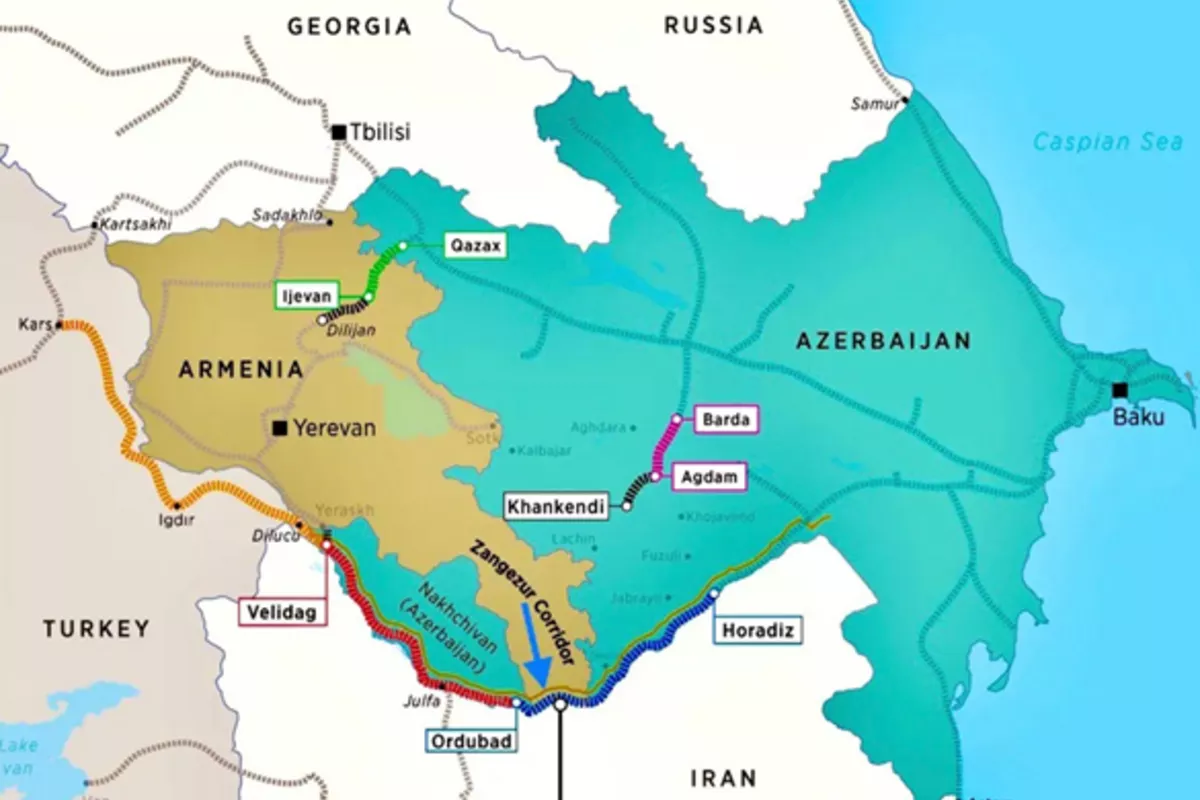
According to official data, the core segment of the Zangezur corridor within Azerbaijani territory is the 110-kilometer Horadiz-Aghband railway line. The project includes the construction of eight railway stations and more than 200 engineering structures, including tunnels, bridges, viaducts, and protective installations. Designed in line with international railway standards, the line supports an axle load of 25 tons and freight train speeds of up to 120 kilometers per hour. These specifications position the corridor as a fully interoperable component of international rail networks rather than a purely domestic infrastructure project.
Official projections indicate that the corridor’s initial annual freight capacity will reach 15 million tons, with scalability to 20-25 million tons in subsequent phases. For comparison, Azerbaijan’s total railway transit volume in 2023-2024 stood at approximately 10-11 million tons. This highlights the corridor’s transformative potential, as a single transport axis capable of more than doubling the country’s existing transit capacity. Strategically, this represents a shift from supplementary transit participation to system-level relevance in Eurasian supply chains.
Importantly, the Zangezur corridor is conceived as a multimodal platform rather than a single railway project. In parallel, a Category I highway with four and six lanes is under construction along the Horadiz-Zangilan-Aghband route. Official planning documents estimate daily throughput at 20,000-25,000 vehicles. In the Zangilan and Jabrayil districts alone, more than 30 road and railway bridges, along with complex junctions and tunnels, are being built. This integrated road-rail architecture ensures redundancy, flexibility, and resilience - key requirements in contemporary logistics planning.
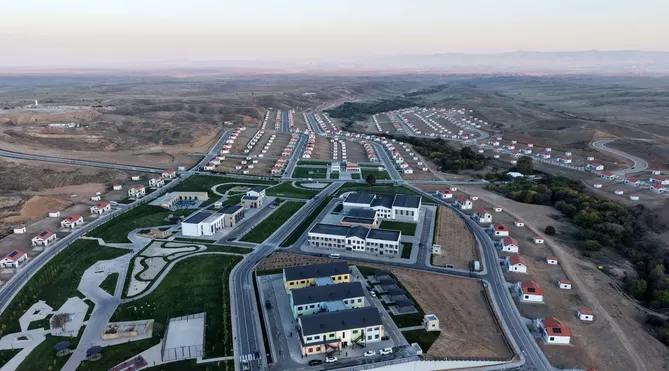
photo: Trend
These investments are directly linked to the economic reconstruction of the Karabakh and East Zangezur economic regions. Enhanced connectivity reduces transaction costs, shortens delivery times, and expands market access for agriculture, manufacturing, logistics services, and tourism. In practical terms, transport infrastructure is acting as a multiplier for regional economic recovery, accelerating the reintegration of liberated territories into national and international economic circulation.
Restoring sustainable connectivity between the Nakhchivan Autonomous Republic and mainland Azerbaijan constitutes another strategic pillar of this policy. Two parallel routes have been developed to ensure both efficiency and redundancy. The first is the direct land connection via the Zangezur corridor, integrating Nakhchivan into Azerbaijan’s national transport network and linking it directly to trans-Eurasian routes. The second is an alternative corridor passing through Iranian territory. According to official sources, two new automobile bridges are being built over the Araz River, with the total route exceeding 55 kilometers.
Preliminary estimates suggest that the Iran-based route alone could handle 3-5 million tons of cargo annually, potentially increasing Nakhchivan’s economic turnover by 30-40 percent. The existence of two independent routes significantly strengthens Azerbaijan’s transport security, diversifies geopolitical and operational risks, and ensures continuity under fluctuating regional conditions. This approach reflects advanced risk-management principles increasingly adopted in global logistics strategy.
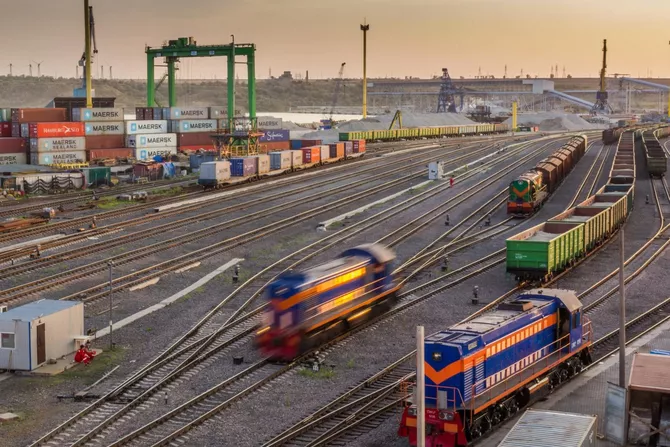
photo: Reuters
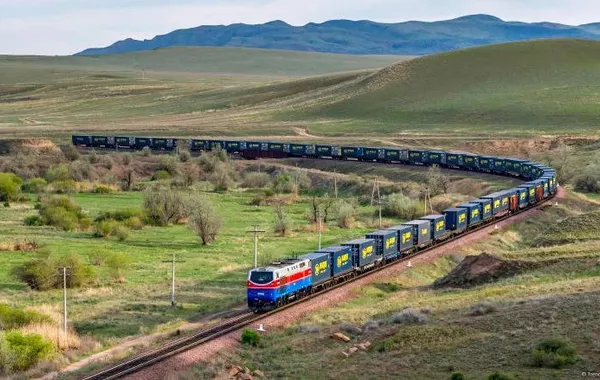
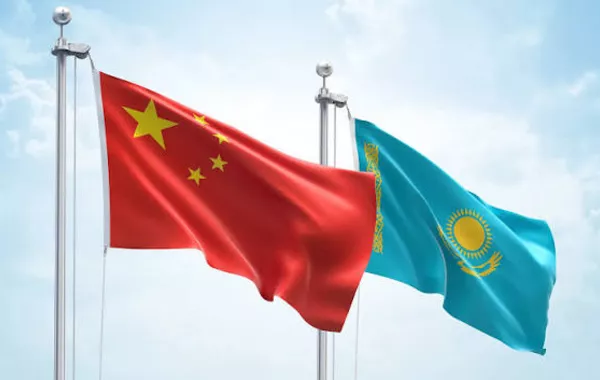
From a global perspective, the relevance of these corridors is reinforced by broader trade dynamics. International economic assessments indicate that annual Asia-Europe trade exceeds $700 billion. While maritime routes still dominate this exchange, growing vulnerabilities-including geopolitical tensions, congestion at maritime chokepoints, and rising shipping costs-have elevated the strategic value of land-based alternatives. The Zangezur corridor and the broader “Trump route” envision the movement of cargo from China and Central Asia across the Caspian Sea, through Azerbaijan, Zangezur, Nakhchivan, and Türkiye, into European markets.
This route reduces transit time and distance while offering greater political and infrastructural stability. Official statistics show that Azerbaijan’s transit revenues have more than doubled in recent years, approaching 1 billion manats annually. Following the full operationalization of the Zangezur corridor, revenues are projected to rise to 1.5-2 billion manats. Beyond fiscal gains, this growth enhances Azerbaijan’s leverage in regional logistics negotiations and strengthens its role as a rules-setting transit actor.
The corridor also carries significant regional economic implications. Official assessments suggest that Armenia could generate $200-300 million annually in transit revenue by participating in the corridor. In addition, Armenia’s import and export distances would be reduced by 30-40 percent, substantially lowering logistics costs. This creates tangible economic incentives for cooperation and establishes material interdependence as a stabilizing factor in post-conflict regional relations.
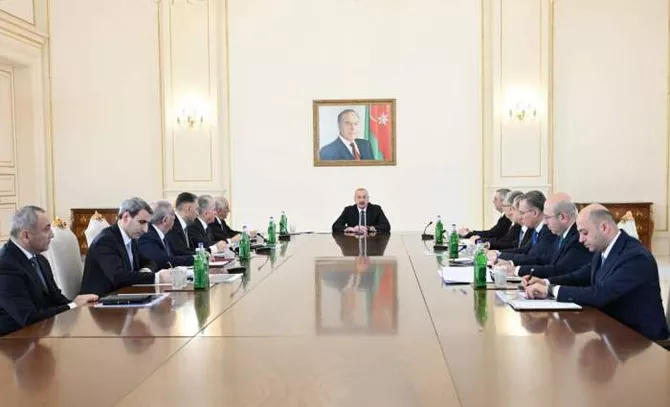
Photo: AZERTAC
President Ilham Aliyev has repeatedly emphasized that the Zangezur corridor is not only Azerbaijan’s historical right but also an open economic platform for the entire region. In public statements, he has underlined that billions of manats in state investment have already been allocated to these projects and that their implementation is irreversible. According to the head of state, direct connectivity with Nakhchivan is a matter of national security, economic sovereignty, and long-term regional cooperation.
In sum, empirical indicators confirm that the Zangezur corridor, the “Trump route,” and the Nakhchivan-focused infrastructure projects are no longer abstract political concepts. They represent quantifiable transport capacity, scalable economic returns, and durable strategic influence. With freight volumes of 15-25 million tons, transit revenues measured in billions of manats, and infrastructure capable of supporting tens of thousands of vehicles, Azerbaijan is consolidating its transformation from a regional transit country into a global logistics hub. These projects are rapidly emerging as core pillars shaping Azerbaijan’s position on the 21st-century Eurasian transport map.