Recent developments in the South Caucasus point to a phase of strategic recalibration driven more by pragmatism than confrontation. Azerbaijan’s decision to supply fuel to Armenia indicates a willingness to turn political agreements into practical measures, while underscoring a broader commitment to regional stability. At the same time, discussions surrounding transport routes, external influence, and internal political tensions in neighboring states underscore the fragility of the current balance.
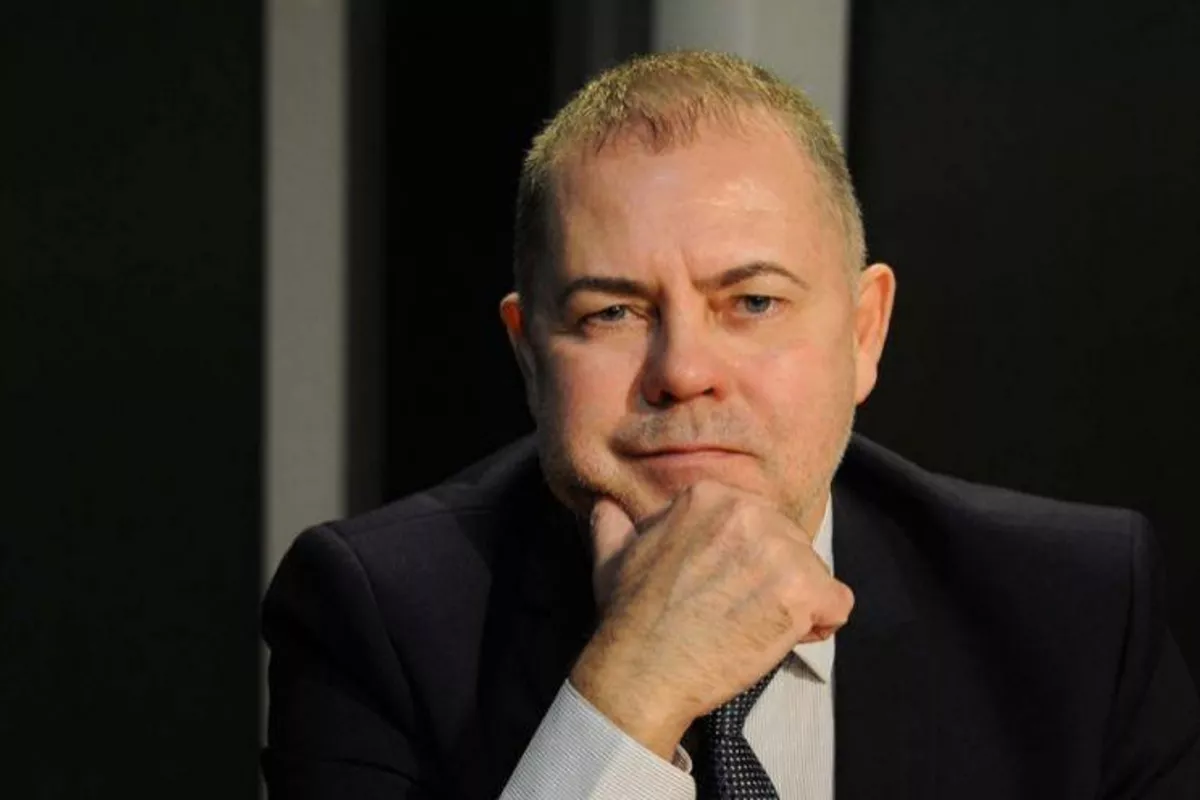
The Caspian Post spoke with Russian international affairs expert Grigory Trofimchuk, who shared his assessment of the key geopolitical processes shaping the South Caucasus.
- How do you assess Azerbaijan’s decision to deliver fuel to Armenia?
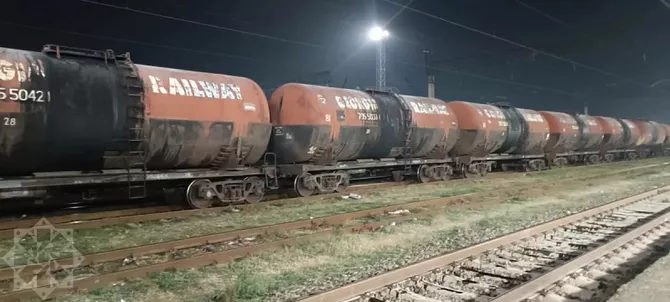
- The decision is not only responsible and fully in line with previously reached agreements, serving as their practical implementation, but also, to a significant extent, creative and correctly presented in the media.
This step demonstrates that the population of Armenia will not be left in a fuel and transport blockade. At the same time, the Armenian side will also have to fulfill its own obligations. Overall, this move reinforces the impression that Baku is committed to peace, and it would be difficult to accuse it of any wrongdoing. As the saying goes, if you do not want it, do not take it - no one is forcing anyone.
Source: News.Az
- Recently, Ali Akbar Velayati, adviser to Iran’s Supreme Leader on international affairs, said that Tehran opposes the so-called “Trump route,” arguing that it poses a serious threat to Iran’s security. Armenia’s Foreign Ministry declined to comment on the statement. At the same time, Armenian Parliament Deputy Speaker Ruben Rubinyan said that Armenia is guided by an Iranian Foreign Ministry statement which notes that the project takes Tehran’s “red lines” into account and creates opportunities for Iran. How do you explain these apparent contradictions in Iran’s position?
- There are no contradictions in Tehran’s position on this issue. Iran has consistently opposed any changes to borders and transport communications, both across the region as a whole and specifically with regard to Armenia. Since Trump did not pursue the issue with Iran to its conclusion, Tehran is once again clearly restating its long-held positions.
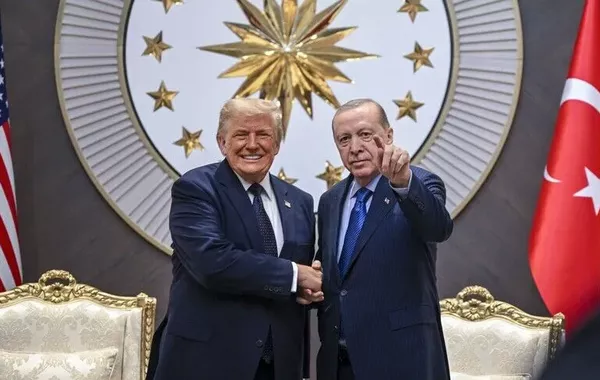
Put simply, Tehran sensed Trump’s weakness and therefore believes it can prevent both the Zangezur Corridor and the so-called “Trump Bridge” - projects that would imply international revitalization along Iran’s northern borders, including potential NATO activity.
At the same time, Yerevan is taking advantage of the fact that its relations with Iran remain stable and unchanged, using this to delay the implementation of the route for as long as possible. This, however, is characteristic of Pashinyan’s political style - nothing new in that regard. Iran is essentially voicing positions that, for various reasons, Yerevan itself cannot articulate openly.
That said, engaging in confrontation with the Azerbaijan-Türkiye tandem is costly. The longer the implementation of the route is delayed, the tougher and more complex it will ultimately become, with added conditions not directly related to transport communications. This has already been demonstrated by the two allies.
As for Trump himself, ending the Azerbaijani-Armenian conflict currently ranks as his top peacekeeping priority, making it unlikely that the White House’s attention to the issue will diminish. As a result, Pashinyan is trying to avoid personally provoking the US president, shifting responsibility onto Iran, which, effectively, has little left to lose - with or without the corridor.
- What are your forecasts regarding the ongoing conflict in Armenia between the Armenian Church and Prime Minister Nikol Pashinyan?
Source: PerthNow
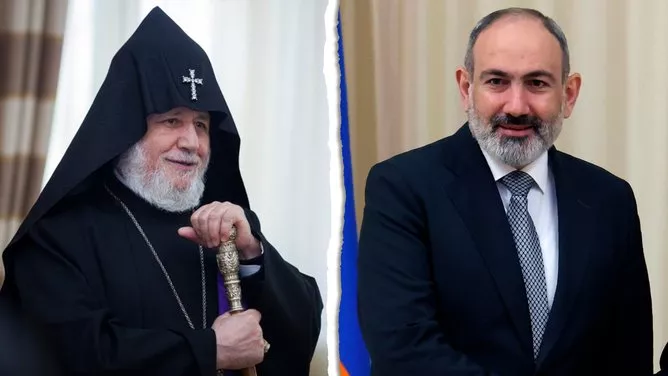
- The Church is, by definition, stronger than Pashinyan. It is an institution that exists outside of time and even beyond the confines of a specific territory. Moreover, Armenia’s current prime minister is far from being a figure capable of carrying out a genuine reformation. Figuratively speaking, he is no Martin Luther. He should not have targeted such a fundamental issue as a religious confrontation.
If, in addition, a member of the clergy were to be killed and turned into a martyr, the consequences of such a situation could persist for centuries. Given Pashinyan’s weakness as a reformer, he also lacks a respected church authority who could mobilize support from within the religious sphere.
At the same time, the Church itself has not yet taken the final step toward a full-scale “anathema,” which would permanently cast Nikol Vovaevich in a deeply negative historical image. For now, there is a pause on both sides.
- Recent statements by Russian officials suggest that Moscow is interested in normalizing contacts with Tbilisi. In particular, Mikhail Kalugin, Director of the Fourth CIS Department at Russia’s Foreign Ministry, said normalization would be possible provided Georgia does not become a “bargaining chip” in actions against Russia. In response, Georgian Parliament Speaker Shalva Papuashvili said this could happen only if Russia recognizes Georgia’s territorial integrity. How likely is the normalization of Russian-Georgian relations in the near future?
- For now, no real normalization of Russian-Georgian relations is visible, as the unresolved legacy of 2008 continues to stand between the two countries. Claims about an allegedly pro-Russian Georgian government have no solid foundation.
Due to broader geopolitical and external circumstances, Georgia has found itself in a suspended position, avoiding firm alignment in any one direction. Over the years, Moscow has naturally been inclined toward normalization, but the core problem cannot simply be removed, and it is unrealistic to expect otherwise. Under these conditions, the current ambiguous and frozen state of relations may be the most viable option.
Recently, attention was drawn to official group photographs from a Turkmen summit in which representatives of both countries appeared in the same frame, but this is a minor detail that only reinforces my point. Georgia remains oriented toward the European path, though a combination of circumstances has slowed and temporarily frozen this aspiration.
Moreover, the European Union itself is in a state of uncertainty and does not provide strong incentives for countries, including Georgia, to accelerate integration. Overall, there is a general pause. The EU failed to destabilize Georgia internally following Saakashvili’s return in 2021, and since then it has been preoccupied with other concerns.
- How do you assess Azerbaijan’s rapprochement with the Central Asian countries? What does this process bring to Baku?
- Strategically, this rapprochement has become inevitable, including in its transport and economic dimensions, as the configuration of the former Soviet space is rapidly changing. The countries involved are preparing for this future in advance.
Beyond that, there is a shared spiritual and, in many respects, kinship closeness, which underscores the natural logic of this alignment and its non-artificial character. It is not a situational or forced grouping.
At the same time, new threats are emerging for this interconnected region, including in the Caspian area and Central Asia itself. Unfortunately, the Second Karabakh War was not the last conflict along this arc. What I refer to as the “second collapse of the USSR” will unfold in a harsher form.
Whether this figurative arc will be able to shield itself from pressures coming from the south, including developments in Afghanistan, and from the north, related to Russia, remains an open question. In any case, Baku is clearly seeking to act proactively and stay ahead of events - and that is evident.
By Asif Aydinli