In an era when diplomacy often masks confusion and loud alliances conceal fatigue from old commitments, a pause itself becomes a statement. Georgia today finds itself in such a pause - not silent, but deliberate and purposeful. Tbilisi is no longer rushing to slam doors shut, yet it does not knock on them with pleading.
Against a backdrop of global shifts - the erosion of familiar centers of power, turbulence within the United States, and a governance crisis in the European Union - Georgia is relying not on emotion, but on calculation, sovereignty, and pragmatism. Here, the notion of “strategic patience” moves beyond diplomatic cliché to become a defining diagnosis of the era.
The Caspian Post's interlocutor, Georgian politician and political analyst Dmitry Lortkipanidze, approaches this topic with calm clarity, free of illusions and rehearsed phrases. He offers no simple answers and seeks no external patrons. His reasoning is uncompromising and, at times, unsettling: the world no longer guarantees security to those accustomed to being objects. In the new order, survival favors those who assert themselves as subjects. This conversation explores the maturity of states, the cost of autonomy, and why a strategic pause can sometimes speak louder than any official statement.
- Dmitry, Tbilisi today speaks of “strategic patience” in relations with the United States and of waiting for partnership “from a clean slate.” Is this a genuine diplomatic calculation or a forced pause amid uncertainty?

photo: Imedi
- Strategic patience is a deliberate exercise of political sovereignty, a way for a state to refuse an imposed script and set its own pace. For Georgia, this is particularly crucial: for too long, its relations with the collective West were built on asymmetry, where the language of “support” often masked one-sided expectations, and the format of “partnership” in practice meant managed loyalty.
That model is now becoming obsolete. The world is moving beyond unipolar dominance, and even Western powers are confronting the limits of their traditional instruments of influence - from sanctions fatigue to a loss of moral authority. In this new reality, influence must be negotiated rather than dictated. Strategic patience thus becomes a tangible political asset.
The idea of starting “from a clean slate” sends a clear signal: Georgia is not abandoning the West, but it will no longer accept the role of a managed object. This represents a shift from verticality to horizontality, from external tutelage to mutual responsibility. True partnership is possible only when a country’s own interests, risk assessments, and development trajectory are respected.
Equally important, strategic patience protects internal stability. In a context of turbulent geopolitics, regional conflicts, and a crisis of global institutions, hasty decisions under external pressure can be costly. Tbilisi is acting not according to electoral cycles or external applause, but according to a sense of historical responsibility.
Georgia is not closing the door, but it is no longer willing to prove its “usefulness” at the expense of sovereignty. It seeks a dialogue without mentorship, ultimatums, or the rhetoric of a “big brother.” The novelty of this approach lies not in rupture but in rethinking; not in confrontation but in rebuilding the rules. In a world where the architecture of power is shifting, such a measured, sober, and sovereign stance is not a weakness - it is a mark of mature politics.
- You often emphasize that the crisis in relations between the West and Georgia is not situational, but systemic. In your view, what is the root of this fracture?
photo: Caspian Post
- The root lies in a mismatch of eras. The West still thinks in outdated categories, viewing small states as managed territories rather than independent actors. The 21st century, however, is dismantling that logic.
Georgia today is not experiencing a crisis of trust, but a crisis of the model itself. The old approach of “political homework” has run its course. Sovereignty can no longer be treated as a bargaining chip, and foreign policy cannot depend on external approval.
The paradox is striking: the very forces that champion democracy and freedom in words often react negatively when states attempt to act autonomously. This is the systemic conflict - a clash between declared values and the realities of geopolitical practice.
- In the United States, there is a fierce struggle between the Donald Trump administration and the so-called “deep state.” How important is the outcome of this struggle for Georgia’s future and its place in world politics?
- For Georgia, it is significant, but not in the way many might assume. Betting on either side as a “savior” would be a mistake.
If the “deep state” prevails, old pressure mechanisms are likely to persist, including through the EU, where signs of institutional erosion are already evident. If the Trump administration strengthens, there may be room for a more pragmatic, transactional dialogue - one less bound by ideological moralizing.
The crucial point, however, is this: Georgia must stop being an object in the domestic political battles of others. The goal is to achieve a degree of agency such that changes in Washington no longer provoke crises in Tbilisi. That is true sovereignty.
- You speak about the need to transform Georgia into a geo-economic actor. Is this scenario realistic under conditions of pressure, great power competition, and regional turbulence?

photo: georgiaembassyusa.org
- It is not only realistic - it is inevitable. Georgia must either become a geo-economic hub or remain forever a zone defined by other countries’ transit interests.
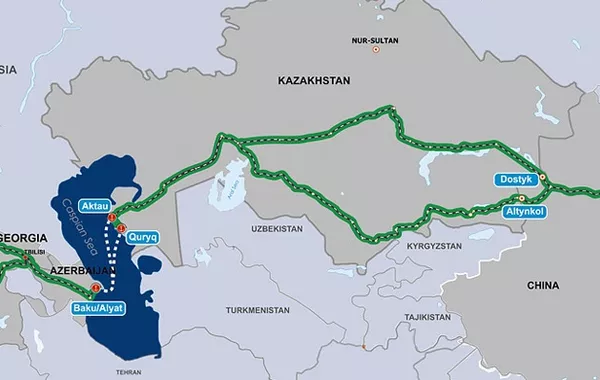
The country’s advantage lies not in military might or loud declarations, but in geography, logistics, and its capacity to connect North and South, East and West. The Middle Corridor, regional transport routes, and energy linkages are not abstract concepts - they are instruments for increasing political influence.
There is, however, one essential condition: internal consolidation and the abandonment of the “small country” mindset. Pressure is resisted not by those who protest the loudest, but by those who understand their purpose. If Georgia consistently strengthens its sovereignty, pursues good-neighborly policies, and acts with strategic calm, it will become not a challenge for global powers, but a necessary partner.
Then the question “Will Georgia withstand it?” transforms into another: Who can afford to ignore Georgia?