Armenian Prime Minister Nikol Pashinyan’s outreach to Germany, his escalating tensions with the Armenian Apostolic Church, and shifting transit routes across the South Caucasus are reshaping regional political and economic dynamics.
In an interview with The Caspian Post, Andrey Petrov, Deputy Director General of the Russian agency Vestnik Kavkaza, explains why Yerevan’s European signaling is closely linked to Armenia’s domestic electoral calendar, what the clash between the government and the Church could entail, and how new logistics projects may affect Georgia’s strategic role. He also evaluates the prospects for reopening the Abkhaz railway amid competing regional corridors.
- How do you assess the outcome of Armenian Prime Minister Nikol Pashinyan’s visit to Germany? What was behind this trip?
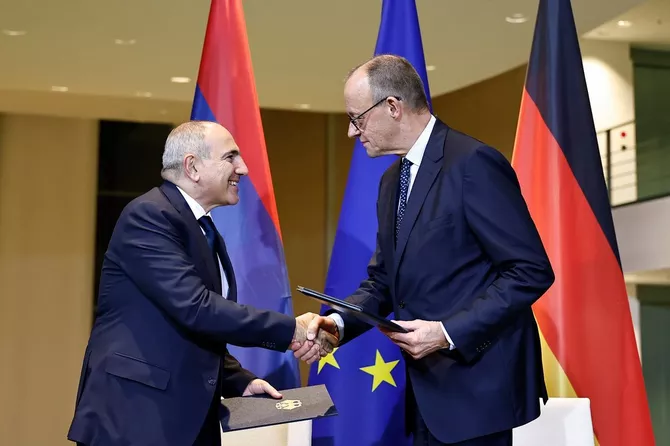
photo: News.Am
- Nikol Pashinyan went to Germany to secure additional political support ahead of the parliamentary elections. In general, everything that Pashinyan, his government, and the Civil Contract party are doing now should primarily be viewed through the lens of the upcoming parliamentary elections, as Pashinyan and his team face a very difficult task of retaining power next June.
This is happening against the backdrop of several risky campaigns aimed at “restoring order” in Armenia and consolidating power in the hands of Civil Contract. These include attempts to replace the head of the Armenian Church and the conflict with Russian billionaire Samvel Karapetyan, who is currently imprisoned in Yerevan. Pashinyan needs all the political support and every possible means of boosting his authority that he can obtain.
In this context, the trip to Germany should be considered alongside his subsequent visit to Russia to attend the Eurasian Economic Union Intergovernmental Council. I believe the visit to Germany was planned and timed specifically to coincide with the trip to Moscow, allowing Pashinyan to demonstrate that he has access to European corridors of power while simultaneously being well received in Russia.
Pashinyan needs to secure the maximum number of votes from all Armenian citizens who may turn out in next June’s elections. That means he must appeal to both pro-European voters, like himself, and pro-Russian constituents.
From Pashinyan’s own statements in Germany - that leaving the EAEU is not an end in itself, while joining the European Union is - it is clear that he still personally wants to integrate Armenia as deeply as possible into European structures. Interestingly, the experience of Georgia seems to teach him nothing. Georgia spent decades pursuing EU integration and now faces a freeze in accession talks simply for maintaining a sovereign policy.
Nor does Armenia seem to learn from Azerbaijan, which has always been cautious and balanced in its European contacts, consistently emphasizing that national interests come first. Apparently, Pashinyan believes he can succeed where Georgia has not, and that Armenia can integrate more deeply than Azerbaijan’s current partnership with the EU.
So far, however, there is no concrete plan or roadmap explaining how Armenia could realistically integrate into European structures without inflicting severe damage on itself through withdrawal from the EAEU. On the surface, Pashinyan can claim that one process does not interfere with the other, but all parties clearly understand that Armenia cannot simultaneously be a member of both the EAEU and the EU.
Moreover, there is a clear understanding that Armenia would have to undergo a very painful process if Pashinyan is serious about this choice. Even implementing EU standards in economic and customs legislation would effectively end cooperation with EAEU countries. To join the EU, Armenia would first have to leave the Eurasian Economic Union, then wait for many years at Europe’s doorstep before potential membership.
In practical terms, this is simply not an option for Armenia. Therefore, regardless of what Pashinyan says, Armenia has no real opportunity to integrate into the EU without causing severe self-inflicted damage. That is why Pashinyan’s trip to Germany should primarily be seen as political and propagandistic.
He is showing voters that he shakes hands with Chancellor Friedrich Merz, while his visit does not provoke a harsh reaction from Russia, because the very next day after Hamburg, he flies to Moscow, where he is received by Russian Prime Minister Mikhail Mishustin and discusses Russian-Armenian cooperation within the EAEU framework.
This is a purely pre-election campaign. Of course, Germany would like Armenia to do more to counter Russia, and Germany does not hide this. But Armenia can do very little in practice to harm Russia without harming itself.
Therefore, I believe this was a showcase visit, intended to present Nikol Pashinyan as a respected and widely welcomed leader of Armenia.
- Recently, Pashinyan stated that the Armenian Church has neither a statute nor a canon. What are your forecasts regarding the conflict between Pashinyan and the Church?
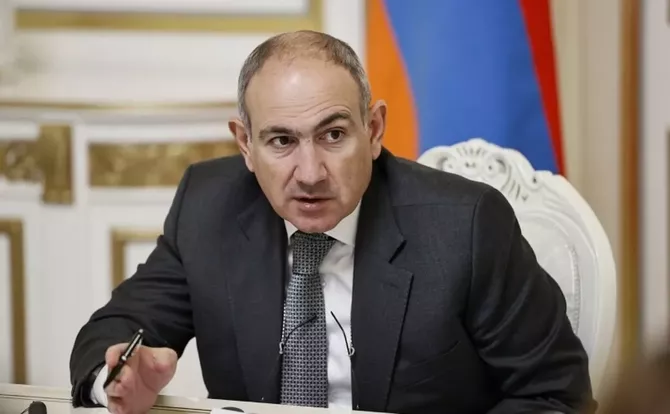
photo: Armenian media
- Based on recent developments, it is clear that Pashinyan is firmly determined to change the leadership of the Armenian Church. Since these processes are not quick, it can be assumed with high confidence that they are aimed not only at the upcoming parliamentary elections but also at Pashinyan’s long-term plans for governing Armenia.
Pashinyan’s objective is to fully consolidate power in his own hands. He sees that there is a force in the country that is not formally political and does not belong to any state structure, yet clearly opposes him. That force is the Church. In seeking to consolidate power, he is launching a campaign to bring the Armenian Church under control by replacing opposing clerics with loyal ones.
For nearly two months, Pashinyan has been attending church services almost every week. In other words, he is no longer acting solely as a statesman on this issue; he is demonstrating that he is a believer, a parishioner, and actively involved in church processes both politically and spiritually.
In this way, he supports those within the Armenian Church who are prepared to support him. It is clear that in any structure there are always people who would like to replace the current leadership, and the Armenian Church is no exception. Pashinyan therefore has the potential, at some point, to fully subordinate the Church to himself.
I do not think he will fully resolve this issue in his favor before the parliamentary elections. However, in the longer term, he is capable of appointing a new Catholicos. This is linked to the fundamental principle of the separation of church and state.
The Church is separated from the state not only in Armenia but everywhere. Therefore, Armenia cannot face serious political or economic pressure over internal processes within its religious institutions, even if religious structures in other countries are dissatisfied. Campaigns in support of the Catholicos already exist, but there are no significant internal resources to resist the authorities. Everything will depend on the outcome of the parliamentary elections.
If Pashinyan wins, he will have a strong mandate to replace the Catholicos. He can argue: you elected me and entrusted me with leading the republic for another term; therefore, I have the full right to seek the replacement of Catholicos Karekin II. Arrests or other measures cannot be ruled out. Through long-term, sustained pressure on the Church, Pashinyan may well achieve a change in leadership. This is not unprecedented; it has happened elsewhere in history.
- Deliveries of grain and fuel to Armenia via Azerbaijani territory reduce Georgia’s transit significance by opening a shorter and more profitable route bypassing Georgian territory. Tbilisi appears concerned about losing influence and is signaling this to Azerbaijani partners. Will this affect bilateral relations?
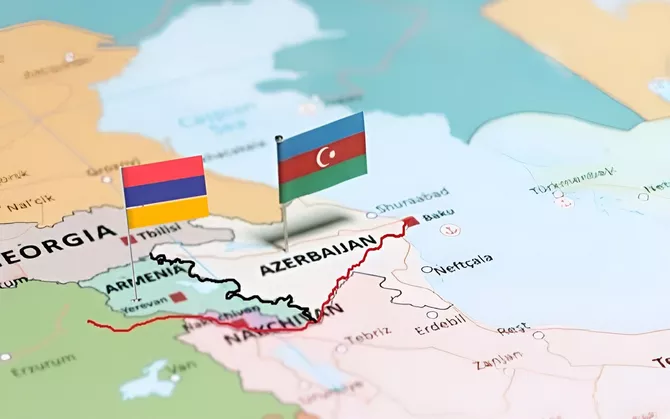
photo: TASS
- Georgia is certainly unhappy with Azerbaijani logistics projects that bypass its territory. I have repeatedly emphasized during the years of the Karabakh war that the main, or even the only, beneficiary of the prolonged conflict was Georgia.
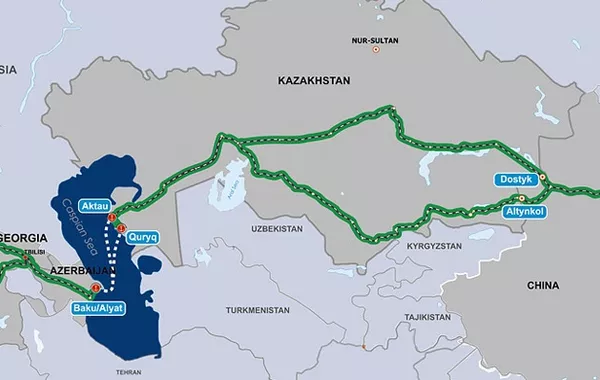
Because of the closure of the Armenian-Azerbaijani and Armenian-Turkish borders and unresolved contradictions between Armenia and Azerbaijan, Georgia gained several international routes from Azerbaijan to Türkiye. These include, above all, the Southern Gas Corridor and the Baku-Tbilisi-Ceyhan oil pipeline, which bring significant transit revenues into Georgia’s budget. There is also the Baku-Tbilisi-Kars railway, which, until the Zangezur corridor is launched, remains the only route for the Middle Corridor transporting goods from Azerbaijan to Türkiye.
While Georgia officially states that it welcomes the normalization of relations between Azerbaijan and Armenia, it understands that once the Zangezur corridor is launched - which it has never officially opposed - cargo will travel from Azerbaijan to Türkiye through Armenia. The Armenian section is only about 40 kilometers, while the rest runs through Azerbaijani territory, which is more advantageous for Azerbaijan and slightly shorter for deliveries to the EU.
Georgia has no incentive to seriously damage relations with Azerbaijan, as it would risk losing its current benefits. This primarily concerns gas and oil pipelines transporting Azerbaijani hydrocarbons to Türkiye via Georgia. Tbilisi would not want to irritate Baku to the point where Azerbaijan might organize new supply routes to Türkiye bypassing Georgia, using the same logic as the Zangezur corridor.
Infrastructure there already includes plans for a gas pipeline to Nakhchivan and power transmission lines. Why not use this shortest transit segment in the South Caucasus to pump oil and gas to Europe and completely bypass Georgia if it does not want to maintain friendly relations?
Georgia certainly does not want matters to reach that point. That is why, at the official level, Tbilisi emphasizes its friendship with Azerbaijan and states that it has no intention of undermining it. Yes, Georgia is unhappy that not all cargo will pass through its territory once the Zangezur corridor is launched, and it expects to lose part of its transit traffic. But that is simply how the world works. Previously, Georgia benefited greatly from being the sole transit route. Now it will benefit somewhat less. To preserve its remaining advantages, it should avoid conflict with Baku.
- Do the processes surrounding the launch of the Trump route make the opening of the Abkhaz railway more relevant?
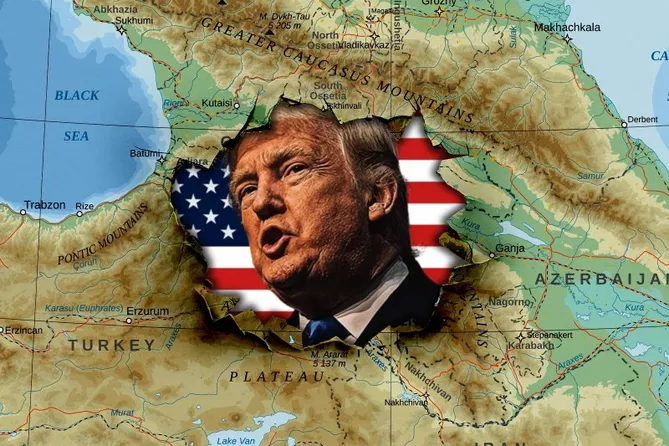
photo: News.Az
- The main point regarding renewed discussions about reopening the Abkhaz railway is that this is impossible unless Georgia recognizes Abkhazia as a separate state. There are both political and economic dimensions. Politically, Georgia insists that Abkhazia and South Ossetia are part of its historic territory and therefore cannot recognize their “sovereignty.” Georgia cannot allow any communication with Abkhazia without its political control.
Economically, Georgia considers Abkhazia part of its territory and therefore demands that all transit revenues from cargo passing through Abkhazia go to the Georgian budget. Since Georgia cannot ensure this, it will not allow Abkhazia to increase its own revenues by reopening the railway and linking it with Georgia and Türkiye. Therefore, the Abkhaz railway cannot be reopened without a radical change in Georgia’s approach.
Many would like to see the railway reopened. For Russia, it would be extremely beneficial as the shortest and most reliable route for transporting goods from Russia to Armenia via Georgia, and from Russia to Türkiye. However, politically this is simply impossible. Politics always prevails over economics, no matter the wishes. In this sense, the Trump route currently appears to be the most viable option for Russia.
By Asif Aydinli