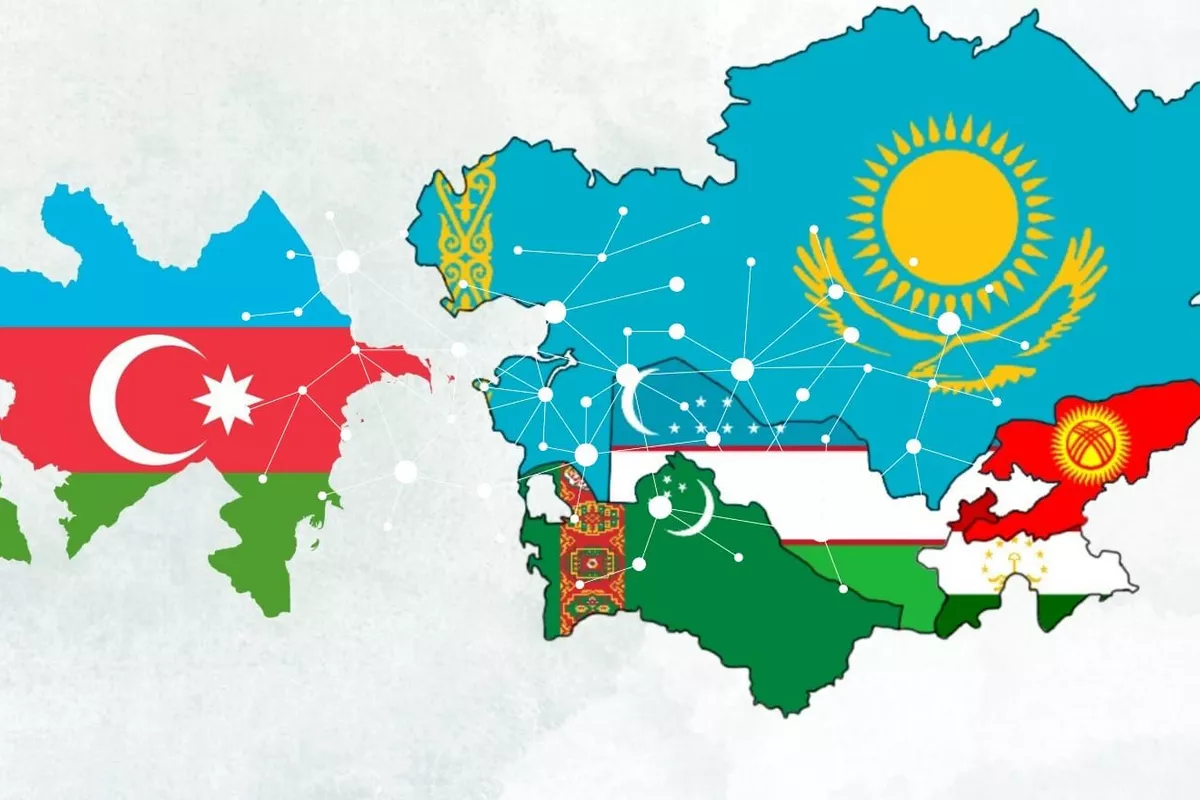
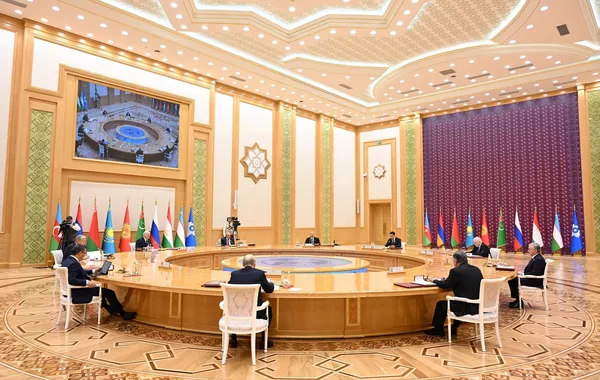
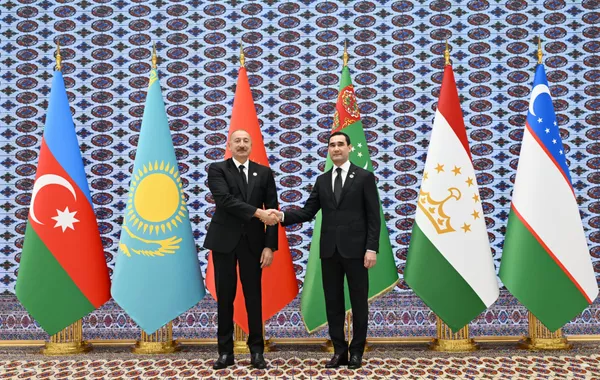
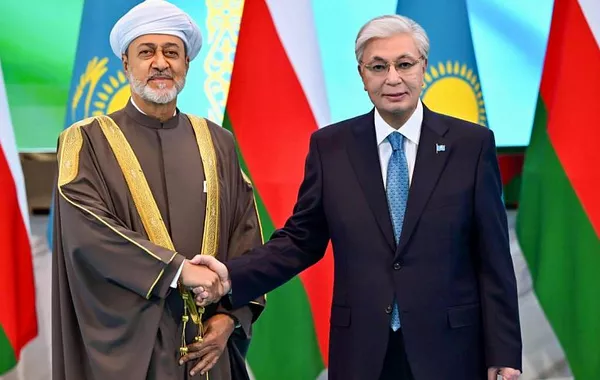
The C6 format, uniting the five Central Asian states with Azerbaijan, may look like a recent diplomatic innovation. In reality, it represents the institutionalization of a much older strategic logic. For decades, scholars and policymakers have discussed the Caucasus and Central Asia as an interconnected geopolitical space. What once existed primarily in academic discourse is now materializing as a functional political and economic alignment.
C6 is not symbolic. It is structural.
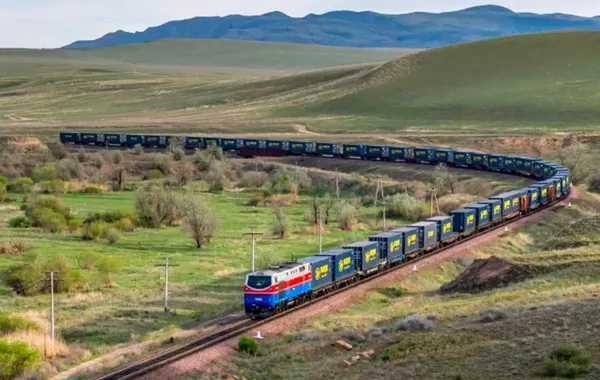
The catalyst for this transformation lies in the reconfiguration of Eurasian trade routes following the Russia-Ukraine war. Traditional transit corridors that once dominated East-West trade have become politically fragile and economically exposed. The urgency of diversification has accelerated dramatically. In this context, the Middle Corridor, connecting China to Europe through Central Asia, across the Caspian Sea, via Azerbaijan and onward through Türkiye, is no longer a theoretical alternative. It is becoming an operational necessity.
Central Asian states, sharing borders with China, are uniquely positioned within this equation. They sit at the first gateway of continental transit. Azerbaijan occupies the second gateway - the bridge across the South Caucasus linking the Caspian basin to European markets. Together, they form a continuous strategic chain.
This shift is not merely about container traffic or customs revenues. It is about control over supply chains, influence over strategic commodities, and the ability to shape regional economic flows rather than passively absorb external shocks.
The second structural driver is historical dependency. During the Soviet era, nearly all infrastructure - railways, pipelines, highways - was designed to run northward, integrating republics into a centralized system oriented around Moscow. That infrastructure logic survived independence. However, today’s geopolitical fragmentation renders single-direction dependency untenable.
Kazakhstan’s energy exports offer a clear example. For years, they have relied heavily on pipelines transiting Russian territory, including the Atyrau-Samara route and the Caspian Pipeline Consortium (CPC). Political disruptions or technical disputes in these channels expose the vulnerability of overconcentration. Diversification through Azerbaijan and the Caspian Sea offers not simply an option, but a strategic safeguard.
Yet C6 extends beyond energy and transit. Azerbaijan has strengthened its role as both a logistics hub and an agricultural exporter. Trade is becoming multidimensional, incorporating processed goods, agri-products, petrochemicals, and raw materials. Integration is moving from rhetoric to tangible exchange.
Connectivity in the South Caucasus adds another critical layer. The Zangezur corridor, long debated as a geopolitical aspiration, is gradually acquiring more concrete parameters. If implemented effectively, it would shorten supply chains, reinforce Türkiye’s linkage to Central Asia, and deepen Azerbaijan’s position as a transit pivot. The broader implication is clear: connectivity creates leverage.
Some observers argue that external sponsorship, particularly from the United States, could enhance the credibility and institutional resilience of C6-linked projects. Indeed, American political or financial backing could unlock infrastructure financing, attract Western investment, and stabilize long-term planning horizons. However, the core logic of C6 is internally generated. It is driven by regional economic pragmatism rather than ideological alignment.
Simultaneously, Russia is accelerating development of the International North-South Transport Corridor. Once largely conceptual, this route linking Russia to Iran and India via the Caspian is now receiving renewed attention. Interestingly, in this sphere, the interests of Russia, Azerbaijan, and Central Asian states intersect. The region is not fragmenting into rigid blocs. Instead, it is evolving into a network of intersecting corridors - East-West and North-South - with Central Asia at the intersection.
This transformation redefines the region’s identity. For much of the post-Soviet period, Central Asia was described as peripheral - a buffer zone between larger powers. That characterization is becoming obsolete. The region is turning into a crossroads of Eurasian logistics, energy distribution, and geopolitical influence.
Cultural factors reinforce this trajectory. The C6 states share a predominantly Islamic civilizational background. Five of the six are Turkic-speaking nations. Shared linguistic and historical bonds lower diplomatic friction and facilitate trust-building. While cultural affinity alone does not build ports or pipelines, it does reduce political transaction costs.
Security cooperation represents another strategic pillar. Intensified trade flows inevitably raise the stakes of stability. Infrastructure protection, counterterrorism coordination, cyber resilience, and border management will require synchronized approaches. Economic integration without security coordination risks fragility.
Energy integration deserves particular attention. The concept of a regional electricity ring, enabling mutual balancing of generation and demand, could significantly enhance resilience. Central Asian states frequently import electricity during shortages, often from Russia. With Kazakhstan considering nuclear power development and Tajikistan advancing large-scale hydropower projects such as the Rogun Dam, intra-regional energy trade could become a stabilizing mechanism. Azerbaijan’s expanding renewable portfolio further complements this potential.
The green transition opens additional strategic space. Kazakhstan’s wind corridors, Azerbaijan’s offshore wind potential in the Caspian, and broader renewable ambitions create opportunities for cooperation in green hydrogen production. As Europe and other markets accelerate decarbonization, early coordination could position C6 states as future suppliers of clean energy rather than remaining dependent on raw commodity exports.
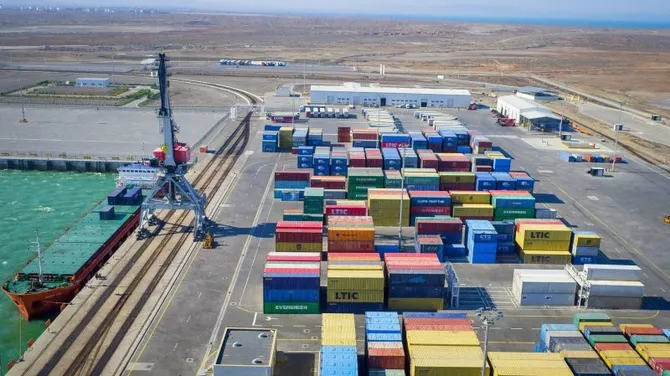
Source: portofbaku.com Naturally, obstacles remain. Kazakhstan’s Caspian maritime infrastructure requires modernization. Port capacity expansion, tanker fleet development, and customs harmonization demand investment and coordination. However, these challenges are technical rather than conceptual. They reflect capacity gaps, not strategic contradictions.
In my assessment, C6 is not a temporary diplomatic platform. It reflects a deeper reorientation of Eurasian economic geography. Central Asia and Azerbaijan are gradually transitioning from transit territories shaped by external powers to active architects of regional connectivity.
The decisive factor will be execution. Grand concepts without implementation risk stagnation. Infrastructure projects must be economically viable. Regulatory frameworks must align. Political will must translate into timelines and financing mechanisms.
If these conditions are met, C6 will represent more than a consultative grouping. It will mark the emergence of a new Eurasian power axis - one defined not by ideological blocs, but by infrastructure, interdependence, and strategic autonomy.
The era of peripheral Eurasia is ending. A corridor-centered Eurasia is taking shape.