Khojaly: The Untold Role of Russia’s 366th Regiment
A bloody February night. A besieged town. Civilians fleeing for their lives. Lifeless bodies left on frozen ground. February 26, 1992, in Khojaly was not merely an episode of the Karabakh war - it was the tragic outcome of unchecked military force and geopolitical turbulence in the collapsing post-Soviet space. In Azerbaijan, the events are recognized as genocide, and their political dimension remains the subject of ongoing debate.
Khojaly held strategic importance in the Karabakh region. The town was home to the area’s only airport and controlled a key transportation corridor linking Aghdam, Shusha, and Khankendi. From late 1991, it was effectively under blockade. Electricity and food supplies were cut off, and residents lived under constant shelling.
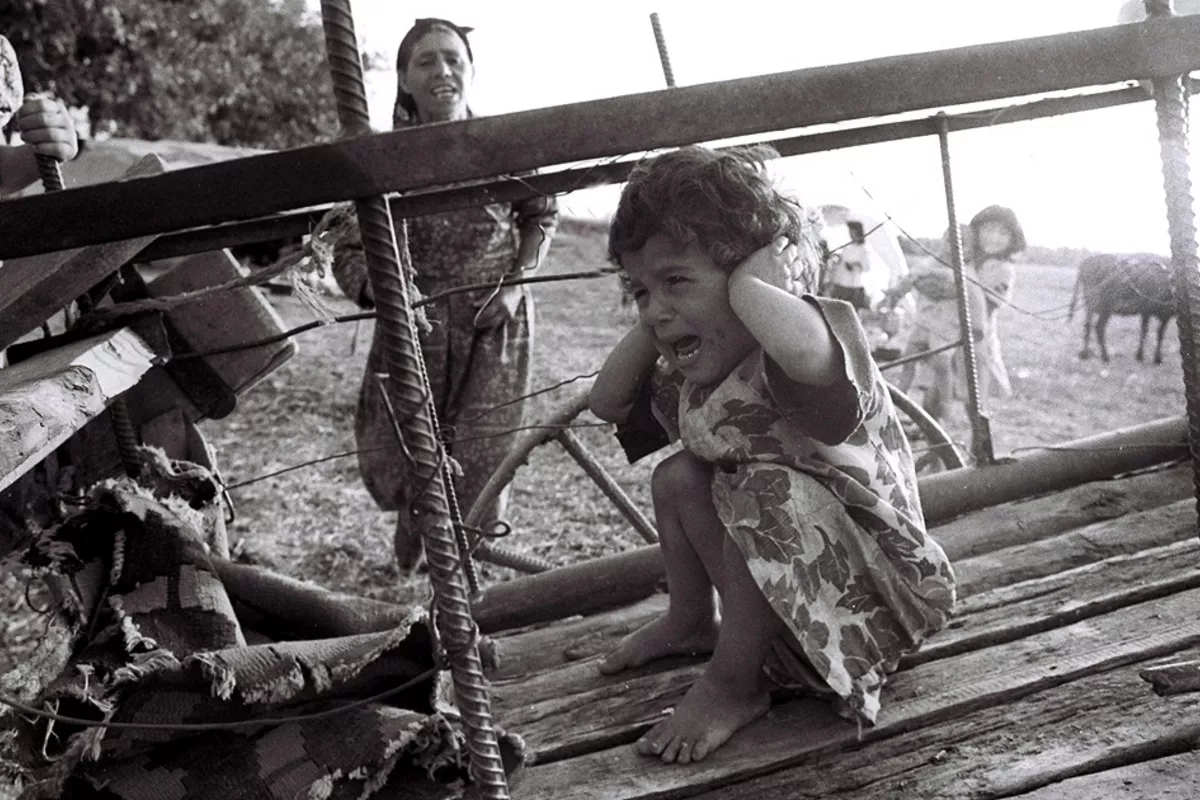
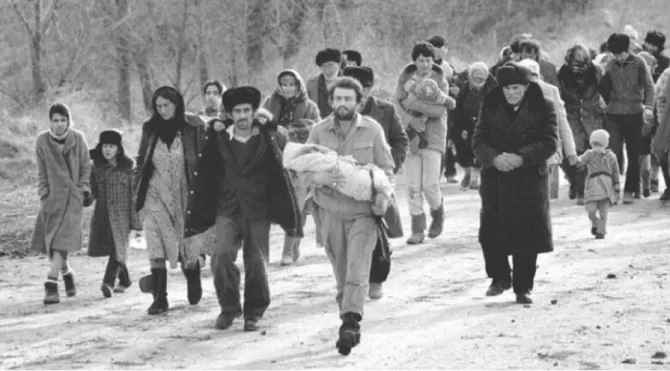
On the night of February 25-26, 1992, a large-scale assault on the town began. The attack opened with heavy artillery fire, followed by the advance of armored vehicles. Civilians attempting to flee toward the Gargarchay River came under fire in open fields. According to official Azerbaijani data, 613 people were killed, including 63 children, 106 women, and 70 elderly individuals. Eight families were completely wiped out. Twenty-five children lost both parents, and 130 lost one parent. A total of 1,275 civilians were taken hostage, and the fate of many remained unknown for an extended period.
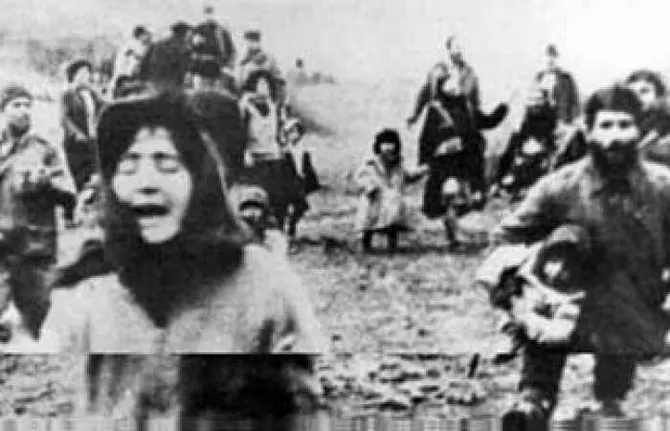
Photo credit: 1905.az
These figures illustrate the scale of the tragedy. However, the political dimension extends beyond the human toll. A central question remains: what military capabilities and structural support made such an operation possible? This is where the role of the 366th Motor Rifle Regiment becomes pivotal.
The 366th regiment was part of the former Soviet Army’s 23rd Motor Rifle Division and was stationed in Khankendi. Although the Soviet Union formally collapsed at the end of 1991, the status of military units in the region remained unclear. Weapons depots, armored vehicles, and heavy artillery were left in a legal and post-Soviet vacuum.
Various sources and eyewitness accounts indicate that armored personnel carriers and military personnel from the 366th regiment participated in the assault on Khojaly. The intensive use of heavy weaponry and the swift collapse of the town’s defenses suggested a level of military superiority beyond that of local armed groups alone. Azerbaijani officials have repeatedly argued that, without the regiment’s involvement, such a large-scale operation would have been difficult to carry out.
The fact that part of the regiment’s personnel consisted of ethnic Armenian servicemen, and that some officers later relocated to Armenia, raised further questions. In March 1992, the regiment was withdrawn from the region and transferred to the Russian Federation. By then, however, the massacre in Khojaly had already taken place.Sovi
This raises the issue of political responsibility. If the regiment was formally part of the Commonwealth of Independent States’ armed forces structure, how should its role in providing a military advantage to one side of the conflict be assessed under international law and political ethics? The collapse of military command and control in the post-Soviet space was not merely accidental; it coincided with a broader redefinition of spheres of influence.
When the events in Khojaly are considered alongside the events of January 20, 1990, in Baku, a broader political pattern emerges. On that day, Soviet troops entered Baku, killing 147 civilians and injuring hundreds in an attempt to suppress Azerbaijan’s independence movement. Two years later, remnants of Soviet military infrastructure in Karabakh contributed to a decisive imbalance in another conflict. Both episodes illustrate a similar element - the use of force as an instrument of political control.
Between 1992 and 1994, Karabakh and seven surrounding districts came under occupation. Approximately 20 percent of Azerbaijan’s internationally recognized territory fell under Armenian control. Nearly one million Azerbaijanis became refugees or internally displaced persons. The role of post-Soviet military assets in shaping this outcome has been widely debated. The availability and distribution of heavy weaponry significantly influenced the course of the war.
For Azerbaijani society, the Khojaly genocide represents not only a humanitarian tragedy but also a political lesson. When state institutions are weak, military control is fragmented, and external influence intensifies, human security deteriorates. The tragedy reinforced the imperative of building a strong national army and pursuing an independent security policy.
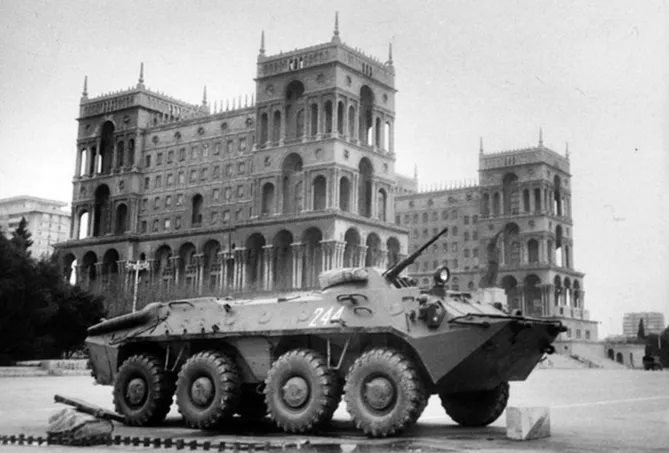
Photo credit: 1905.az
The name of the 366th Motor Rifle Regiment has therefore become symbolic. It represents not merely a single military unit but a broader pattern of diffused responsibility in the chaotic post-Soviet environment. Khojaly stands as one of the gravest human consequences of that pattern.
International reaction at the time was limited. In the early 1990s, the global system was preoccupied with major geopolitical transformations. The Karabakh conflict remained on the periphery of international attention, contributing to a climate of impunity in the region.
In conclusion, the tragedy in Khojaly is documented as a severe humanitarian crime: 613 civilians killed, hundreds taken hostage, and thousands of lives irreversibly altered. Accounts of the involvement of the 366th Motor Rifle Regiment underscore that the events were not merely a localized ethnic clash but unfolded within a broader military and geopolitical context. For Azerbaijan, Khojaly is both history and an enduring question of political responsibility - a stark reminder of how uncontrolled military infrastructure and power politics in the post-Soviet space can produce catastrophic human consequences.