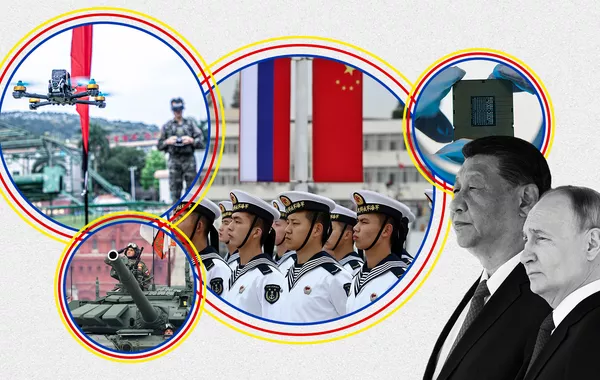
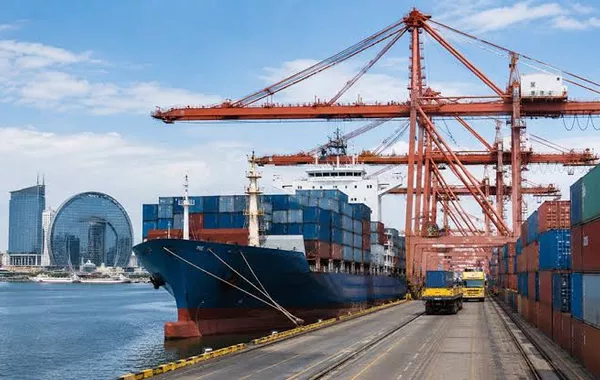
After the imposition of sweeping Western sanctions in 2022, Russia faced a systemic rupture of its traditional trade, financial, and technological channels. Yet instead of becoming isolated, Moscow constructed an alternative geoeconomic architecture, with the South Caucasus emerging as one of its key nodes. The region has effectively become a transit and financial belt, connecting sanctions-hit Russia to global markets through a network of formally independent states not directly subject to Western restrictions.
Each of the three South Caucasus countries has, to varying degrees, contributed to Russia’s ability to cope with Western sanctions. This process has been most visible in Armenia, which benefited the most from these operations. The dividends from the Armenian economy’s almost fairy-tale growth only began to decline last year, while in 2023-2024 that growth was at its peak. Georgia was involved in the re-export of sanctioned goods to a lesser extent, yet its name has also appeared in relevant reports and investigations. As for Azerbaijan, there are no proven facts confirming that Baku assisted Moscow in circumventing sanctions. The only allegation concerned the sale to partners of Russian gas instead of Azerbaijani gas, but this version remained at the level of speculation and was never supported by evidence. Moreover, experts explained why such re-export is physically impossible.
A separate layer of this scheme is linked to Iran. Russia and Iran have developed barter and settlement mechanisms outside the dollar system, with the South Caucasus acting as the connecting link between their economies. Iranian goods flow into Russia through Azerbaijan and Armenia, while Russian supplies, including industrial products and technologies, move in the opposite direction. This has created an alternative economic circuit that is largely immune to Western financial pressure.
But let us take everything step by step.

photo: Shutterstock
Armenia
By the end of the very first year of the Russia-Ukraine war, Armenia’s economy began to demonstrate extraordinary growth figures.
In Armenia, the stunning surge in foreign trade turnover was often explained by the expansion of cooperation with partners within the Eurasian Economic Union. However, the chronology of the growth tells a different story, above all, that it was driven primarily by trade with Russia. By the end of 2024, trade turnover between Armenia and Russia reached $16 billion. In 2023, this figure stood at $7.4 billion, which itself was 55 percent higher than in 2022. By comparison, Armenia’s trade turnover with Kazakhstan in 2023 amounted to just $100 million. These figures led Western analysts to conclude that Armenia’s spectacular foreign trade growth was closely tied to sanctions-related re-exports.
And this re-export was not limited to bilateral trade. Armenia was involved in schemes that helped Moscow continue selling goods subject to sanctions, as well as acquiring products that were prohibited for direct sale to Russia.
By mid-2024, Armenia’s trade turnover had also skyrocketed with the United Arab Emirates (almost sevenfold) and China (up 84.5 percent). Notably, the lists of imports into and exports from Armenia were nearly identical. In 2024, Armenia imported: precious stones and metals (and products made from them); machinery, equipment, and mechanisms; mining industry materials; land, air, and water transport vehicles; textiles (and textile products); chemical industry products; base metals (and products made from them); and finished food industry products. Armenia exported: precious stones and metals (and products made from them); machinery, equipment, and mechanisms; mining materials; finished food industry products; textiles (and textile products); base metals (and products made from them); instruments and apparatuses; and products of plant origin.
These parallels speak for themselves.
It is also necessary to recall an investigation conducted in June 2024 by Germany’s DW following the EU’s 12th sanctions package, which imposed a complete ban on the direct import from Russia to the European Union of non-industrial natural and synthetic diamonds and diamond jewelry. DW analysts concluded that gold was being exported by Armenia as Armenian in origin, despite the fact that such volumes have never been mined in the republic itself. According to official statistics, Armenia exported gold worth $1.8 billion in 2023. In 2024, this figure doubled. It was established that Armenia was re-exporting Russian gold and diamonds to Dubai and Hong Kong, where, in turn, an abnormal surge in imports from Armenia began in 2023.
In the opposite direction, Armenia became a channel for the re-export of Western goods. Supplies of electronics, microchips, household appliances, industrial equipment, automobiles, and spare parts increased most sharply - precisely the categories that the EU and the United States restricted in trade with Russia. These re-exports were carried out through the purchase of the relevant goods in the EU, China, South Korea, or the UAE. As a result of these activities, a number of Armenian companies were placed on the U.S. sanctions list.
In 2025, the process began to slow down and almost came to a halt. A key role was played by Armenia’s rapprochement with the United States and the emergence of certain prospects for the country that were incompatible with continued large-scale assistance to Moscow in circumventing sanctions.
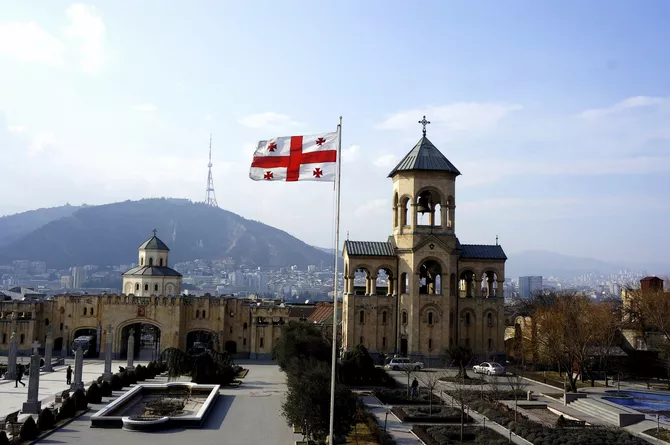
photo: Novo-monde
Georgia
Georgia plays a different, but no less important role. While formally supporting sanctions, it has become one of the main transit corridors between Russia and the outside world. Through the Georgian ports of Poti and Batumi, as well as overland border crossings, a significant share of trade flows between Russia, Türkiye, the Middle East, and Europe. After 2022, cargo turnover along these routes increased sharply, coinciding with a rise in Turkish exports to the region and growing Georgian transit into Russia.
Türkiye emerged as Russia’s main external supplier after European markets were closed. However, a substantial portion of Turkish goods, including industrial equipment, electronics, and components, reaches Russia not directly, but via the Caucasus. The Türkiye-Caucasus-Russia scheme helps reduce sanctions risks, alter documentation regarding the origin of goods, and rely on intermediary companies to bypass restrictions.
In early October 2025, Reuters reported that the Russian company Russneft delivered its first shipment of crude oil to a new refinery in Kulevi. The tanker Kayseri, sailing from Novorossiysk, delivered 105,340 tons of Siberian Light crude on October 6. For Georgia, this marked the launch of its first full-cycle oil refinery; for Russia, it represented one of the new export routes for raw materials amid Western sanctions. The supplies were carried out not by the state-owned Rosneft, which is under sanctions by the United States, the United Kingdom, and several EU countries, but by the private company Russneft.
Last year, the investigative outlet iFact published a report titled “Invisible Cargo: The Path of Sanctioned Russian Oil to Europe,” suggesting that Russian oil was reaching Europe via Georgian territory.
According to Georgia’s National Statistics Office (Geostat), total exports of oil and petroleum products amounted to about 65,000 tons in 2019-2021, but rose to 275,000 tons in 2022-2024 (including 104,000 tons shipped to EU countries). The value of exports over the same period increased from $46 million to $255 million. At the same time, experts emphasize that Georgia has very limited oil reserves, producing on average only 35,000-40,000 tons per year.
In previous years, other notable trends were observed. In 2023, imports of Russian petroleum products increased significantly. Georgia’s involvement in helping Russia bypass Western sanctions was also indicated by a rise in the re-export of cars to Russia and Belarus. Eventually, Tbilisi banned the re-export of vehicles, but did not prohibit their registration in the names of citizens of those countries. As a result, a new scheme emerged: Russian and Belarusian citizens purchased cars in Georgia, listing Kazakhstan or Kyrgyzstan as the final destination in the documents. The vehicles were then exported through the Lars checkpoint and ended up on the Russian market.
In May of last year, Georgian authorities completely banned citizens of Belarus and Russia from re-exporting cars and special equipment through the country’s territory.
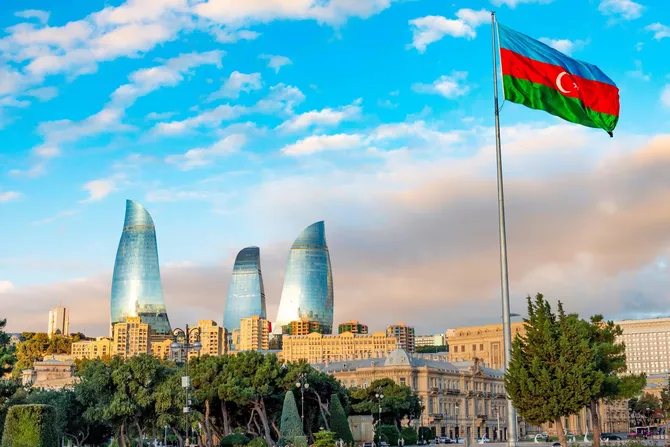
photo: mappr
Azerbaijan
Azerbaijan occupies a restrained but strategically important position. Baku maintains close ties with both the West and Russia, while simultaneously serving as a key element of transport corridors linking Russia, Iran, Türkiye, and Central Asia. Cargo flows passing through Azerbaijani territory along the North-South and East-West routes allow Moscow to diversify its logistics and reduce dependence on European pathways.
Azerbaijan is extremely cautious when it comes to sanctions and therefore avoids involvement in such schemes, unwilling to jeopardize its expanding energy partnership with Europe. Two years ago, Politico Europe published an investigation alleging that Azerbaijan was selling Russian gas to Europe under the guise of Azerbaijani supplies. However, these claims could not be substantiated with facts. Official Baku refuted the publication with concrete data. In 2024, Azerbaijan simply could not have sold Russian gas to the EU because it did not import a single cubic meter of gas from Russia that year. Presidential aide Hikmet Hajiyev stated that “Azerbaijan did not import gas from Russia in 2024. Production is carried out exclusively in cooperation with international partners, and volumes of production and exports are open and transparent.”
Previously, Azerbaijan had purchased limited volumes of Russian gas for domestic consumption.
As for gas re-exports, experts note that Russian gas cannot physically enter the only pipeline supplying Europe. The Southern Gas Corridor originates at the Shah Deniz field and does not branch off elsewhere. The gas previously purchased from Russia had no technical possibility of entering the SGC pipeline, as it arrived through a different pipeline system.
Conclusion
Be that as it may, the issue of Russia circumventing sanctions via the South Caucasus remains. According to Western analysts, taken together, these processes have turned the South Caucasus into a “gray zone” of the global economy - a space where sanctions-hit Russia continues to interact with world markets through a chain of intermediaries, transit routes, and financial buffers. This does not eliminate the economic costs for Moscow, but it significantly reduces the strategic effectiveness of sanctions.
For the countries of the region, such a role brings short-term benefits - growth in trade, logistics, and the banking sector, but at the same time, increases their vulnerability to secondary sanctions, political pressure, and the risks of long-term dependence on Russia’s economic orbit. The longer the sanctions regime persists, the greater the danger that the South Caucasus will become entrenched in this new Russian geoeconomic architecture, transforming from a periphery into one of the key nodes of the global sanctions confrontation.
In contrast to Western analysts, however, let us not be so pessimistic, because the South Caucasus is already moving away from Russia at a rapid pace.
By Emil Samedov