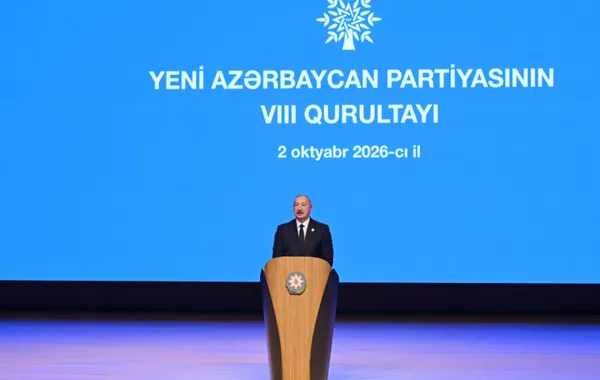
On January 13, Azerbaijani President Ilham Aliyev took part in the reopening ceremony of the Tartar Electromechanical Plant following its reconstruction. Since 2005, the enterprise, which has been operating since Soviet times, has been placed under the authority of the newly established Ministry of Defense Industry. The plant is expected to produce various types of military equipment.
On the same day, Uzbekistan's President Shavkat Mirziyoyev visited a technopark in Chirchik, where he inspected defense industry enterprises. During the visit, the president was shown the production of armored vehicles and remotely controlled combat modules.
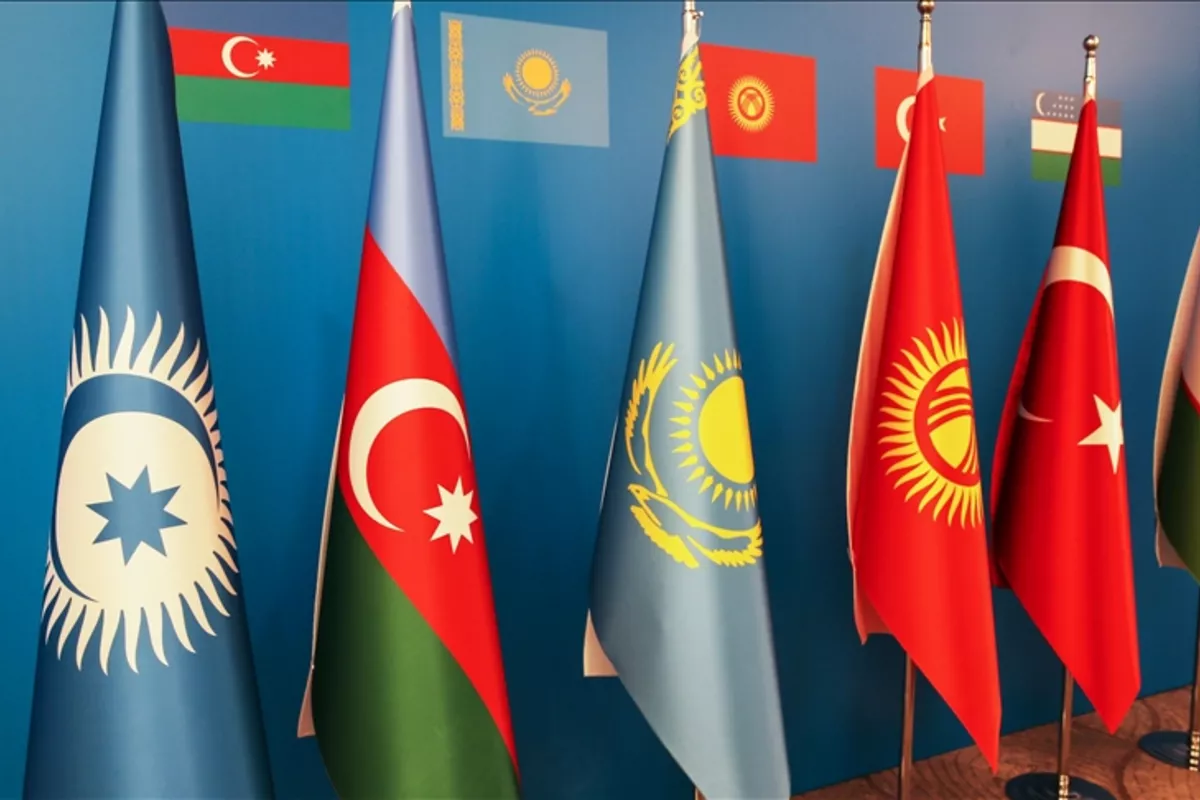
Experts have drawn attention to the parallel nature of these visits, viewing them as far from coincidental. Against the backdrop of Azerbaijan’s recent initiatives aimed at strengthening defense cooperation among Turkic states and the growing emphasis on security, it is reasonable to expect that the military dimension of policy among member states of the Organization of Turkic States (OTS) will continue to expand.
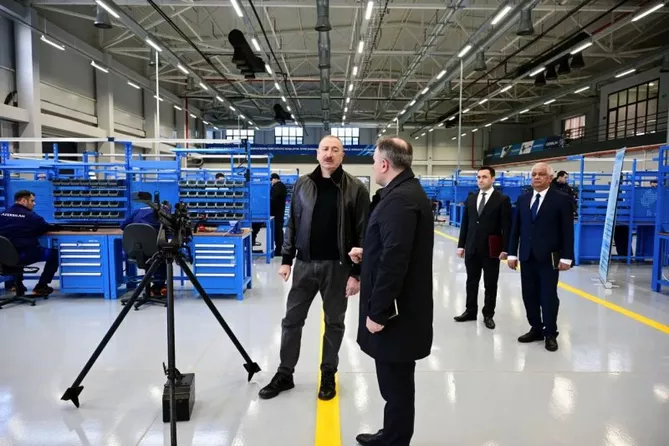
Photo: President.Az
The defense industries of former Soviet republics are entering a qualitatively new stage of technological development. These countries are increasingly seeking to rely on their own military-technical platforms, taking into account external risks and emerging threats. In a rapidly changing international environment, security issues are moving to the forefront. For OTS member states, this challenge is particularly acute: rising geopolitical tensions, intensifying global competition over energy and transport routes, and the emergence of new threats require coordinated action among countries that share a common geopolitical, linguistic, and cultural space.
The military-industrial complexes (MICs) of OTS member states are developing actively, with a focus on cooperation, digitalization, and strengthening national defense capabilities, particularly in the areas of unmanned aerial vehicles (UAVs), cybersecurity, armored vehicles, and ammunition. Türkiye, Azerbaijan, and Kazakhstan stand out as leading examples, striving for greater self-sufficiency while also building export potential.
Türkiye remains the regional leader, possessing a powerful defense industry, including companies such as Baykar Defense and ASELSAN, that produces high-tech UAVs, air defense systems, and armored vehicles, while actively exporting its products. Azerbaijan is also rapidly expanding its defense industry by increasing both procurement and domestic production, while developing joint projects with Türkiye and Israel, with a strong emphasis on drones and artillery systems, including the Ravan platform.
Kazakhstan prioritizes ammunition production, armored vehicles, most notably through Kazakhstan Paramount Engineering, and UAVs, while deepening defense cooperation with Türkiye. Uzbekistan is modernizing its defense production base, focusing on UAVs and communications systems, and seeking to strengthen collaboration within the OTS framework.
At present, only Türkiye and Azerbaijan possess substantial export potential in their defense industries.
The primary objective of the Turkic states in developing their military-industrial complexes is to reduce dependence on imports and ensure national security. Alongside the expansion of national defense industries, these countries are increasingly discussing and implementing joint projects and training programs, particularly in drone technologies, cybersecurity, and communications. Overall, the defense sector of OTS countries represents a dynamically growing field that is becoming a key element of both regional security and economic cooperation.
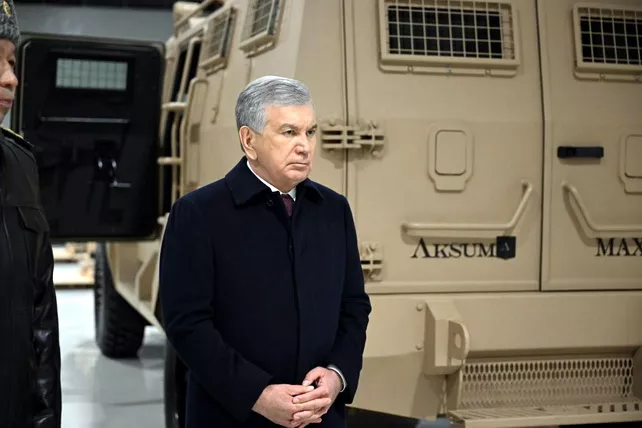
Photo: Uzdaily
While the development of defense industries contributes directly to the national security of each state, the OTS agenda is increasingly incorporating the idea of pooling efforts to establish elements of collective security.
Security issues featured prominently at the latest OTS summit, held in October 2025 in Gabala, Azerbaijan. During the meeting, leaders put forward a number of concrete initiatives aimed at strengthening collective security. President Ilham Aliyev proposed expanding military cooperation and suggested holding joint military exercises involving OTS member states in Azerbaijan in 2026.
These proposals did not emerge in isolation. In July 2025, Türkiye hosted a meeting of defense ministers and heads of defense industries from OTS countries, with a similar gathering scheduled to take place in Azerbaijan in 2026. In September 2025, secretaries of national security councils of OTS states met in Bishkek to discuss regional and global threats, as well as broader trends affecting the Turkic world. In addition, since 1992, the heads of intelligence services of Turkic states have maintained regular coordination meetings.
The growth of global and regional risks makes military cooperation within the OTS objectively necessary. This is particularly relevant in light of increasingly explicit threats voiced by Russia toward Central Asian states. In a world where major powers are more frequently disregarding international law and prioritizing the use of force, no country can consider itself fully secure in isolation. As the strategic importance of the Turkic world in energy and transit logistics continues to rise, so too does external competition and attention. Without a coordinated security framework, there remains a risk that external actors could attempt to shape the future of the Turkic space.
The proposal to hold joint military exercises generated significant resonance, particularly in Turkish media, where it was described as historic and even dubbed the “Turan Exercises.” However, as President Ilham Aliyev emphasized in a recent television interview, formal consent from partner states has not yet been received.
The potential for military cooperation among Turkic states is considerable. The combined armed forces of OTS members include Türkiye’s powerful military - the second largest in NATO and highly ranked in the Global Firepower 2025 index - as well as the rapidly modernizing armed forces of Azerbaijan and Kazakhstan. Kyrgyzstan, Uzbekistan, and Turkmenistan also possess notable military capabilities.
Joint exercises are already becoming more frequent. In November 2022, the first OTS military drills were held in Isparta, Türkiye, involving special forces from Azerbaijan, Kazakhstan, Kyrgyzstan, Türkiye, and the Turkish Republic of Northern Cyprus, with a focus on counterterrorism operations in urban environments. In August 2024, Kazakhstan hosted the Birlestik-2024 command-staff exercises, observed by military leaders from several Turkic states. In June 2025, Azerbaijan and Kazakhstan conducted the Caspian Breeze-2025 naval drills near Aktau. In July 2025, the two countries held the Tarlan-2025 joint flight-tactical exercises focused on UAV operations. In September 2025, Azerbaijan, Kazakhstan, Uzbekistan, and Türkiye participated in joint exercises with Pakistan titled Infinite Brotherhood IV, involving armored units, army aviation, and drones. In October 2025, the Unity-2025 regional exercises took place in Uzbekistan’s Samarkand region, involving Azerbaijan, Kazakhstan, Tajikistan, Kyrgyzstan, and Uzbekistan.
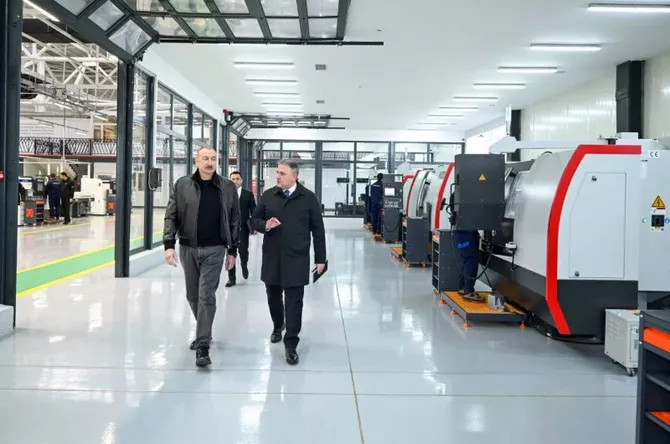
Photo: President.Az
In 2025 alone, Azerbaijan conducted 25 joint military exercises with Türkiye.
It is becoming increasingly evident that there is a need to move beyond fragmented bilateral drills toward full-scale multilateral OTS exercises. The total number of armed personnel across OTS member states exceeds one million - a significant factor of strength and deterrence.
In today’s complex international environment, Turkic countries have an opportunity to act as a unified front on security issues, transforming the Organization of Turkic States into a fully fledged center of stability and power in Eurasia.
By Tural Heybatov