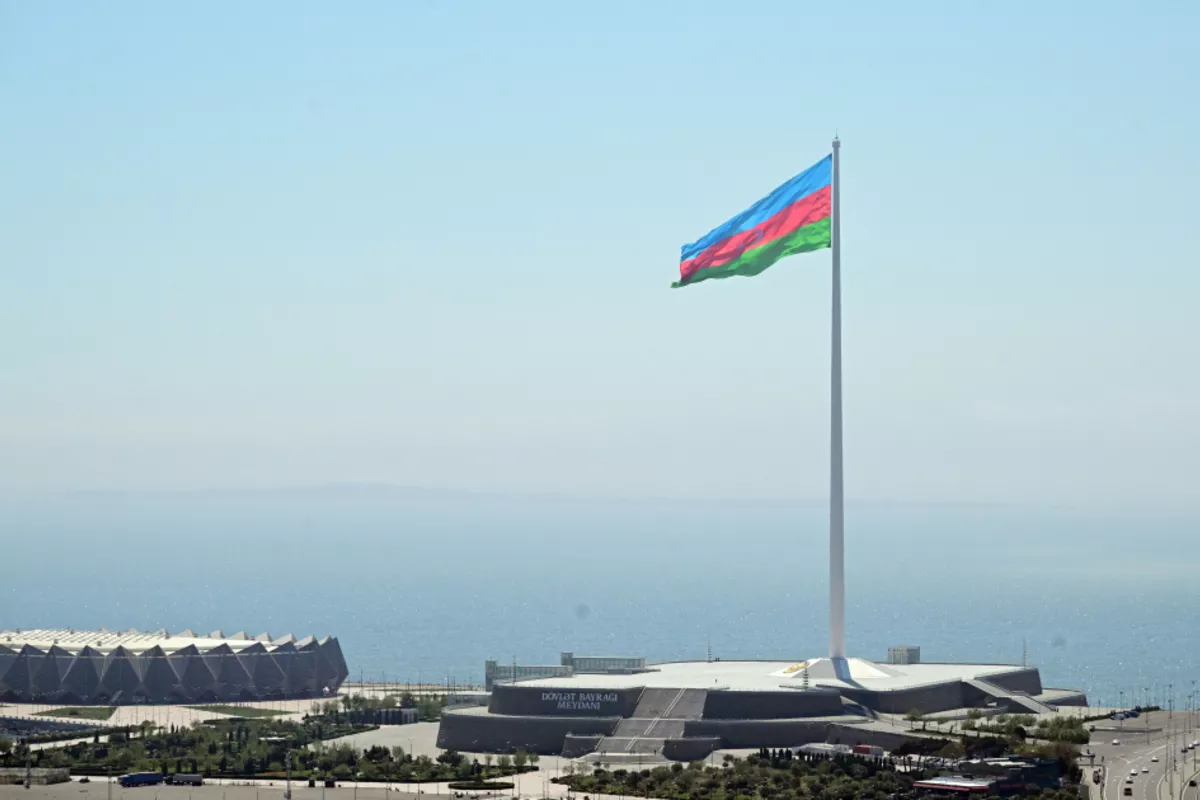
In recent years, Azerbaijan has been increasingly acting as a system-shaping state in the South Caucasus. Rather than approaching diplomacy issue by issue, Baku is working to define the frameworks through which regional politics, economics, and connectivity operate. Energy networks, transit corridors, logistics standards, and post-conflict governance are no longer isolated tools; they are components of a broader effort to design the region’s operating environment.
System shaping is not about dominance or exclusion. It is about setting the conditions under which cooperation becomes practical, investment becomes viable, and stability becomes self-reinforcing. States that shape systems determine what is feasible, scalable, and credible-and in doing so, they influence outcomes without constant intervention.
This shift is visible across three interconnected domains: Azerbaijan’s role as an energy network builder, its emergence as a transit and logistics hub linking Eurasian routes, and its effort to translate political leverage into a regional governance proposition centered on connectivity, responsibility, and predictability. Together, these elements signal a transition from reactive diplomacy to regional architecture-one that positions Azerbaijan not merely as a participant in the South Caucasus, but as one of its primary designers.
From Leverage to Architecture: Redefining the Regional Moment
Azerbaijan’s consolidation of sovereignty following the 2020 war and the 2023 developments did more than alter military or negotiating balances. It fundamentally changed the diplomatic geometry of the South Caucasus.
The immediate impact was obvious: Azerbaijan gained greater leverage in negotiations with Armenia and enhanced its ability to shape the agenda of peace talks. The deeper and more consequential shift, however, lies in Azerbaijan’s new role as the decisive variable in determining whether the South Caucasus evolves as a closed security space or an open connectivity zone.
By early 2025, negotiations between Armenia and Azerbaijan moved beyond generalized confidence-building language toward a text-based peace framework. By March 13, 2025, both foreign ministries publicly confirmed that work on the draft peace agreement text had been concluded. At the same time, Azerbaijan made clear that signature would depend on Armenia addressing constitutional claims on territorial integrity.
Parallel to this diplomatic track, practical signals of normalization began to emerge. In October 2025, Azerbaijan lifted restrictions on cargo transit to Armenia-a step framed not merely as a concession, but as an economic dividend of peace and a precursor to reopening regional communications.
Regardless of the external lens through which these developments are viewed-Western, Russian, Turkish, or Iranian-the underlying reality is consistent: the trajectory of regional normalization increasingly runs through Azerbaijani decisions. Crucially, Baku is using this position not only to resolve bilateral disputes, but to advance a broader vision of a South Caucasus organized around connectivity, commercial logic, and enforceable arrangements.
This is the essence of system design.
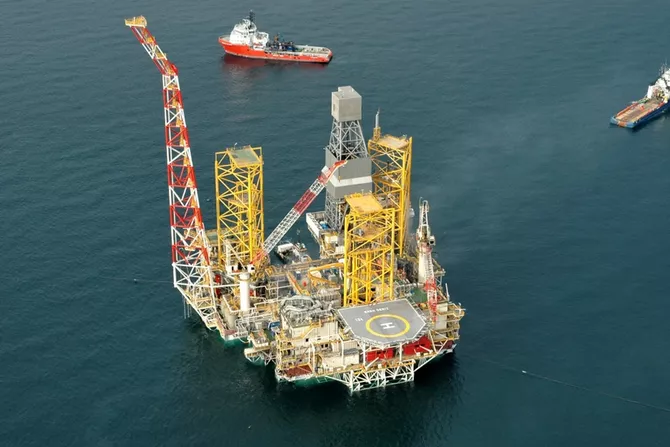
Photo: bp-Azerbaijan
Energy as Architecture: From Exporter to Network-Maker
Azerbaijan’s role as an energy producer is often summarized in simple terms: gas exports to Europe. Yet from a system-shaping perspective, the more important story is not the commodity itself, but the ecosystem that Azerbaijan has built over decades-production capacity, processing facilities, pipeline infrastructure, contractual discipline, and a reputation for reliability even during periods of geopolitical stress.
Reliability as Influence
In 2025, Azerbaijan produced approximately 51.5 billion cubic meters of natural gas, marking a modest year-on-year increase. Exports totaled around 25.2 bcm, with roughly 12.8 bcm delivered to European markets. These figures underscore an important reality: supply volumes are constrained less by political intent than by upstream and midstream capacity.
The strategic signal in 2026, however, lies in market deepening rather than sheer volume growth. Azerbaijan expanded its European footprint by initiating gas supplies to new markets, including Germany and Austria, under long-term contractual arrangements. This step matters because it embeds Azerbaijan more deeply into Europe’s energy security planning processes, where decisions about financing, infrastructure expansion, and regulatory frameworks are made.
From a system-design perspective, Azerbaijan is no longer merely responding to European demand. It is actively shaping the conditions under which diversification is possible. Baku’s message to European partners has been explicit: expectations for increased supply must be matched by realistic financing mechanisms, particularly given constraints on fossil-fuel investment within European policy frameworks.
In this sense, Azerbaijan is influencing not just energy flows, but the policy environment surrounding them.
The Renewables Pivot: Designing the Next System
Perhaps the most forward-looking element of Azerbaijan’s strategy is its deliberate pivot toward renewable energy-not as a symbolic gesture, but as a structural component of future system design.
The commissioning of the Garadagh solar power plant, with a capacity of 230 MW, has become emblematic of this shift. With annual output sufficient to supply tens of thousands of households, the project contributes to emissions reduction while freeing natural gas for export or domestic industrial use.
By late 2025, renewable generation accounted for nearly one-fifth of Azerbaijan’s installed electricity capacity, with major wind and solar projects contributing more than 2.3 billion kWh annually. Plans for additional gigawatt-scale capacity by 2027 indicate that this transition is not incremental, but strategic.
The most system-shaping initiative, however, is the proposed Caspian-Black Sea-European Green Energy Corridor, including a submarine electricity cable linking Azerbaijan and Georgia to Romania and Hungary. By positioning itself as the eastern anchor of this corridor, Azerbaijan is helping to redesign the South Caucasus as an electricity transit region rather than solely a hydrocarbon one.
This represents a quiet transformation: a region historically defined by pipelines and frozen conflicts is being reimagined around cross-border power transmission and grid interconnection.
Transit and Logistics: Strategic Gravity and the Middle Corridor
If energy provides Azerbaijan with credibility, transit and logistics provide it with structural leverage.
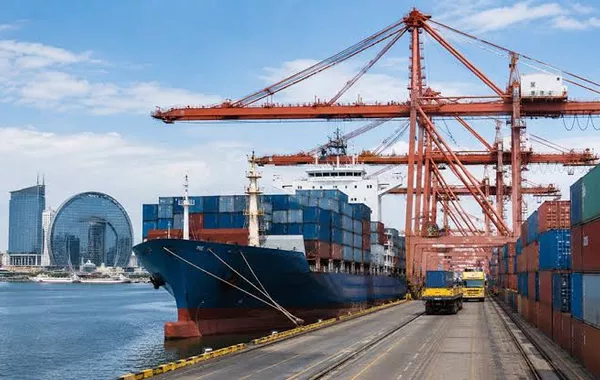
The acceleration of the Trans-Caspian or Middle Corridor reflects broader shifts in global supply chains, driven by sanctions risk, geopolitical fragmentation, and the search for redundancy. Azerbaijan’s strategic advantage lies not merely in geography, but in its ability to convert geography into institutional capacity.
By 2025, the Port of Baku surpassed 100,000 TEU in annual container handling for the first time-a milestone indicating operational scaling rather than aspirational planning. Cargo volumes transported via the Middle Corridor rose significantly, with several million tons moved in the first three quarters of the year alone.
Yet Azerbaijan’s approach increasingly emphasizes systems over projects. Government and corporate messaging now focuses on integrated logistics governance: digital customs, data interoperability, predictable tariffs, and coordination across rail, port, and maritime authorities.
This matters because transit power is not defined by infrastructure alone. It is defined by predictability, enforceability, and trust. Investors and shippers value routes that are boring in the best sense-standardized, reliable, and insulated from political volatility.
Azerbaijan’s experience delivering complex energy corridors gives it credibility in applying the same logic to transport connectivity. In effect, Baku is repositioning the South Caucasus from a high-friction space to a utility-like transit zone.
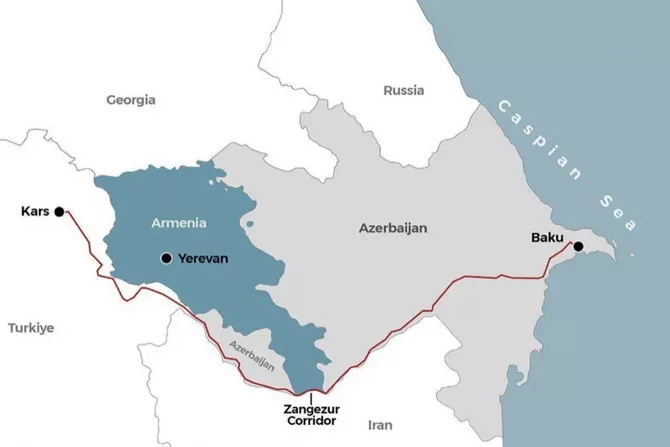
Photo: AIR Center
Balancing Major Powers Through Systems, Not Rhetoric
A system-shaping state in a contested region must balance major powers without becoming dependent on any of them. Azerbaijan’s balancing act is increasingly operational rather than rhetorical.
-
With Türkiye, strategic alignment is being translated into corridor economics, making connectivity itself a multiplier of partnership.
-
With Russia, Azerbaijan manages friction while reducing dependency by diversifying economic lifelines.
-
With Iran, corridor optionality allows pragmatic engagement without granting veto power over strategic routes.
-
With the EU, Azerbaijan pursues partnership on clearly defined terms, particularly in energy and green connectivity.
-
With China, Azerbaijan positions itself as a corridor stakeholder without aligning its system design to any single external agenda.
This approach enhances autonomy precisely because it embeds Azerbaijan in multiple overlapping systems.
Conclusion: Making the Region Work
Azerbaijan’s strategic evolution reflects a clear transition:
-
Issue-driven diplomacy sought to resolve a national problem.
-
System design seeks to make the region function on terms that reduce conflict risk, enable growth, and protect sovereignty.
Energy corridors established credibility. Logistics corridors create centrality. Renewable projects align Azerbaijan with future systems. Post-conflict statecraft provides leverage-but also responsibility.
Now, the South Caucasus is increasingly a space of contested connectivity-and Azerbaijan is playing a leading role in defining its operating logic.
If this approach is sustained, Azerbaijan will not simply be a strong regional actor. It will be the state that shapes how the South Caucasus works.