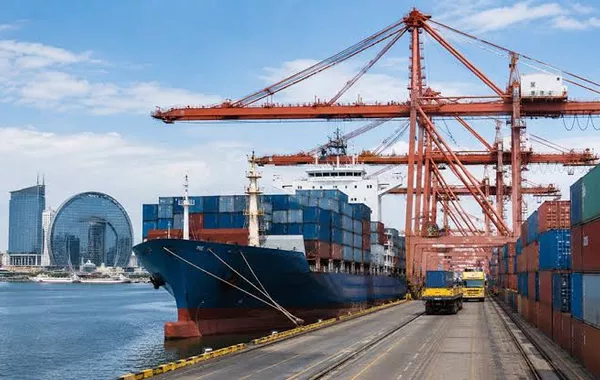
Over the last decade-and particularly since 2022-the landscape of Eurasian trade has been reshaped dramatically. Traditional trade routes that once formed the backbone of intercontinental commerce, especially those relying on maritime chokepoints like the Suez Canal or rail lines crossing Russian territory, have exposed structural weaknesses. Geopolitical tensions, global supply chain disruptions caused by war and sanctions, and intense competition among major powers for influence have all accelerated the search for alternative pathways.
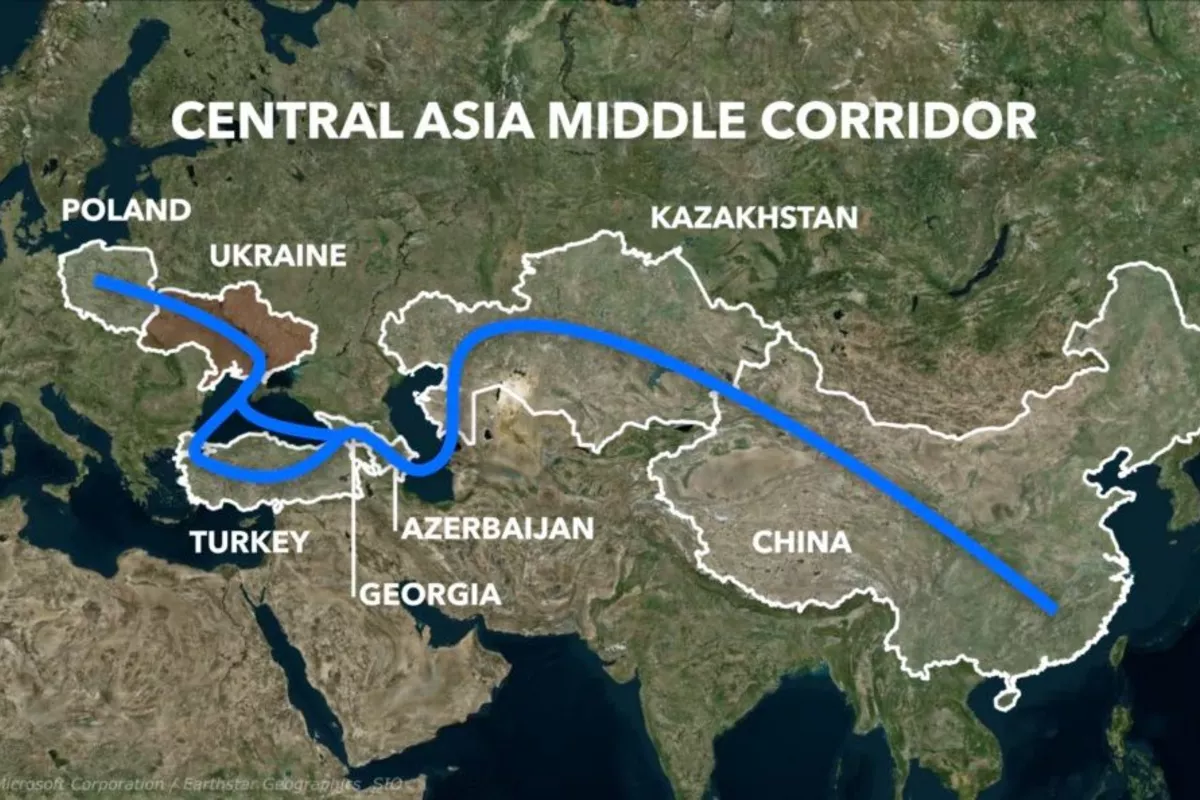
In this context, the Middle Corridor, formally known as the Trans-Caspian International Transport Route (TITR), has emerged as a strategically vital new corridor connecting China to Europe through Central Asia, the Caspian Sea, the South Caucasus, and Türkiye.
This article examines why the Middle Corridor has become a central strategic alternative to conventional routes, reviews recent developments shaping its expansion, and highlights the critical roles played by Azerbaijan and Central Asian states in creating this new Eurasian trade architecture.
I. The Middle Corridor in Context: Why a New Route Matters
Geopolitics and the Search for Alternatives
The Middle Corridor is not simply another transport pathway; it represents a geopolitical response to evolving global realities. The 2022 invasion of Ukraine by Russia triggered extensive sanctions and created significant disruptions in international trade. These developments increased the risks and costs associated with routes that cross Russian territory. Simultaneously, global maritime logistics have faced ongoing instability-from pandemic-era bottlenecks at key maritime passages like the Suez Canal to growing strategic rivalry between the United States and China. As a result, the international community has increasingly looked toward overland alternatives that can provide greater reliability and resilience.
By routing goods through Kazakhstan → Caspian Sea → Azerbaijan → Georgia → Türkiye → Europe, the Middle Corridor offers a pathway that avoids Russian territory and largely bypasses Iran. This reduces exposure to geopolitical pressure, sanctions, and instability. As a result, the route has rapidly gained strategic significance among a wide range of global and regional actors.
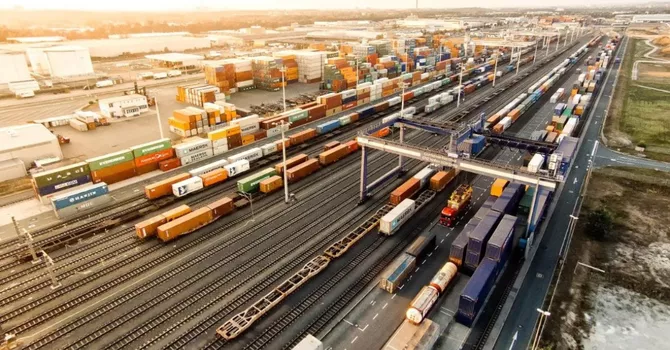
Photo: iStock
Efficiency, Resilience, and the Competitive Edge
When compared to traditional northern routes through Russia, the Middle Corridor is significantly shorter-approximately 2,500 kilometers less-and can deliver transit times of 10-15 days between China and Europe under optimal conditions. In contrast, other routes can take anywhere from 15 to 60 days or more, depending on congestion, border delays, or geopolitical disruptions.
While maritime shipping remains cheaper in many cases, the key advantage of the Middle Corridor is its predictability and speed, especially for high-value, time-sensitive goods such as electronics and industrial components. The corridor’s multimodal design, combining rail and sea transport, enhances its ability to absorb disruptions in either domain. This flexibility has made it increasingly attractive for businesses seeking dependable supply chains amid global uncertainty.
II. Evolution and Scaling: Latest Figures and Capacity Trends
Rapid Growth in Freight Volumes
The expansion of the Middle Corridor is not only a matter of strategic rhetoric; it is reflected in measurable cargo volumes:
In the first 11 months of 2024, 4.1 million tons of cargo moved through the corridor-an increase of 63% year-on-year.
Other reports show that transit freight rose from about 2.7 million tons in 2023 to 4.5 million tons in 2024, with continued growth into 2025.
Container throughput has increased dramatically in certain segments-sometimes rising up to 25 times year-on-year, driven by soaring demand for containerized freight.
Azerbaijan’s Baku International Sea Trade Port, the largest port on the Caspian Sea, has become a crucial node in this system. It currently has the capacity to handle 25+ million tons annually, with plans to expand further. This surge in capacity and throughput indicates that the Middle Corridor is evolving from a secondary alternative into a major trade artery linking East and West.
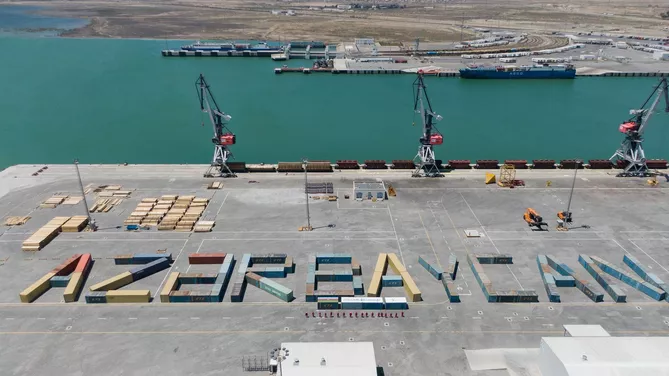
Photo: portofbaku.com
III. Strategic Drivers
1. Geopolitical Balancing and Diversification
The rise of the Middle Corridor is closely linked to Eurasia’s shifting geopolitical landscape:
The European Union has intensified investment in infrastructure along the Middle Corridor to reduce reliance on Russia-controlled routes.
The United States has tied corridor development to broader initiatives like the Trump Route for International Peace and Prosperity (TRIPP), which aims to integrate transport, energy, and fiber-optic networks while encouraging regional peace and stability.
China, once a peripheral actor in the corridor’s development, has increasingly recognized the Middle Corridor as integral to its Eurasian logistics strategy, particularly as a way to bypass transit chokepoints in Russia.
This multipolar interest underscores how trade infrastructure has become a field of both geopolitical competition and strategic cooperation.
2. Infrastructure Investments and Institutional Frameworks
The expansion of the Middle Corridor has been driven by a series of coordinated infrastructure investments:
Azerbaijan, Kazakhstan, and Georgia established Middle Corridor Multimodal Ltd, a joint venture aimed at streamlining logistics, harmonizing tariffs, and providing integrated “one-stop” solutions for freight transport.
In 2025, Azerbaijan Railways signed Memorandums of Understanding with China Railways State Corporation and the Xi’an Free Trade Port, strengthening the Baku-Tbilisi-Kars (BTK) route and establishing a 20,000 TEU container yard near Xi’an.
Ports such as Aktau, Kuryk, and Baku have expanded, while new intermodal terminals in Türkiye are being developed to relieve bottlenecks. The corridor’s capacity is projected to reach 11 million tons by 2030.
Institutionally, cooperation within the Trans-Caspian International Transport Route International Association and forums like the Organization of Turkic States has helped standardize customs procedures, technical regulations, and digital systems across multiple countries.
Photo: AZERTAC
IV. Azerbaijan: A Strategic Nexus
Transit Hub and Logistics Powerhouse
Azerbaijan’s geographic position-linking the Caspian Sea with the Caucasus and Türkiye-has made it a crucial pivot point in the Middle Corridor. The country has actively pursued policies to upgrade infrastructure, streamline logistics procedures, and attract regional and global partners.
The Port of Baku and Alat serve as major Caspian export and transit hubs, handling bulk, containerized, and break-bulk cargo. Their expansion has increased throughput and created new opportunities for value-added services such as processing, storage, and logistics support.
Key developments include:
358 block trains were dispatched from China to the Port of Alat in 2024, with average delivery times of 8-10 days.
Export block trains from Baku to China began in 2024, signaling the corridor’s potential for two-way trade rather than just inbound transit.
Strategic agreements with China to enhance BTK operations and integrate Azerbaijan’s rail infrastructure into broader regional networks.
Azerbaijan’s strategy has been multi-faceted: invest in physical infrastructure, strengthen institutional cooperation, and position itself as a reliable, neutral transit partner. These efforts have significantly boosted Azerbaijan’s geopolitical and economic importance within Eurasia.
V. Central Asia: Balancing Connectivity and Economic Integration
Kazakhstan: The Northern Anchor
Kazakhstan, Central Asia’s largest economy, forms the backbone of the Middle Corridor:
Its rail network links China to the Caspian Sea, and expansions like the second track on the Dostyk-Moyynty line have increased throughput.
Rail freight with China has grown by 48% since 2020, and export volumes have increased substantially.
A new container hub in Aktau and planned facilities aim to triple container capacity by 2030.
On October 24, 2025, Azerbaijan and Kazakhstan reaffirmed their partnership, noting a 62% increase in freight traffic in 2024 and growing interdependence in trade and investment. Kazakhstan’s commitment reflects a broader strategy to leverage transit capacity for economic diversification away from energy dependence.
Uzbekistan: Emerging Connectivity Node
Although landlocked, Uzbekistan has begun positioning itself as a more active participant in Eurasian transport networks. A national report highlights freight flows connecting Uzbekistan through Kazakhstan, across the Caspian Sea, and onward to Georgia and Europe. This offers an alternative to traditional northern and southern routes.
Challenges remain-such as infrastructure gaps and the need for stronger rail connections to China-but Uzbekistan’s logistics export strategy and involvement in multimodal initiatives indicate growing engagement with the corridor.
Turkmenistan: New Opportunities Across the Caspian
In 2025, Turkmenistan reached a milestone by dispatching cargo from China via the Turkmenbashi International Seaport, expanding the corridor’s capacity and diversifying Caspian maritime routes.
Turkmenistan’s participation extends the corridor’s geographical footprint and highlights its strategic potential beyond the traditional Kazakhstan-Azerbaijan link.
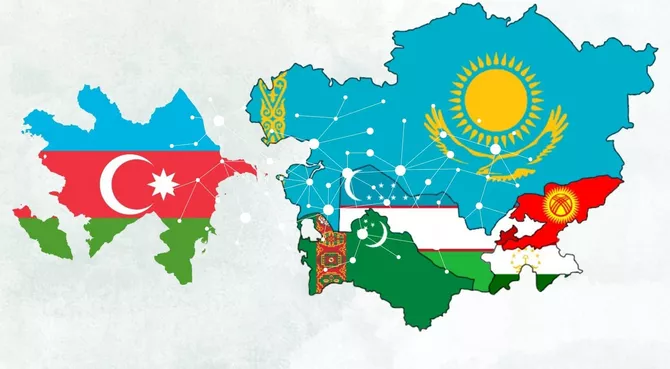
Photo: AIR Center
VI. Challenges and the Road Ahead
Despite impressive growth and strategic momentum, the Middle Corridor faces significant operational and structural challenges:
1. Border Bottlenecks and Infrastructure Gaps
Long waiting times and fragmented customs procedures across multiple borders can undermine efficiency. Multilateral efforts-such as implementing digital transit systems like the TIR international freight system-are crucial to harmonize procedures and reduce delays.
2. Maritime Segment Limitations
The Caspian Sea crossing remains a critical bottleneck. Seasonal weather variability and capacity constraints can limit throughput. Investment in Ro-Ro services, additional ferry capacity, and upgraded port facilities is necessary to mitigate these limitations.
3. Financial and Institutional Coordination
Sustained corridor development requires ongoing cooperation among governments, financial institutions, and private sector stakeholders. While organizations like the TITR International Association provide platforms for coordination, aligning regulations and financing across diverse legal systems remains a complex challenge.
VII. Conclusion: A New Eurasian Trade Architecture
In an era marked by strategic rivalry, supply chain risk, and shifting alliances, the Middle Corridor has evolved from a peripheral concept into a transformative trade architecture connecting East and West.
For Azerbaijan, the corridor has turned geographic advantage into economic and diplomatic capital. Investments in ports, rail links, and international agreements have made the country an indispensable hub in Eurasian logistics.
For Central Asia, especially Kazakhstan and emerging actors like Uzbekistan and Turkmenistan, participation in the corridor offers a path toward economic diversification, enhanced connectivity, and deeper integration with global markets.
Although challenges remain, recent freight volumes, institutional cooperation, and high-level summit outcomes suggest a clear trend: the Middle Corridor is no longer a secondary alternative-it is a strategic framework shaping the future of Eurasian trade.