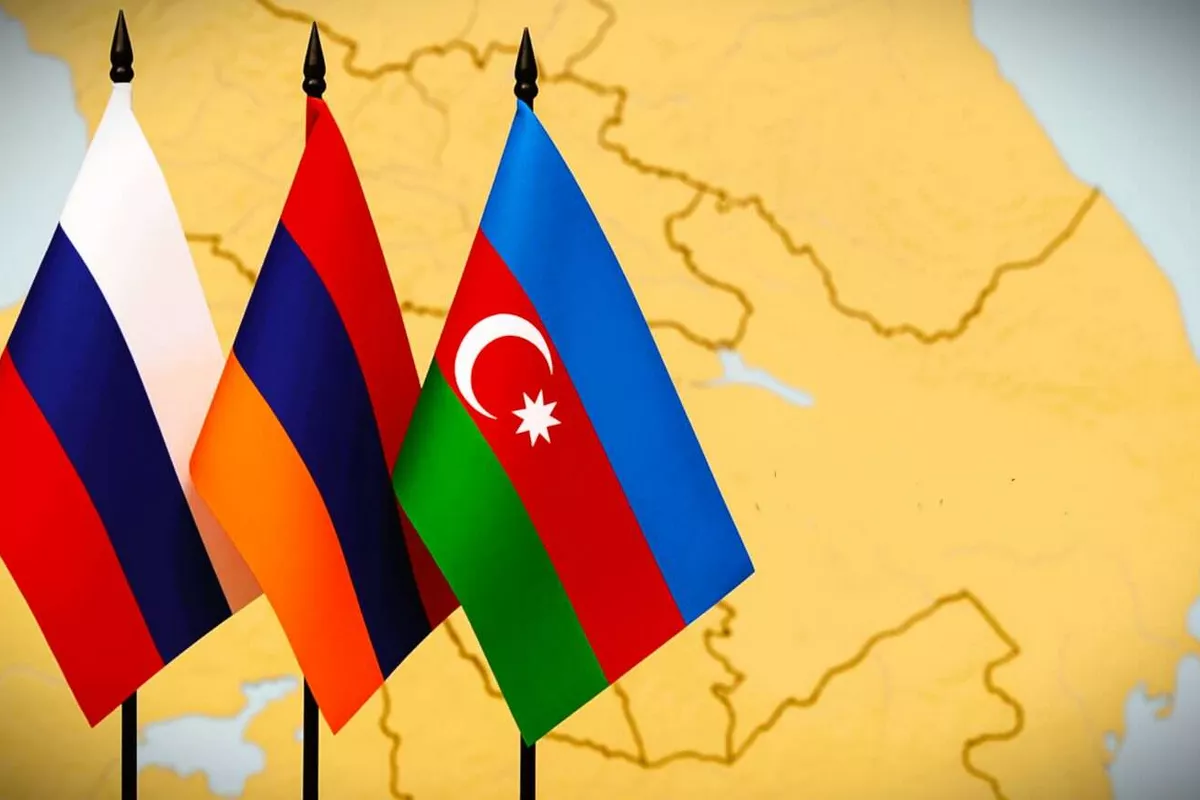
One hundred and six years ago, on August 10, 1920, an agreement was signed in Tiflis between Soviet Russia and the Republic of Armenia. At first glance, the document was temporary in nature and was intended primarily to bring hostilities to an end. Its implications for the region, however, proved far broader and more consequential: Azerbaijani lands - Karabakh, Zangezur and Nakhchivan - found themselves at the center of the arrangements. Armenia was bargaining with Russia and hoped to exchange its own Sovietization for Azerbaijani territories that it had failed to detach from the Azerbaijan Democratic Republic (ADR).
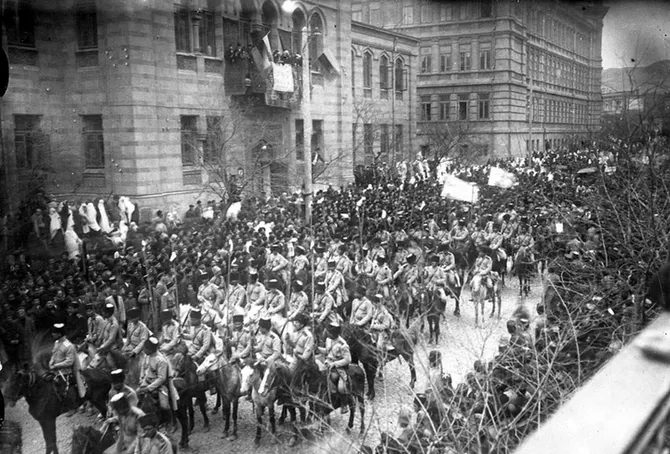
Credit: bakucity.preslib.az
It should be recalled that on May 29, 1918, the National Council of the Azerbaijan Democratic Republic decided to cede the city of Irevan to the Armenian side as a political center for the establishment of an Armenian state. The decision was made under pressure from the Entente powers as a condition for Western recognition of the ADR.
But this was not enough for the Armenians. Claims to Azerbaijani lands resurfaced with renewed force following the forcible Sovietization of Azerbaijan. After Soviet rule was established in Baku, the Armenians gained new hope of expanding their presence in the South Caucasus, a process that had begun in the previous century.
It should be noted that territorial questions were never simply a matter of bilateral discussion between Azerbaijan and the Armenians laying claim to its lands. Following the Russian Empire’s conquest of the Caucasus, Azerbaijan lost its independence. As for Armenia, the so-called Republic of Ararat - the first Armenian state established in this geography - emerged only in 1918 and existed for two years. Questions concerning the allocation of territories for the creation of an Armenian political entity in the Caucasus had traditionally been handled by Russia.
Therefore, there was nothing particularly surprising about the fact that on August 10, 1920, Russia and the Republic of Ararat were discussing the fate of Azerbaijani territories without Azerbaijan itself. These territories were described as “disputed” largely because Armenians laid claim to them. In reality, they had historically formed part of Azerbaijani khanates.
In the spring of 1920, the political map of the South Caucasus began to change rapidly. In late April, the Azerbaijan Democratic Republic ceased to exist following the invasion of the 11th Red Army, and the Azerbaijan Soviet Socialist Republic was proclaimed. Armenia, meanwhile, remained independent. Armed clashes and acute territorial disputes over Karabakh, Zangezur and Nakhchivan continued, but they were already beginning to move into an entirely different political dimension.
Moscow was pursuing its own objectives. It sought simultaneously to consolidate its influence in the region, normalize relations with Dashnak-ruled Armenia and establish cooperation with the Kemalist movement in Türkiye. The territorial dispute between Azerbaijan and Armenia therefore became part of a much broader geopolitical calculation.
A revealing document in this regard dates from July 14, 1920. Sergo Ordzhonikidze, a member of the Caucasian Bureau and the Revolutionary Military Council of the Caucasian Front, together with Boris Legrand, the plenipotentiary representative of the RSFSR in Armenia, sent People’s Commissar for Foreign Affairs Georgy Chicherin a proposal outlining a possible settlement.
Under the proposed arrangement, Karabakh was to remain entirely within Azerbaijan, Zangezur was to be declared a “disputed territory,” while Nakhchivan, Sharur, Daralayaz and Ordubad were to be transferred to Armenia.
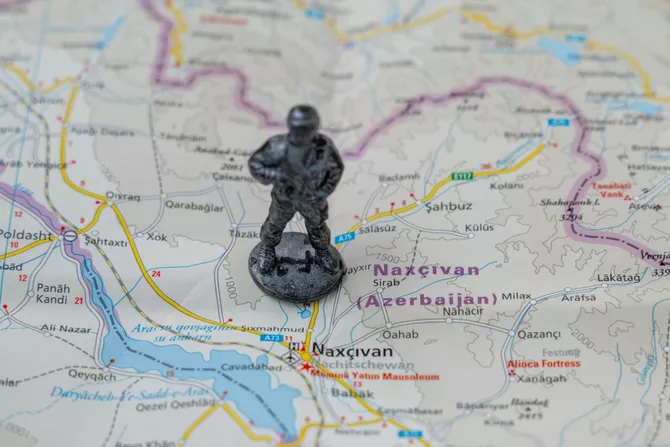
Shutterstock photo
The very next day, July 15, the Bureau of the Central Committee of the Communist Party of Azerbaijan considered the question of peace with the Republic of Ararat. Its resolution stated that Karabakh and Zangezur should be incorporated into Azerbaijan. With regard to Nakhchivan, a temporary arrangement was proposed under which Russian troops would be deployed there until the issue was finally settled. Moreover, Legrand was advised not to conclude a peace agreement until further information had been received.
On July 28, Soviet power was established in Nakhchivan with the support of the 11th Red Army. On August 10, the Nakhchivan Revolutionary Committee sent a letter to Nariman Narimanov, chairman of the Council of People’s Commissars of the Azerbaijan SSR, stating that, in accordance with the will of the majority of the population, Nakhchivan remained an integral part of Soviet Azerbaijan.
This was a highly important document, allowing Baku to strengthen its position on the Nakhchivan question and disrupting the calculations of the Dashnaks.
Two weeks later, representatives of the RSFSR and the so-called First Republic of Armenia signed a preliminary agreement in Tiflis. The fate of Azerbaijani territories was addressed without Azerbaijan’s participation in the following manner: Soviet troops were to occupy Karabakh, Zangezur and Nakhchivan, which the document described as “disputed” territories.
At the same time, it was stipulated that the presence of the Red Army itself was not to prejudge the question of their ultimate affiliation with either side.
The agreement of August 10 effectively froze the territorial question, placing a considerable part of the disputed area under Russian control while promising a future, hypothetical political settlement. Armenian historian Vanik Virabyan, who studied the agreement and the reaction of European powers to it, acknowledged that the territories effectively came under the “temporary control” of Soviet Russia. The Shahtakhti-Julfa railway was transferred to the Armenian side, although on the condition that it would not be used for military purposes.
For Baku, such an arrangement was extremely sensitive. Soviet Azerbaijan formally existed as a separate republic, yet territorial questions that the Azerbaijani leadership regarded as directly affecting its vital national interests were being discussed by Moscow without Baku’s participation.
The August 10, 1920 agreement between Russia and Armenia therefore went down in history as a document that reinforced Moscow’s decisive role in the territorial reorganization of the South Caucasus. Azerbaijani researchers emphasize that representatives of Baku were not parties to the agreement even though it directly concerned Karabakh, Zangezur and Nakhchivan.
Remarkably, on that same day - August 10 - far from the Caucasus, representatives of the Ottoman Empire and the victorious powers of the First World War signed the Treaty of Sèvres in France. Under its provisions, Armenia was also expected to receive a substantial part of the territories that Russia had previously conquered from the Ottoman Empire.
In effect, plans for a “Greater Armenia” were simultaneously taking shape in Tiflis and Sèvres.
The Treaty of Sèvres, however, was ultimately rendered void following the establishment of the Republic of Türkiye, while Woodrow Wilson’s plan was likewise consigned to history.
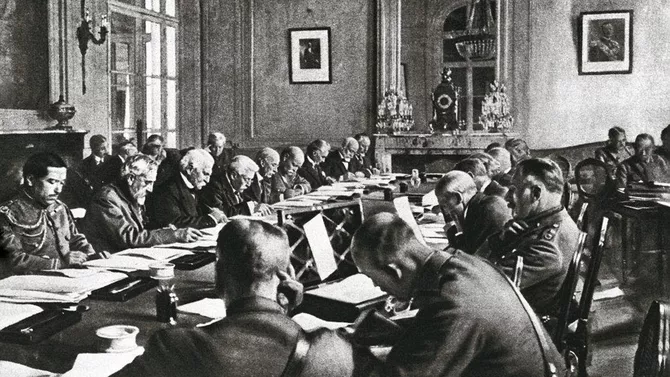
The Treaty of Sèvres/Credit: meer.com
In the months that followed these decisions, which had come close to becoming historic turning points for the Armenian national project, the situation changed dramatically once again. In the autumn, the Turkish-Armenian War began, and by late November and early December 1920 Soviet power had also been established in Armenia. From that point onward, the question of the South Caucasus borders was addressed in an entirely different political reality.
Particularly important for Nakhchivan was the Treaty of Moscow of March 16, 1921, between Soviet Russia and Türkiye, whose denunciation is still demanded by sections of the Armenian diaspora today. Article III of the treaty established Nakhchivan as an autonomous territory under the protection of Azerbaijan, on the condition that Azerbaijan would not transfer that protection to a third state. These provisions were reaffirmed later that same year in the Treaty of Kars.
In the months following August 10, the fate of Azerbaijani territories was discussed in Tiflis, Baku, Moscow, Yerevan and Ankara. Temporary military lines of demarcation turned into diplomatic arguments, while decisions initially presented as provisional created the foundations for the next round of negotiations.
The formation of the modern borders of the South Caucasus was an extraordinarily complex, dramatic and at times bloody process. Azerbaijan emerged from that process as the losing side.
By Anar Musayev