Central Asia has long understood the risks of China’s largesse, but the Belt and Road Initiative’s opportunities are too good to turn down.
It’s no secret that Central Asia is critical to China. During a war in the Pacific Ocean, trade along China’s 9,000-mile eastern coastline may grind to a halt. Then, the only way to move Chinese products to markets in Europe, the Middle East, and Africa will be over land. In that direction, Central Asia is directly across the border, The Caspian Post reports via The National Interest.
For that scenario, China has invested over $1.3 trillion since 2013 in building land-based infrastructure to support this trade, through its Belt and Road Initiative (BRI). Central Asian countries-specifically, Kazakhstan, Kyrgyzstan, Tajikistan, Turkmenistan, and Uzbekistan-have been big beneficiaries. Chinese President Xi Jinping even unveiled the BRI in Astana, Kazakhstan’s capital, in 2013, underscoring the region’s importance. Since then, Chinese investment in Central Asia has increased by 257 percent.
The BRI is certainly huge and is not without controversy. In recipient countries, its projects have been attacked as “debt traps” and instruments of “colonialism,” due to the terms of their loans and China’s control over the projects. Central Asia has much to gain from Chinese capital for development, though at substantial political and financial risk. It is consequently worth reviewing how the BRI has taken shape in Central Asia and assessing the benefits that countries have gained from it.
How China Changed Central Asia’s ‘Great Game’
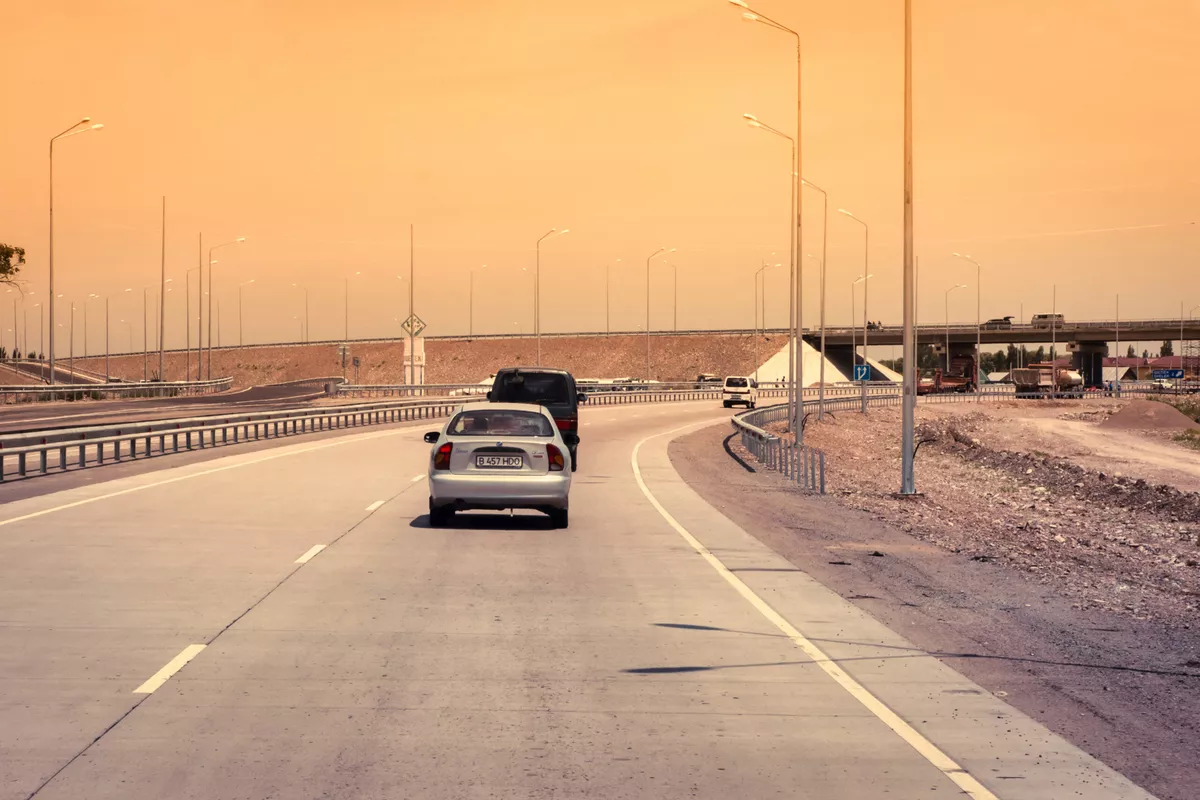
In its 13 years, the BRI has revamped trade in Central Asia. Chinese money has raised whole new highways, railways, and factories in the five countries, beyond their own ability to build them. It is no understatement to say that the BRI has elevated Central Asia’s infrastructure to world-class standards.
Kazakhstan is the most important country for this effort. It has a 1,000-mile border with China and is connected via the Caspian Sea to Western Russia and the South Caucasus, which provide access to Europe and North Africa. It’s also the region’s largest economy, and the first stop for goods leaving China. The BRI has, thus, showered Kazakhstan with cash.
In 2025, over $23 billion of Chinese capital entered Kazakhstan, making it the primary destination worldwide for Chinese foreign direct investment. Currently, China is involved with 224 infrastructure projects in the country, worth $66.4 billion and employing over 50,000 people. The most significant of these projects is the Khorgos Gateway, a logistics hub across the border from China, where much of its westbound trade is processed and shipped by rail to Europe.
Railroads are a frequent BRI project to handle high trade volumes and shorten journeys to the West compared to oceanic shipping. To that end, in 2024, the China-Kyrgyzstan-Uzbekistan Railway began construction as part of the BRI. It will involve building four stops,50 bridges, and 29 tunnels-through high mountain ranges-330 miles to connect China’s Kashgar logistics hub with Uzbekistan, and ultimately with Europe.
Interestingly, China’s BRI investments in the region have diversified beyond just transportation. That sector needs allied industries-eg, energy, communications, and metals for construction-to support its development. To that end, Chinese companies are building them out in Central Asia, with a BRI impetus. Chinese investors are backing a $12 billion aluminum plant in Kazakhstan and have bought a majority stake in the country’s telecommunications industry.
In Tajikistan, meanwhile, Chinese firms are spending $500 million to construct an iron ore processing plant and a solar power plant. In Turkmenistan, BRI finance has backed the construction of Line D of the Central Asia-China Gas Pipeline, which will annually carry 85 billion cubic meters of natural gas to Uzbekistan, Tajikistan, Kyrgyzstan, and China, to power these new industries.
This big spending comes with social benefits. Uzbekistan’s Chinese wind power projects have begun supplying electricity to long-neglected highland regions in the country. In Kyrgyzstan, Chinese investment has been comprehensive-involving transfers of medical equipment, digitizing the country’s judiciary, funding artificial intelligence (AI) integration, and supporting its social security system.
Beyond just building infrastructure, outsourcing Chinese production units to Central Asia offers benefits for China. It allows their products to avoid tariffs imposed by Western countries and Western sanctions, such as those targeting products made by Uyghur labor in nearby Xinjiang.
In statistical terms, the BRI’s effects in Central Asia are yet to be fully realized. Many projects are still under construction, even those that have partially come online. It’s too early to compare volumes on the BRI’s new trade routes with those of traditional shipping lines, which remain the default method of China’s global commerce.
Yet, it’s clear that the BRI is making a difference. Kazakhstan’s economy has seen the lion’s share of growth. A World Bank study estimates that Kazakh energy exports, the chief source of revenue, grew by 13 percent annually from 2013 onward due to Chinese BRI construction. Exports to the European Union increased to 40 percent of total exports, while dependence on Russia, its Soviet suzerain, declined by 10 percentage points. Total transit traffic through Kazakhstan reached 36.9 million tons in 2025. The study projects BRI-induced GDP growth between 6.5 and 21 percent.
The story is the same across the region, especially for smaller countries. The World Bank estimates for them are even more generous. For Kyrgyzstan and Tajikistan, estimates range from 9 to 32 percent GDP growth due to BRI spending.
For Central Asia’s middle-income countries, these BRI-induced figures are too good to resist. Apart from the intrinsic benefits of good infrastructure, these countries stand to gain revenue from customs and transit fees levied on goods passing through their territory. Historically, this is how principalities in the territory leveraged the Old Silk Road, which passed through the region, to swell their revenues. Central Asian countries see an opportunity in the same.
“[We] remain committed to the principles of the Belt and Road Initiative, which is gaining even greater relevance in today’s complex global environment,” Kyrgyzstani Prime Minister Adylbek Kasymaliyev remarked in 2025, highlighting this sentiment. The BRI isn’t just an economic opportunity for Central Asia. It’s an economic strategy.
Its countries, therefore, are not only courting more Chinese investment but also European capital, to strengthen their position as a trading corridor. As the prime destination for Chinese goods via Central Asia, Europe has much to gain from the BRI’s new infrastructure: to export goods to China and gain greater access to the plentiful oil and gas fields of Central Asia rather than Russia. Many EU countries are also BRI members.
The European Union has thus taken notice of Central Asia, holding its first leaders’ summit in 2025 and announcing €12 billion ($13.9 billion) of investments in Central Asian countries. Europe, which calls the region the “Middle Corridor,” seems interested in following China’s practice: investing in the region to gain influence over an important commercial route. As interest booms at both ends of the New Silk Road, Central Asia stands to gain.
China’s Challenges in Central Asia
Notwithstanding its largesse, the BRI has bred resentment in Central Asia. Akin to other countries where Chinese money is building infrastructure, the jobs created have often gone to Chinese workers, who are imported to complete the project. Chinese investors, meanwhile, continue to own majority stakes in the infrastructure, and thus control its use.
Locals have protested the use of their land for infrastructure without commensurate benefits or compensation, which has frustrated construction. In Kyrgyzstan, a $275 million logistics hub for Chinese trade, in the Naryn economic zone, was canceled in 2020 after hundreds of locals picketed the site. Land code changes in Kazakhstan in 2016, to enable Chinese ownership of their projects, also sparked protests.
Politically, Chinese involvement in the country is also controversial due to its activities in the neighboring Xinjiang Province, where ethnically Turkic Uyghur Muslims face extreme persecution. Anti-China rallies across the region, highlighting this issue, have been aplenty.
Most governments in the region are authoritarian, meaning that local opposition can be suppressed to an extent. Still, political friction entails risk that breeds investor caution.
The more pressing challenge of the BRI is macroeconomic-specifically, imbalanced trade. Every country in the region is running a trade deficit with China. In doing so, they are placing themselves in a vulnerable financial position vis-à-vis China, which is now the region’s largest importer and exporter. Tethering themselves to China’s economy, which is convulsing through a housing bubble and massive domestic debt crisis, is a risk for Central Asia.
Worse than trade dependency, perhaps, is debt. Much of the financing from China for projects takes the form of loans, using national assets as collateral. When countries cannot service those loans, restructuring agreements with China often lead to generous lease terms for territory. The notion that China uses this as a predatory strategy has given the BRI the epithet of a “debt trap.” Tajikistan, in particular, has over a quarter of its debt held by China and has ceded territory in exchange for relief from it.
Central Asian countries, at such a crossroads, must assess how much the BRI will benefit them and the limits it may impose on integration. As “middle” powers between the West, Russia, and China, equidistance-geographical, political, and economic-is a virtue to ensure benefits from each relationship. In these countries, China’s BRI is eclipsing all others. The infrastructure and investment come at the cost of autonomy.
There are no free rides on China’s economic bandwagon. The BRI largesse is great, indeed, but comes at a price. Central Asia must decide how much, and for how long, it’s willing to pay for it.
By Arjun Singh