The 2026 U.S.-Israel war on Iran, the Ramadan War, which began with airstrikes on 28 February 2026 and involved Iranian retaliation via missiles, drones, and a blockade of the Strait of Hormuz, has indirectly but significantly constrained investment plans by Persian Gulf petrostates, primarily Saudi Arabia, the United Arab Emirates, and Qatar, along with other Gulf Cooperation Council (GCC) members, in Central Asia.
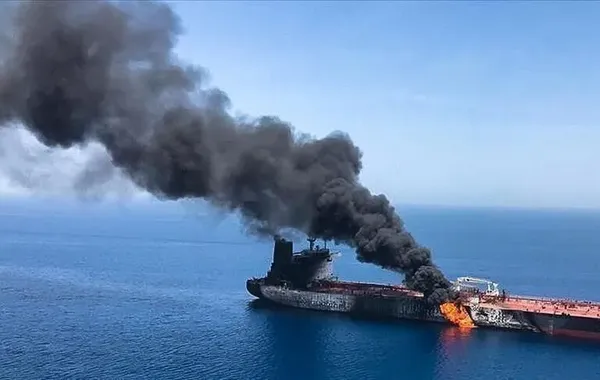
These petrostates were not direct belligerents but suffered economic fallout from Iranian strikes on their energy infrastructure, ports, aviation, tourism, and logistics, plus the near halt of roughly 20% of global oil and liquified natural gas (LNG) flows through Hormuz, The Caspian Post reports via Oilprice.com.
Goldman Sachs projects GDP hits of up to 14% for Qatar and Kuwait, 5% for the UAE, and 3% for Saudi Arabia if disruptions persist. The United Nations Development Programme estimates the war “may cost economies in the region from 3.7 to 6.0 percent of their collective Gross Domestic Product (GDP)” or US$120-194 billion and exceeds the cumulative regional GDP growth achieved in 2025.”
War damages have forced a broader fiscal rethink, with at least three GCC governments reviewing trillions in sovereign wealth fund (SWF) deployments, potential pledge reversals, divestments, and sponsorship deals to offset losses and prioritize domestic recovery, defense, and infrastructure hardening. Saudi Arabia has ended its partnership with the Metropolitan Opera in New York City and the LIV Golf, but the real consequences will come from reduced investments in transport, energy, and water projects in Asia and Africa, not image-building projects targeted at well-off consumers in high-income countries.
Pre-War Context
Before the conflict, Gulf petrostates had been expanding investments in Central Asia, primarily Kazakhstan, Uzbekistan, and Turkmenistan, as part of economic diversification away from oil, resource-seeking (e.g., uranium, rare earths, gas), and geopolitical hedging, totaling US$16.2 billion by late 2025. Examples included UAE logistics and energy deals, Saudi mining and infrastructure, and broader GCC engagement in post-Soviet markets. These were modest relative to Gulf investments in the U.S., Europe, or Africa but aligned with Vision 2030-style strategies and alternatives to Russian and Chinese influence, which also suited Washington’s interests.
Direct Impacts on Investment Plans
No cancellations of specific Central Asia projects have been officially announced so far, but the war’s economic shock has created clear headwinds through several channels:
Capital constraints and SWF recalibration. GCC SWFs (managing ~$5 trillion) may shift towards domestic needs, e.g., repairing damaged facilities, bolstering defense, and supporting local economies, at the expense of overseas foreign direct investment (FDI). This may signal the end of the era of “big spenders,” with reviews explicitly targeting global pledges, including those 2025 commitments to U.S. president Donald Trump worth US$2 trillion. Central Asia investments, being non-core compared to U.S./Europe or immediate neighbors, are likely to be deprioritized or delayed.
Higher risk premiums and investor caution. The Gulf’s image as a stable “safe haven” has been damaged, raising costs of capital and making ambitious foreign expansions less attractive. This affects not just inbound FDI to the Gulf but also the Gulf states’ outbound investment plans.
Ripple effects on Central Asia. The Hormuz blockade and Iranian route disruptions raised trade and logistics costs for landlocked Central Asian states (which rely on Iranian territory for Gulf access), driving inflation, shortages, and slower growth. This makes the region less attractive for large-scale Gulf investment in the short term, though it has accelerated interest in alternative, such as the Middle Corridor, though the latter has limited utility for trade with South and West Asia.
Specific deals from 2023 to 2025 highlight the momentum that may be endangered:
UAE: First Abu Dhabi Bank financed Uzbekistan’s 500 MW Zarafshan Wind Power Project (Central Asia’s largest renewable project at the time) and supported bond placements. UAE sovereign funds and entities were major players in renewables and re-exports.
Saudi Arabia: ACWA Power and other entities pursued clean energy and infrastructure deals with Kazakhstan and Tajikistan, and US$30 million in concessional loans for Tajikistan’s Kulob Ring Road). The Saudi Arabia-based Islamic Development Bank has financed energy, transport, and agriculture projects in Central Asia.
Qatar: Lesha Bank acquired Kazakhstan’s Bereke Bank (a full bank takeover, the first by a Gulf investor) for US$134 million in 2024. The Qatar Fund for Development committed US$50 million to Tajikistan’s Rogun Hydropower Project and announced plans to participate in gas processing and hydropower ventures in Kazakhstan and Turkmenistan.
Uzbekistan and Kazakhstan (largest economy) have seen the biggest inflows of Gulf investment.
The investments went hand-in-hand with high-level diplomacy. The first GCC-Central Asia Summit was held in Jeddah, Saudi Arabia in July 2023, and a second was planned for Samarkand, Uzbekistan in May 2025 but has been indefinitely delayed. Ongoing ministerial meetings have focused on transport, communications, energy, trade, economic, and cultural exchanges.
In April 2026, Kazakhstan’s foreign minister met his UAE counterpart in Abu Dhabi and delivered a message from Kazakh president, Kassym-Jomart Tokayev, to the UAE’s president, Sheikh Mohamed bin Zayed Al Nahyan. In March 2026, Uzbekistan’s foreign minister and first deputy foreign minister met separately with the ambassadors of Qatar, Saudi Arabia, the UAE, Kuwait, and Oman.
Potential Shifts or Opportunities
There are some countervailing dynamics, but they appear limited by fiscal strain:
Alternative connectivity focus: The Hormuz crisis has validated (and accelerated) Gulf investments in bypass infrastructure (e.g., pipelines, GCC rail projects) and partnerships like China-Pakistan Economic Corridor/Gwadar Port to create land corridors linking the Gulf to Central Asia via Pakistan or the Caspian. This could open niche opportunities for Gulf capital in Middle Corridor logistics or energy links, positioning the petrostates in multipolar trade routes.
Supply diversification: Central Asian states are seeking alternative suppliers (including from the Gulf) for goods previously routed via Iran, which could sustain or modestly expand targeted trade/investment ties-though Gulf exporters are themselves strained.
Energy diversification tailwinds: The Hormuz crisis has highlighted Gulf vulnerabilities, accelerating interest in overland/non-Gulf routes. China is pressing Turkmenistan and Uzbekistan to increase natural gas production, and the crisis may see the revival of discussions on Central Asia-to-China Line D capacity expansion.
Central Asia’s neutrality and lower direct exposure make it a safer diversification play for any residual GCC capital once the ceasefire stabilizes. Kazakhstan, Uzbekistan, and Turkmenistan have welcomed the truce and emphasized peaceful resolution.
Overall, the net effect has been a slowdown or scaling-back of planned Gulf investments in Central Asia. Pre-war momentum has been dented by the need to conserve capital at home amid the worst economic shock to GCC states since the early 1990s (or even the COVID pandemic). Long-term diversification goals remain, but near-term execution is more cautious, with resources funneled toward resilience and core priorities. The situation remains fluid amid the tense ceasefire between Iran and the U.S./Israel, so further shifts could occur if Hormuz disruptions ease or escalate.
Cui bono?
If Gulf capital dries up, other potential investors are Europe, the U.S., Russia, Japan, Türkiye, India, or South Korea. The big winner may be China, as the American administration is likely expecting to be the recipient, not the source of, Central Asia investment. (In November 2025, Trump announced over US$ 100 billion in investment and contracts from Uzbekistan and Kazakhstan.)
China has invested about US$89.3 billion in Central Asia and Beijing may see an opportunity to expand its influence in the region, and to drive better terms if it doesn’t have to compete with Gulf investors, though local leaders will have to consider increased public skepticism of Chinese investment.
By James Durso