For much of the post-Cold War era, Japan’s relationship with Central Asia unfolded quietly. Tokyo invested in infrastructure, supported education and training, and selectively engaged in commercial projects-most notably in Kazakhstan’s energy and mining sectors. This engagement was shaped less by geopolitical ambition and more by Japan’s long-standing emphasis on “human security,” capacity building, and development assistance. As a result, Japan rarely appeared at the center of discussions about great-power competition in Central Asia.
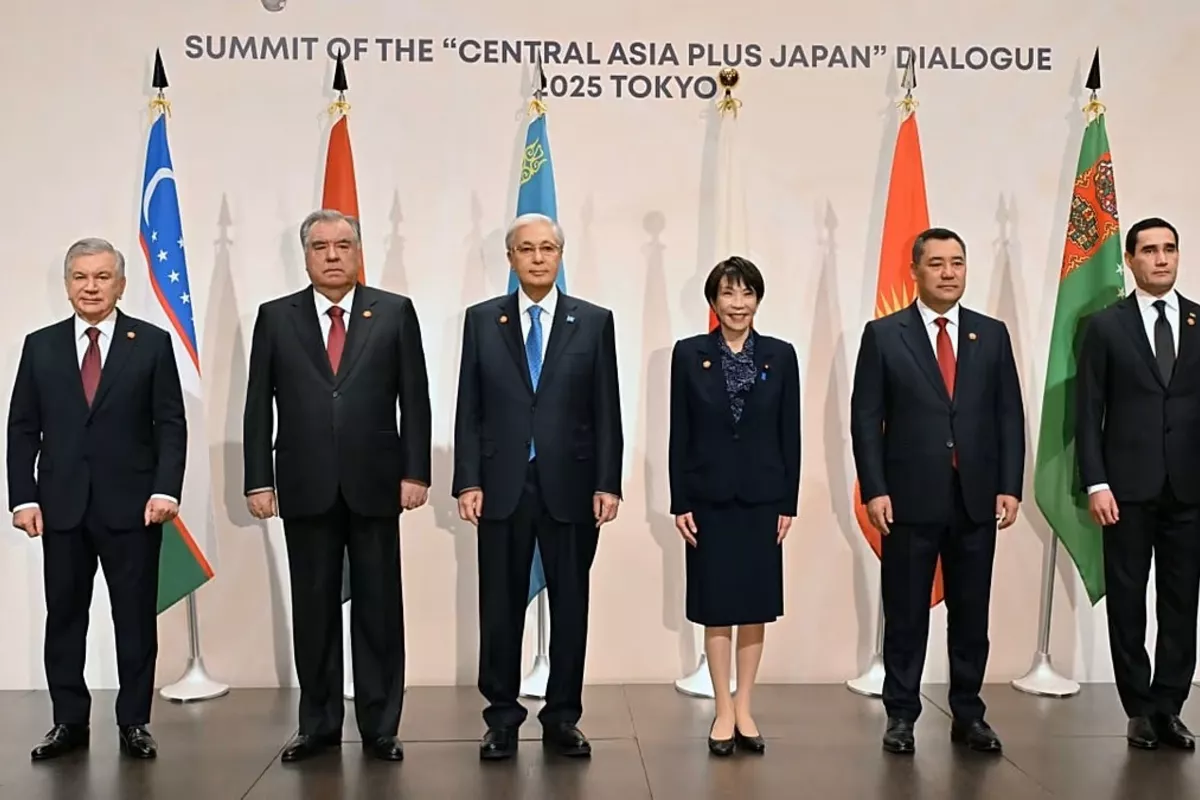
What changed in 2025 was not a sudden awakening to the region’s existence, but a strategic reassessment in Tokyo. Central Asia could no longer be treated as peripheral. Shifting global supply chains, energy transition uncertainties, and intensifying competition for influence across Eurasia pushed Japan to elevate its engagement. This recalibration culminated in a landmark moment: the first leaders-level summit of the “Central Asia plus Japan” Dialogue, held in Tokyo on December 20, 2025.
This rewritten analysis examines Japan’s motivations for returning to Central Asia with renewed purpose, explains what was substantively new about the 2025 summit, unpacks the main components of the so-called “Tokyo Initiative,” and assesses how investment and trade dynamics are likely to evolve across the five Central Asian states. It also considers the constraints that may limit outcomes and identifies the indicators that will reveal whether 2025 marked a genuine turning point.
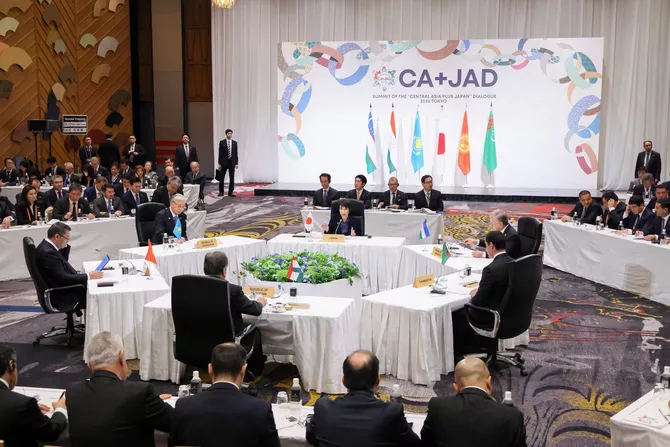
Photo: Prime Minister's Office of Japan
Why Central Asia Has Gained Strategic Weight for Japan
Japan’s heightened interest in Central Asia reflects the convergence of several strategic imperatives rather than a single driver. Together, these factors explain why Tokyo decided to elevate the region within its foreign and economic policy priorities.
The first imperative is supply-chain security in an increasingly fragmented global economy. Japan’s industrial base remains deeply dependent on reliable access to energy resources, uranium, and critical minerals. As geopolitical risks multiply and chokepoints become more vulnerable, diversification has become essential. Central Asia-and Kazakhstan in particular-occupies a central position in global uranium supply and holds substantial reserves of various critical raw materials. For Japan, deeper partnerships in the region offer a way to reduce exposure to disruptions and reinforce resilience across strategic industries.
A second factor is what might be called energy-transition realism. Japan’s pathway toward decarbonization is complex and uneven. While renewables and energy efficiency are expanding, energy security concerns remain acute, and domestic debates over nuclear power continue. Central Asian producers can supply transitional fuels and, in Kazakhstan’s case, uranium that supports Japan’s nuclear energy needs. At the same time, the region presents opportunities for cooperation in renewables, hydrogen and ammonia initiatives, and grid modernization. The 2025 summit explicitly framed cooperation around the idea that economic growth, energy security, and decarbonization must be pursued together rather than sequentially.
Connectivity represents a third driver. As geopolitical tensions complicate traditional Eurasian transit routes, attention has increasingly turned to alternative corridors linking East Asia to Europe through the Caspian basin, often described collectively as the “Middle Corridor” or the Trans-Caspian International Transport Route. For Japan, improved connectivity is more than a trade facilitator. It functions as a hedge against disruption and a means for Japanese firms to embed themselves in logistics networks, technical standards, and financing arrangements that will shape future trade flows.
Finally, Japan’s renewed engagement reflects a commitment to strategic pluralism without militarizing Central Asia. The region’s states are adept at multi-vector diplomacy, balancing relationships with major powers while avoiding overdependence on any single partner. Japan offers a distinct value proposition: advanced technology, high-quality infrastructure expertise, disaster risk management capabilities, and a comparatively non-polarizing partnership model. Unlike other external actors, Tokyo’s approach emphasizes pragmatic development outcomes over alignment politics, a tone clearly reflected in the summit’s language and structure.
The 2025 Japan-Central Asia Summit as a Diplomatic Upgrade
The “Central Asia plus Japan” Dialogue is not a new invention. It dates back to 2004, when foreign ministers first met in Astana and agreed to institutionalize a framework for cooperation. For two decades, the dialogue continued largely at the ministerial level, producing incremental progress but limited political visibility.
What distinguished December 2025 was the elevation of the format to a leaders-level summit for the first time. Hosted in Tokyo by Prime Minister Sanae Takaichi, the meeting brought together the presidents of all five Central Asian states. This upgrade was significant not merely symbolically, but functionally.
First, leaders-level endorsement alters bureaucratic incentives. When heads of state commit to a framework, ministries, state-owned enterprises, and development agencies receive a stronger mandate to prioritize projects, streamline procedures, and coordinate financing. This can accelerate the transition from concept to implementation.
Second, the summit allowed Japan to “bundle” cooperation under a single regional umbrella while still advancing bilateral initiatives. The Tokyo Declaration effectively serves as a flexible menu, enabling each Central Asian country to pursue projects aligned with national priorities while presenting them as part of a broader regional strategy.
Third, diplomacy was explicitly linked to deal-making. The summit was paired with business forums, including one held in Astana in August 2024 and another in Tokyo alongside the summit itself. Japan’s Ministry of Economy, Trade and Industry highlighted that 158 memoranda of cooperation signed by companies and organizations were presented at the Central Asia + Japan Business Forum. This coupling of political signaling and commercial engagement underscores Tokyo’s intention to move beyond rhetoric.
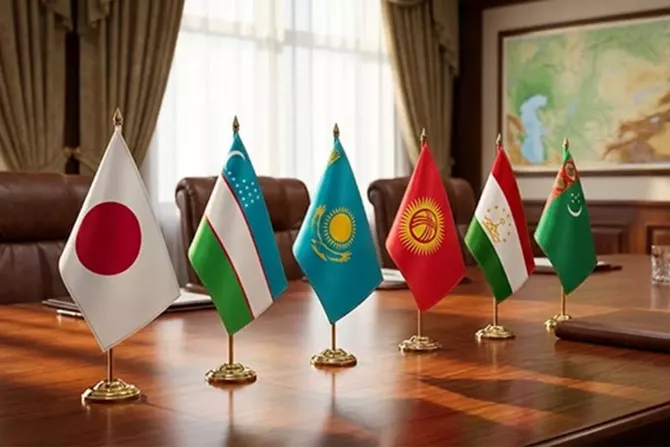
Photo: Uzdaily.uz
The Tokyo Initiative and Its Core Pillars
At the heart of the Tokyo Declaration is the CA+JAD “Tokyo Initiative,” structured around three priority pillars: Green and Resilience, Connectivity, and Human Resource Development. The choice of these pillars reveals Japan’s strategic calculus.
Rather than competing on scale or speed with other powers, Japan is focusing on areas where it holds clear comparative advantages. These include energy efficiency technologies, resilient infrastructure design, disaster risk reduction, advanced digital systems, and skills development. By shaping how modernization occurs-rather than simply financing it-Japan aims to embed its standards and expertise within Central Asian development trajectories.
The most eye-catching element of the Declaration is Japan’s commitment to target 3 trillion yen in business projects in Central Asia over five years. While not a guaranteed spending pledge, this figure serves as a powerful political signal designed to mobilize corporate interest and align public and private financing ecosystems.
Equally important is the range of instruments Japan plans to deploy. The Declaration references official development assistance, export credit agencies, multilateral development banks, and private finance, pointing toward a blended finance model. This approach reflects an understanding that many projects in Central Asia require risk-sharing and long-term financing structures to become viable.
Developments in 2025 That Shaped the Agenda
The summit did not occur in isolation. Several developments throughout 2025 helped define its scope and priorities.
Ongoing Economic and Energy Dialogues, launched in September 2023 and continued through a second round in September 2025, provided a platform for identifying projects and aligning policy objectives. These dialogues signaled that Japan views engagement as a process rather than a one-off event.
Japan also expanded cooperation into areas reflecting contemporary global concerns, including artificial intelligence, digital transformation, disaster risk reduction, health systems strengthening, and rule-of-law and counterterrorism capacity building. Workshops and proposals for ministerial-level meetings in these fields illustrate Tokyo’s emphasis on institutional and systems-level cooperation.
Summit-related reporting from the Prime Minister’s Office highlighted concrete grant aid and assistance initiatives, particularly for Kyrgyzstan and Tajikistan. This combination of digital, resilience, health, and skills programming underscores Japan’s strategy of building influence through governance systems and human capital rather than relying solely on commodity trade.
Investment and Trade Dynamics Across Central Asia
Central Asia is not a monolithic market, and Japan’s economic footprint will continue to vary significantly by country. Kazakhstan remains the anchor partner, while Uzbekistan is emerging as a second pillar. Engagement with Kyrgyzstan, Tajikistan, and Turkmenistan is more selective and tailored.
Kazakhstan stands out as the centerpiece of Japan’s strategy. It offers a combination of strategic resources, large-scale project opportunities, and relative investment stability. During President Tokayev’s visit to Japan ahead of the summit, Kazakhstan reportedly signed more than 40 agreements worth over €3 billion with Japanese companies across energy, digitalization, mining, and transport sectors. A long-term uranium supply agreement between Kazatomprom and Kansai Electric Power further solidified strategic ties.
Over the past two decades, Japanese investment in Kazakhstan has been estimated at around $9 billion, reflecting a long-term commitment. Trade patterns remain complementary: Kazakhstan exports commodities, while Japan supplies machinery, vehicles, and high-value equipment. Increasingly, Japan appears interested in moving beyond extraction toward upstream and midstream roles, including processing technologies, logistics systems, and digital infrastructure.
Uzbekistan represents a different opportunity. Ongoing reforms and a larger domestic market make it attractive for Japanese firms seeking scale. Cooperation agreements highlighted smart city initiatives, road safety pilots, IT collaboration, and health-related assistance. Uzbekistan is likely to become a testing ground for Japan’s emphasis on digital transformation, human capital development, and industrial upgrading rather than raw material extraction.
In Kyrgyzstan and Tajikistan, Japan’s engagement aligns closely with its traditional strengths. Disaster risk reduction, climate resilience, and targeted support for small and medium-sized enterprises dominate the agenda. Projects such as satellite-based landslide monitoring and glacial lake outburst flood research exemplify Japan’s ability to export risk-management expertise that delivers long-term institutional influence even where trade volumes remain modest.
Turkmenistan, by contrast, continues to favor large, state-mediated projects, particularly in petrochemicals and industrial maintenance. Japan’s role there is likely to remain transactional and project-focused, but such engagement can still carry strategic value if linked to broader regional connectivity and energy transition pathways.
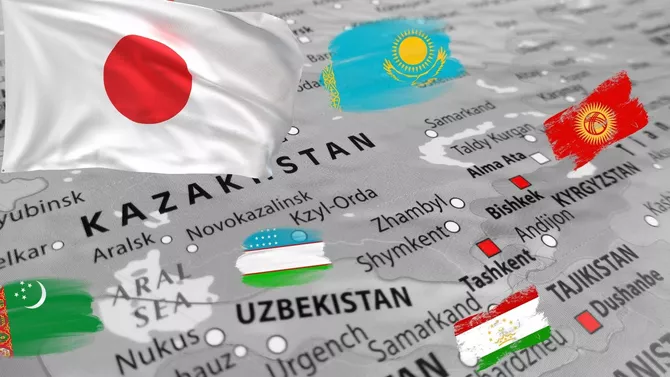
Photo: EUReflect
Japan’s Position in a Crowded Competitive Landscape
Japan’s renewed push into Central Asia comes amid intense external competition. China’s infrastructure financing, the European Union’s connectivity and critical raw materials agenda, Türkiye’s growing influence, Gulf capital, and renewed U.S. attention all shape the regional environment.
Japan differentiates itself through quality, lifecycle value, disaster resilience expertise, and human-capital development. It also offers a partnership model with lower political conditionality and fewer debt-related concerns. The combination of a leaders-level summit, a large business forum, and a headline investment target illustrates Tokyo’s effort to compete through coordination and credibility rather than sheer scale.
Constraints on Turning Ambition Into Outcomes
Despite momentum, several constraints could limit the impact of Japan’s renewed engagement. Geography and logistics costs remain fundamental challenges for landlocked Central Asian economies. Projects must address transport bottlenecks or leverage emerging corridors to become viable.
Bankability is another hurdle. Many initiatives require blended finance, political risk insurance, or sovereign guarantees. Japan’s ability to coordinate across public and private financing instruments will be critical. Regional fragmentation also persists: while cooperation has improved, national priorities differ sharply, particularly on water and energy issues.
Finally, Central Asia must compete for attention within Japan itself. Japanese firms face abundant opportunities in Southeast Asia, India, and domestic reshoring initiatives. The region will need to demonstrate that it can deliver reliable returns and strategic value.
Indicators to Watch Beyond 2025
If the 2025 summit is to mark a genuine pivot, several indicators will be telling in 2026 and beyond. These include concrete progress on the 3-trillion-yen project pipeline, the emergence of connectivity projects tied to the Trans-Caspian route, and tangible steps toward critical minerals processing rather than extraction alone. The scaling of disaster risk reduction programs and the institutionalization of CA+JAD mechanisms will also signal whether cooperation is becoming embedded.
From Development Support to Co-Creation
Japan’s renewed engagement with Central Asia in 2025 represents a strategic evolution rather than a rupture with the past. Long-standing development cooperation is being integrated into a broader framework that links green transition, connectivity, digital modernization, and human capital development. The December 20 summit and Tokyo Declaration provided the political architecture for this shift, backed by a significant investment target and extensive business engagement.
Whether this strategy proves transformative will depend less on declarations and more on execution. The true test lies in converting memoranda into financed projects, aligning regional connectivity with competitiveness, and embedding Japanese technology and standards into the everyday economic systems of Central Asia.