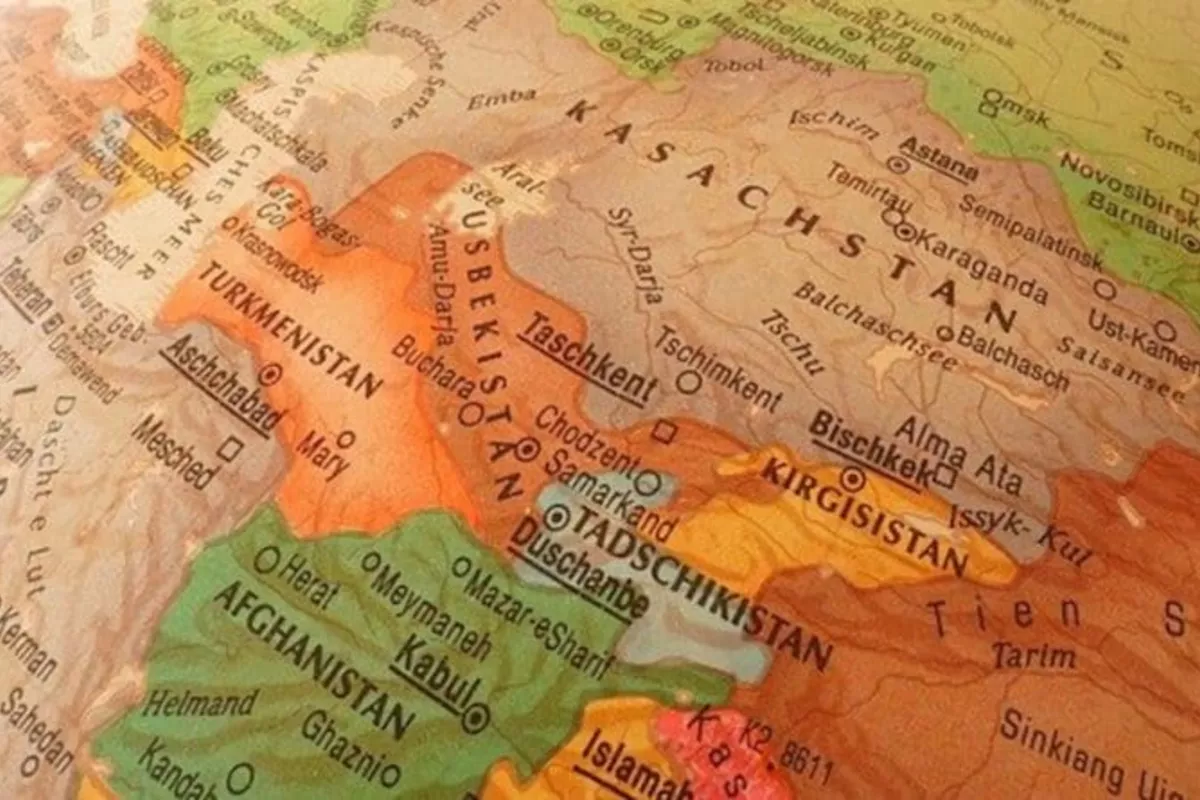
Central Asia has re-emerged as one of the most strategically significant regions in contemporary international politics. The growing engagement of external powers in the region has revived discussions surrounding a ‘New Great Game,’ wherein major powers seek influence through economic, political, and security mechanisms. Among the Central Asian republics, Tajikistan presents a particularly compelling case for examining changing regional power relations because of its strategic location, economic vulnerabilities, and security challenges.
For decades, Russia remained the dominant external actor in Tajikistan. However, China’s remarkable economic rise and its increasing engagement through the Belt and Road Initiative (BRI) have transformed regional dynamics. The resulting interaction between Moscow and Beijing does not fit neatly into traditional categories of alliance or rivalry. Instead, it reflects a more complex pattern of coexistence in which both powers pursue their interests while avoiding direct confrontation. This article explores these dynamics and assesses their implications for Tajikistan and the broader regional order, The Caspian Post reports via EurasiaReview.
Power Transition and Regional Security
Power Transition Theory suggests that shifts in the distribution of power often generate competition between established and rising powers. In Central Asia, Russia represents the traditional security provider, whereas China has emerged as a rising economic and increasingly strategic actor. At the same time, the Regional Security Complex framework highlights how security interdependence within a particular region shapes the behaviour of both regional and external actors.
Applying these perspectives to Tajikistan reveals a gradual redistribution of influence rather than an abrupt transition. Russia continues to dominate traditional security arrangements, while China has expanded its influence through economic investment, infrastructure development, and institutional engagement. The interaction between these two forms of influence has produced a hybrid regional order marked by cooperation, competition, and strategic accommodation.
Russia’s Enduring Influence in Tajikistan
Russia’s position in Tajikistan is rooted in historical, political, and institutional linkages that emerged during the Soviet period. The presence of the Russian 201st Military Base, one of Moscow’s largest overseas military facilities, symbolizes the enduring nature of this relationship. Through the Collective Security Treaty Organization (CSTO), Russia has maintained its role as Tajikistan’s principal security partner.
Economic and social connections have reinforced this influence. Labour migration to Russia has become a vital source of income for many Tajik households, creating deep interdependence between the two countries. For many years, these connections ensured that Russia occupied a privileged position within Tajikistan’s foreign policy calculations.
However, recent developments have altered the nature of this relationship. The war in Ukraine has placed significant pressure on Russia’s economic and military resources. The disruption of remittance flows, coupled with growing uncertainty regarding Russia’s regional commitments, has encouraged Tajikistan to diversify its external partnerships. Furthermore, the treatment of Central Asian migrants in Russia following security incidents has generated concerns among Tajik citizens and policymakers. Although Russia remains an indispensable partner, its influence is no longer uncontested.
China’s Expanding Economic and Strategic Presence
China’s rise in Tajikistan has been gradual but transformative. Unlike Russia, whose influence historically developed through military and political channels, China initially relied on economic engagement. Infrastructure loans, transportation projects, mining investments, and telecommunications initiatives enabled Beijing to establish a substantial presence in the Tajik economy.
Chinese investments have contributed to the modernization of infrastructure and improved connectivity. However, they have also increased Tajikistan’s financial dependence on Beijing. The growing share of Chinese-held debt has raised concerns regarding economic vulnerability and long-term dependence.
Economic engagement has increasingly been accompanied by security cooperation. China has expanded its involvement in border management, counterterrorism initiatives, and capacity-building programmes. The establishment of multilateral security mechanisms involving China, Tajikistan, Afghanistan, and Pakistan illustrates Beijing’s growing willingness to shape regional security arrangements independently of Russia.
China’s strategy differs from traditional power projection. Rather than seeking immediate dominance, Beijing has emphasized institution-building, economic integration, and selective security cooperation. This approach allows China to expand its influence without provoking direct confrontation with Moscow.
Tajikistan’s Strategy of Balancing and Diversification
A common mistake in analyses of great-power competition is to portray smaller states as passive actors. Tajikistan’s foreign policy demonstrates considerable agency and strategic calculation. Rather than aligning exclusively with either Russia or China, the country has pursued a policy of balancing and diversification.
Tajikistan continues to rely on Russia for security guarantees and military cooperation while simultaneously seeking economic opportunities from China. It has accepted Chinese investments without abandoning its participation in Russian-led institutions. Similarly, it has sought to preserve diplomatic flexibility by avoiding commitments that would require choosing one partner over the other.
This strategy reflects the realities facing small states in a competitive geopolitical environment. By maintaining productive relations with both powers, Tajikistan maximizes economic benefits, reduces strategic vulnerability, and preserves a degree of policy autonomy. Nevertheless, the sustainability of this approach depends upon its ability to reduce structural dependence on external actors.
Societal Dimensions of Great-Power Competition
The geopolitical competition between Russia and China is not merely an abstract contest among states; it has significant implications for ordinary citizens. Labour migration patterns directly affect livelihoods across Tajikistan. Economic fluctuations in Russia influence household incomes, while Chinese investments shape employment opportunities and local development.
The expansion of surveillance technologies and digital infrastructure has also generated debates regarding privacy, governance, and accountability. Similarly, concerns regarding debt dependence and resource concessions have raised questions about the long-term consequences of external involvement.
These developments highlight the importance of adopting a human-centred perspective when analysing regional geopolitics. The experiences of local communities reveal how global power shifts are experienced at the societal level and demonstrate that the consequences of geopolitical competition extend far beyond state institutions.
Implications for the Regional Order
The evolving relationship between Russia and China in Tajikistan reflects broader transformations within Central Asia. The region is increasingly characterized by multiple centres of influence rather than a single dominant power. Russia remains an essential security actor, but China has emerged as an equally significant economic and strategic stakeholder.
This transformation has important implications for regional stability. On one hand, the coexistence of Russian and Chinese influence may create opportunities for economic development and security cooperation. On the other hand, overlapping interests could generate tensions if either power perceives its position to be threatened.
The future regional order will therefore depend on the ability of both powers to manage competition while preserving channels of cooperation. Equally important will be the capacity of Central Asian states to maintain strategic autonomy and prevent excessive dependence on any single external actor.
Conclusion
The case of Tajikistan demonstrates that contemporary Sino-Russian relations in Central Asia cannot be adequately described as either a partnership or a rivalry. Russia continues to possess significant military and institutional influence, while China has expanded its presence through economic engagement, infrastructure development, and selective security cooperation. Rather than directly challenging one another, both powers have adopted strategies that allow them to pursue their interests while avoiding open confrontation.
Tajikistan has responded to these developments through a strategy of balancing and diversification, seeking to benefit from both relationships while preserving its autonomy. The resulting regional order is fluid, dynamic, and characterized by strategic accommodation. Understanding this complexity is essential for analysing the future of Central Asia and the broader implications of shifting global power relations.