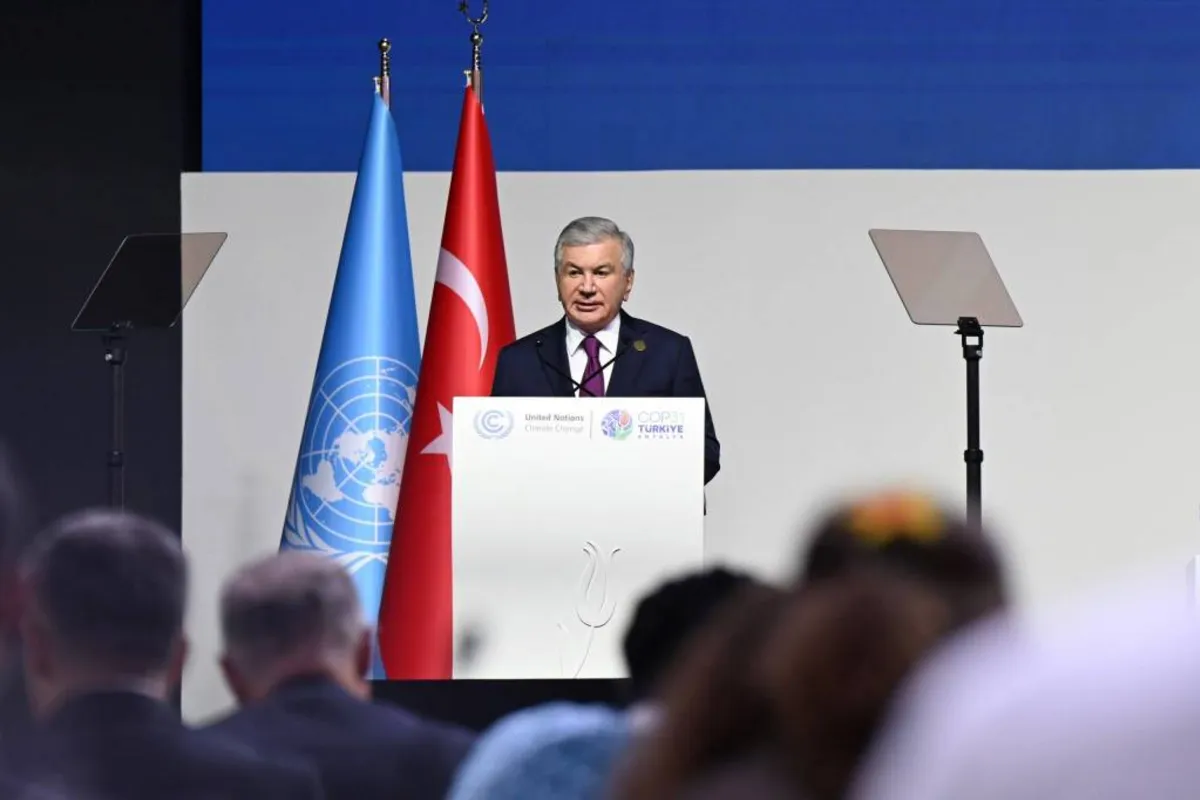
Source: Press Service of Uzbekistan's President
Uzbek President Shavkat Mirziyoyev on Wednesday proposed a Central Asian climate integration model to address shared environmental challenges, including melting glaciers, water scarcity and extreme droughts.
Addressing the high-level segment for heads of state and government at the 31st UN Climate Change Conference (COP31) in Türkiye's southern province of Antalya, Mirziyoyev stressed the importance of regional cooperation and outlined three pillars for the proposed framework: information sharing, technology and financing, The Caspian Post reports, citing Anadolu Agency.
Under the information-sharing pillar, he proposed establishing a regional climate-risk information infrastructure and early warning system with support from the World Meteorological Organization, along with common indicators and mechanisms to monitor gradual climate-related changes.
The technology pillar would focus on green solutions to restore degraded land, capture carbon in arid regions and combat dust and sandstorms.
Mirziyoyev said Uzbekistan planned to transform its annual Central Asia Eco Expo into a permanent investment and technology platform for regional environmental solutions.
He also called for sustainable climate financing mechanisms developed in cooperation with development banks, including concessional grants and innovative financing instruments tailored to regional needs.
“Central Asia needs reliable and sustainable sources of financing that reflect the region's specific conditions and needs,” he said.
Mirziyoyev said Uzbekistan had already achieved its target of reducing greenhouse gas emissions per unit of gross domestic product by 35% ahead of schedule and had set a new goal of a 50% reduction by 2035.
He added that renewable energy would account for 54% of Uzbekistan's energy mix within four years, while water-saving technologies were already being used on 60% of irrigated land.
The Uzbek leader urged participating countries and international organizations to turn the proposed climate integration model into concrete cooperation, stressing that no country could tackle climate change alone.
Share on social media