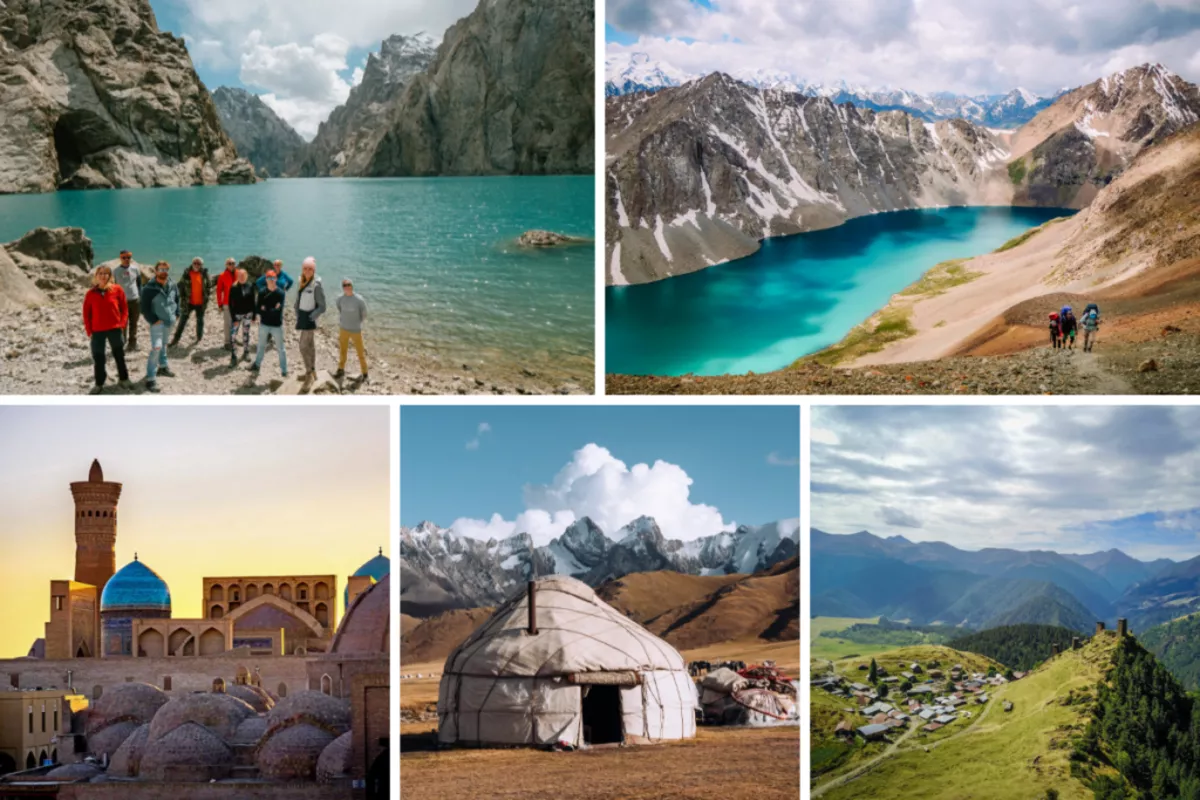
Central Asia is steadily emerging as one of the most intriguing new tourism frontiers in the global travel economy. It occupies a rare and advantageous position: geographically close enough to serve as a short-break destination for travelers from Eurasia, Russia, South Asia, and the Gulf, yet culturally and visually “exotic” enough to attract long-haul visitors in search of landscapes, heritage, and stories that still feel undiscovered. Perhaps most importantly, the region is early in its tourism cycle.
Infrastructure expansion, visa liberalization, and destination branding efforts are only beginning to reshape travel patterns-meaning policy decisions taken now can have an outsized impact over the next decade.
Central Asia’s opportunity does not lie in replicating the models of Dubai, Antalya, or Mediterranean mass tourism. Instead, its comparative advantage is diversity: ancient Silk Road cities, vast steppes and deserts, high-mountain environments, living nomadic traditions, and distinctive layers of Soviet-era urbanism. The strategic challenge is to convert these assets into a coherent, cross-border tourism product-one that feels integrated rather than fragmented by national boundaries.
Two structural realities will define the region’s tourism trajectory in the 2020s and early 2030s.
Two Realities Shaping the Next Decade
First, tourism growth is real but unevenly structured.
Central Asian tourism numbers are rising quickly, yet a large share of recorded arrivals consists of intra-regional movement. Neighbors visiting neighbors for short trips, trade, family visits, seasonal work, or shopping account for a significant portion of official “visitor” statistics-particularly in Kyrgyzstan and Uzbekistan. Long-haul leisure tourism is expanding, but it is not yet the foundation of the sector.
This distinction matters. It affects what governments should prioritize. In many cases, investments in efficient land borders, affordable accommodation, regional flight connectivity, year-round transport, and destination management in natural areas may deliver higher returns than prestige megaprojects alone. Turning short stays into longer visits is often more valuable than simply increasing headline arrival numbers.
Second, tourism statistics across Central Asia are not fully harmonized.
Countries count visitors differently. Some report foreign arrivals, others tourist trips, others overnight stays. Some indicators include repeat crossings by the same individual. Uzbekistan, for example, explicitly notes that its inbound tourism figures are counted as trips and may include multiple entries by the same person. As a result, comparisons based solely on headline numbers can be misleading.
The more relevant analytical question is not “which country has the most tourists,” but rather: what mix of visitors does each country attract, and which policies and projects can convert day-trippers into longer-stay, higher-spend travelers?
Source: gov.uz
What the Latest Arrivals Data Really Shows
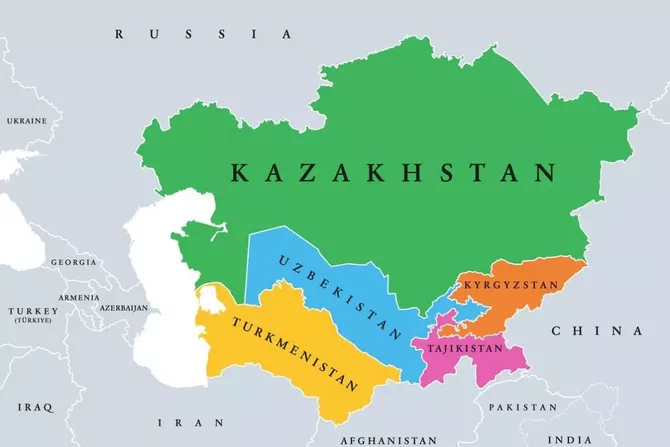
In 2025, Central Asia experienced a significant surge in tourism, with several countries reaching record-breaking arrival numbers.
Uzbekistan
Uzbekistan recorded a historic peak in 2025, welcoming 11.7 million foreign tourists.
Growth: This represented a 46.8% increase (3.7 million more visitors) compared to 2024.
Key Source Markets:
Kyrgyzstan: 3.3 million
Tajikistan: 2.7 million
Kazakhstan: 2.7 million
Russia: 984,400
China: 278,900 (a significant increase following visa-free regime introduction)
Economic Impact: Tourism service exports reached approximately $4.8 billion (€3.74 billion).
Kazakhstan
Kazakhstan remains a regional leader in total visitor volume, though full-year consolidated 2025 data is still being finalized.
First Half (H1) 2025: Welcomed 7.5 million foreign tourists, with 5 million staying longer than 24 hours.
Full-Year Estimates: Preliminary reports from late 2025 suggested over 12.1 million foreign nationals visited for tourism purposes through September 2025.
Kyrgyzstan
Kyrgyzstan continues to strengthen its position as an eco-tourism destination.
Arrivals: Received nearly 5 million foreign visitors in the first half of 2025.
Full-Year Projection: One regional report estimated 2025 totals at approximately 10 million visits.
Regional Reliance: Roughly 90% of arrivals originated from other Central Asian countries, particularly Uzbekistan.
Tajikistan
Arrivals: Recorded 1,388,800 foreign nationals from January to September 2025.
Top Source: Uzbekistan remained the single largest source of visitors to Tajikistan during this period.
Turkmenistan
Policy Shift: In April 2025, Turkmenistan adopted a new law enabling electronic visas, aimed at reducing entry frictions and capturing more regional "spillover" tourism. Specific 2025 arrival totals are not yet widely published, but the country received roughly 370,000 visitors from Uzbekistan alone.
Source: The Caspian Post
What Each Country Can Realistically Win At
Kazakhstan: four-season scale and geological drama
Kazakhstan’s strongest play is not volume alone, but bundled experiences. Almaty offers a rare “city plus mountains” product, where skiing, hiking, and alpine scenery are accessible within an hour of a major urban center. Mangystau’s otherworldly landscapes align perfectly with global demand for cinematic, remote destinations, while Astana’s MICE infrastructure helps smooth seasonality.
The planned Almaty Mountain Cluster reflects an ambition to create a fully integrated, all-season mountain destination. Combined with improved tourist measurement tools-such as discussions around using mobile data-Kazakhstan is positioning itself to optimize both planning and spend per visitor.
Strategic takeaway: Kazakhstan should prioritize longer stays and higher-value itineraries, positioning itself as the aviation and logistics hub for multi-country Central Asian circuits.
Uzbekistan: consolidate the anchor, diversify the offer
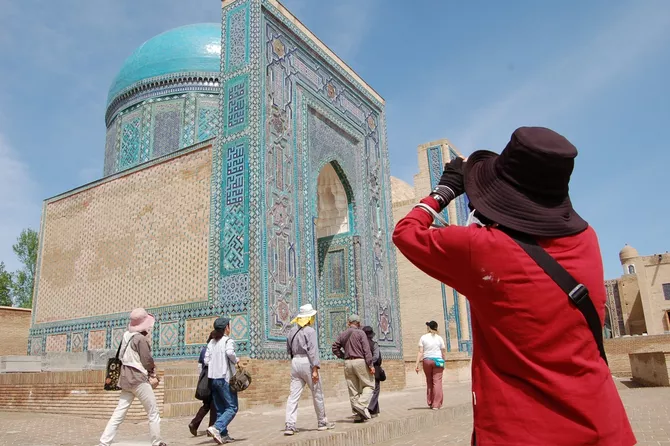
Uzbekistan’s challenge is not attracting visitors-it is managing dispersion, quality, and seasonality. Heritage demand is strong, but summer heat and overcrowding in the “golden triangle” risk limiting growth.
Flagship projects like the Silk Road Samarkand International Tourist Centre aim to add modern capacity, events, and wellness tourism. At the same time, rising numbers of tour operators and service providers indicate ecosystem growth.
Strategic takeaway: Uzbekistan can sell “two Uzbekistans”-timeless Silk Road cities alongside nature, gastronomy, and contemporary culture-using Samarkand and Tashkent as hubs.
Kyrgyzstan: adventure specialization with environmental discipline
Kyrgyzstan is well positioned to become Central Asia’s outdoor and eco-tourism specialist. Community-based tourism models allow value to remain in rural areas, aligning with sustainability-conscious travelers.
Government programs toward sustainable tourism development to 2030 and environmental infrastructure investments around Issyk-Kul-such as wastewater treatment upgrades-are essential to protecting the very assets tourists come to see.
Strategic takeaway: The priority is conversion: turning high visitor flows into structured experiences, while enforcing standards that protect lakes, trails, and alpine environments.
Tajikistan: premium Pamir adventure without massification
Tajikistan’s Pamirs offer one of Eurasia’s most compelling adventure narratives. The risk is overbuilding or copying mass tourism templates ill-suited to fragile mountain environments.
Authorities emphasize long-term strategy, SME readiness, and visa facilitation. Reliable permits, road services, emergency response, and small-scale quality accommodation matter more than large resorts.
Strategic takeaway: Tajikistan should brand itself as a premium, safety-focused adventure destination built on scarcity and authenticity.
Turkmenistan: the “mystery premium” if access continues to ease
Turkmenistan’s tourism ceiling has been administrative rather than asset-based. If e-visas are implemented smoothly and independent travel rules relax further, the country could capture a high-spend niche market drawn by curiosity, Caspian leisure, and Silk Road archaeology.
Strategic takeaway: Reduced friction could unlock a distinctive, high-value segment rather than mass tourism.
The regional play: one journey, not five destinations
The highest-value opportunity lies in regional bundling. A long-haul traveler wants variety, and Central Asia can deliver it in a single circuit:
- Uzbekistan’s heritage
- Kyrgyzstan’s lakes and trekking or Tajikistan’s Pamirs
- Kazakhstan’s urban and natural scale
- Optional Turkmenistan extension for Caspian leisure and architectural curiosity.
To make this viable, three pillars are essential:
- Frictionless movement: harmonized border procedures, expanded visa-free regimes, and user-friendly e-visas.
- Shared narrative: a Silk Road-plus-nature story, where countries complement rather than compete.
- Destination management: from wastewater systems to trail maintenance and rescue capacity-the “unsexy” factors that determine long-term success.
- Risks, constraints, and smart policy responses
Overcounting and mixed-purpose arrivals require honest metrics and realistic goals. Seasonality and climate stress push the region toward shoulder seasons and four-season products. Infrastructure gaps outside capitals, along with reputation and safety perceptions, remain binding constraints-but ones that professional management can mitigate.
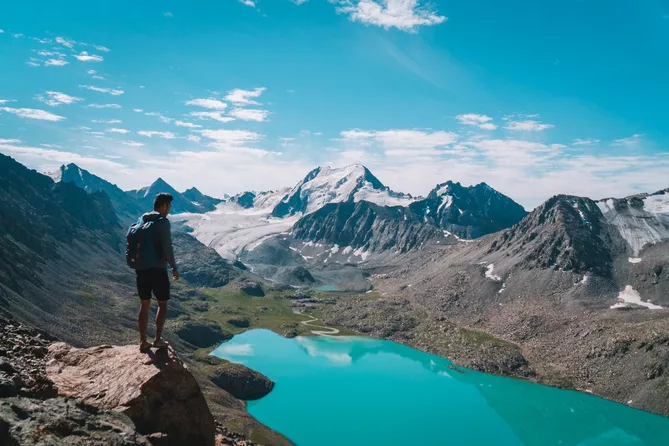
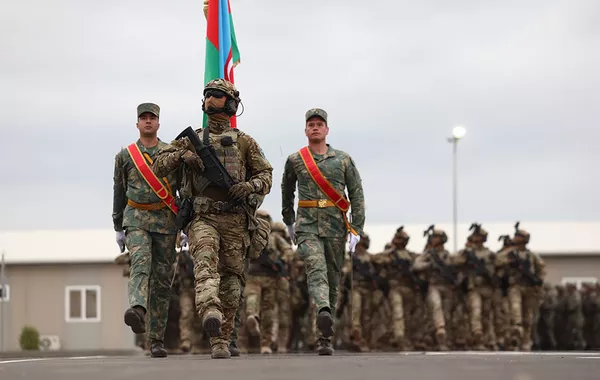
Photo: Getty Images
Conclusion: Conversion, Not Just Arrivals
Central Asia does not need mass tourism to succeed. Its path is high-value growth: converting regional mobility into longer stays, building a premium reputation in nature and heritage, and professionalizing destination management to protect fragile assets.
If current reforms and investments align, Central Asia’s most valuable tourism product will not be any single country. It will be the idea of Central Asia itself-a single journey where Silk Road cities and high mountains belong to the same story, and where one trip can feel like five different worlds.