Why Russia Is Bringing Crypto Market Under State Control
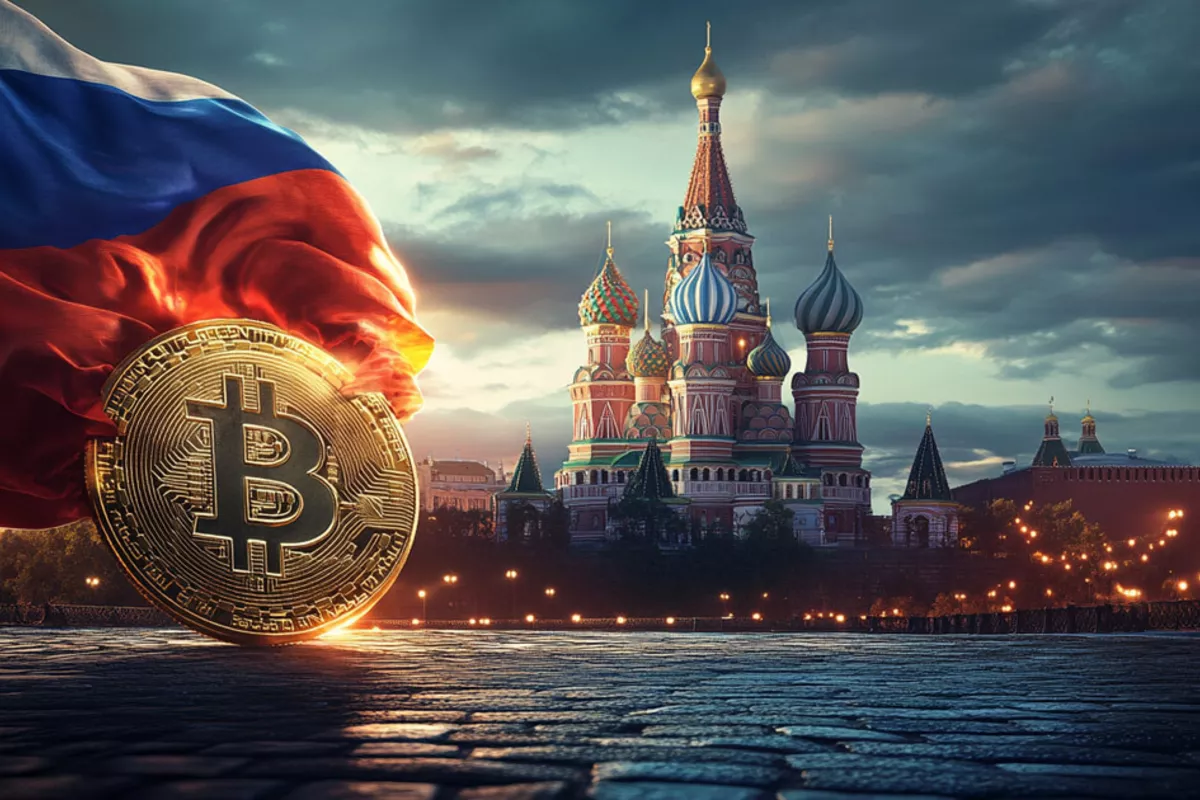
Russia is preparing to place its cryptocurrency market under comprehensive state supervision, as policymakers move to formalize and tightly regulate a sector that has grown rapidly amid international sanctions and shifting global financial dynamics.
The Central Bank of Russia and the Ministry of Finance are drafting legislation that would create a fully regulated domestic crypto market. The bill, expected to be submitted to the State Duma, envisions a structured system of licensed exchanges, digital depositories, brokers, asset managers and exchangers - all operating under the oversight of the central bank. Core provisions are scheduled to come into force in mid-2026, with additional criminal penalties applying from 2027.
From Skepticism to Strategic Adoption
The move represents a significant policy shift. Just a few years ago, the central bank had floated the possibility of banning cryptocurrencies altogether, citing financial stability risks and concerns over capital flight. However, the expansion of Western sanctions - particularly restrictions on Russia’s access to the US dollar and international payment systems - reshaped the debate.
Digital assets increasingly became viewed as a practical tool for cross-border trade and alternative settlement mechanisms. Russian officials acknowledged that cryptocurrency had proved “too convenient” for foreign trade payments to abandon.
At the same time, Moscow has accelerated development of the digital ruble - a central bank digital currency (CBDC) issued and controlled by the regulator. Unlike decentralized cryptocurrencies such as Bitcoin, the digital ruble is centrally managed and is not mined independently. Pilot programs have already tested real-time settlements between commercial banks for international trade transactions.
Integration With Broader Financial Strategy
Russia’s evolving crypto framework also aligns with broader efforts among BRICS nations to reduce reliance on the US dollar in global trade. At the 2024 summit in Kazan, member states showcased initiatives aimed at strengthening alternative payment systems, including discussions around digital currency cooperation.
Domestically, Russia has already laid legal groundwork for crypto activities. Mining and certain payment uses were legalized in 2024, and experimental regimes were introduced to allow cryptocurrency for cross-border settlements. In 2023, Russia overtook Kazakhstan to become the world’s second-largest cryptocurrency mining country, reflecting the sector’s rapid expansion.
The new legislation aims to consolidate these developments into a unified, state-supervised structure. First Deputy Central Bank Chairman Vladimir Chistyukhin described the initiative as an effort to “clean up” the market.
Key Features of the Proposed Framework
Under the proposed rules:
-
Only companies holding a trading organizer license - currently including entities such as the Moscow Exchange - would be authorized to operate crypto exchanges and trading platforms.
-
A new category of digital depositories would maintain official records of cryptocurrency ownership, overseen by the central bank.
-
Cryptocurrency exchangers would be restricted to Russian legal entities registered in a special registry and meeting minimum transaction thresholds.
-
Brokers and asset managers would operate under regulatory standards similar to those governing traditional securities markets.
Retail participation would also be tightly controlled. Individuals would only be allowed to purchase cryptocurrencies through licensed intermediaries. All investors, whether qualified or not, would have to pass mandatory testing, with results valid for one year. Non-qualified investors would face annual purchase limits and would only be permitted to buy tokens listed on Russian exchanges.
Anonymous cryptocurrencies - such as Monero - would be banned.
Transparency and Enforcement
The framework introduces extensive transparency requirements. Licensed depositories and exchangers would be obligated to provide transaction data upon request to courts, regulators, tax authorities and financial monitoring agencies. Transactions above a specified threshold would require full identification of both sender and recipient.
From 2027, violations could carry criminal penalties similar to those imposed for illegal banking operations.
For Russia’s estimated 20 million cryptocurrency users, the legislation would significantly alter the market landscape. Peer-to-peer trading via informal channels, including messaging apps and unregulated platforms, would effectively be curtailed. While individuals could retain existing holdings, future transactions would have to pass through state-controlled infrastructure.
Shielding the Market From External Pressure
The initiative comes as the European Union considers additional sanctions that could include broader restrictions on cryptocurrency transactions involving Russia. Digital assets have become an important conduit for cross-border trade, particularly as traditional financial channels have narrowed.
By formalizing and centralizing the crypto ecosystem, Russian authorities appear to be pursuing dual objectives: bringing a previously grey market into the regulatory perimeter and insulating it from external financial pressure.
In doing so, Moscow is signaling that digital assets - once viewed as a threat to monetary stability - are now being repositioned as a strategic component of national economic policy.