If Iran Wins The Strait Of Hormuz, The US Economy Stays Steady
The United States economy will be affected by how the war with Iran evolves or ends. That makes the forecast quite difficult. The best approach in this situation is to look at different scenarios. This article works through the global and U.S. economic outlook if Iran ends up controlling the Strait of Hormuz. This is not an argument about how the U.S. should proceed, but simply the consequences of an end result in which Iran effectively controls the Strait.
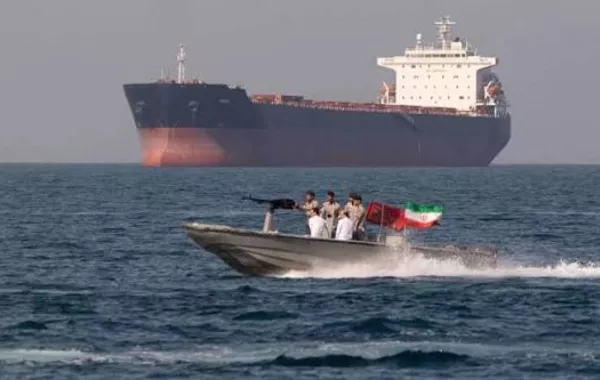
The basis for the scenario is that a determined country with adequate resources, including air and sea drones and missiles, can endanger any ship near its coast. The opposition cannot easily spot the on-shore bases from which the dangers come without putting boots on the ground. And the U.S. is not willing to land soldiers in large numbers in Iran. (This view of the military situation may be incorrect, but it seems likely now.)
Iran's Two Options for Tolling the Strait
Iran would have two basic choices for what it allows through the Strait. One option would be to allow only Iranian oil out of the Persian Gulf. The other option would be to allow all oil out, but subject to a toll. (There are variations on the second option that will be discussed below.) That first choice would not make much sense for Iran. Its oil exports last year amounted to about two percent of global oil production. Reducing the oil leaving the Persian Gulf would raise world oil prices, but Iran would only benefit a small amount. It would make much more money charging tolls to the big Gulf producers, which are Saudi Arabia and Iraq, followed by the United Arab Emirates, Kuwait and Qatar (ranked by export volume).
The Iranian toll for travel through the Strait would most likely be a combination of money and political loyalty. Iran has not gotten along well with its neighbors during this war. It might well cut deals for lower tolls with countries that support, at least to some extent, Iran’s geopolitical goals. The other Gulf countries would probably respond, but they have little choice for a year or two.
Why Hormuz Tolls Won't Raise Oil Prices
With tankers traveling through the Gulf, the world price of crude oil would return to nearly its pre-war level. The closure of the Strait this spring probably caused some long-lasting reduction in crude oil production capacity because some oil wells cannot pump as much after having been shut down. But $80 a barrel might be a ballpark estimate for a post-war price.
Strait of Hormuz tolls would not increase the world price of oil, and this fact is central to the economic forecast. Tolls would reduce net proceeds for the non-Iranian oil producers, but not raise world prices. This conclusion results from simple supply and demand analysis. Global demand for oil will continue absent a worldwide recession. The supply will have dropped only a little, as noted above. So the world price of oil will be just a bit higher than the pre-war price. The toll just changes who pockets the revenue. A low toll is good for the non-Iranian producers. A high toll will be better for Iran’s finances in the short run, but will trigger a greater response by the toll-paying countries.
Gulf Countries Respond With Pipelines and Military Buildup
In a year or two, however, the other Gulf countries would react to Iran’s tolls. Saudi Arabia will probably increase pipeline capacity to its ports on the Red Sea. The UAE already has a pipeline to the Gulf of Oman, just outside the Strait of Hormuz, which could be expanded. Iraq has a northern oil pipeline into Turkey that could be expanded, though the two countries are currently quarreling over payments and oil pumped in Kurdish territories. Regardless of what happens in the next year, Persian Gulf countries will work to expand alternative export routes.
The Gulf countries may well beef up their own naval and air forces to counter Iranian tolls. Current military technology makes safe transit very difficult to achieve in the face of a determined enemy. A coalition of Gulf countries, such as Saudi Arabia, Kuwait and the Emirates, could well acquire enough missiles and air and sea drones to threaten Iranian transits through the Gulf. Iran and the Gulf coalition might launch missiles aimed at each other’s economic infrastructure. Most likely the two sides would come to some agreement to continue transits. With enough military power, the other Persian Gulf countries might negotiate free transit through the Strait.
The US Economic Forecast
In the geopolitical scenario laid out here, the United States economy remains comfortable. Oil prices would not trigger a recession. The U.S. could tell some face-saving story, though it is doubtful that the U.S. will have achieved its goal of preventing Iran from developing nuclear weapons. However, it has probably achieved the goal of reducing Iran’s support for anti-Israeli actions by Hezbollah, Hamas and the Houthis.
Longer term, the Gulf countries will exert more effort for alternative oil export paths, as well as alternatives for the consumer imports they need. The solution will not be cheap, but the U.S.-Iranian war has vividly shown the danger of reliance on a single path for oil exports.
See the original article here