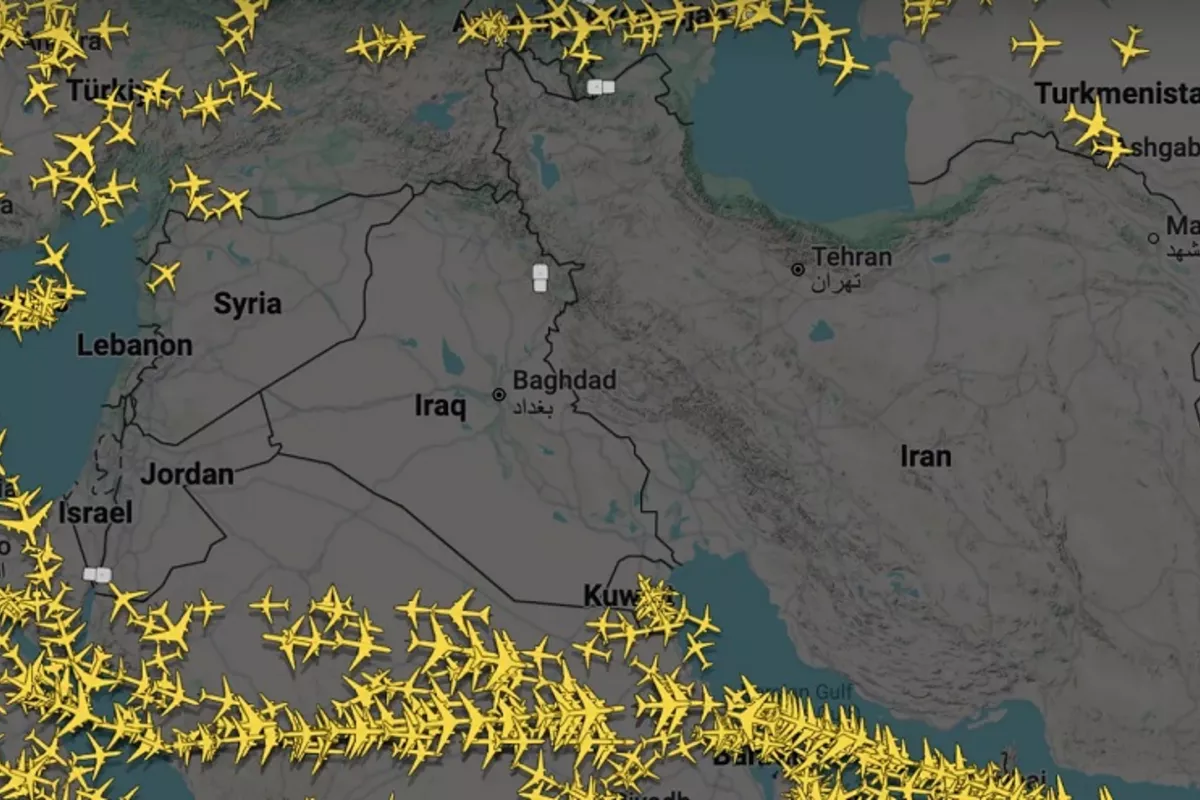
When geopolitical tensions rise in the Gulf, the impact is often visible first on flight-tracking maps. Aircraft that once followed near-straight paths begin tracing wide arcs around restricted airspace, routings lengthen, and some services vanish from departure boards altogether. The latest disruptions linked to rising Iran-US tensions illustrate how quickly aviation risk management translates political signals into operational decisions-even when no airport is directly under attack.
In late January 2026, a growing number of international airlines adjusted Middle East operations following heightened rhetoric and military signaling between Washington and Tehran. These developments included U.S. force deployments to the region and Iranian warnings that any strike would be treated as a full-scale war. In parallel, European aviation authorities issued formal guidance advising airlines to avoid Iranian airspace, citing the risk of escalation and misidentification within Iran’s Tehran Flight Information Region (FIR).
What follows is an overview of three key issues: which airlines have cancelled, reduced, or rerouted flights; what the most relevant “latest data” looks like from an aviation-risk perspective; and how a potential Iran-Israel-US escalation could further reshape Middle East air travel.
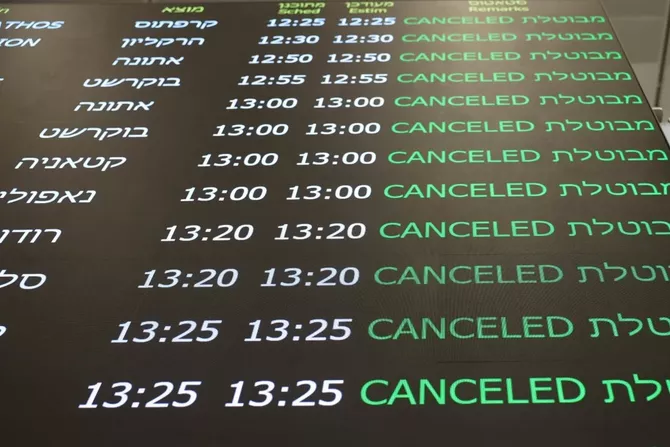
Photo: EPA-EFE
Why airlines pull back early: the logic behind cancellations and detours
Airlines do not wait for confirmed hostilities to change operations. Instead, they respond to shifting risk indicators, which in the Middle East can evolve within hours. Several factors tend to drive early pullbacks:
Airspace advisories.
The European Union Aviation Safety Agency (EASA) issued a Conflict Zone Information Bulletin advising operators not to fly within Iran’s Tehran FIR (OIIX) at any altitude, while urging heightened caution in neighboring airspace hosting U.S. military facilities. Such guidance carries significant weight for European carriers and often influences non-European airlines as well.
Short-notice closures.
Iran temporarily closed its airspace in mid-January, forcing diversions and cancellations before corridors reopened. Even brief closures are operationally disruptive, as flight planning, crew duty limits, fuel calculations, and overflight permissions are tightly interconnected.
Misidentification risk.
During periods of elevated military alert, civil aircraft face a higher risk of misidentification, particularly when air-defense systems are on heightened readiness. This concern was explicitly cited in EASA’s rationale.
Navigation interference.
Independent monitoring groups have reported GPS spoofing and related navigation issues in parts of the region, complicating RNAV and RNP procedures and increasing cockpit and air-traffic-control workload.
In response, airlines generally choose among three options: cancel flights outright, reduce exposure by cutting frequencies or limiting operations, or reroute around higher-risk airspace-accepting longer flight times and higher costs.

Photo: Getty Images
Airlines that have cancelled, reduced, or rerouted Middle East flights
The following overview reflects widely reported operational changes during the January 2026 disruption cycle. Because airline decisions are reassessed frequently, these measures should be understood as snapshots rather than permanent policies.
Air France-KLM Group
KLM
KLM avoided large portions of Middle East airspace and suspended flights to several destinations, including Dubai, Riyadh, Dammam, and Tel Aviv. These decisions were tied primarily to the need to avoid overflying Iran, Iraq, Israel, and parts of the Gulf. The combination of route suspensions and airspace avoidance underscores that overflight risk-not only destination risk-was central to the airline’s assessment.
Air France
Air France temporarily suspended certain services, notably flights to Dubai during the initial spike in tension, before resuming operations while continuing close monitoring. Such rapid resumptions typically suggest that an airline has identified acceptable rerouting options or judged the immediate risk window to be narrowing, while retaining the ability to reverse course if advisories tighten.
Lufthansa Group and other European carriers
Lufthansa, SWISS, and Austrian Airlines
These carriers suspended overflights of Iranian and Iraqi airspace and imposed restrictions on certain Middle East routes. Reported measures included reducing exposure to destinations such as Tel Aviv and Amman and, in some cases, limiting operations to daytime hours. Daylight-only flying is a common mitigation strategy, as it increases diversion options and reduces certain threat profiles, even though it does not eliminate risk entirely.
Finnair
Finnair rerouted several long-haul flights, including services to hubs such as Doha and Dubai, by transiting alternative corridors such as Saudi airspace in order to avoid higher-risk regions.
British Airways
British Airways temporarily halted flights to Bahrain before later resuming them, reflecting a short, precautionary pause rather than a sustained withdrawal from the market.
Wizz Air
Wizz Air avoided Iraqi and Iranian airspace, with some westbound Gulf routes requiring technical stops-reported in locations such as Cyprus or Greece-because extended detours reduced fuel margins and crew-duty flexibility.
North American carriers
United Airlines and Air Canada
Both carriers reported suspensions or cancellations of services to Israel during the heightened-risk period. With relatively limited Middle East networks compared to European or Gulf carriers, suspending individual routes-often Tel Aviv-is a straightforward way for North American airlines to reduce exposure.
South Asian carriers
IndiGo
IndiGo cancelled select international flights during the period, citing regional security concerns. Reported examples included specific dates on routes such as Delhi-Tbilisi and Mumbai-Almaty. These cases highlight how Iran-adjacent airspace constraints can affect flights even when destinations lie outside the Gulf.
Regional carriers and Iran-specific cancellations
Reporting from mid-January also indicated that regional airlines, including flydubai and Turkish Airlines, cancelled multiple flights to Iran during periods of airspace uncertainty. This pattern is typical in Iran-centered risk events: flights destined for Iran are often the first to be cancelled, as they are the most difficult to mitigate through rerouting.
How a wider Iran-Israel-US escalation could affect air travel
While outcomes cannot be predicted with certainty, airlines and regulators routinely plan around scenarios:
Limited escalation with sustained high alert.
This most common pattern would likely result in continued avoidance of Iranian airspace, rolling suspensions of select destinations, and frequent last-minute reroutes.
Strikes near air corridors.
Any Israel-Iran exchange involving missiles or drones would raise the risk of debris, misidentification, and sudden FIR shutdowns, forcing large-scale diversions and concentrating traffic into fewer safe corridors.
Direct US-Iran confrontation.
Such a scenario would intensify concerns about misidentification and could expand avoidance zones to parts of the Gulf, particularly if GPS disruption or drone activity increases.
Broad regional shutdowns.
Though rare, widespread closures would disrupt global networks, affecting Europe-Asia and Europe-Africa traffic and triggering cascading delays worldwide.
Photo: Anadolu Agency
What travelers and shippers should expect
If elevated tensions persist, the most likely impacts include more irregular operations, longer scheduled block times, higher operating costs, and short-notice changes driven by NOTAMs. Even in relatively mild scenarios, these effects can last for weeks.
The defining feature of the current Iran-US tension cycle is that airlines are treating Iranian airspace itself as the central risk node-a view reinforced by EASA guidance-and then adjusting destination flying to places such as Dubai, Bahrain, Tel Aviv, and Amman based on whether safe and commercially viable routings remain available.
If tensions ease, reroutes typically persist while destinations return. If tensions escalate, broader cancellations and more frequent airspace restrictions are likely to follow, reshaping Middle East air travel once again.