A third round of indirect talks between the United States and Iran, mediated by Oman, began in Geneva on Thursday.
Iran’s delegation is led by Foreign Minister Abbas Araghchi, with the meetings hosted at the Omani ambassador’s residence. The US side is represented by Steve Witkoff and Jared Kushner, son-in-law of President Donald Trump.
The Iranian side asserts that a deal with the Trump government remains “attainable”.
This hinges on Washington adhering to preconditions established in prior backchannel discussions, Araghchi told Western media.
'Big Problem'
The US side, however, cites a “big problem” over the exclusion of Iran’s ballistic missiles in the talks.
The new round of Iran-US indirect talks in Switzerland, mediated by Oman, aim to strike a deal to avert fresh conflict and bring an end to weeks of threats.
Ahead of the Thursday Geneva talks, US Secretary of State Marco Rubio cautioned that excluding missile talks would spell a "big problem," clashing directly with Tehran's terms.
The US is ramping up massive military firepower in the region, the biggest since 2003, with fears of military "miscalculation" precipitating a wider regional conflict.
President Donald Trump repeatedly threatened to strike Iran if a deal is not reached.
In his State of the Union address on Tuesday, Trump accused Iran of "pursuing sinister nuclear ambitions".
He also claimed Tehran had "already developed missiles that can threaten Europe and our bases overseas, and they're working to build missiles that will soon reach the United States of America".
3 Iran Principles
As of Thursday, Iranian officials maintain that a deal hinges on three fundamental principles:
- acknowledging Iran's right to enrich uranium for peaceful purposes;
- allowing dilution of its highly enriched uranium stockpile instead of full dismantlement; and
- keeping Iran's ballistic missile program out of the talks.
These “non-negotiables”, diplomats stress, safeguard Iran's core interests.
On Tuesday (February 17), the Iranian side announced a “breakthrough” in the first Geneva talks mediated by Oman, citing “agreement” on "guiding principles” for resolving its nuclear dispute.
This marks "progress" following the Oman-hosted first round.
Araghchi called the indirect discussions "constructive," stating both sides will now draft texts for exchange ahead of a third round.
Trump's stance stays unclear.
The Guardian, citing Iranian sources, said prior indirect rounds saw Witkoff greenlight enrichment below 5% purity - civilian levels from the 2015 deal, and nowhere near weapons-grade.
Negotiators were caught off-guard by Kushner and Witkoff's flexible opener, centred on sub-5% limits and civilian-only reorientation, per “insiders”, according to British daily.
Sanctions Relief
Sanctions relief or normalisation, however, lacks firm promises, with any relief phased in later.
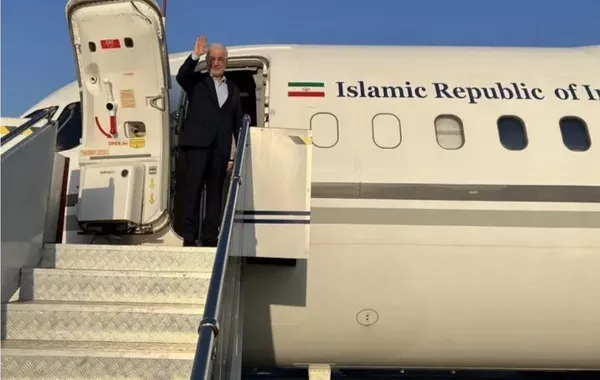
Araghchi restated Tehran's red line before takeoff: “Iran will never, under any circumstances, seek to develop nuclear weapons; at the same time, we Iranians will never forgo our right to benefit from peaceful nuclear technology. Achieving an agreement is within reach but only if diplomacy is prioritised.”
US media outlets portray this as Trump's deal-making litmus test, spotlighting Rubio's missile hawkishness against Witkoff's nuclear focus.
Analysts cite echoes of the Joint Comprehensive Plan of Action (JCPOA), known as the "Iran nuclear deal", a 2015 landmark agreement between Iran and the P5+1 (USA, UK, France, China, Russia, plus Germany) and the EU.
However, they doubt Tehran's buy-in without swift sanctions relief, eyeing US Congressional pushback on verification.
UK media coverage stresses risks of misstep, likening curbs to Obama's 2015 pact for breathing room on proliferation.
They also cite that missile omission could lead to security holes, while Europe eyes de-escalation for trade gains.
Fresh Sanctions
On Wednesday, the US announced a new round of sanctions targetting Iran’s oil trade and weapons networks, intensifying what Washington calls its “maximum pressure” campaign.
The US Treasury Department said the measures target more than 30 individuals, entities and vessels accused of facilitating “illicit Iranian petroleum sales” and supporting Tehran’s weapons programmes.
Particular focus was placed on ships operating within Iran’s so-called “shadow fleet,” which Washington says covertly transports Iranian oil to foreign markets.
See the original article here