Despite heavy losses and the destruction of military infrastructure, Iran retains the capacity to resist and continues to shape the course of the conflict.
Political analyst Tamerlan Ibraimov highlighted that Iran still holds significant leverage over the region and the global economy, The Caspian Post reports via Kyrgyz media.

Political analyst Tamerlan Ibraimov
Iran Bombed but Not Defeated
After a month of relentless attacks, Iran’s military infrastructure has been severely damaged. The country’s top political and military leadership-including the Supreme Leader, senior IRGC commanders, and top army officials-has been targeted, leaving second- and even third-tier leaders in charge.
The Iranian navy has effectively ceased to exist, with U.S. reports claiming around 150 vessels of various types have been sunk, while air defenses are almost completely destroyed, allowing U.S. and Israeli forces to operate freely across Iranian airspace.
Yet, despite these massive strikes on its state-military complex, Iran continues to resist.
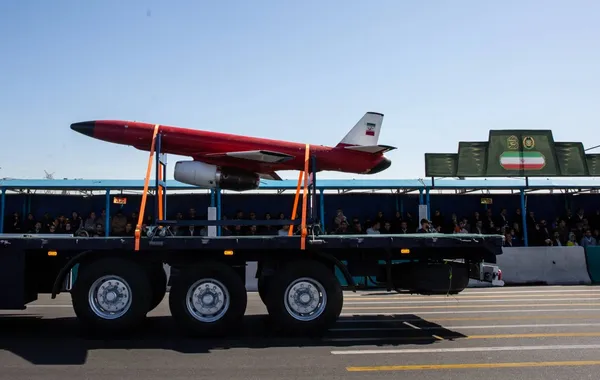
On its side, Iran continues missile and drone strikes against Israel and Gulf countries hosting U.S. military bases. Meanwhile, the location of Iran’s enriched uranium remains largely unknown.
The Iranian regime remains firmly in power, demonstrating remarkable resilience and survival skills.
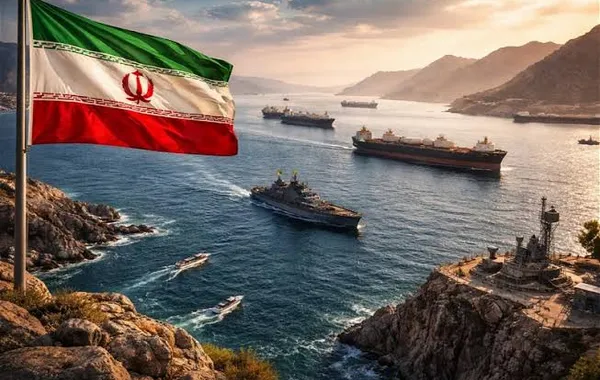
Iran has taken full control of economic traffic through the Strait of Hormuz, which handles about 20% of the world’s oil, 30% of liquefied gas, and over 10% of mineral fertilizers. Moreover, looking ahead, Iran could potentially extend its influence through the Yemen-based Houthi movement (“Ansar Allah”), which controls the Red Sea coast, to oversee an additional 10% of global oil traffic passing through the Bab-el-Mandeb Strait. In doing so, Iran has demonstrated that, if necessary, it has the power to literally disrupt the global economy and plunge it into chaos with skyrocketing energy prices.
U.S. and Iranian Statements and Capabilities
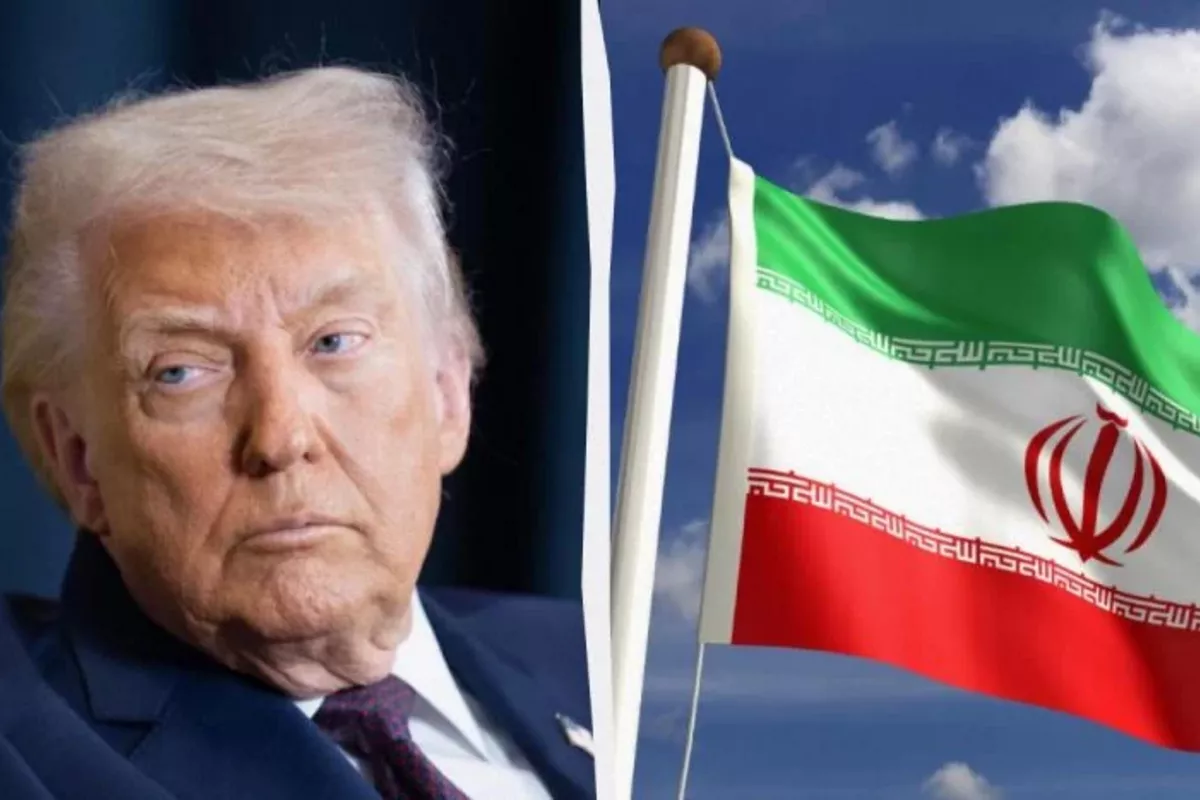
US President Donald Trump, in his characteristic style of making bold and often contradictory statements, recently claimed that the U.S. has already “won,” adding that Iran desperately wants peace and is practically begging for it. He further warned that if Iran refuses to meet U.S. demands, American forces could bomb its energy infrastructure and possibly seize key islands, including Khark Island, through which 90% of Iran’s oil exports pass.
In response, the Islamic Revolutionary Guard Corps (IRGC) threatened to destroy all critical infrastructure of U.S. allies in the Persian Gulf, including power plants and desalination facilities, signaling the potential for a serious escalation in regional conflict.
Considering the Military Capabilities of Both Sides
Given the military capacities of both parties, each could carry out such strikes-but the consequences would differ dramatically.
In Qatar, for example, over 95% of all water comes from desalination plants. If Iran were to bomb these facilities, it would trigger a full-scale humanitarian disaster: residents and foreign workers would flee, and the country could face severe shortages, turning parts of it into a desert. Other Gulf states would face similar risks.
For the U.S., however, targeting Iran’s energy infrastructure would be counterproductive. Such a move would likely send global oil prices soaring-even domestically-fueling dissatisfaction among American citizens and creating political and economic backlash at home.
Explaining the Strange Oil Export Numbers
This helps explain the seemingly odd oil export figures. Before the war, Iran’s exports were around 1.3 million barrels per day. Today, instead of declining, they have actually risen to 1.5 million barrels per day. With soaring global oil prices, this means Iran is earning two to three times more revenue from exports than it did just a month ago.
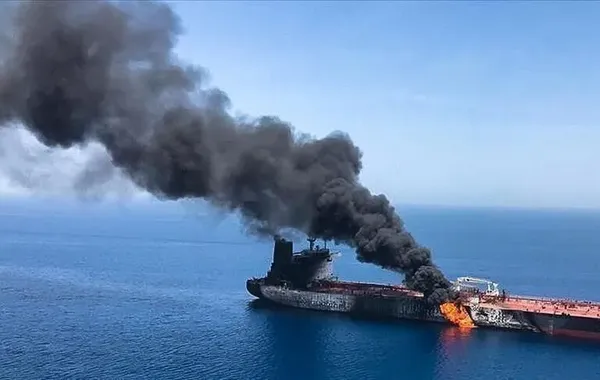
Iranian tankers continue to move freely through the Strait of Hormuz, with the U.S. taking a hands-off approach-ensuring more oil reaches the global market while trying to prevent prices from spiking even higher.
Can the U.S. Take Control of the Strait of Hormuz?
Could the U.S. seize control of the Strait of Hormuz and dictate who can trade oil and who cannot? Under current circumstances-the answer is no.
Modern Warfare Gives Iran the Upper Hand
Modern methods of warfare-specifically drones and long-range missiles-allow Iran to effectively control the Strait of Hormuz even without a fully operational air force or navy, leaving the U.S. with little recourse. To neutralize the drone and missile threat, the U.S. would need to occupy a large portion of Iranian territory-a feat that is practically impossible.
Controlling Iran would require a full-scale ground operation, but the U.S. simply does not have the troops for it. For comparison, during the 1991 “Desert Storm” operation against Iraq, coalition forces deployed over 900,000 soldiers and multiple armored divisions. That was in Iraq-a country much smaller than Iran with predominantly flat desert terrain-while Iran is largely mountainous, making any large-scale invasion far more difficult.
Ground Invasion of Iran: Practically Impossible
A full-scale U.S. ground operation would require millions of troops, yet there are only about 10,000 Marines and special forces stationed in the region. Even under the most optimistic projections, that force would be insufficient to capture even a single city. And even if a significant portion of Iranian territory were seized, the drone threat and guerrilla resistance would remain, with continual U.S. casualties-a politically and socially sensitive issue, especially now, when the war’s objectives are unclear and heavily criticized domestically.
From both practical and theoretical perspectives, a large-scale ground invasion of Iran makes no sense.
A slightly more feasible option might be a targeted special operation, similar to U.S. actions in Venezuela, but Iran has already demonstrated that eliminating or capturing specific leaders does not collapse the government or end resistance. In this context, even the deployment of 10,000 Marines serves more as a psychological signal than a practical military strategy.
The Only Realistic U.S. “Victory” Scenario in Iran
The US only plausible path to exiting the conflict with a “victorious” image would be if either internal protests in Iran topple the current leadership and bring in a more U.S.-friendly government, or if a faction of high-ranking officials emerges willing to negotiate and align with U.S. positions.
So far, nothing of the sort has materialized. President Trump has claimed multiple times that the U.S. is secretly negotiating with Iranian officials who are willing to accept U.S. terms, but international analysts remain skeptical of such statements.
Thus, the U.S. can bomb and strike specific targets within Iran, but it cannot fully seize or exert control over the country.
Meanwhile, Iran, using rockets and low-cost drones mounted on mobile platforms, can effectively maintain fire control over both the Strait of Hormuz and U.S. allies in the Middle East.
Not long ago, Iran’s demand for reparations for its losses seemed more like a bluff, but it now appears to be a practical strategy. Direct payments are unlikely, but what else could these demands be if not indirect reparations? The recent requirement for $2 million per tanker to pass through the Strait of Hormuz represents a substantial sum, and over time, Iran could realistically collect significant revenue from Gulf countries to compensate for the damages and losses it has suffered.
The same applies to demands to withdraw U.S. bases from the region. While no one is likely to agree to this immediately, it’s theoretically possible that over time the idea could become more acceptable-especially to a president with a “business-minded” approach like Trump.
A full withdrawal of U.S. bases from the Persian Gulf would leave the region’s Arab monarchies and Israel “on their own” against Iran, making such a scenario unlikely. However, a softer version-such as a partial withdrawal combined with non-aggression guarantees-remains possible.
The same logic applies to the “nuclear and missile” issue, where the U.S. may be willing to moderately soften its stance.
The war is dragging on, oil and gas prices have skyrocketed, and the economic costs for the U.S. rise daily. Washington is actively seeking a way to exit the conflict without losing face.
However, if internal tensions in Iran worsen, the U.S. could, on the contrary, harden its negotiating stance. For now, time is working in Iran’s favor, and the next couple of weeks will be critical for both sides to define their positions.
When will the war end?
With intense fighting ongoing, it’s difficult to predict exact timelines, but certain factors directly influence the duration of the hot phase of the conflict, at least from the U.S. perspective.
For the U.S., the main factor is domestic. While rising oil prices bring super-profits to American energy companies, they are largely disadvantageous for the rest of the population-and Trump is well aware of this. Additionally, with Congressional elections approaching in the fall, the Republican Party risks losing its majority in the House of Representatives due to failures in the war. This, in turn, could trigger impeachment proceedings against Trump amid numerous allegations. The faster he ends the war, the better it is for him personally.
Another factor is Trump’s planned visit to China, originally set for March 31, which he undoubtedly wanted to make as the victor of the Gulf conflict.
However, events unfolded differently, and the visit was postponed to May 14. Clearly, Trump aims to conclude the war before that date-and preferably, at least formally, as the winner.
A further factor influencing the war’s timing in April-May is the upcoming FIFA World Cup in June. Trump would prefer the tournament to take place in a context of peace and international stability, rather than amid ongoing hostilities-and especially not with American soldiers dying, which is an inevitable consequence of active warfare.
The question is really about on whose terms the war will end. The U.S. still holds overwhelming technological superiority, but it cannot fully control Iran-or the Strait of Hormuz in particular. Time is working against the U.S., which cannot sustain prolonged combat, drain massive resources, and watch energy prices soar to unprecedented levels.
Iran cannot deliver decisive blows to the U.S. or Israel, but it can control a significant portion of the global oil and gas flow. More importantly, it appears willing to endure and wait in order to achieve its objectives.
For now, surprisingly as it may sound, the “cards” seem to be stronger in Iran’s hands than in Trump’s.