Photo credit: The Ministry of Artificial Intelligence and Digital Development of Kazakhstan
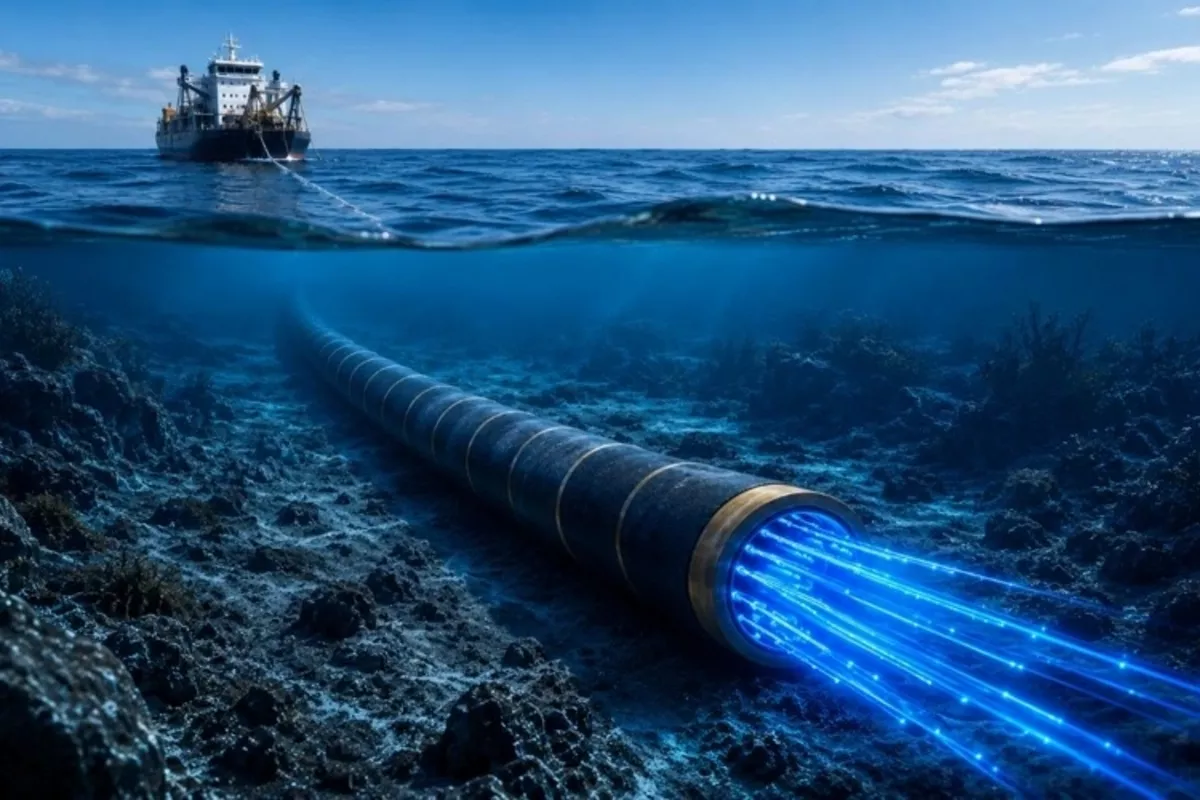
A major digital infrastructure project connecting Azerbaijan and Kazakhstan has entered its offshore construction phase, with a submarine fiber-optic cable now being laid across the Caspian Sea from Baku toward Aktau.
The Trans-Caspian fiber-optic cable project is designed to strengthen digital connectivity between the two countries and support faster data transmission along the Trans-Caspian International Transport Route. The project is scheduled to be fully commissioned by the end of 2026, Kazinform reports.
Kazakhstan’s Ministry of Artificial Intelligence and Digital Development said the cable-laying operation began after the necessary regulatory, organizational and customs procedures were completed.
Preparatory work was carried out throughout 2025. This included desktop research, offshore engineering surveys and the selection of a route designed to avoid anchorage zones and areas used for military exercises. An environmental permit was also obtained from the relevant authorities in Kazakhstan’s Mangistau Region.
The specialized armored submarine cable was manufactured and factory-tested in China before being transported to Kazakhstan. It was later moved from the Port of Kuryk to Baku, together with three cable baskets weighing a combined 600 tons.
According to the ministry, the entire cable has now been transferred into the cable tank of a specialized vessel. The ship has departed Baku and begun laying the cable toward the Port of Aktau.
The operation is being carried out by a cable-laying vessel with a displacement of more than 20,000 tons and an advanced dynamic positioning system. A crew of around 70 people, including technical supervisors and a representative of Kazakhtelecom, is working onboard.
The project is being implemented by CaspiLink B.V., formerly known as Caspinet B.V., a joint venture established by Kazakhtelecom and Azertelecom.
The vessel also has a dedicated jointing room for emergency repairs and cable splicing. Both the Kazakh and Azerbaijani ends of the cable are currently housed there, while all fiber cores have already undergone testing.
The submarine cable is expected to be fully laid within 15-20 days, weather permitting. The broader project, including technological and commissioning work, remains on track for completion by the end of 2026.
Share on social media