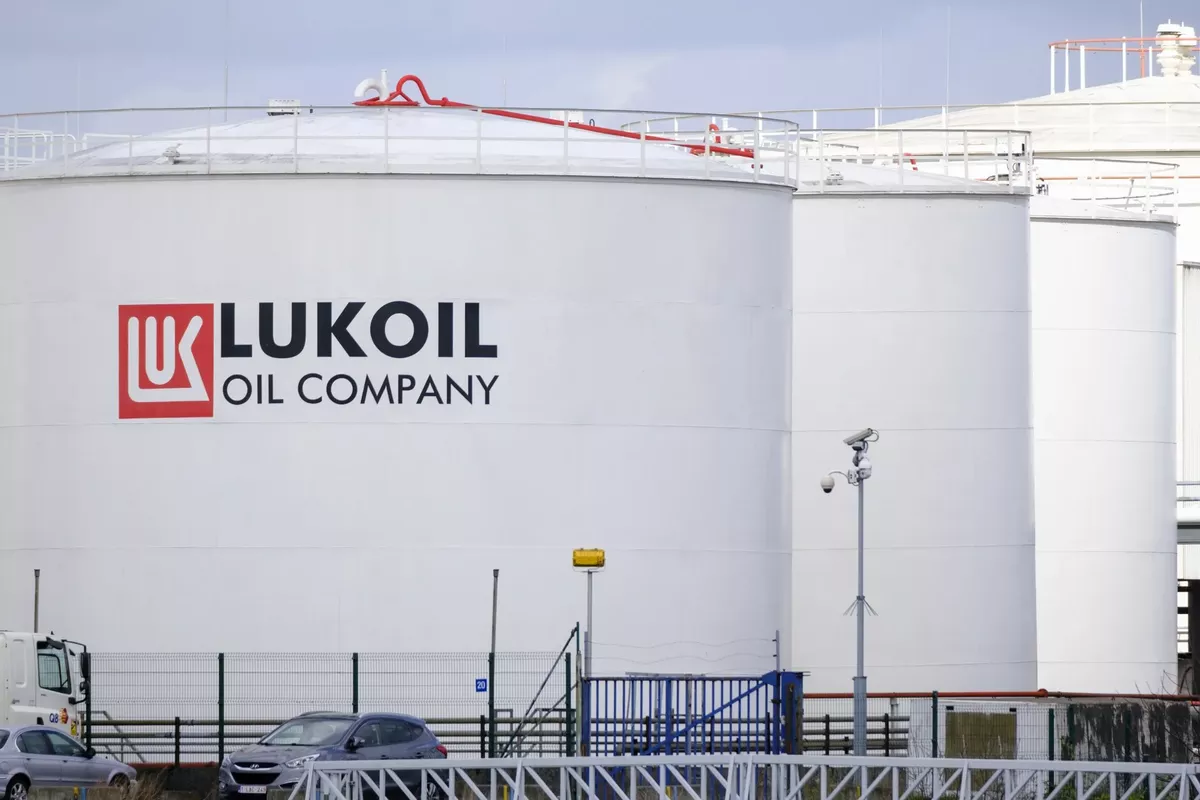
Kazakhstan’s decision to formally engage the U.S. Treasury’s Office of Foreign Assets Control (OFAC) over Lukoil’s participation in major energy projects marks a calculated exercise in sanctions risk management rather than a symbolic diplomatic move. By taking the issue directly to the U.S. sanctions authority, Astana is attempting to protect the operational and financial integrity of its most strategic energy assets at a moment when global sanctions regimes, regional instability, and domestic production disruptions are converging.
At stake is not only ownership of minority stakes held by a Russian oil major, but the broader question of whether Kazakhstan can continue to market itself as a stable, investable energy producer whose infrastructure remains insulated from secondary sanctions, compliance ambiguity, and geopolitical spillover. This article provides an evergreen assessment of why Kazakhstan has acted now, what it is trying to achieve, the realistic options under U.S. sanctions mechanics, and what the most probable next steps look like.
The Trigger: Sanctions Pressure and Lukoil’s Shrinking Room to Maneuver
The immediate catalyst for Kazakhstan’s outreach lies in the late-2025 decision by OFAC to designate PJSC Lukoil. While the designation did not automatically force a fire sale of the company’s international holdings, it fundamentally altered the risk profile of any project in which Lukoil participates. OFAC simultaneously acknowledged that sanctioned Russian firms might seek to divest assets outside Russia to non-blocked parties in order to mitigate sanctions exposure-a signal that divestment, if properly structured, could be permissible.
This distinction matters enormously for Kazakhstan. Lukoil is embedded in several of the country’s most strategically important energy assets, not as an operator but as a minority stakeholder whose presence nonetheless affects ownership chains, dividend flows, governance rights, and compliance assessments. These assets include:
-
Tengiz, through the Tengizchevroil consortium, one of the world’s largest and most technically complex oil fields
-
Karachaganak, a cornerstone gas-condensate project with long-term export significance
-
The Caspian Pipeline Consortium (CPC), which serves as Kazakhstan’s primary crude export artery via Russia’s Black Sea coast
In late January 2026, reporting confirmed that Kazakhstan had formally submitted a request or bid to OFAC relating to the acquisition of Lukoil’s stakes in these projects, invoking pre-emptive rights under existing agreements and citing the sanctions-driven timeline. This was a notable escalation: rather than waiting for Lukoil to act, Astana moved to frame itself as a proactive, compliant solution to a problem created by sanctions.
Crucially, this move came against the backdrop of acute operational stress. Kazakhstan had just experienced a major outage at Tengiz in January 2026, while CPC exports were facing disruptions linked to weather, security incidents, and broader regional tensions. In this environment, sanctions ambiguity was not merely a legal issue-it represented an additional risk layer Kazakhstan could ill afford.
Photo: Shutterstock
Kazakhstan’s Core Objective: Insulating the “Plumbing” of its Oil Economy
Kazakhstan’s approach is best understood not as an opportunistic grab for Russian assets, but as a defensive strategy aimed at protecting the core “plumbing” of its energy economy. Three overlapping objectives define Astana’s calculus.
First, Kazakhstan is seeking to preserve the investability of its flagship projects. Fields like Tengiz and Karachaganak are long-life assets developed and financed by international consortia involving Western oil majors, global banks, insurers, and service providers. Even minority ownership by a sanctioned entity can trigger heightened compliance reviews, delayed payments, frozen dividends, and reluctance among counterparties. Over time, this can translate into higher financing costs, deferred investment, or outright withdrawal by risk-averse partners. By securing OFAC clarity, Kazakhstan aims to keep these projects “boringly compliant”-a critical attribute in capital-intensive upstream development.
Second, Astana is focused on safeguarding its export chokepoint. The CPC pipeline is not merely another infrastructure asset; it is the backbone of Kazakhstan’s crude export system. Any uncertainty surrounding ownership, governance, or cash flows at CPC can rapidly affect export scheduling, revenue collection, and market confidence. Given that CPC already runs through Russian territory and has been vulnerable to disruptions, Kazakhstan has strong incentives to eliminate any additional sanctions-related complications tied to shareholder structure.
Third, Kazakhstan is acting to reduce vulnerability at a time of compounded risk. The January 2026 Tengiz outage and CPC disruptions underscored how quickly operational issues can translate into macroeconomic and fiscal pressure. Against this backdrop, unresolved sanctions exposure becomes unacceptable. Astana’s outreach to OFAC reflects a broader “risk-stacking” logic: when physical, political, and market risks are already elevated, legal uncertainty must be minimized.
The Realistic Options on the Table-and What They Actually Mean
Public statements about “assessing options” often obscure the fact that sanctions-driven divestments follow a fairly narrow set of pathways. In practice, Kazakhstan’s choices fall into three main categories, each shaped by OFAC’s core concerns: beneficial ownership, control, and the flow of value to sanctioned parties.
Option one: an OFAC-approved transfer to a non-sanctioned buyer.
This is the cleanest and most desirable outcome for all involved. Under this scenario, Lukoil exits its Kazakh holdings, and a non-blocked entity-most plausibly a state-aligned buyer centered on Kazakhstan’s national oil company-acquires the stakes. OFAC would either issue a specific license or provide formal comfort that the transaction is permissible under U.S. sanctions law.
For Kazakhstan, this route offers maximum clarity. Ownership chains become sanctions-clean, governance stabilizes, and international partners regain confidence that compliance risks are contained. Kazakhstan’s claim of pre-emption rights strengthens its case that such a transfer is orderly, contractual, and consistent with national interest rather than politically opportunistic.
Option two: interim ring-fencing or trust-like structures.
When deal timing collides with sanctions deadlines, interim solutions sometimes emerge. These can include escrow accounts, restricted holding vehicles, or temporary governance arrangements designed to prevent any sanctioned party from receiving economic benefit while approvals are pending.
Such structures are inherently imperfect. They can preserve asset value in the short term, but they introduce complexity and require close scrutiny by OFAC to ensure that control and benefit do not indirectly flow back to the sanctioned entity. Kazakhstan would likely view this as a stopgap rather than a destination.
Option three: a constrained passive holding pending resolution.
The least attractive option is one in which Lukoil’s stake remains legally frozen-unable to receive dividends or exercise meaningful governance rights-until a buyer is approved. While this may satisfy sanctions requirements, it injects uncertainty into joint-venture decision-making and complicates financing. Kazakhstan has strong incentives to avoid this outcome, as it undermines precisely the stability it is seeking to protect.
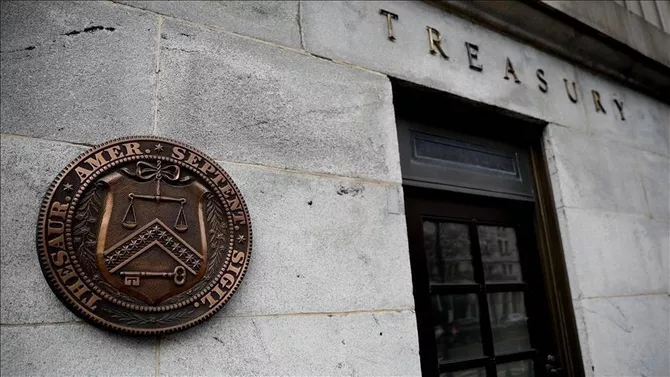
Photo: Anadolu Agency
What Comes Next: Process, Politics, and the Push for Speed
The submission of a formal request to OFAC is not the end of the story but the beginning of a technical, iterative process. Typically, such engagement unfolds in several stages.
First, expect sustained back-and-forth between Kazakh authorities, proposed buyers, legal advisers, and OFAC officials. Transaction details-ownership percentages, financing sources, governance rights, dividend treatment, and compliance safeguards-must be spelled out with precision. OFAC’s focus will be on ensuring that no prohibited benefit accrues to Lukoil or any other blocked party, directly or indirectly.
Second, joint-venture politics will matter as much as sanctions law. Assets like Tengiz and Karachaganak operate under complex governance arrangements. Existing partners may have consent rights or strong preferences regarding who replaces Lukoil as a shareholder. Maintaining operator discipline, investment timelines, and long-term development plans will be central considerations.
Third, Kazakhstan will continue to manage the narrative carefully. The optimal outcome for Astana is a swift, low-drama resolution that reassures markets without drawing unnecessary geopolitical attention. By engaging OFAC openly, Kazakhstan is signaling that it values sanctions compliance over improvised workarounds-a message aimed squarely at Western investors and policymakers.
Finally, the export-security dimension will remain front and center. As Tengiz output stabilizes following the January outage and CPC continues to face scrutiny as a strategic chokepoint, Kazakhstan is likely to pursue a parallel strategy: stabilize physical flows while de-risking ownership structures that could become the next source of disruption.
Bottom Line
Kazakhstan’s outreach to OFAC over Lukoil’s stakes is best understood as a pre-emptive effort to protect the credibility, continuity, and bankability of its energy system under tightening global sanctions. Rather than signaling a geopolitical realignment, the move reflects pragmatic deal engineering: remove sanctions ambiguity, secure export infrastructure, and reassure international partners that Kazakhstan remains a reliable energy producer in an increasingly fragmented world.
What follows is unlikely to be dramatic. The most probable outcome is a structured, OFAC-cleared transfer that allows Lukoil to exit while keeping Kazakhstan’s flagship projects operationally and financially intact. In an era where sanctions risk has become a permanent feature of the global energy landscape, Astana’s message is clear: compliance is not optional, and stability must be actively managed.