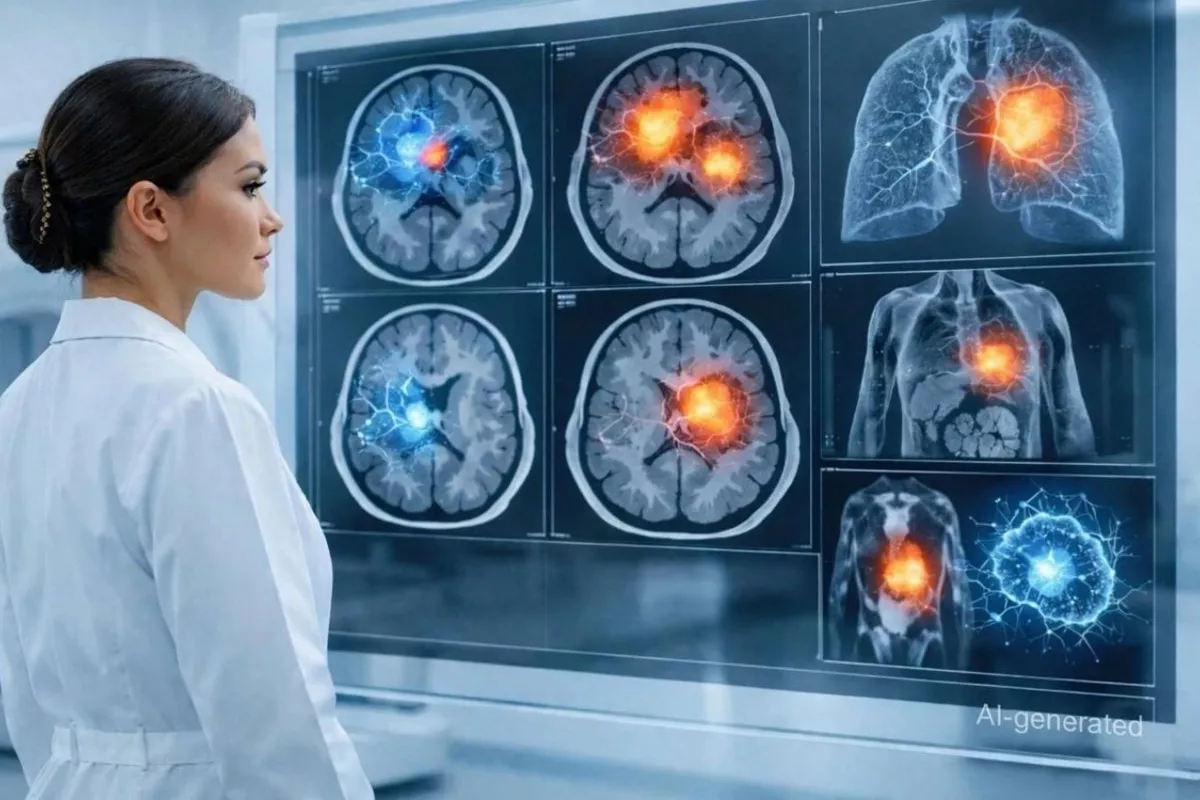
AI Boosts Early Detection of Stroke and Cancer Across Kazakhstan

Photo credit: AI

AI Boosts Early Detection of Stroke and Cancer Across Kazakhstan

Kazakhstan is accelerating the use of artificial intelligence to transform healthcare, improving diagnostic accuracy, clinical decision-making, and patient outcomes.

One of the most impactful applications is in stroke care, The Caspian Post reports via Kazakh media.

The AI-based system Cerebra is already active in nine stroke centers nationwide, enabling doctors to detect early signs of stroke faster and start treatment promptly. Early results show that thrombolytic therapy usage has risen by 40%, and by 2026, Cerebra will expand to 33 stroke centers.

In oncology, AI solutions developed by WDSoft are assisting doctors identify breast and lung cancer at earlier stages. The technology has increased detection rates by 32% while cutting diagnostic time from 40 minutes to just 10 minutes. Currently, the system is used in 190 medical facilities across 12 regions, with further expansion planned.

Even dentistry is benefiting from AI. The Aidentis platform automatically analyzes X-rays, spots pathological changes, and generates treatment recommendations-reducing image analysis time from one hour to one minute.

All AI solutions are integrated via the Unified Medical Data Repository, improving healthcare management and laying the foundation for intelligent medicine in Kazakhstan.

The initiative aligns with the national strategy, as the Kazakh president has declared 2026 the Year of Digitalization and Artificial Intelligence, signaling a major push toward modern, tech-driven healthcare.

Related news

AI Boosts Early Detection of Stroke and Cancer Across Kazakhstan

Kazakhstan is accelerating the use of artificial intelligence to transform healthcare, improving diagnostic accuracy, clinical decision-making, and patient outcomes.