In Recent Weeks, The Georgian And Armenian Media Space Has Been Flooded With Alarmist Narratives Surrounding The Zangezur Corridor, Better Known Today As TRIPP Or The So-Called “Trump Route.” According To These Claims, The Emergence Of A New Route Through Armenia Will Allegedly Deprive Georgia Of Its Transit Role, Cripple Its Economy, And Push The Country Into A Geopolitical Corner. Some Commentators Go Even Further, Suggesting That Georgia Risks Losing Its Strategic Relevance Altogether.
This interpretation is not only exaggerated - it fundamentally misunderstands how modern logistics, infrastructure competition, and regional connectivity actually work.
Transit is not a zero-sum game. The expansion of routes rarely destroys existing corridors; far more often, it multiplies overall volumes. History shows that when connectivity increases, trade grows, and when trade grows, multiple routes benefit simultaneously. The idea that Georgia’s logistics future hinges on blocking alternative corridors reflects a static, outdated mindset.
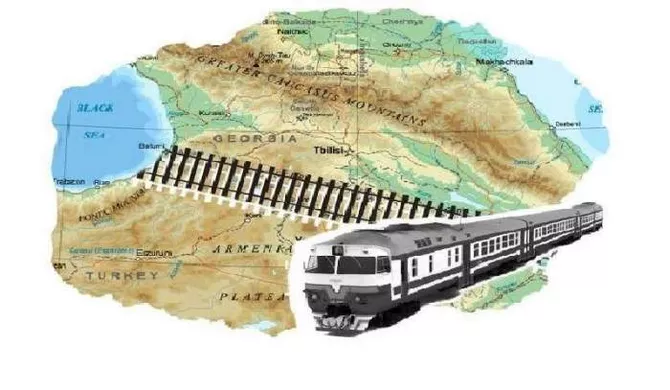
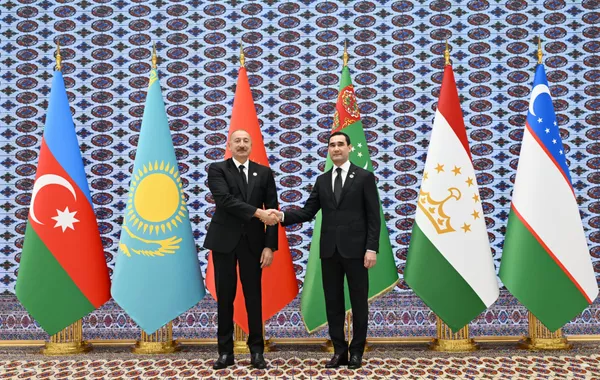
Photo credit: News.Az
Official Tbilisi has, to its credit, avoided falling into this trap. Prime Minister Irakli Kobakhidze has clearly stated that Georgia’s transit function is not under threat. More importantly, Georgia welcomes the normalization of relations between its neighbors and the expansion of regional trade. This position is not ideological - it is pragmatic.
Numbers tell the real story. Over the past five years, freight volumes along the Middle Corridor have increased sevenfold. Georgia remains the backbone of this route. In 2025, the country completed modernization of its East-West railway, raising capacity to 48 million tons per year. Container throughput at the port of Poti reached 648,000 TEU. These are not symbolic achievements; they are structural indicators of strength.
If TRIPP were truly capable of “killing” Georgia’s transit role, such growth would be impossible.

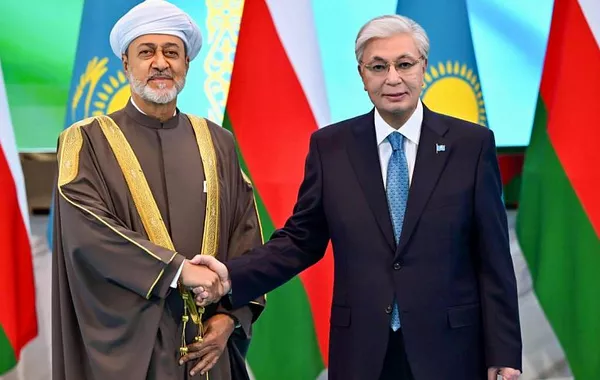
Photo credit: Azernews
What Georgia is doing right is focusing on capacity, not fear. Massive investments are being directed toward highways, border infrastructure, ports, railways, and airports. In 2026, Georgia plans to complete key sections of the Middle Corridor near the borders with Azerbaijan, Armenia, and Türkiye, including the Rustavi-Red Bridge route toward Azerbaijan, the Algeti-Sadakhlo section toward Armenia, and the Batumi-Sarpi highway toward Türkiye.
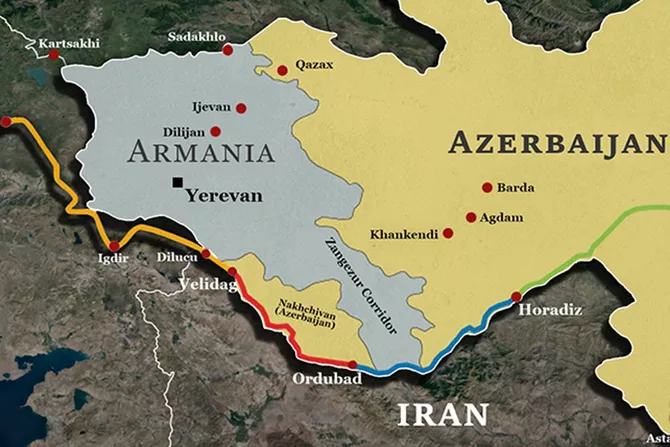
Photo credit: News.Az
This is how serious transit countries behave: they prepare for more traffic, not less.
Yes, TRIPP does offer certain advantages. Its shorter length may make it attractive for specific cargo categories, particularly in Armenia-Azerbaijan bilateral trade. But expecting a full-scale diversion of Eurasian freight flows away from Georgia ignores geography and infrastructure realities.
Georgia possesses something Armenia simply does not: access to the Black Sea backed by developed port capacity and railway connectivity. Poti is already a functioning deep-water port. Anaklia is planned as a major additional maritime hub. In the Black Sea basin, Georgia has no real competitor with comparable scale and rail integration. Turkish ports such as Trabzon and Rize are smaller and lack rail connections.
Even after modernization, Armenia’s logistics system will remain landlocked and dependent on neighboring infrastructure. At best, TRIPP can capture a portion of new flows - not replace Georgia’s role.
More routes do not mean fewer winners. They mean more options.
The real challenge for Georgia is not TRIPP. It is whether Georgia continues upgrading faster than its neighbors. There are still bottlenecks: aging rolling stock, the need for longer station platforms, and the critical modernization of the Gardabani station to match the capacity of Azerbaijan’s Boyuk Kasik node. These issues are technical, solvable, and already on the government’s agenda.
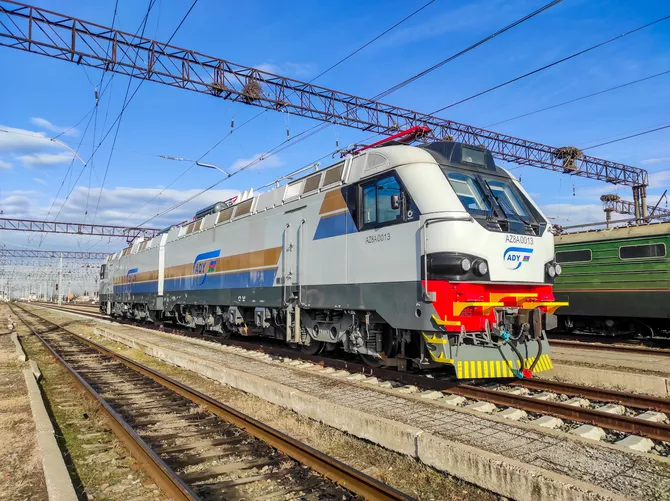
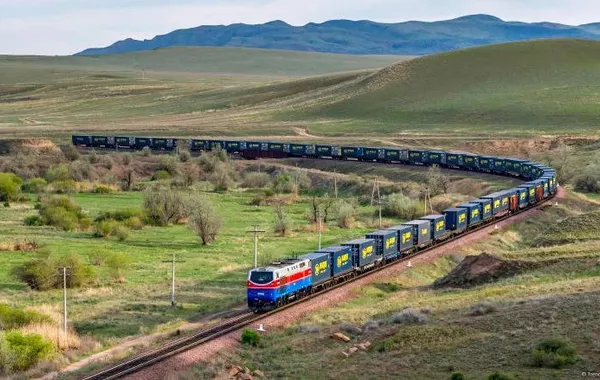
Photo credit: Trend
The bigger strategic question is positioning.
Georgia should not present itself as a country defending its transit status. It should present itself as the indispensable logistics platform that connects multiple corridors into a single system. TRIPP, the Middle Corridor, energy pipelines, digital fiber routes, and Black Sea shipping lanes should be viewed as complementary layers of one architecture - an architecture in which Georgia functions as the main hub.
This means synchronizing infrastructure planning with U.S. and EU connectivity initiatives, actively shaping regional logistics standards, and marketing Georgia as the service center for Eurasian transit: customs processing, multimodal hubs, storage, insurance, finance, and digital tracking.
Countries that win in logistics are not those with the shortest routes. They are those with the most reliable ecosystems.
Georgia already has the foundations of such an ecosystem. What it needs now is consistency, speed, and strategic self-confidence.
TRIPP does not erase Georgia from the map. It redraws the map into a denser network.
And in dense networks, hubs matter more than ever.
For Georgia, the choice is simple: remain trapped in defensive thinking, or embrace its natural role as the region’s primary connectivity hub. History suggests that those who adapt early shape the future. Those who cling to old certainties watch others pass them by.
Georgia still has every opportunity to be among the first.