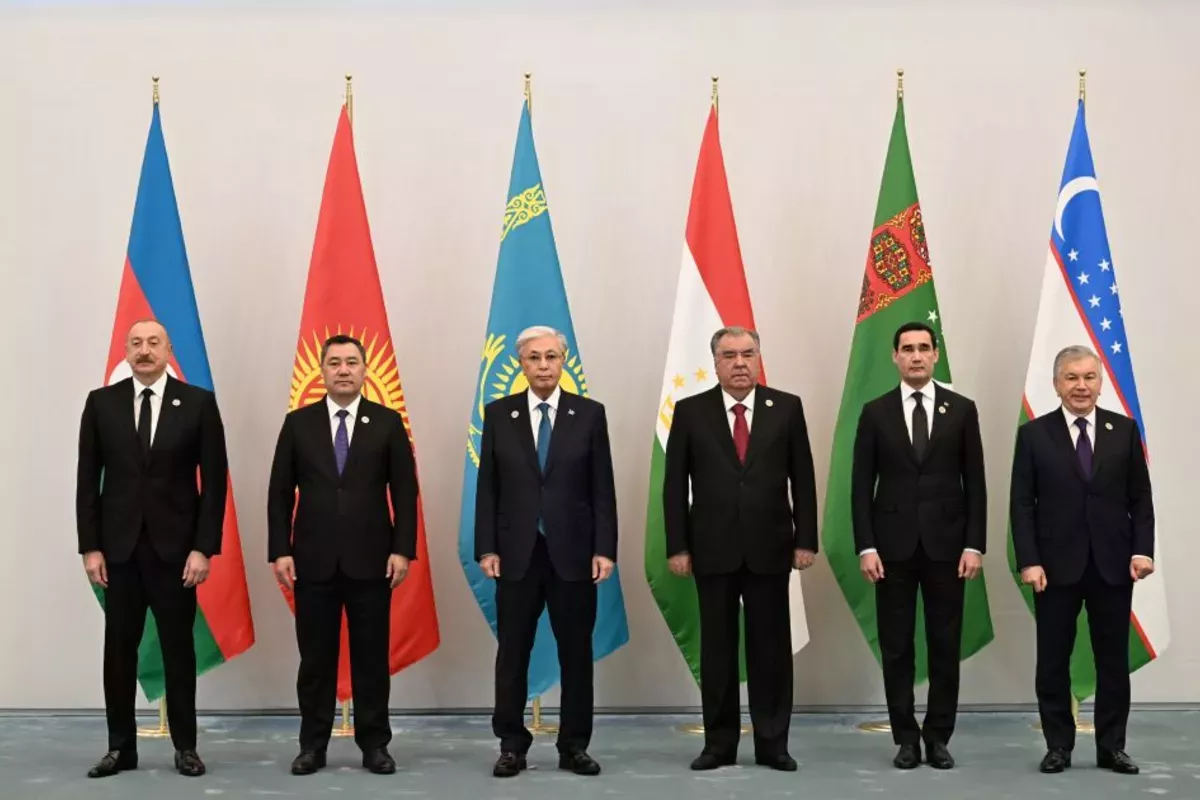
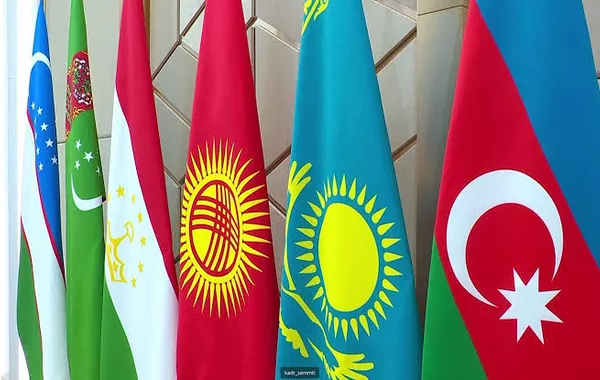
The C6 format represents a new configuration of regional cooperation, bringing together the countries of Central Asia and Azerbaijan into a single geo-economic and geopolitical space. Yet in essence, this is not the creation of something entirely new, but rather the restoration of natural connectivity that has been forming for decades.
Even the title of the conference - “One Region, One Future” - captures the depth of what is taking place. This is not a situational diplomatic initiative or an attempt to artificially construct a new regional bloc. It is the institutional consolidation of an objective reality: shared historical, civilizational, and economic interconnectedness.
Crucially, this logic comes from within the region itself. In the early 2000s, the concept of “Greater Central Asia,” proposed by American scholar Frederick Starr, gained attention. However, that framework was largely shaped by external strategic thinking and reflected U.S. geopolitical priorities, particularly in relation to Afghanistan. The C6 format, by contrast, is not an externally designed geopolitical blueprint. It is the result of the region’s own reassessment of its geography, interests, and long-term trajectory.
History confirms that the current process is not unprecedented. On August 14, 1991, just weeks before the dissolution of the Soviet Union, a meeting took place in Tashkent between the leaders of the Central Asian republics and Azerbaijan. The Inter-Republican Consultative Council was established, and the founding document bore six signatures: five Central Asian republics and the Republic of Azerbaijan. Azerbaijan was represented by Prime Minister Hasan Hasanov. Among the participants were the leaders of Kazakhstan, Uzbekistan, and other republics. Even at that moment, Azerbaijan was recognized as a natural component of this broader regional space.
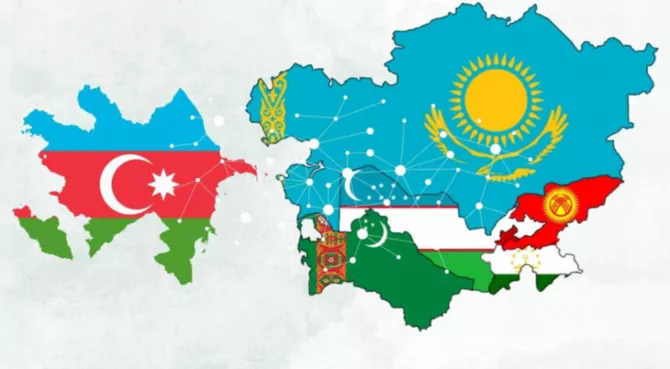
Photo credit: APA
The goals outlined then - restoring economic ties, coordinating economic processes, and improving living standards - closely mirror today’s agenda. This demonstrates that the logic of regional consolidation has existed for nearly 35 years. It is neither accidental nor driven by short-term political calculations. It reflects a natural geo-economic gravitation.
In the early 1990s, there were attempts at institutionalization. A secretariat was even established in Ashgabat, operating until December 1991. More ambitious ideas were discussed as well. During telephone conversations with Nursultan Nazarbayev and Islam Karimov, the first President of Turkmenistan proposed the creation of a Central Asian confederation. However, the geopolitical realities following the collapse of the USSR redirected the region’s trajectory.
Today, C6 represents a more mature phase. It is the institutionalization of already existing infrastructure connectivity, shared post-Soviet transformation experiences, and complementary economic structures. Perhaps most importantly, all participating states share a similar geopolitical position: situated between major centers of power, they must continuously balance competing interests. Coordination strengthens collective agency.
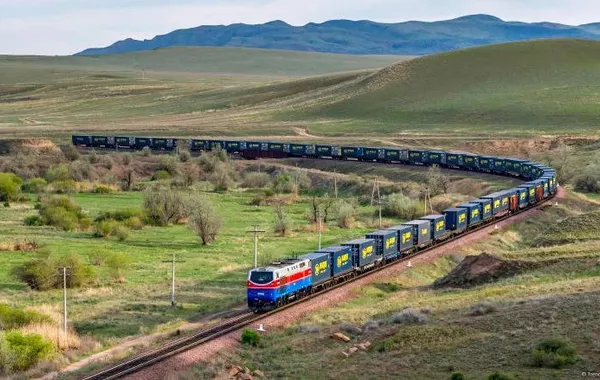
The inclusion of Azerbaijan significantly reshapes the region’s strategic configuration. Central Asia ceases to be purely landlocked and gains direct linkage to the South Caucasus, Türkiye, and the Mediterranean. This is not merely about the Trans-Caspian corridor or individual infrastructure projects. It marks a transition from the logic of transit to the logic of building regional economic ecosystems.
For decades, the region was primarily perceived as a transit space between larger powers - Russia and China, Europe and Asia. Transit, however, is a servicing function. An ecosystem implies value-added production, industrial cooperation, harmonized standards, and integrated supply chains.
In policy discussions, one increasingly hears the argument that Armenia’s border effectively becomes the outer boundary of the broader C6 space. Infrastructure development through Nakhchivan has the potential to overcome the long-standing perception of regional “landlockedness” frequently emphasized in academic discourse. Connectivity creates exit routes and opportunities.
C6 can serve as a platform for coordinating industrial policies, harmonizing technical standards, and jointly accessing external markets. This strengthens the region’s bargaining position in dialogue with the European Union, China, South Asia, and other partners.
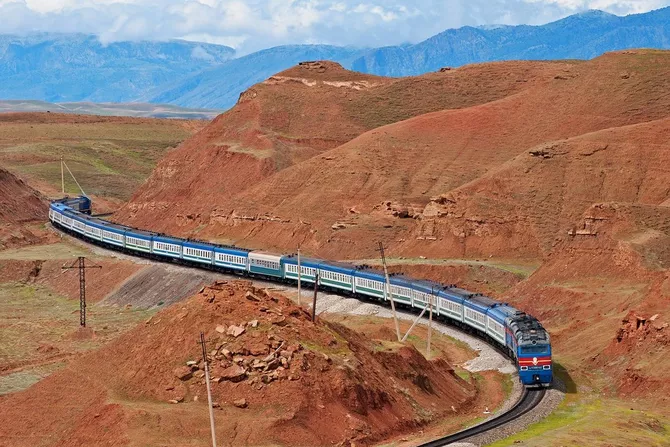
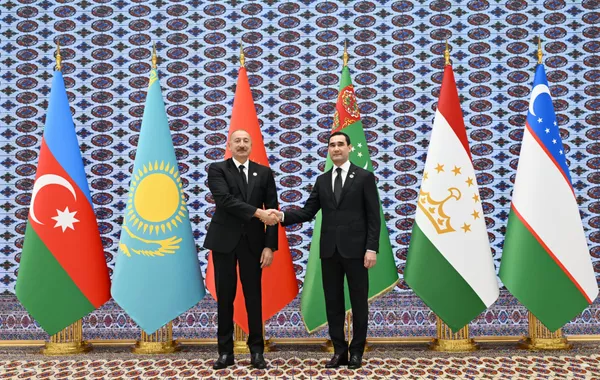
Photo credit: Trend
It is important to distinguish between the C5+ model and C6. The “plus” format primarily reflects engagement with external actors. C6, by contrast, emphasizes internal agency. The region first defines its own strategic agenda and then engages with external powers from a position of coordination.
This does not imply the creation of a unified foreign policy. However, targeted synchronization on issues such as transport connectivity, energy security, climate policy, and regional stability can significantly enhance the region’s collective standing on the international stage.
A particularly illustrative moment came during the 7th Consultative Meeting of the Heads of State in Tashkent in November 2023. President Ilham Aliyev noted that, although Azerbaijan is geographically located in the South Caucasus, the active interaction between Central Asia and Azerbaijan is forming a single geopolitical and geo-economic region whose global importance continues to grow. This statement accurately captures the essence of C6: not a formal alliance, but a strategic space built on coordinated interests.
The question of institutionalization remains open. Regional experience shows that excessive formalization can reduce flexibility and efficiency. Since 2018, the C5 format has evolved through what might be described as “soft institutionalization,” avoiding heavy bureaucratic structures. The early 1990s demonstrated that institutions alone do not guarantee sustainability; practical cooperation does.
Today, inter-agency coordination is already advancing. Railways of Kazakhstan, Kyrgyzstan, and Azerbaijan maintain active dialogue. Energy cooperation is expanding, including engagement between KazMunayGas and the State Oil Company of Azerbaijan. Discussions are underway regarding joint ventures and unified digital logistics platforms. These practical mechanisms lend durability to political agreements.
The humanitarian dimension is equally important. Academic exchanges, joint educational programs, and cultural initiatives form the social framework of C6. People-to-people connectivity becomes the adhesive that transforms geo-economic alignment into a resilient regional community.
C6 is not merely a diplomatic acronym or a temporary political formula. It represents the restoration of historical connectivity and the emergence of a new level of collective regional agency. If it continues to develop through pragmatic coordination, gradual institutionalization, and internally driven strategy, C6 has the potential to become one of the defining regional frameworks of the 21st century.